
How to Specify High Mast Lighting Levels by Application
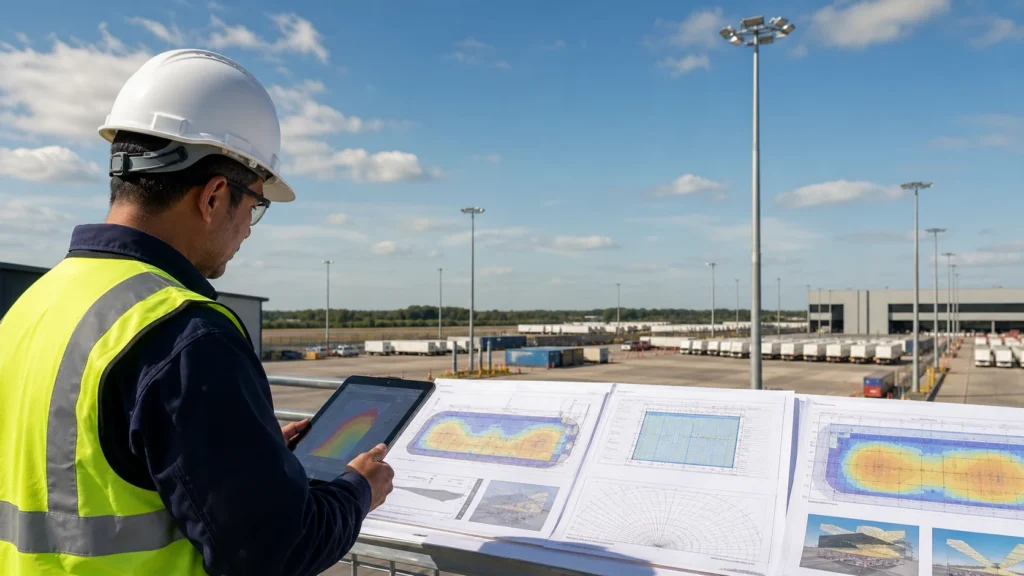
Quick Answer High mast lighting levels should not be selected from a single generic lux table. A professional specification should define the required lighting metric, calculation area, calculation plane, maintained value, minimum value, uniformity target, glare requirement, and source of acceptance criteria for each project zone. For many outdoor infrastructure projects, the question is not […]
High Mast Pole Height Guide: 20m, 25m, 30m & 35m
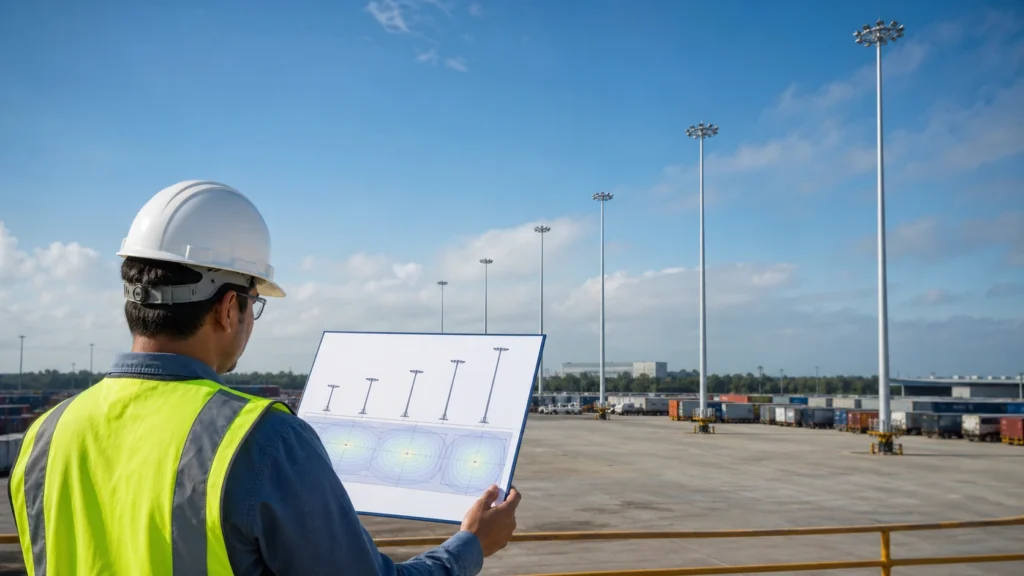
Quick Answer High mast pole height is selected according to project area, required maintained illuminance, pole spacing, luminaire optics, glare control, wind-load condition, foundation feasibility, maintenance method, and local project requirements. There is no single global standard height for every high mast lighting project. In many infrastructure projects, common high mast pole heights include 20m, […]
High Mast Lighting Layout Patterns: Pole Placement & Aiming Examples
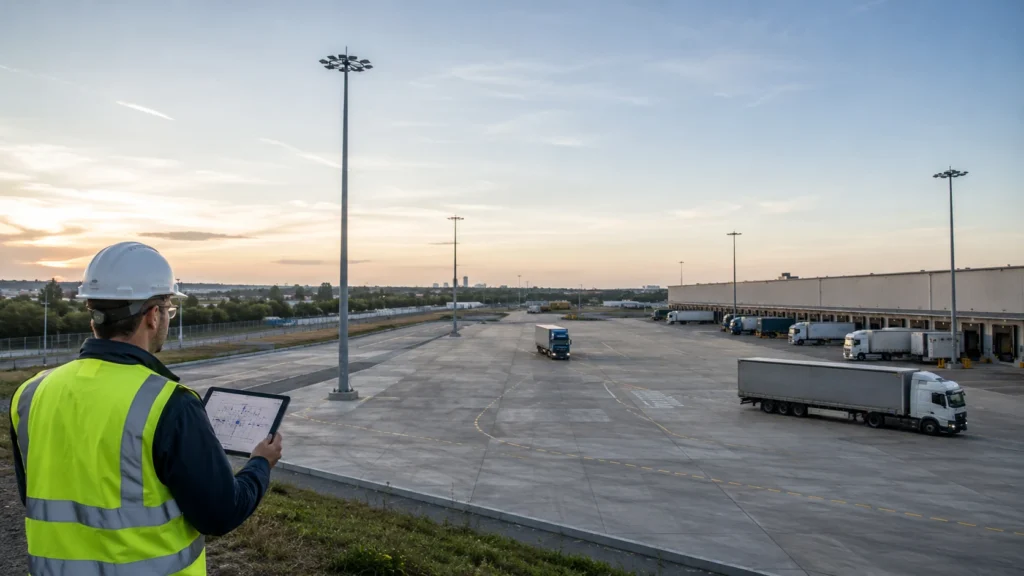
Quick Answer High mast lighting layout is not only about how far apart the poles should be. A professional layout must also decide where each mast should be placed, which area each luminaire should cover, and how every floodlight should be aimed. For large outdoor projects, the most common high mast lighting layout patterns include: […]
High Mast Lighting Layout Design Guide
High Mast Lighting Layout Design Guide: Pole Placement, Aiming & Coverage Zones Quick Answer A high mast lighting layout is not only about pole spacing. A professional layout must define the lighting area, divide the site into functional zones, choose practical pole locations, select suitable luminaire optics, plan aiming directions, control glare and spill light, […]
High Mast Pole Spacing Guide: Distance, Height Ratios & Layout Examples
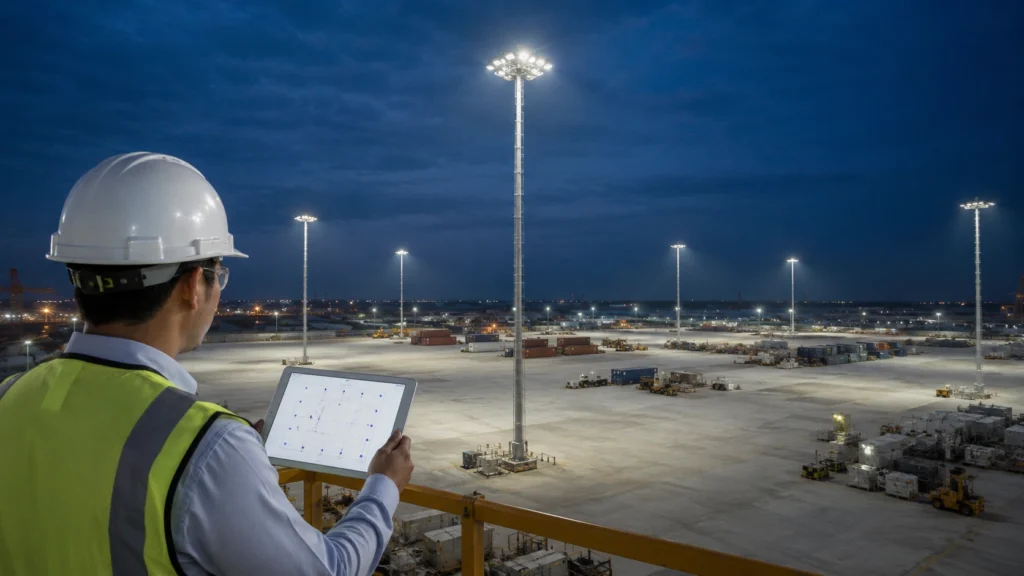
Quick Answer There is no standard pole spacing that applies to every high mast lighting project. During concept planning, engineers may test preliminary spacing in the range of approximately 3 to 5 times the mounting height. This is only a starting point for layout comparison, not an engineering rule or guaranteed recommendation. The final spacing […]
Multiple Solar Street Lights Failing in One Area: Product Defect or Site Problem?
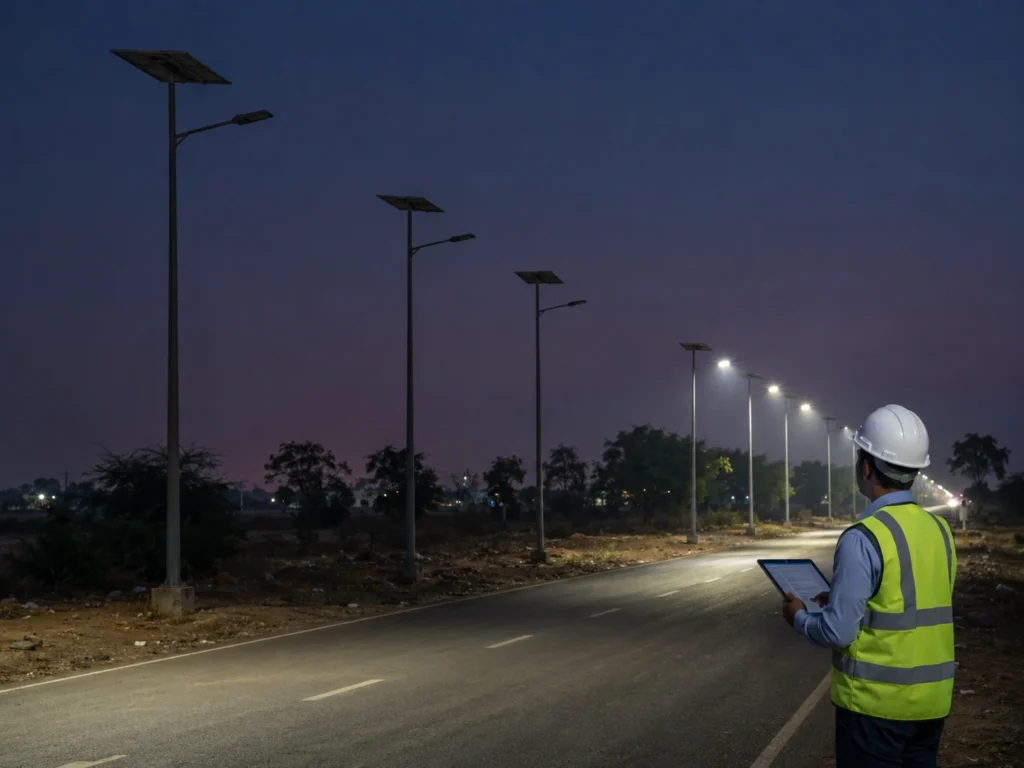
Quick Answer When multiple solar street lights fail in one area, the first step is not to assume a product defect. A group failure may come from shared site conditions, repeated installation issues, shading, weak solar charging, water ingress, inconsistent controller profiles, sensor interference, or a batch-level component problem. The correct review method is to […]
Solar Street Light Motion Sensor Settings: Standby Brightness, Boost Brightness, and Delay Time
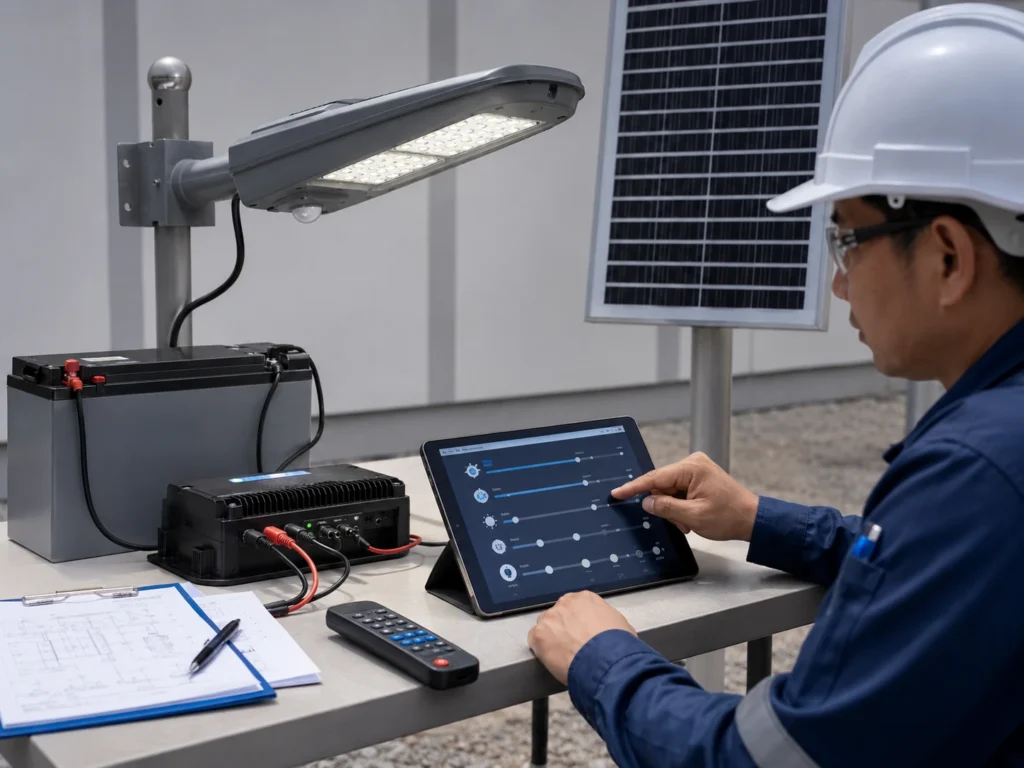
Quick Answer The main motion sensor settings for solar street lights are standby brightness, boost brightness, delay time, sensitivity, and day-night activation logic. Standby brightness controls the lower background light level. Boost brightness controls the higher output when movement is present. Delay time controls how long the lamp stays bright after movement. The right setting […]
PIR vs Radar Motion Sensors for Solar Street Lights: What Should Projects Check?
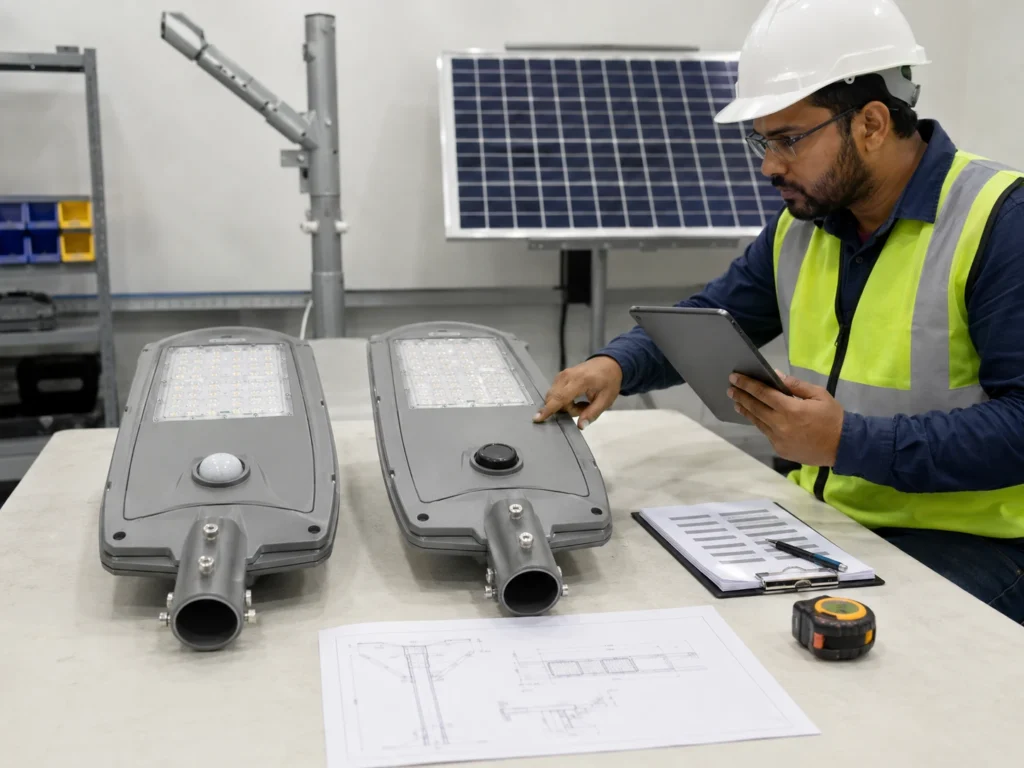
Quick Answer PIR and radar motion sensors both help solar street lights reduce energy use by keeping the lamp at lower standby brightness and boosting output when movement is present. The main difference is how they detect movement and how they behave in real project conditions. PIR sensors respond to infrared heat changes from moving […]
Remote Control vs Smart Control for Solar Street Lights: When Should Projects Upgrade?
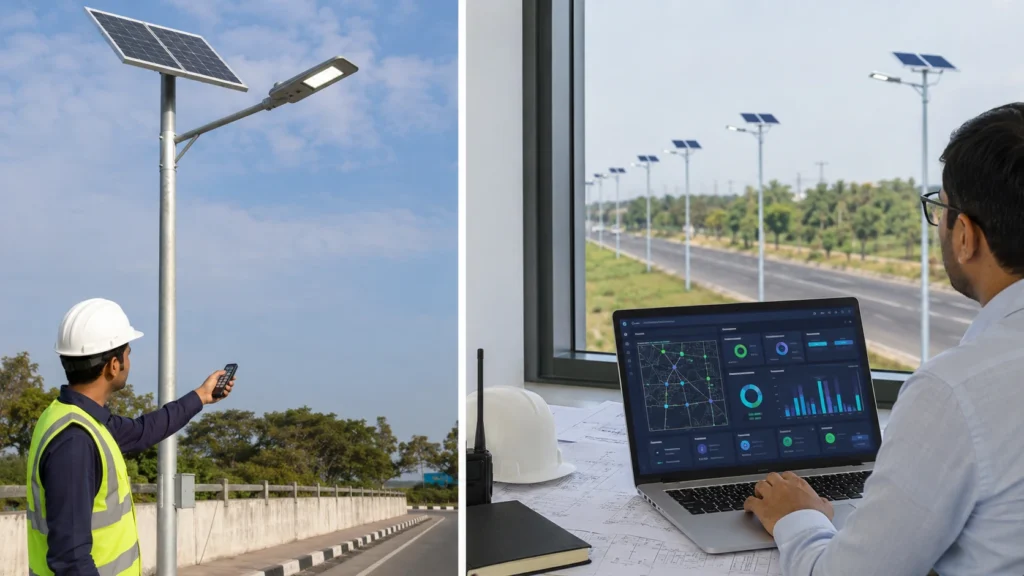
Quick Answer Remote control is usually enough for small solar street light projects where installers only need to set AUTO mode, timer schedules, dimming levels, motion sensor mode, or final operating profiles during installation and commissioning. It is simple, low-cost, and practical when the project does not require remote monitoring. Smart control is more suitable […]
Motion Sensor vs Timer Mode for Solar Street Lights
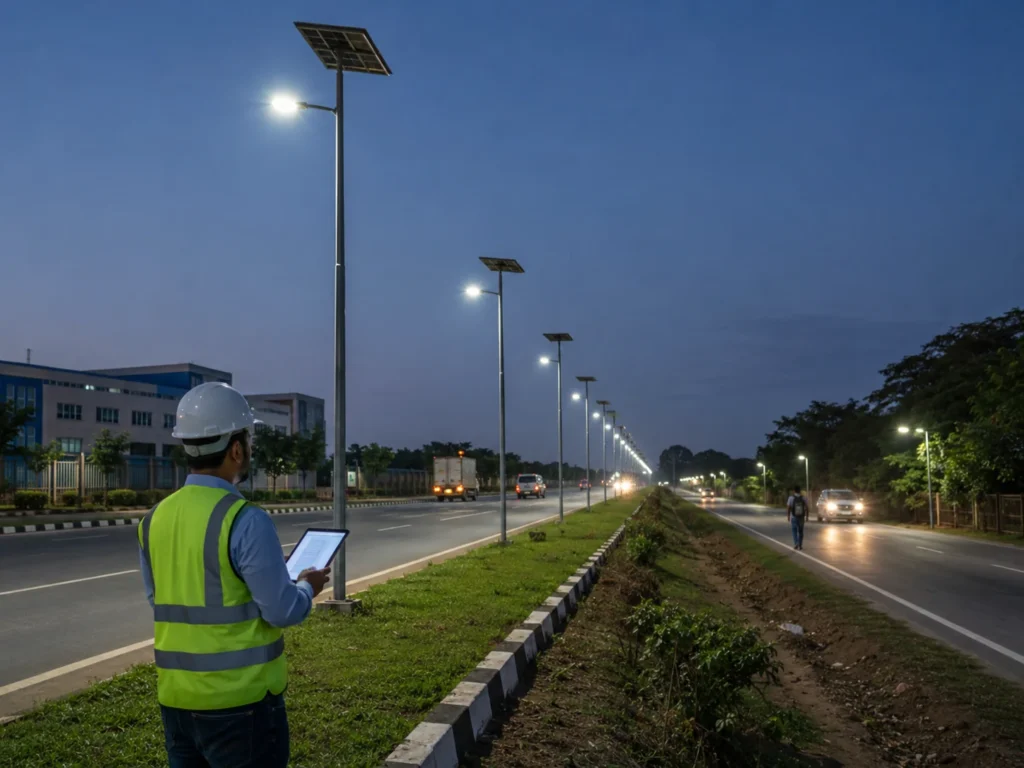
Quick Answer The best mode depends mainly on traffic pattern and road safety requirement. Timer mode is usually better for high-traffic roads, main municipal roads, public service roads, and security-sensitive areas that need predictable overnight visibility. Motion sensor mode is usually better for low-traffic roads, rural access roads, campus roads, parking areas, park pathways, and […]