An existing street lighting system should not be converted by wattage comparison alone. Power conditions, wiring, poles, arms, mounting interfaces, optics, controls, site geometry and maintenance responsibilities must be reviewed before an AC LED, smart AC, solar or mixed-power path is selected.
Sunlurio supports retrofit input review, configuration coordination and project-document planning for municipal, EPC and infrastructure lighting teams.
Retrofit feasibility depends on the condition and compatibility of the installed system. A pole, arm, cable route, cabinet or controller should not be assumed reusable until its condition, interface and project requirements are reviewed.
Decision rule: Existing condition → project objective → feasible retrofit path → engineering review → configuration → documents.
Power and Protection
Grid voltage and frequency, observed variation or outages, cabinet, cable route and condition, circuit protection, SPD, earthing, switching and metering where relevant.
Pole and Mounting
Pole height and condition, arm, spigot/interface, cable entry, corrosion, clearance and available structural information.
Existing Luminaire and Control
Luminaire type and input power, mounting, optic if known, driver, timer, photocell, dimming/control interface, controller or central-management system.
Road and Site
Road width, pole spacing and arrangement, obstructions, target lighting, existing complaints or failures, photos, CAD drawing or site plan.
Unknown fields may be marked Not confirmed yet; they must not be treated as confirmed in the recommendation.
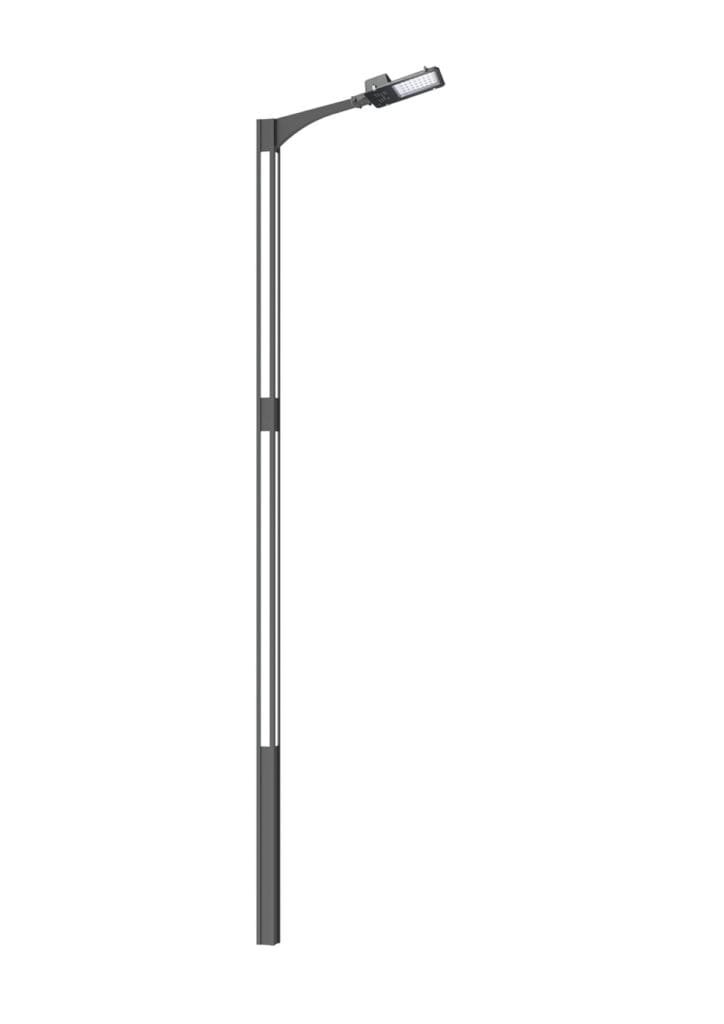
Review the grid, wiring, protection, pole interface, road geometry and required lighting before selecting a new AC road luminaire.
Confirm the luminaire/driver interface, controller, communication, network or gateway, platform, commissioning and O&M architecture.
Assess solar resource, shading, runtime, autonomy, PV/battery location, structure, maintenance, security and economics before deciding whether conversion is appropriate.
Define the actual sources, loads, switching, protection, control logic and failure behavior. Hybrid / mixed-power scenarios require project-specific architecture review.
The old luminaire wattage is only one input. A retrofit configuration should consider actual voltage/frequency, wiring and protection, pole/arm/spigot compatibility, mounting geometry, road dimensions, target lux and uniformity, optic, driver, SPD and control requirements.
A statement such as 250W HPS → 100W LED does not prove photometric or electrical suitability. View LED Street Light.
A smart retrofit may coordinate the luminaire, driver/control interface, controller or node, communication, gateway/network, platform, alarms, dimming, commissioning and maintenance process.
4G, 5G, LoRa, Wi-SUN, NB-IoT, PLC, GPS, API, DALI and 0–10V are not universal inclusions. The selected technology must match the controller, driver, platform, network conditions and project requirements.
View Smart Street Light · Review Smart Street Lighting Solution
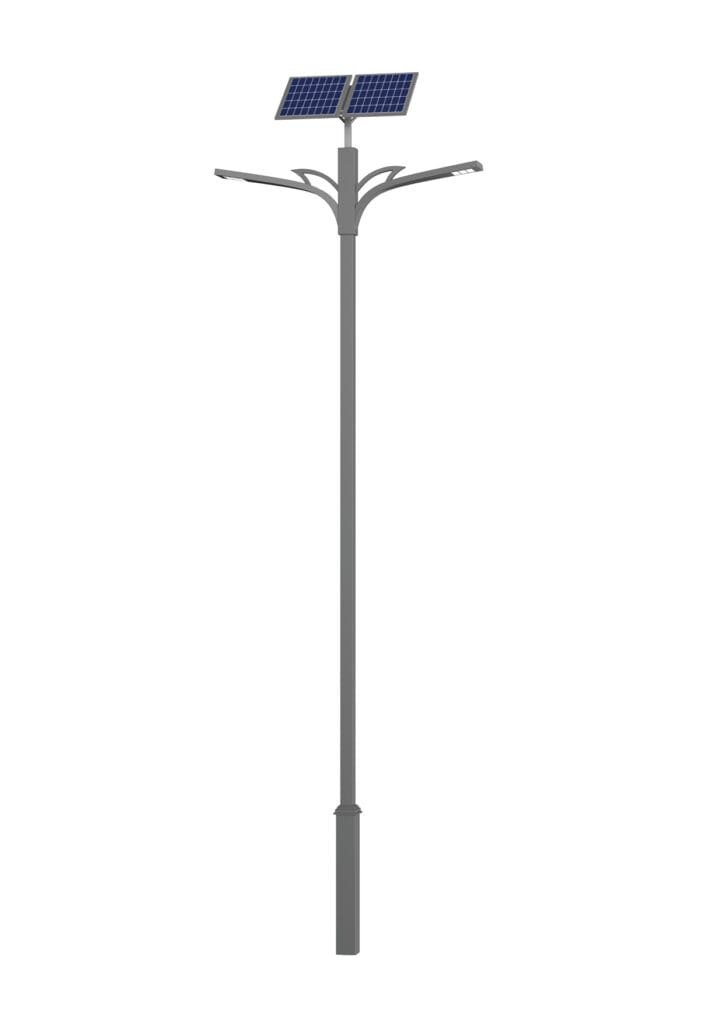
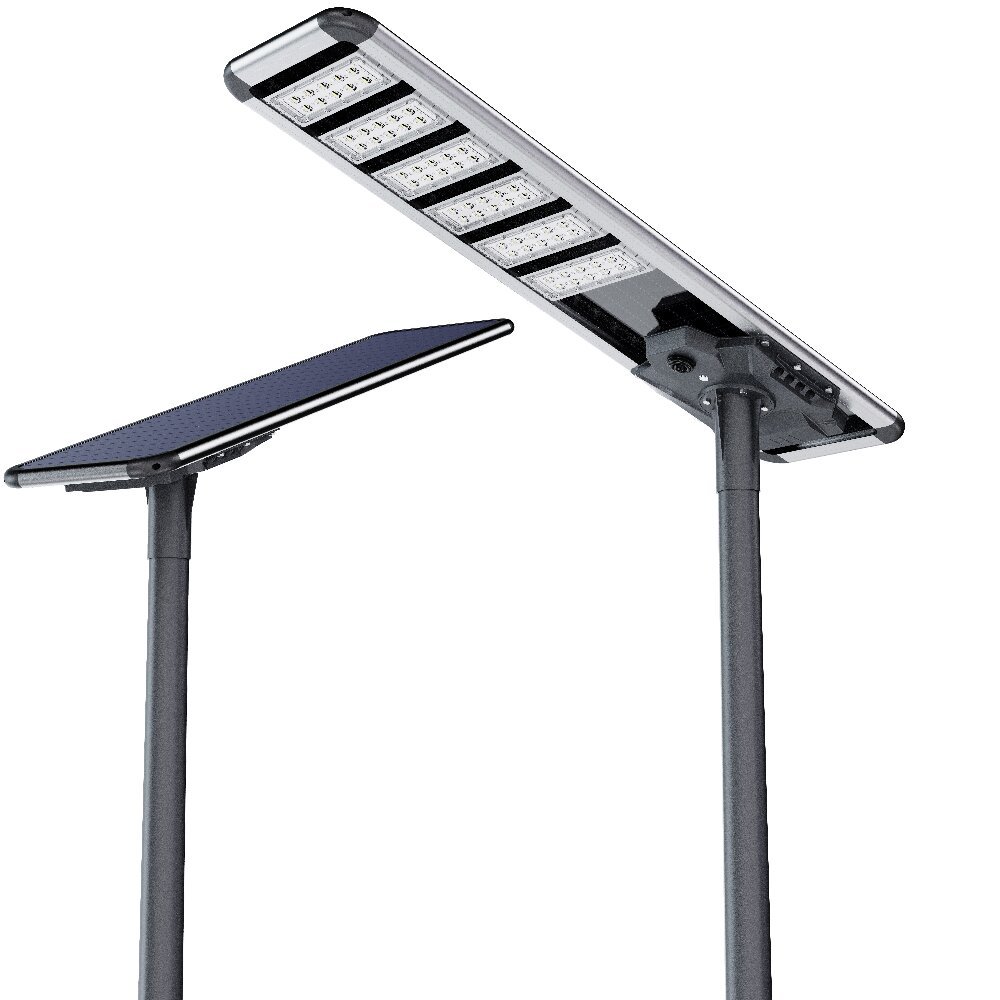
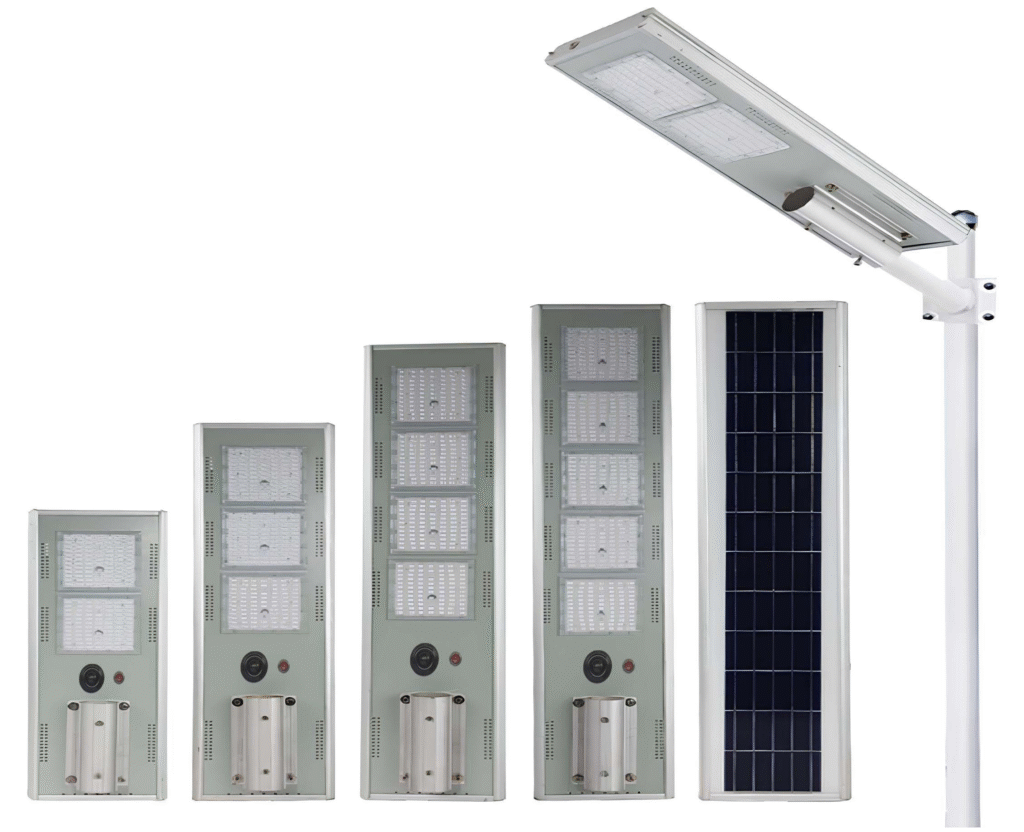
Solar conversion may be evaluated where the project team can define solar resource and shading, operating hours, dimming, autonomy, PV and battery location, pole/structural space, anti-theft requirements, maintenance capability and the new wiring/control architecture.
Solar does not automatically mean lower lifecycle cost or better project suitability. The comparison should include existing energy use and tariff, infrastructure reuse, new equipment and civil scope, maintenance and operating requirements. View Solar Street Light Systems.
Hybrid, AC + solar, solar backup, grid backup and dual power can describe different systems. A project review should define which source supplies which load, normal and outage behavior, switching and protection, energy sizing, control logic, monitoring and maintenance responsibilities.
Sunlurio does not present one universal hybrid mode for every retrofit site.
Review may include pole condition, height, arm and spigot dimensions, luminaire mounting and load, corrosion, cable access, wind/load changes and any added solar panel, battery, controller or cabinet installation.
The webpage does not issue structural approval. Project drawings, condition evidence and qualified structural review may be required. View Lighting Pole Systems.
Confirm the actual supply, cable route and condition, junctions and entry method, cabinet, circuit protection, SPD location and rating basis, earthing, driver, switching/control interface and responsibility for site testing.
Retrofit does not automatically mean no rewiring. Reuse or replacement follows condition, compatibility and the approved scope.
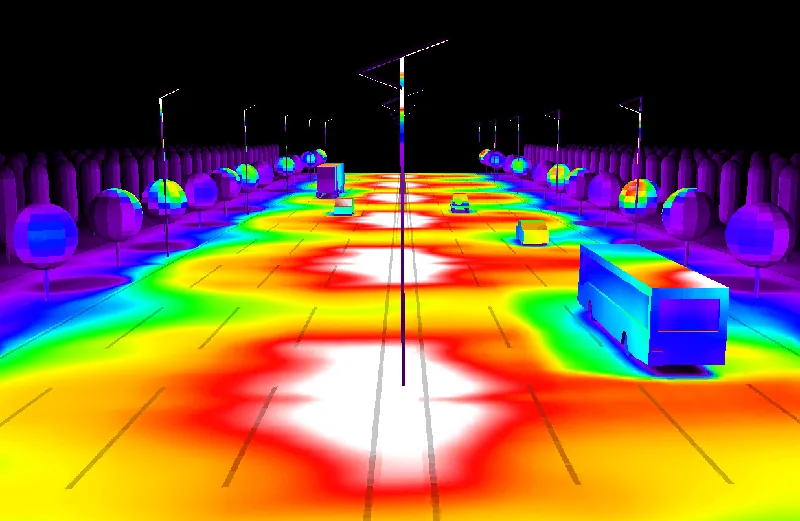
A replacement luminaire may change light output, optic, mounting angle, tilt and optical center. These changes can affect lux, uniformity, glare and spill light even when the poles remain in place.
Use the traceable path: existing geometry → selected model/BOM → optic → matched IES/LDT → DIALux/Relux → aiming and acceptance review. Request DIALux / Relux Review.
The review should identify the required operating schedule, dimming method, controller topology, communication/network, gateway, platform, alarm/monitoring functions, commissioning procedure and O&M capability.
One controller does not fit every driver or luminaire. Optional capabilities must be matched to the selected architecture.
Consider access and traffic-control windows, isolation and safe working procedures, sealing and corrosion risks, spare strategy, replacement interfaces, local maintenance skills, platform/connectivity support where used, commissioning records and responsibility for future faults.
A retrofit plan should state confirmed conditions, assumptions, exclusions and the owner of each installation and acceptance task.
Selected authentic certificates and test records may remain visible. Displaying a real record does not mean it is currently valid for every product or retrofit configuration.

Start with condition evidence, interfaces and project objectives.
Confirm power, wiring, cabinet, pole, mounting, road geometry and the project objective before selecting a retrofit path.

Use confirmed geometry, model/BOM, optic and matched IES/LDT.
Lighting verification may require the existing layout, target criteria and a matched photometric file; project-specific outputs remain controlled.

Datasheets, drawings, compliance notes and tender documents follow the confirmed model, interface and project scope.

Use project records as related experience only; they are not relabelled as retrofit cases.
The references below demonstrate Sunlurio’s AC and smart-lighting supply and engineering experience. They are not presented as completed retrofit projects. Any proposed retrofit requires a separate review of the existing installation and component compatibility.
Community road lighting record covering 210 sets of 60W AC LED luminaires on 7 m poles. Status: Completed. Historical configuration only.
Road and highway sections covering 260 sets of 80W AC LED luminaires on 8 m poles, with a recorded 220–240 VAC / 50 Hz configuration and no dimming or CMS. Status: Completed. Historical configuration only.
Main-road project covering 500 sets of 80W AC smart luminaires on 7 m poles, with 5G and a centralized management platform recorded for that project. Status: Installed, Completed and Accepted. View project.
Public-road project covering 211 sets of 75W AC smart luminaires on 8 m poles, with LoRa and a centralized platform recorded for that project. Status: Accepted. View project.
LED Street Light Projects · Smart Lighting Projects
Provide available photos or drawings, voltage/frequency and outage information, wiring and cabinet details, pole/arm/spigot dimensions, existing luminaire data, road geometry, lighting targets, control requirements and the BOQ or tender scope.
No. Condition, dimensions, mounting interface, load change, corrosion, wind and cable access may need review. Additional solar or control equipment can introduce further loads and interfaces.
No. Selection should consider road geometry, pole arrangement, target lux and uniformity, optic, mounting and a matched photometric file.
No. Driver/control interface, controller, communication, network, platform and commissioning requirements must be compatible.
No. Retrofit economics depend on existing energy use, tariff, maintenance, control strategy, infrastructure reuse and project scope.
It must be defined for the actual project: power sources, connected loads, normal/outage behavior, switching, protection, controls and maintenance. There is no universal hybrid mode.
It should be reviewed when the luminaire, optic, mounting geometry, tilt or output changes. The analysis requires the existing geometry and a matched IES/LDT file.
Share the available site photos or drawings, power condition, wiring and cabinet information, pole and mounting details, existing luminaire/control data, road geometry, lighting targets, preferred retrofit path, BOQ and required documents.
We will identify the initial AC LED, smart AC, solar-evaluation or project-specific mixed-power review path, together with missing inputs and the next engineering step.
WhatsApp us
Share your project location, road width, pole height, spacing, working hours, backup days, and required documents. Our team can help prepare configuration guidance, datasheets, IES/LDT files, DIALux support when applicable, drawings, and BOQ matching notes.