
Outdoor Lighting Solutions for Project and Tender Decisions
For public-road applications, review the municipal roads and community streets selection path, including crossings, operating profiles and document inputs.
Browse Solutions by Project Scenario
Compare outdoor lighting solutions by application, then review the geometry, photometric targets and project constraints that shape system selection.
Road & Municipal
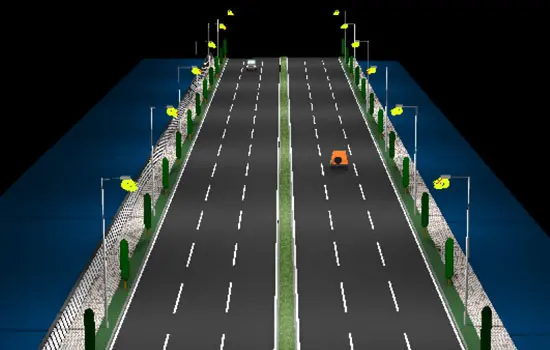
Road lighting solutions shaped by road geometry, mounting height, pole spacing and photometric performance.
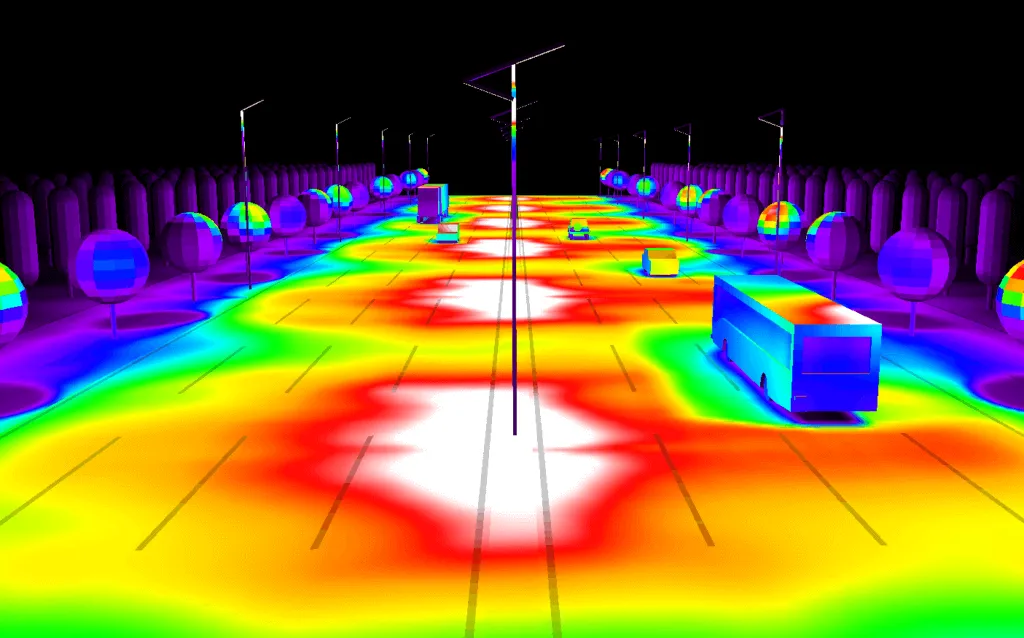
Municipal lighting solutions balancing uniformity, glare, maintenance access and public-space conditions.
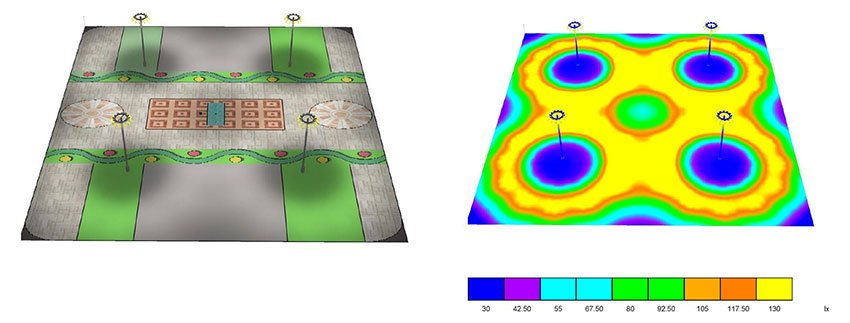
Parking lot lighting solutions coordinated around vehicle zones, pedestrian routes, CCTV and dimming.
Large-Area & Industrial


Industrial outdoor lighting for yards, loading areas, perimeter security and vehicle circulation.
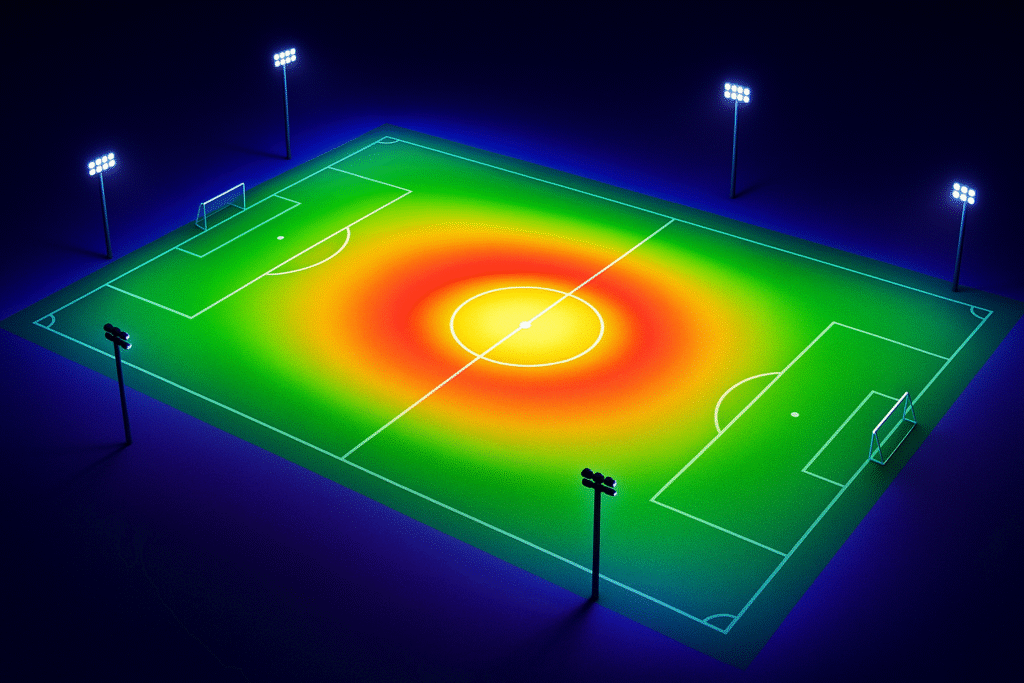
High mast lighting solutions reviewed for mast height, wind load, aiming, foundation inputs and area photometrics.
Smart & Retrofit

Smart street lighting solutions connecting luminaires, controllers, communications, dimming and monitoring.

Review existing infrastructure, grid supply and solar or hybrid options before defining the retrofit boundary.
Project Inputs We Review
A practical lighting review starts with the site, performance criteria and procurement documents available.
Project Location & Climate
Country, site exposure and climate guide corrosion, temperature and wind-load inputs.
Road / Area Geometry
Road width, area dimensions and circulation routes establish the lighting geometry.
Pole / Mast Height & Spacing
Mounting height, pole spacing and mast positions shape coverage and structural review.
Lighting Target & Photometrics
Confirm maintained illuminance, uniformity and glare criteria for IES/LDT and DIALux review.
Operating Hours / Power / Control
Review power source, operating hours, dimming profile and control requirements.
BOQ / Drawings / Specifications
Share the BOQ, technical drawings and specifications, with required document formats.
Common Selection Risks
Resolve these four checks before a preliminary system path becomes a project specification.
Choosing by Wattage Only
Wattage alone does not establish lighting performance.
What to check: Review geometry, mounting height and maintained illuminance before selecting output.
Distribution, Uniformity & Glare
A suitable lux level still needs the right photometric distribution.
What to check: Review IES/LDT files, beam pattern, uniformity and glare through DIALux or equivalent analysis.
Pole, Mast & Foundation Conditions
Lighting layout and structural conditions must be reviewed together.
What to check: Confirm wind load, mast height, foundation inputs and anchor-bolt arrangement.
Tender & Documentation Requirements
Document requirements affect the configuration and review sequence.
What to check: Align the BOQ, specification, drawing package and photometric files with the tender requirements.
Typical System Paths by Scenario
Use these starting points to frame a project review. Final configuration depends on site inputs, performance criteria and engineering checks.
| Project Scenario | Typical System Path | Key Engineering Focus |
|---|---|---|
| Road & Highway | Solar / LED street light + pole | Optics, spacing, DIALux and maintained illuminance |
| Municipal Streets | Street lighting + optional smart control | Uniformity, glare, maintenance and public-space conditions |
| Parking & Campus | Street / LED flood / smart combinations | Zoning, pedestrian routes, CCTV and dimming |
| Industrial & Logistics | High mast / flood / street combinations | Area coverage, glare, operation and circulation |
| High Mast & Large Area | High mast + floodlights + structural system | Mast height, wind load, aiming and foundation |
| Smart Street Lighting | Luminaire + controller + communication | Dimming, alerts and network/platform requirements |
| Hybrid / AC Retrofit | Grid / solar / hybrid system path | Existing infrastructure, power supply and retrofit boundary |
Need Tender Documents, BOQ Support, or Photometric Files?
BOQ / Specification Review · IES / DIALux / Photometric Support · Drawings / Technical Documents
Support depends on confirmed configuration and project inputs. Review photometric file requirements and pole wind-resistance inputs; public guides remain in Resources.
Related Project Evidence
Review documented applications, supplied systems and the engineering support recorded for each project.
TOGO · WEST AFRICA
Road & Highway Solar Lighting
- System
- All-in-two solar street lighting with poles.
- Scope
- System supply.
- Engineering / Document Support
- Tender support and engineering document coordination.
CAMBODIA · SOUTHEAST ASIA
Municipal Parking-Lot High Mast Lighting
- System
- Motorized lifting high mast systems.
- Scope
- System supply and configuration support.
- Engineering / Document Support
- Structural and electrical document coordination.
GHANA · WEST AFRICA
Public & Community Solar Lighting
- System
- All-in-one solar street lighting with poles.
- Scope
- System supply.
- Engineering / Document Support
- IES, BOQ and DIALux document coordination.
These references describe project-specific supply and support scopes. Installation was handled by the client, EPC or local team; see each project record for its scope boundaries.
Proof & Due Diligence

Review application types, supplied systems and project scope, with the engineering and delivery evidence available for each reference.

Review inspection, testing and traceability practices, together with packing and shipment controls relevant to the proposed supply scope.

Contact Engineering Team
Discuss DIALux, IES/LDT files, BOQ review and drawings, with technical-document coordination matched to confirmed project inputs.
Contact Engineering Team →

Markets & Deployment Conditions
Review climate, corrosion exposure, logistics and installation conditions alongside regional procurement requirements.
Review Deployment Conditions →
Solution Selection FAQ
How do I choose the right solution scenario for my project?
What information should I prepare before requesting a solution recommendation?
Road & highway vs. municipal streets—what’s the practical difference?
When should I consider high mast solutions instead of standard poles?
Do I really need smart / connected control for my project?
What is the typical process after I pick a solution scenario?
For product selection and RFQ preparation, review the product overview and buyer resources before submitting project inputs.
Submit Your Project Inputs
Submit Your Project Inputs
Share the available site, lighting, power, structural, control and procurement information. The review can identify a practical product-family path, the critical assumptions and risks, and the engineering or tender documents that should be prepared next. Incomplete information is acceptable for a preliminary review; final conclusions depend on the inputs relevant to the project.
- Project Contact Channels
- Tender Support: tender@sunlurio.com
- Engineering Support: engineering@sunlurio.com
- Project Support: project@sunlurio.com
- General Inquiry: info@sunlurio.com
- Head Office Tel: +86 532 8397 8013
- Fax: +86 532 8397 8023
- Official Project Hotline / WhatsApp: +86 186 5321 8098