Remote Control vs Smart Control for Solar Street Lights: When Should Projects Upgrade?
Quick Answer Remote control is usually enough for small solar street light projects where installers only need to set AUTO mode, timer schedules, dimming levels,

Quick Answer Remote control is usually enough for small solar street light projects where installers only need to set AUTO mode, timer schedules, dimming levels,

Quick Answer The best mode depends mainly on traffic pattern and road safety requirement. Timer mode is usually better for high-traffic roads, main municipal roads,

Solar street lights may stop working after cloudy or rainy days because the battery receives less solar charging while the light still consumes energy every
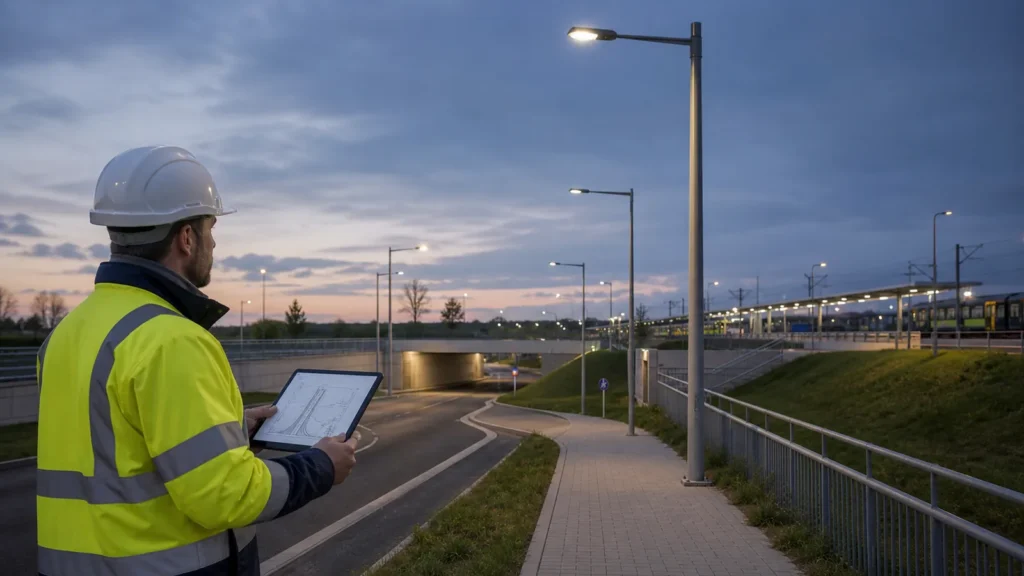
Municipal solar street lighting acceptance and handover workflow Overview Solar street lighting acceptance should not begin after the project is already installed. A reliable handover
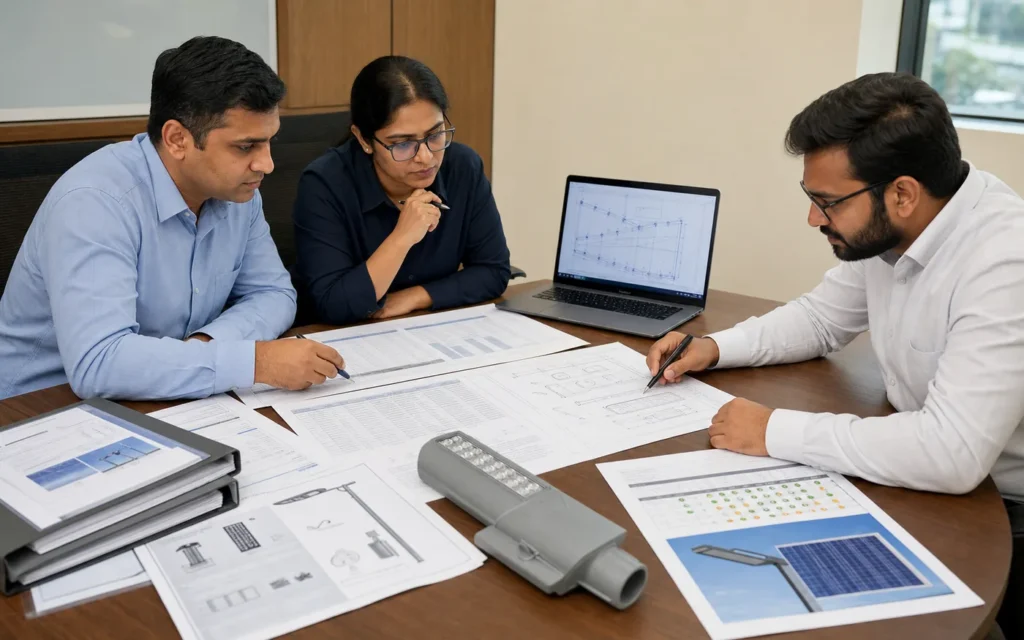
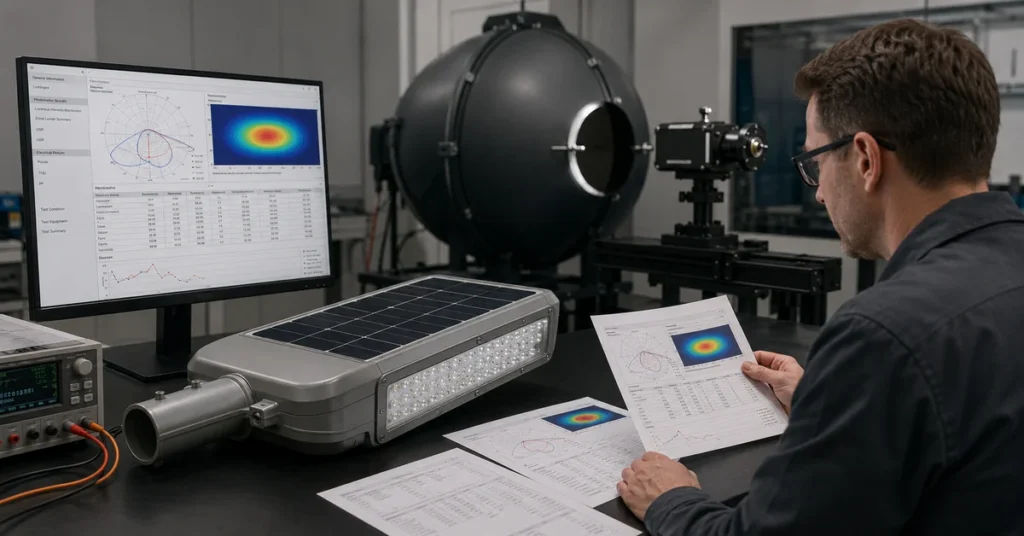
Government and EPC tender support document flow Overview Choosing solar street lights for a government tender is not the same as selecting a product from

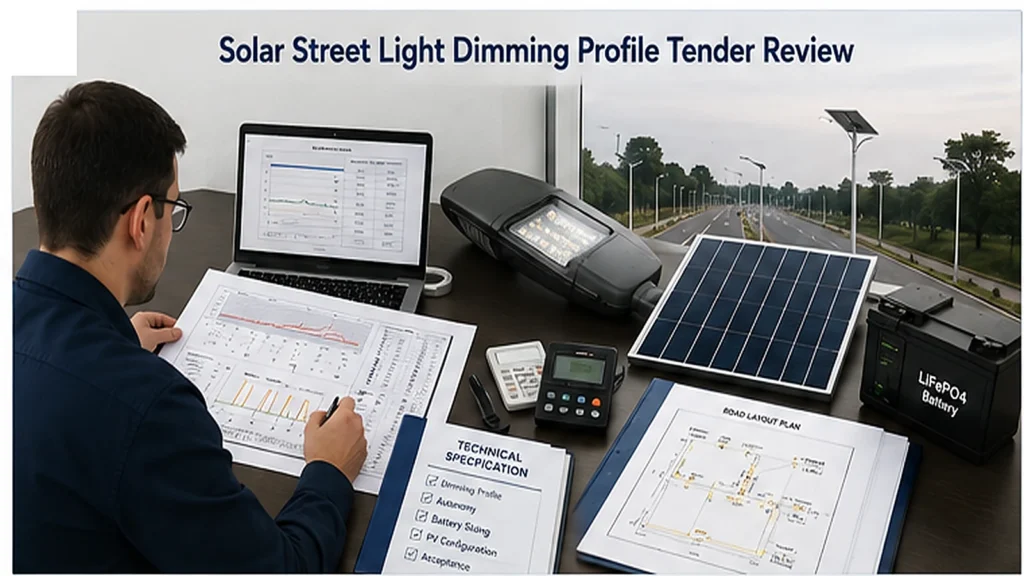
Quick Answer A solar street light dimming profile controls how bright the light runs during different parts of the night. A common project profile may

Quick Answer To test solar street lights before pole installation, assemble the lamp, solar panel, battery, controller, and cables on the ground, then check battery

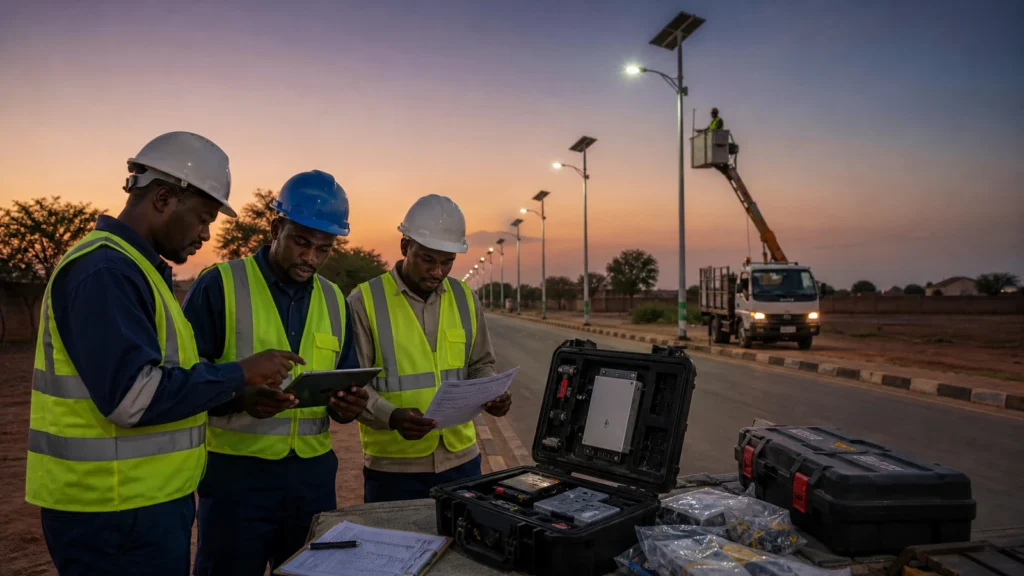
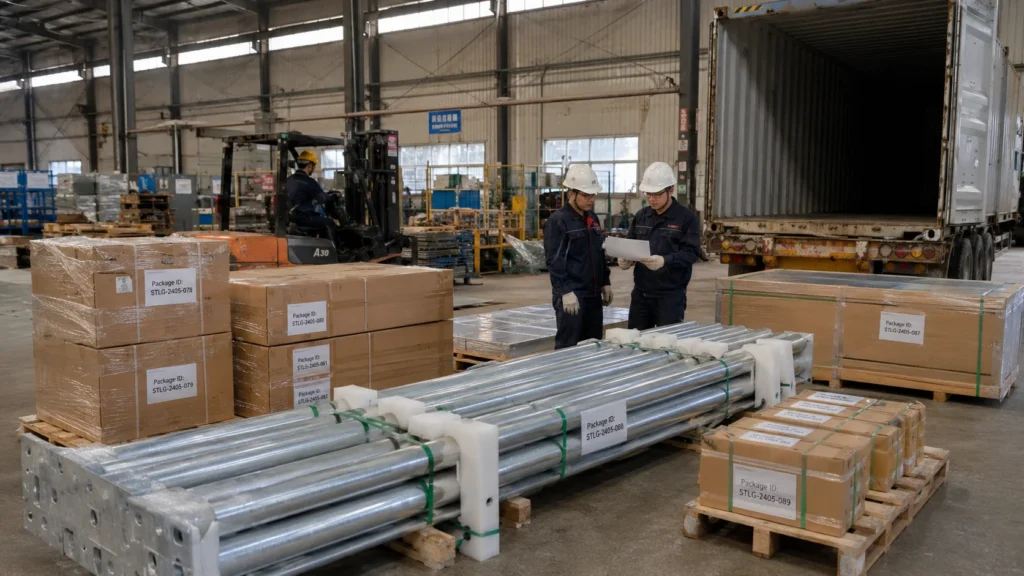
Quick Answer A solar street light commissioning checklist should cover project documents, ground-level testing, battery and solar panel verification, controller profile confirmation, pole and mounting

Quick Answer Solar street lights in desert climates require more active maintenance than systems installed in mild urban environments. The main maintenance tasks include solar

Quick Answer Smart street lighting control can use 4G/5G, LoRaWAN, Zigbee, NB-IoT, or other communication methods. There is no single best option for every government,
WhatsApp us
Share your project location, road width, pole height, spacing, working hours, backup days, and required documents. Our team can help prepare configuration guidance, datasheets, IES/LDT files, DIALux support when applicable, drawings, and BOQ matching notes.