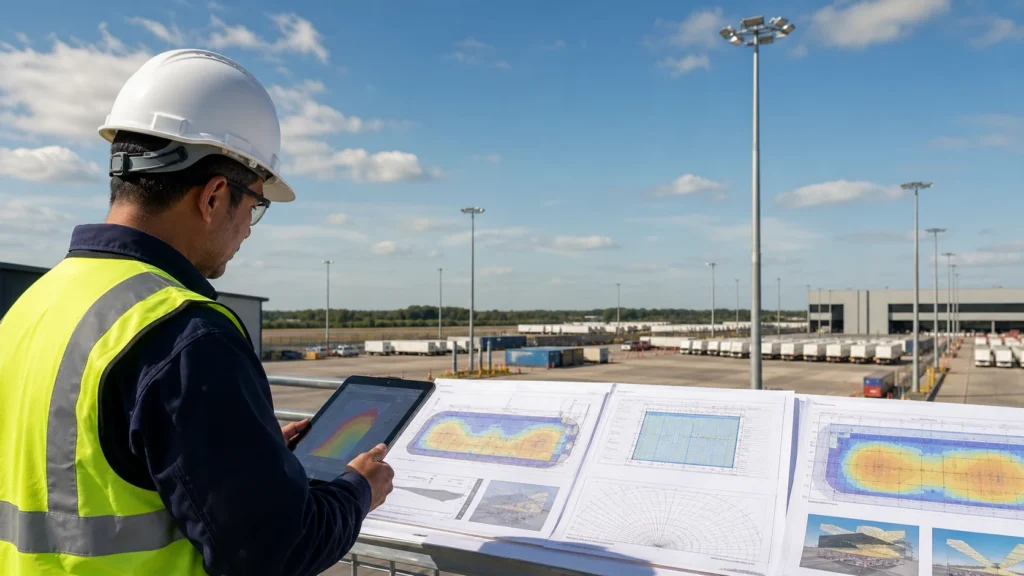
How to Specify High Mast Lighting Levels by Application
Quick Answer High mast lighting levels should not be selected from a single generic lux table. A professional specification should define the required lighting metric,

Quick Answer High mast lighting levels should not be selected from a single generic lux table. A professional specification should define the required lighting metric,
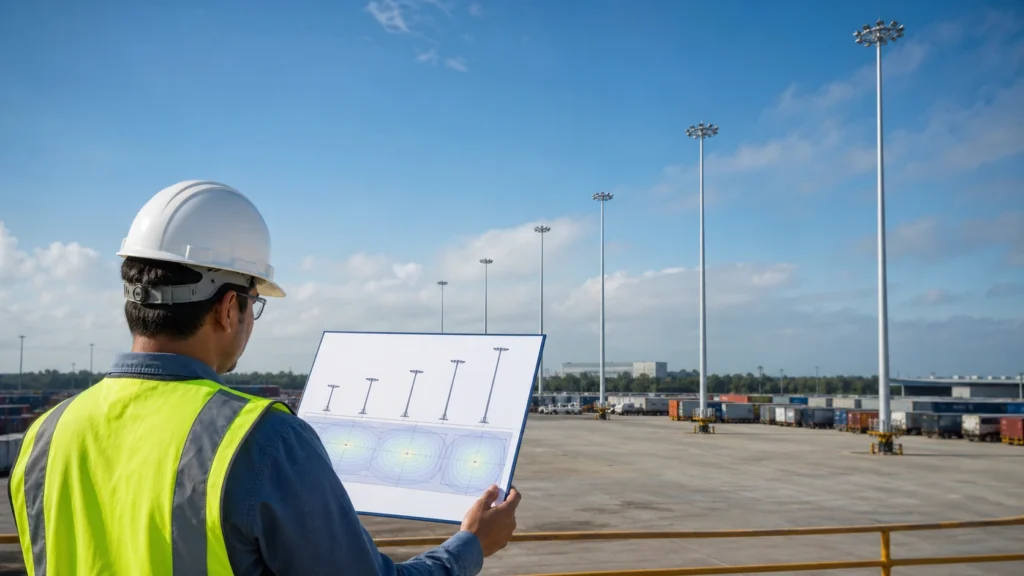
Quick Answer High mast pole height is selected according to project area, required maintained illuminance, pole spacing, luminaire optics, glare control, wind-load condition, foundation feasibility,
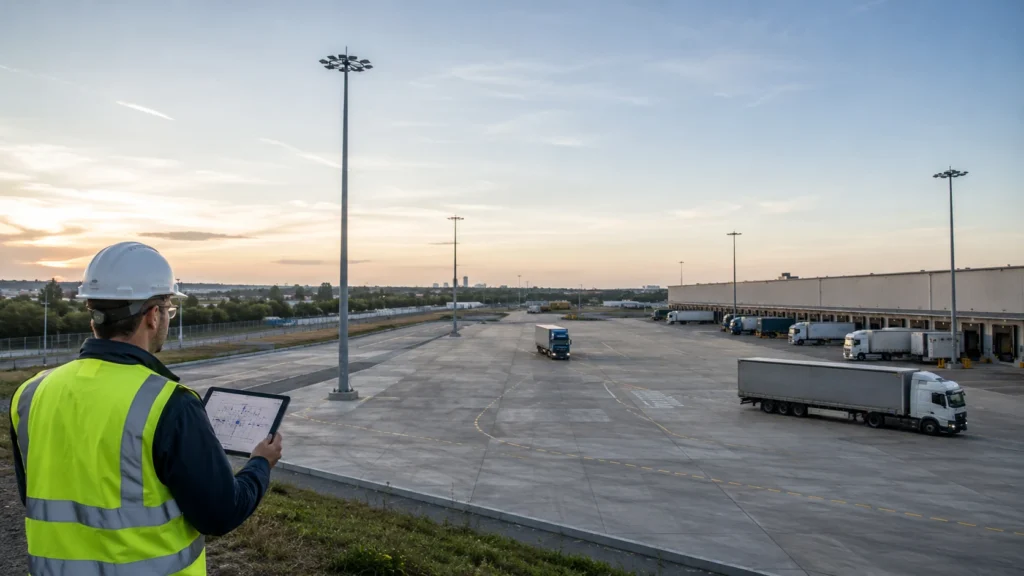
Quick Answer High mast lighting layout is not only about how far apart the poles should be. A professional layout must also decide where each
High Mast Lighting Layout Design Guide: Pole Placement, Aiming & Coverage Zones Quick Answer A high mast lighting layout is not only about pole spacing.
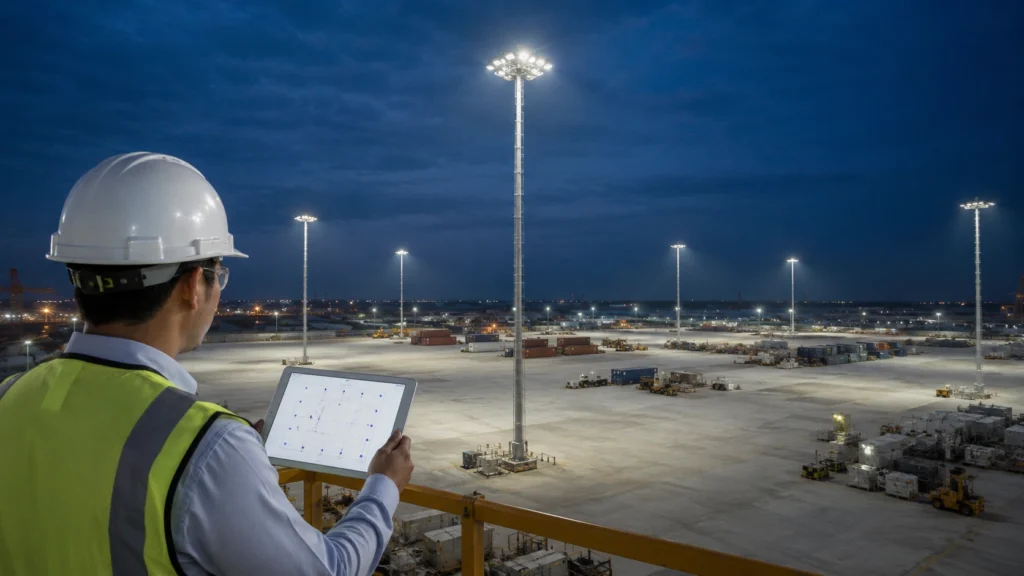
Quick Answer There is no standard pole spacing that applies to every high mast lighting project. During concept planning, engineers may test preliminary spacing in
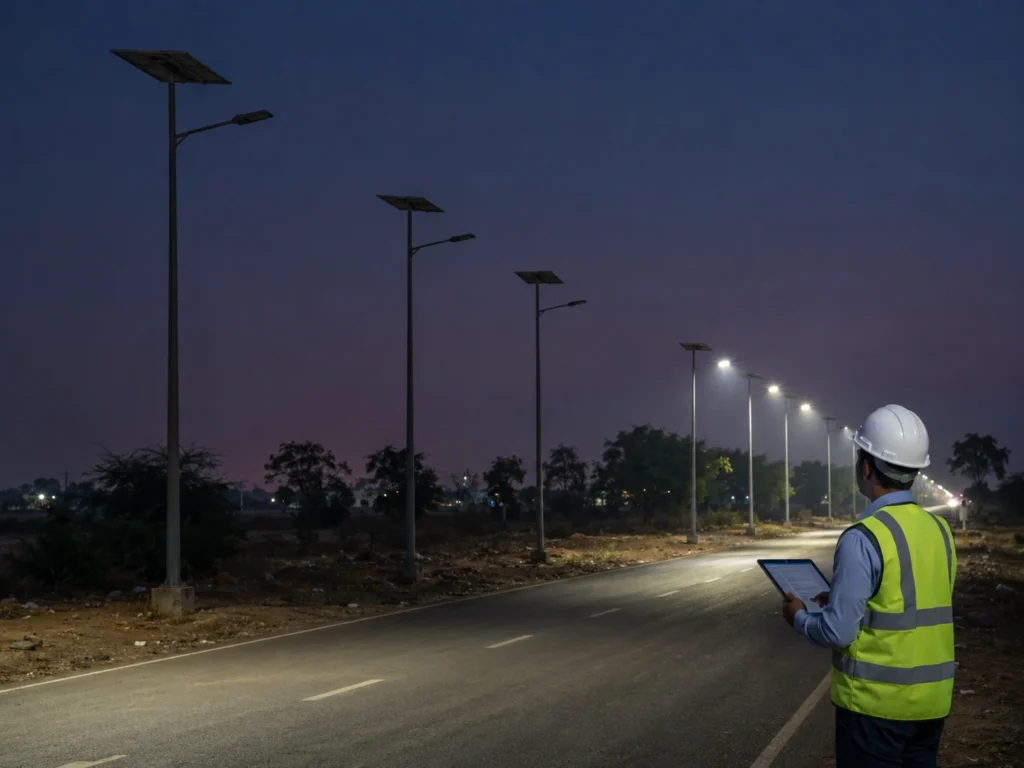
Quick Answer When multiple solar street lights fail in one area, the first step is not to assume a product defect. A group failure may
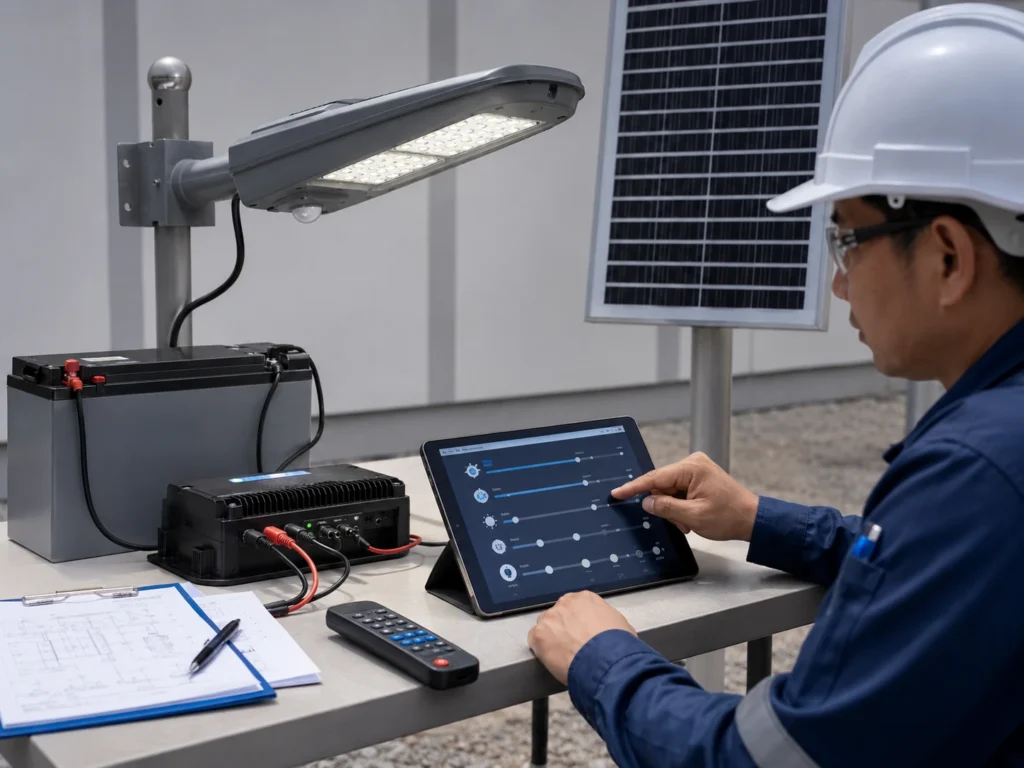
Quick Answer The main motion sensor settings for solar street lights are standby brightness, boost brightness, delay time, sensitivity, and day-night activation logic. Standby brightness
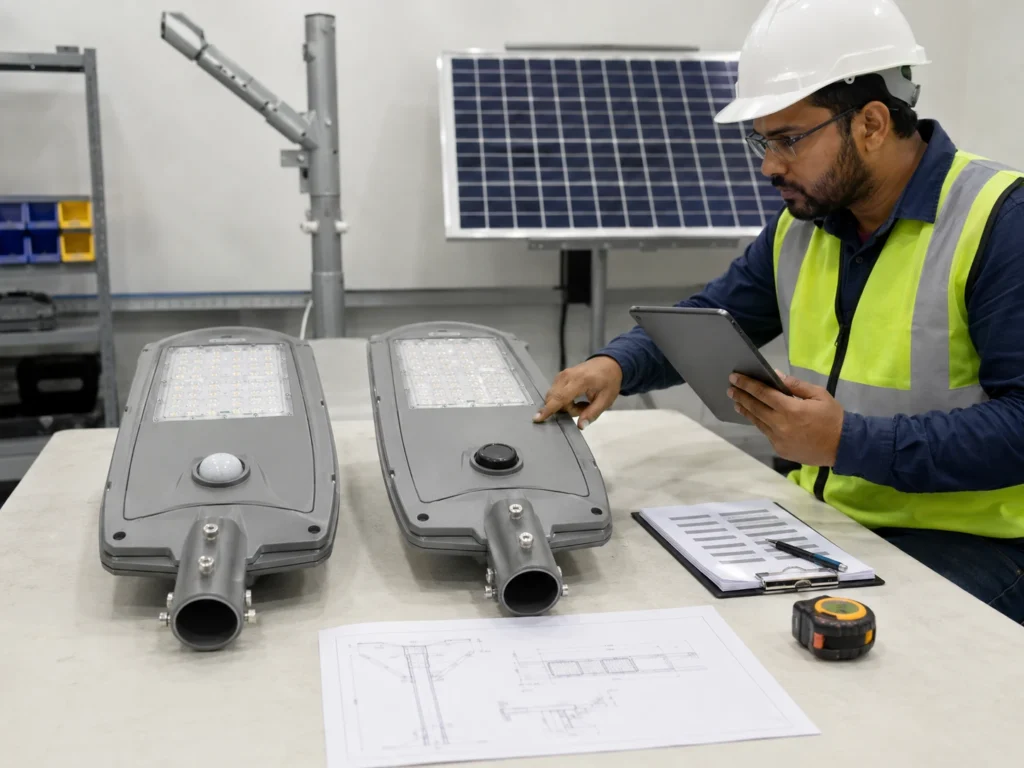
Quick Answer PIR and radar motion sensors both help solar street lights reduce energy use by keeping the lamp at lower standby brightness and boosting
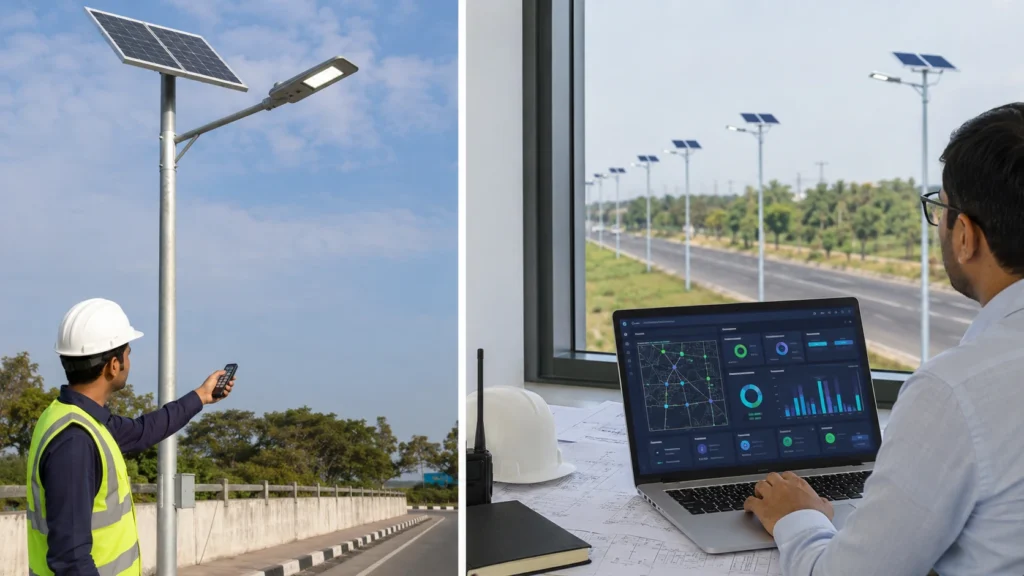
Quick Answer Remote control is usually enough for small solar street light projects where installers only need to set AUTO mode, timer schedules, dimming levels,
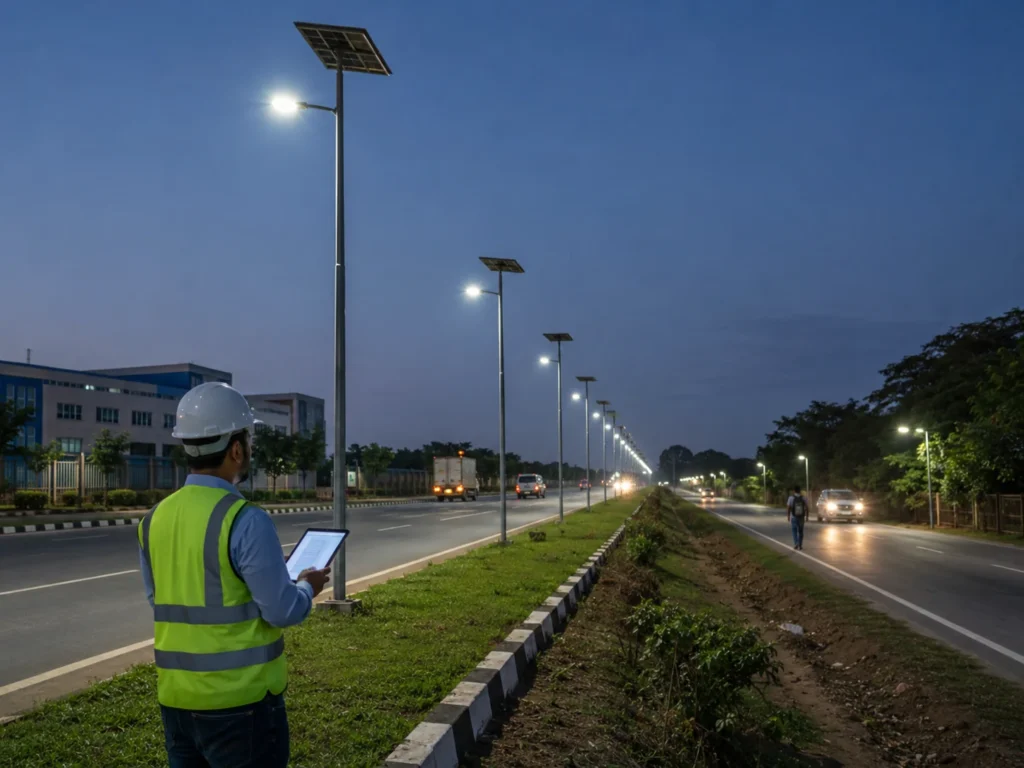
Quick Answer The best mode depends mainly on traffic pattern and road safety requirement. Timer mode is usually better for high-traffic roads, main municipal roads,