
Solar Street Light Systems for EPC, Municipal & Public Lighting Projects
Start with your project conditions
Choose Your Solar System Architecture
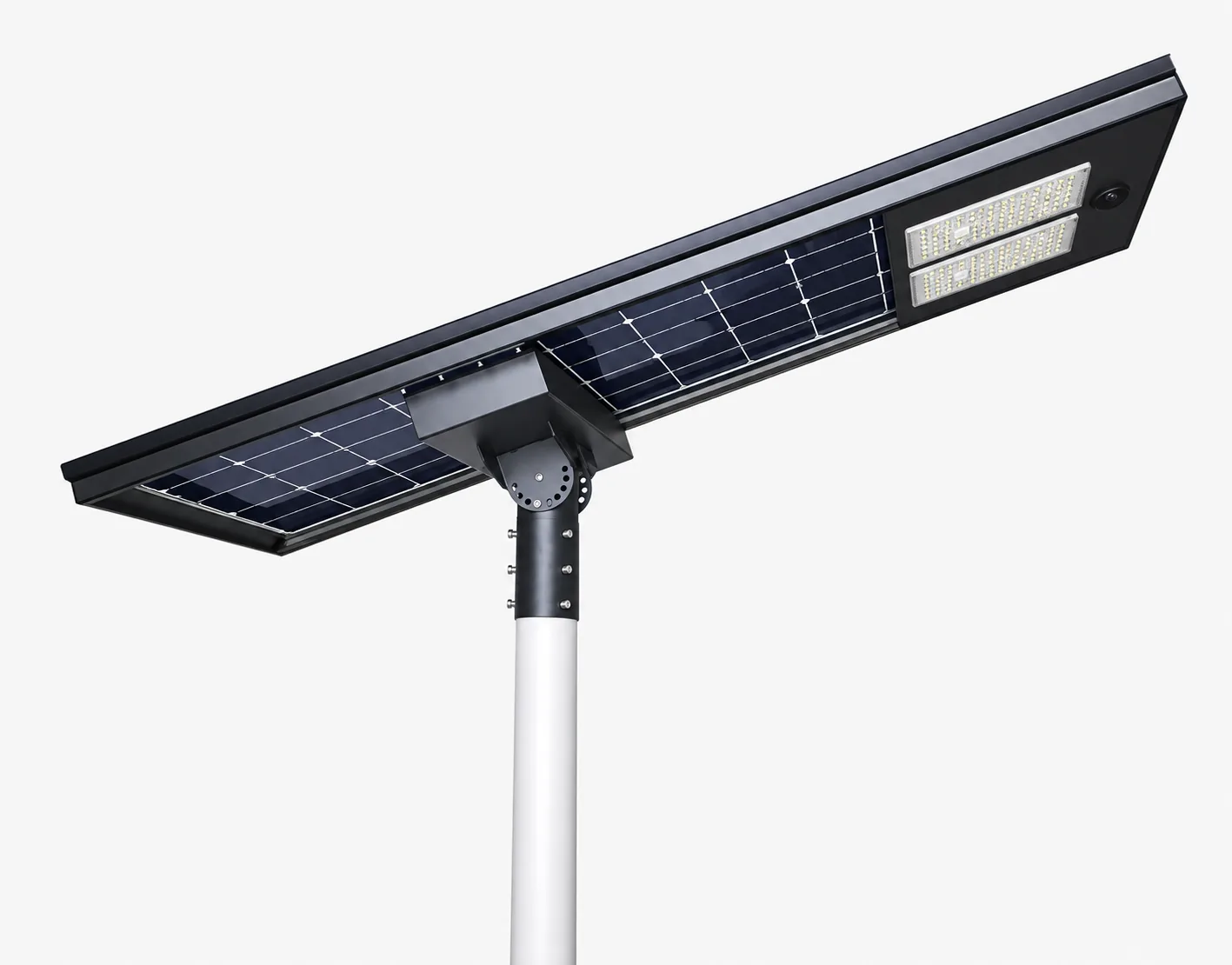
All-in-One
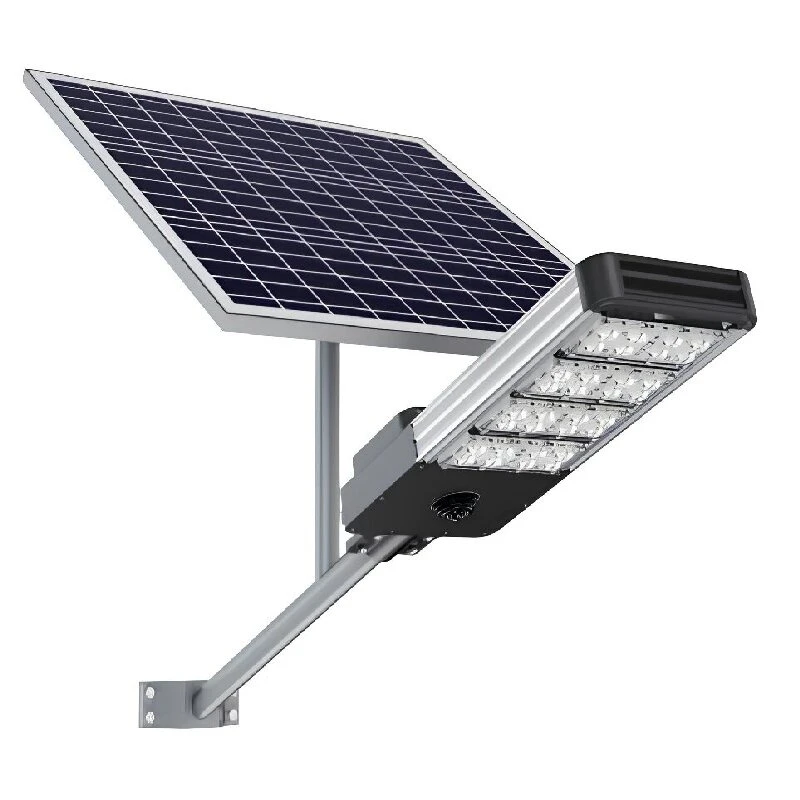
All-in-Two
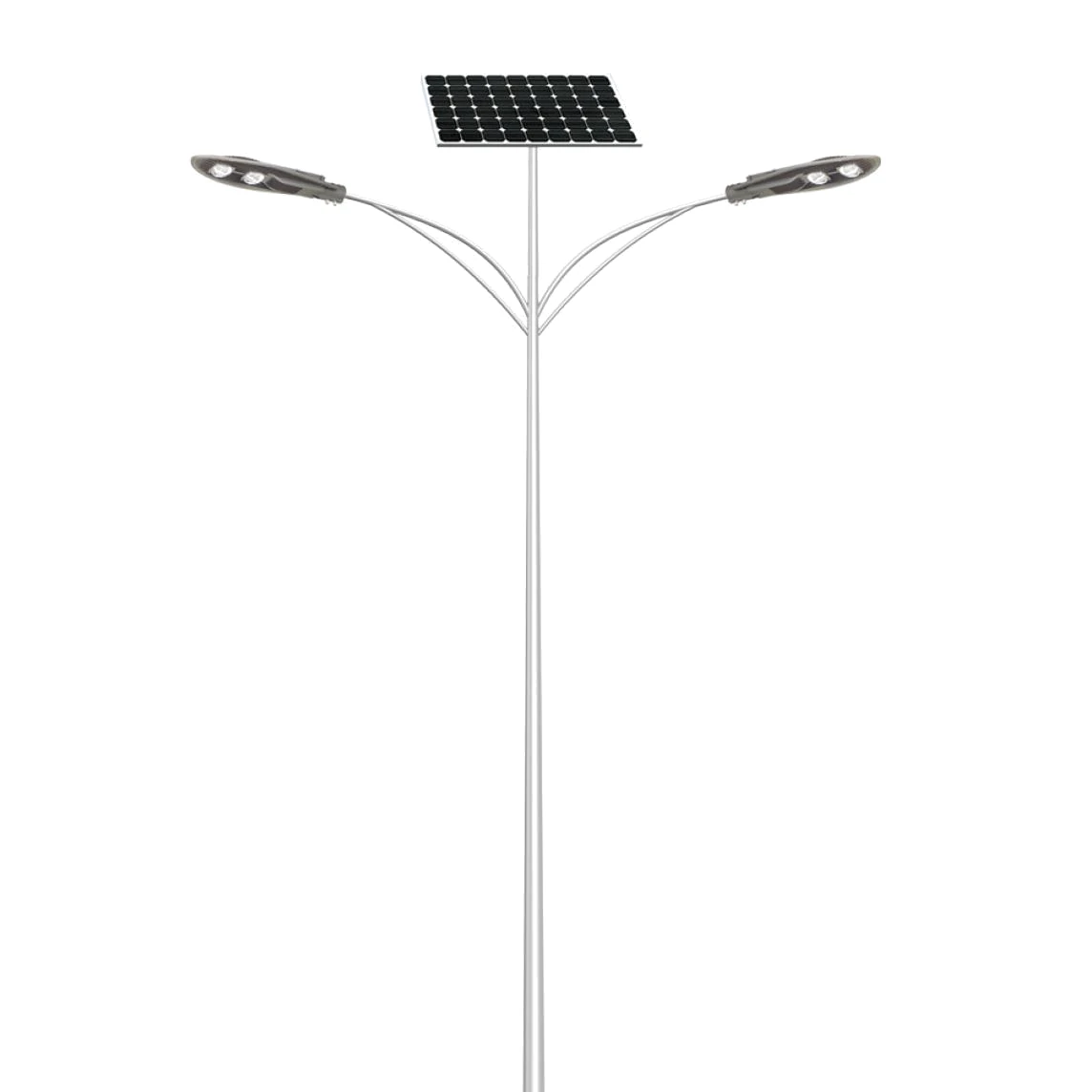
Split
Solar Energy & Autonomy Design Logic
- 01Lighting Requirement
- 02LED Operating Profile
- 03Working Hours
- 04Dimming Profile
- 05Local Solar Resource
- 06PV Generation
- 07Battery Storage
- 08Autonomy / Control
- 09Project-Specific Configuration
Define the lighting duty
Review the solar resource
Match usable battery energy to the backup target
Coordinate the controller and environment
AIO vs AIT vs Split: Procurement Comparison
| Selection factor | All-in-One | All-in-Two | Split |
|---|---|---|---|
| Architecture | All-in-OneIntegrated luminaire, PV and battery assembly | All-in-TwoSeparate PV panel; battery arrangement linked to the luminaire design | SplitSeparate luminaire, PV and battery components |
| Installation coordination | All-in-OneFewer separate component mounting tasks; verify the complete assembly and pole interface | All-in-TwoCoordinate the luminaire and separate PV bracket | SplitCoordinate all component locations, mounting and installation responsibilities |
| PV orientation | All-in-OneLinked to the integrated assembly and its adjustment options | All-in-TwoSeparate panel orientation, within bracket and site limits | SplitSeparate panel placement and orientation, subject to the site design |
| Battery placement | All-in-OneWithin the integrated assembly; confirm service access | All-in-TwoConfirm the battery location in the selected luminaire assembly | SplitConfirm enclosure, location, protection and access |
| Wiring | All-in-OneCheck the integrated assembly and required external connections | All-in-TwoPlan the PV-to-luminaire cable route and connections | SplitPlan interconnecting cables, protection and connection points |
| Maintenance access | All-in-OneReview access to the complete assembly and replaceable components | All-in-TwoReview access to the luminaire/battery and separate PV panel | SplitReview access to each component and the protected battery location |
| Security and site coordination | All-in-OneReview fixing security and safe servicing at height | All-in-TwoReview separate panel fixing and exposed cable routes | SplitReview battery security, cable protection and component responsibilities |
| Project-fit considerations | All-in-OneConsider integration, solar exposure and the service method | All-in-TwoConsider separate panel positioning with a compact luminaire arrangement | SplitConsider placement flexibility alongside installation and maintenance capacity |
| Engineering and documents | All-in-OneMatch the selected model and operating configuration to the document request | All-in-TwoMatch the luminaire, panel arrangement and configuration to the document request | SplitMatch the component schedule, wiring arrangement and configuration to the document request |
Project Inputs & Risk Review
Country, city and site conditions
Road width, pole height and spacing
Working hours and dimming schedule
Autonomy or rainy-day target
Pole, mounting and installation conditions
BOQ, drawings and required documents
Engineering & Tender Documents
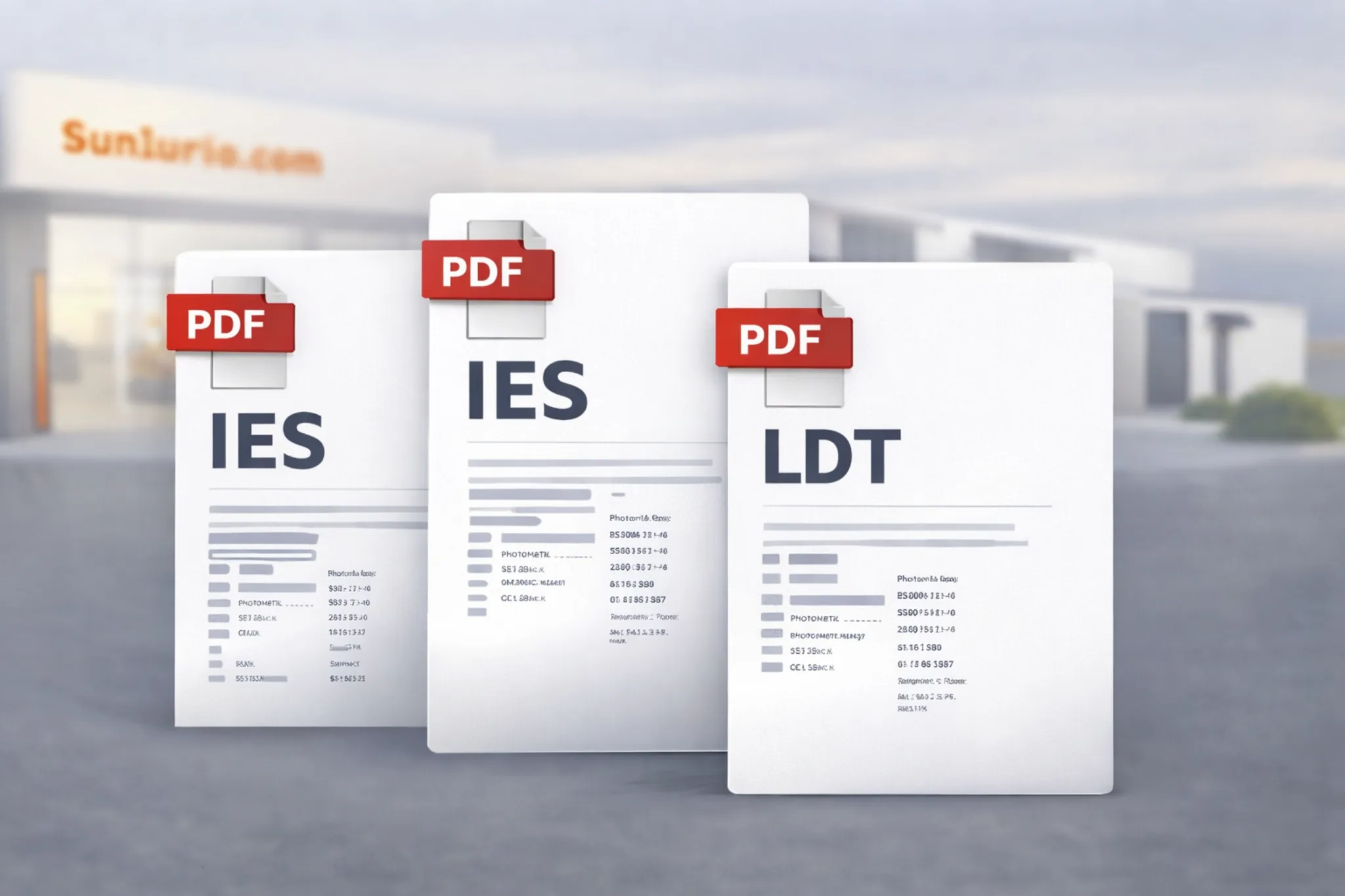
IES / LDT
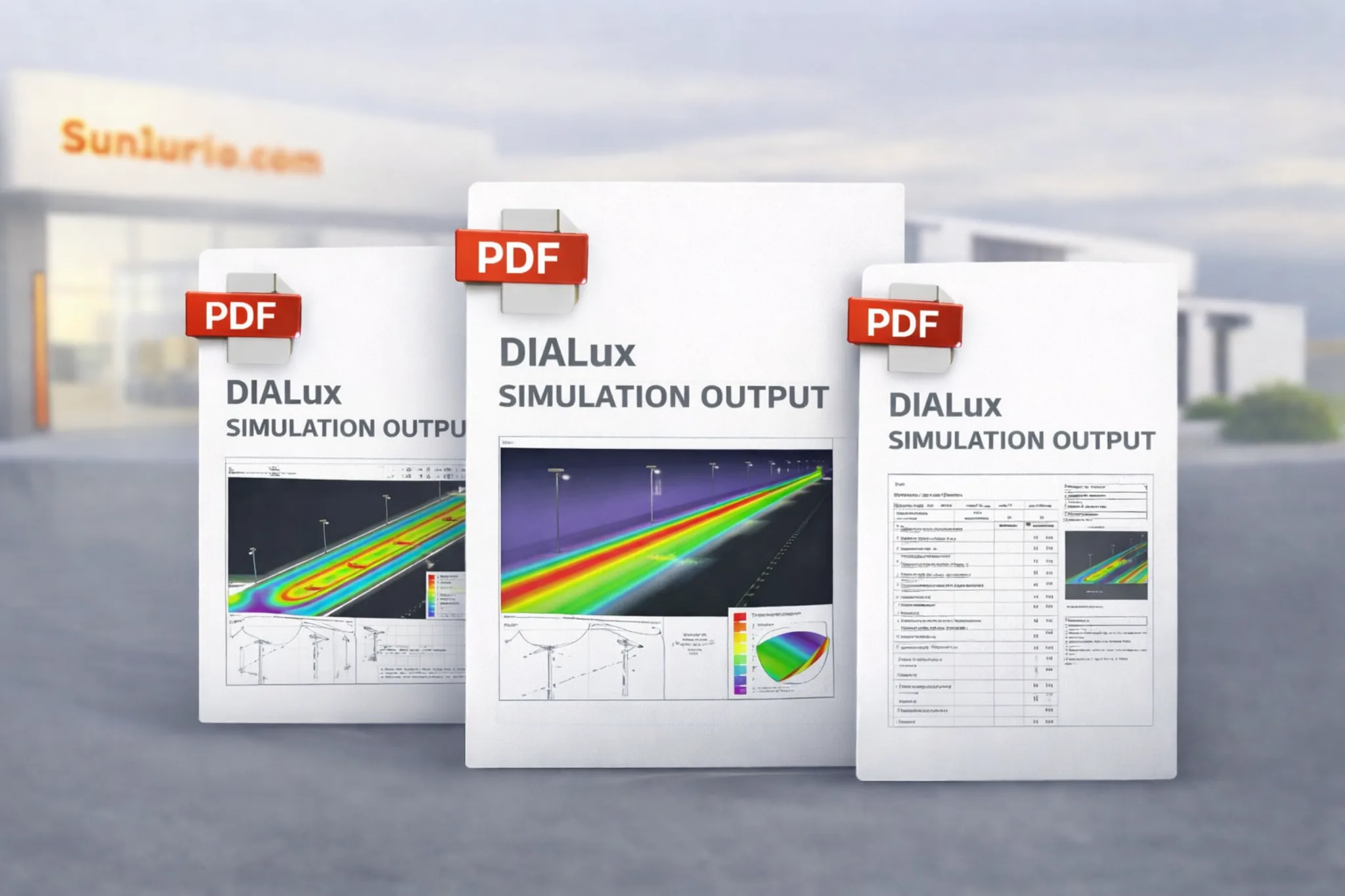
DIALux / Relux
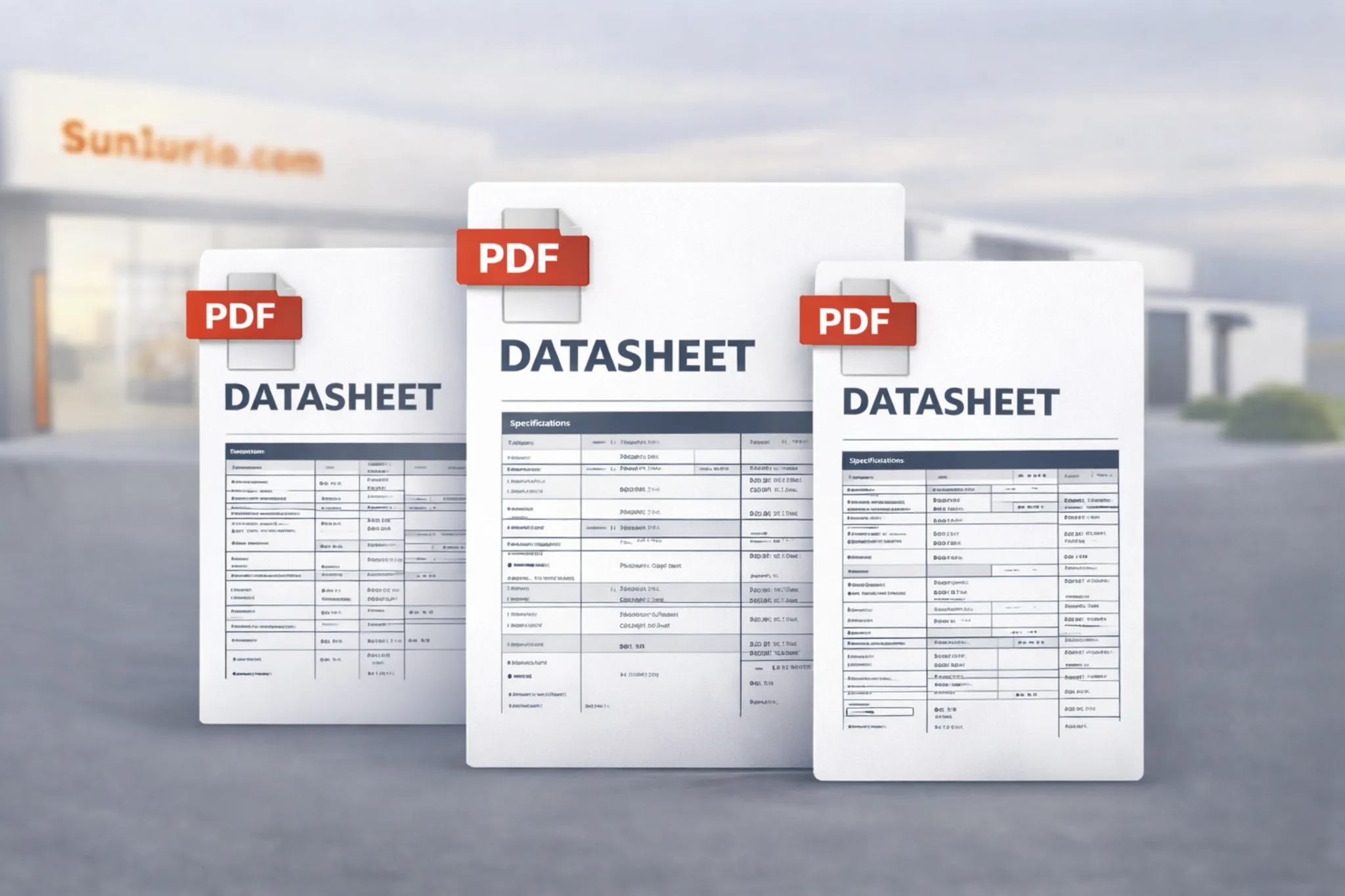
Datasheets & Drawings
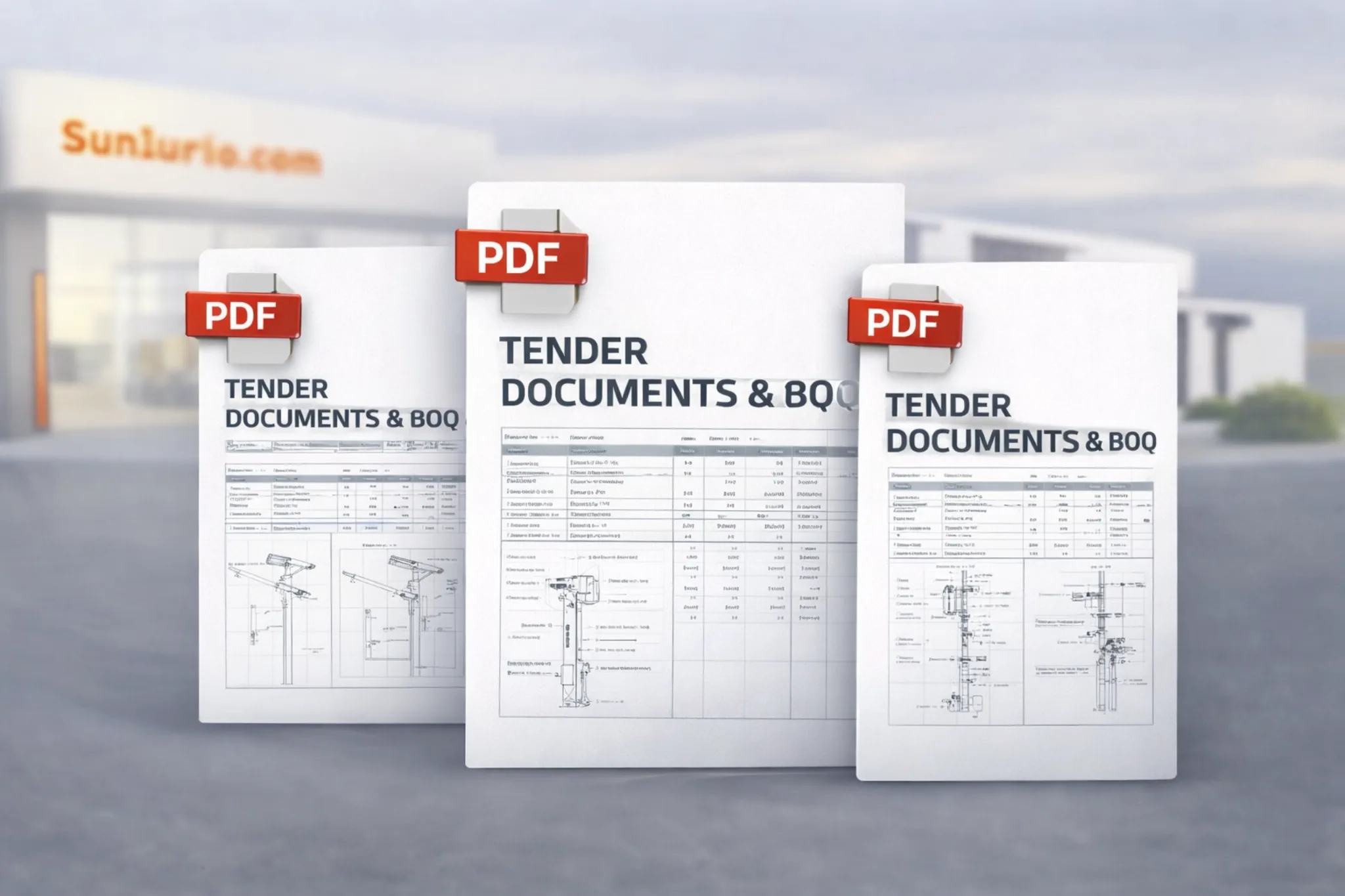
BOQ / Tender Review
Solar Project Evidence
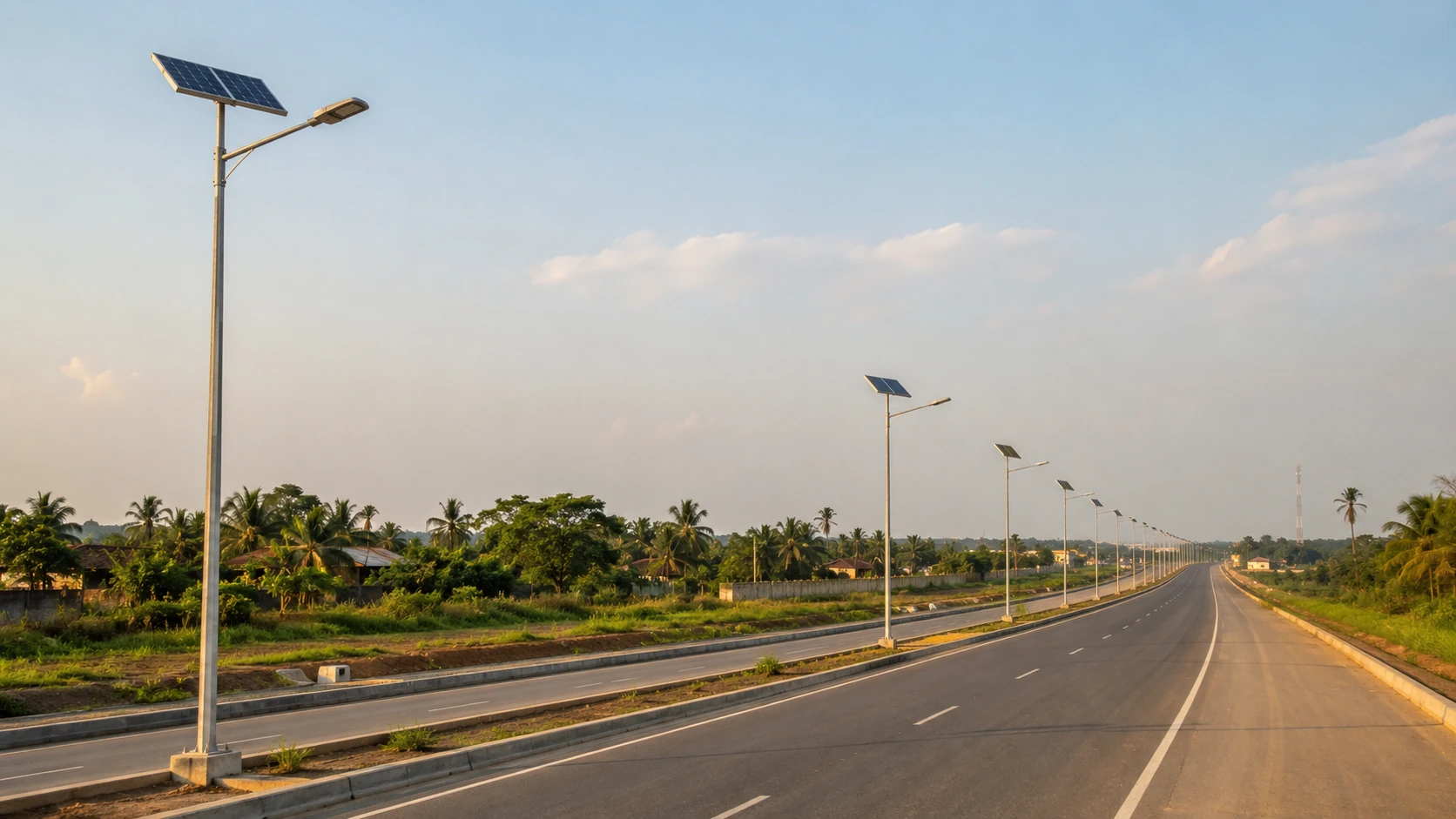
Togo — All-in-Two Road Lighting

Ghana — All-in-One Road Lighting
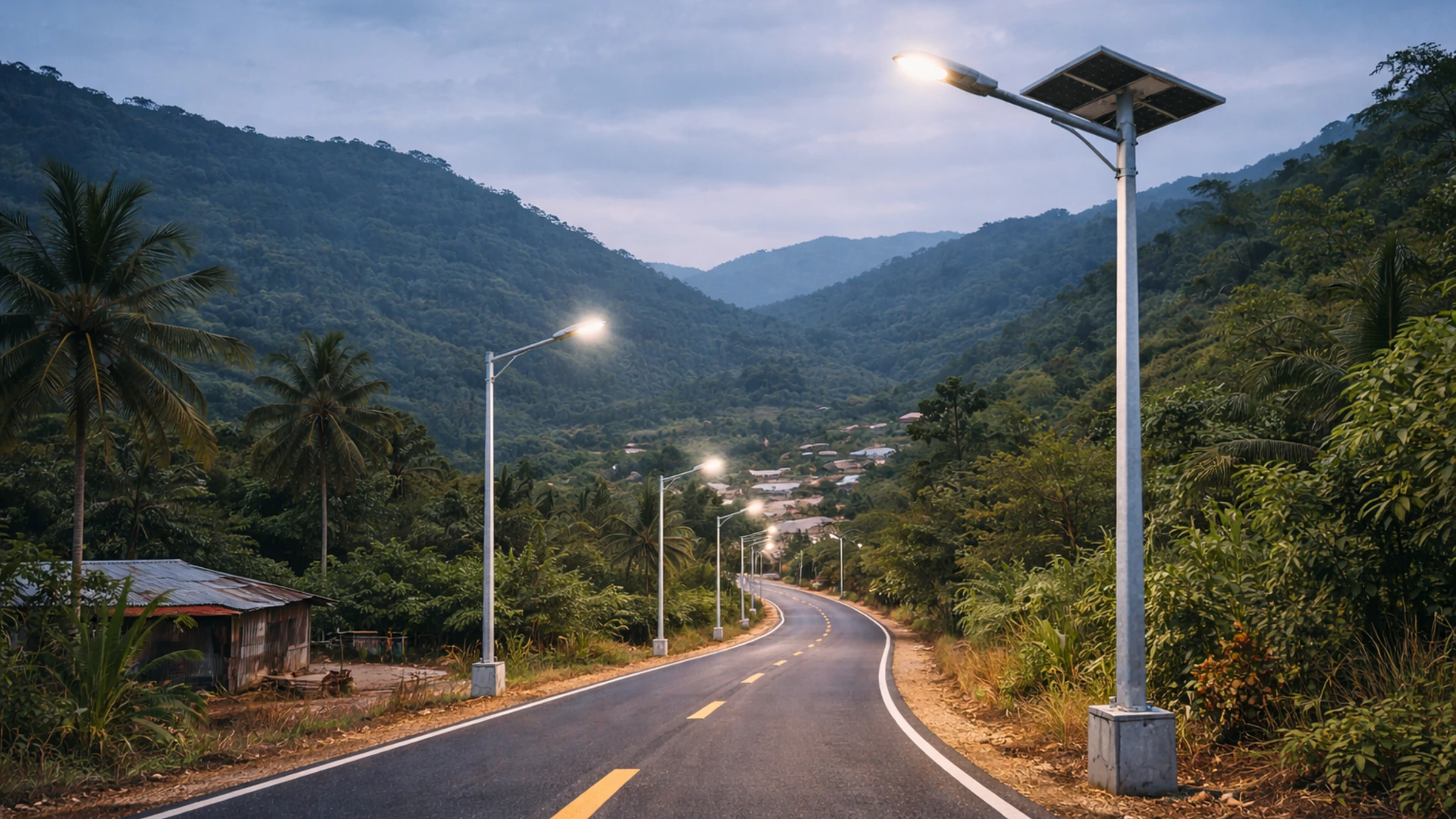
Burkina Faso — Solar Road Lighting
Solar Street Light Selection FAQ
No. All-in-One, All-in-Two and Split describe component arrangements. The suitable output and energy configuration must be confirmed for the selected model, road layout, operating schedule and local solar conditions. Do not assume that one architecture automatically provides higher power or longer backup.
No. Review road width, pole height, spacing, required lighting performance and the nightly schedule first. Then assess the architecture, PV and battery configuration, installation conditions and maintenance access.
Compare solar exposure, panel orientation, component placement, cable routing and service access. All-in-One provides an integrated arrangement; All-in-Two separates the PV panel; Split requires coordination of separate components. Confirm the details against the selected model and site.
Share the country and city, road width, pole height and spacing, working hours, dimming and backup target. Include a BOQ or drawing link if available. If an input is unknown, mark it “To be confirmed” and send the information you already have.
Yes. Request the relevant files or review scope against the selected model and project stage. Photometric files, simulations and drawings must correspond to the configuration under review; one generic document is not evidence for every system.
The lighting duty, working hours, dimming profile, local solar resource, seasonal conditions and backup target all matter. Controller settings, battery operating limits and temperature also need review. A backup-days statement is meaningful only with its operating assumptions.
Share the BOQ, drawings and specification for review. The configuration, component schedule and document list can then be checked for alignment, with any missing inputs or exceptions identified before procurement.
Request a Solar Configuration Review
Share your project inputs and the documents you need. Our team can review the suitable architecture and identify the configuration details that still need confirmation.
- System architecture review
- Energy / autonomy inputs
- IES / DIALux / document path
- BOQ / tender matching
Final configuration and project files depend on confirmed project inputs.