
Why Solar Street Lights Stop Working After Cloudy or Rainy Days
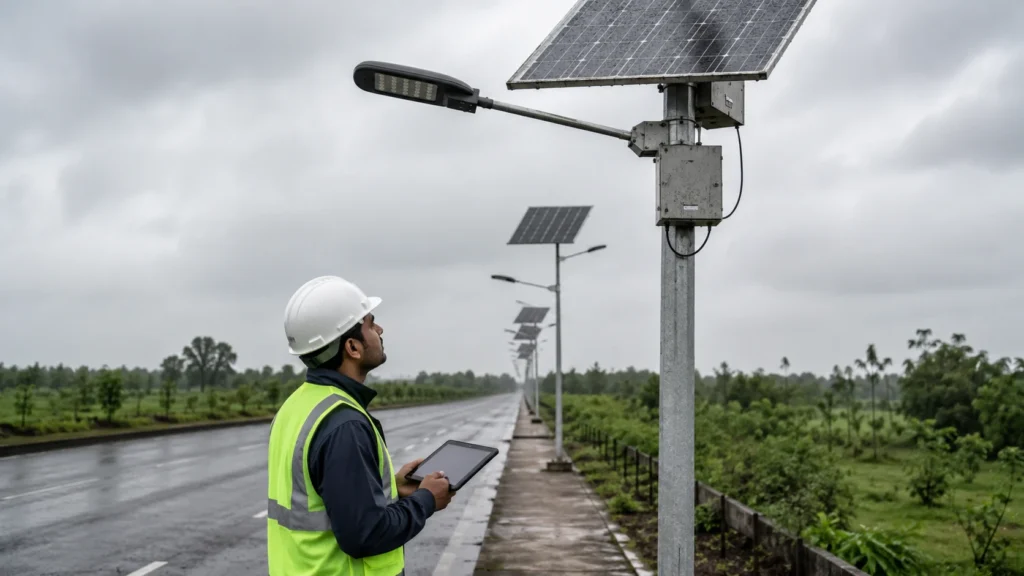
Solar street lights may stop working after cloudy or rainy days because the battery receives less solar charging while the light still consumes energy every night. After several low-charging days, the controller may reduce brightness, shorten runtime, or shut the lamp down to protect the battery from deep discharge. For EPC, municipal, and tender projects, […]
Solar Street Lighting Acceptance & Handover Checklist
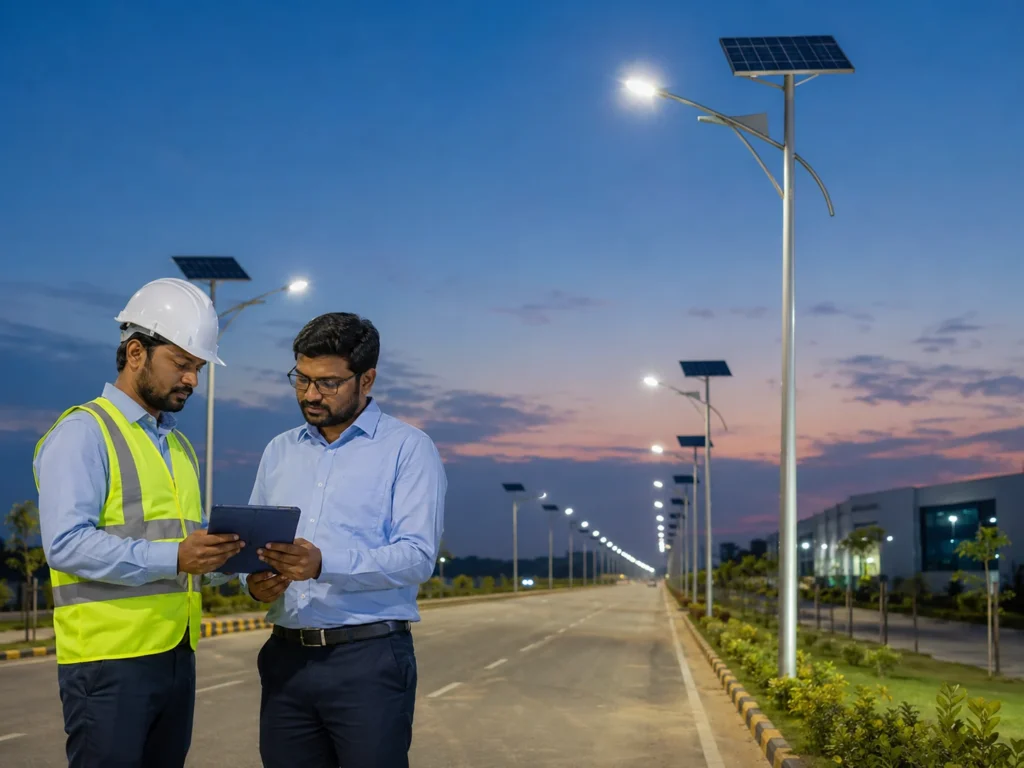
Quick Answer Solar street lighting acceptance should not start only after installation is finished. For EPC contractors, municipal buyers, consultants, and project owners, acceptance should verify whether the delivered solar street lights match the approved BOQ, datasheets, drawings, controller profile, site installation requirements, and handover documents. A proper handover checklist should review pre-shipment documents, packing […]
Solar Street Light Tender Guide for Government Projects
Government and EPC tender support document flow Overview Choosing solar street lights for a government tender is not the same as selecting a product from a catalogue. A municipal solar street light project needs a lighting layout, a practical system configuration, a clear BOQ, and technical documents that reviewers can compare without guessing. This guide […]
Solar Street Light Dimming Profile Battery Autonomy
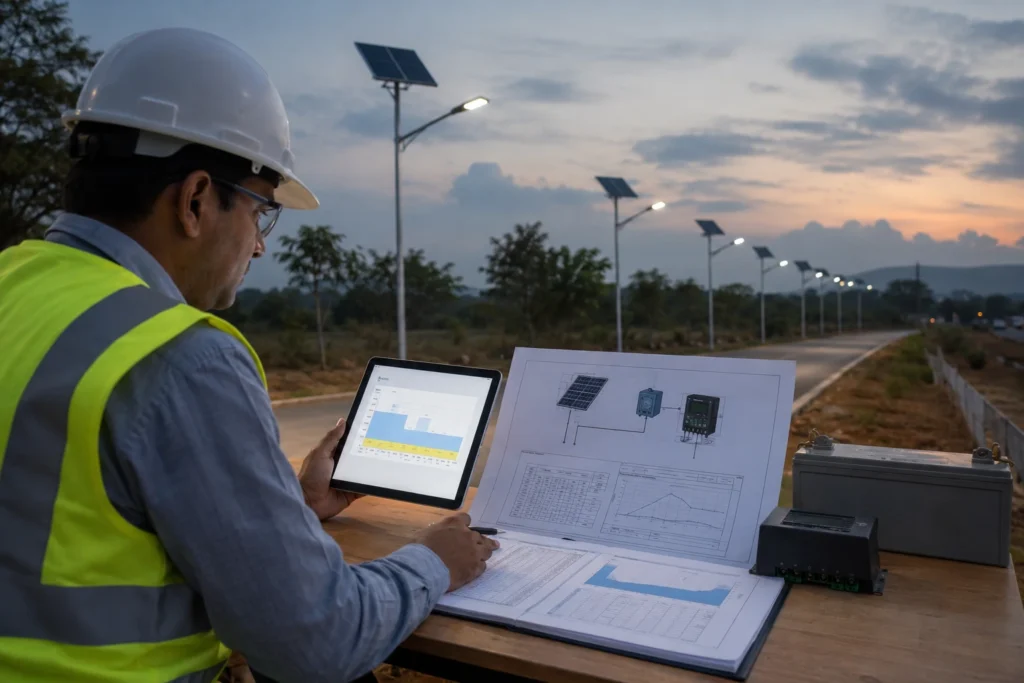
Quick Answer A solar street light dimming profile controls how bright the light runs during different parts of the night. A common project profile may use high brightness during early evening traffic, lower output after midnight, and motion-triggered full brightness when pedestrians or vehicles are detected. For EPC, municipal, and tender projects, the dimming profile […]
How to Test Solar Street Lights Before Pole Installation
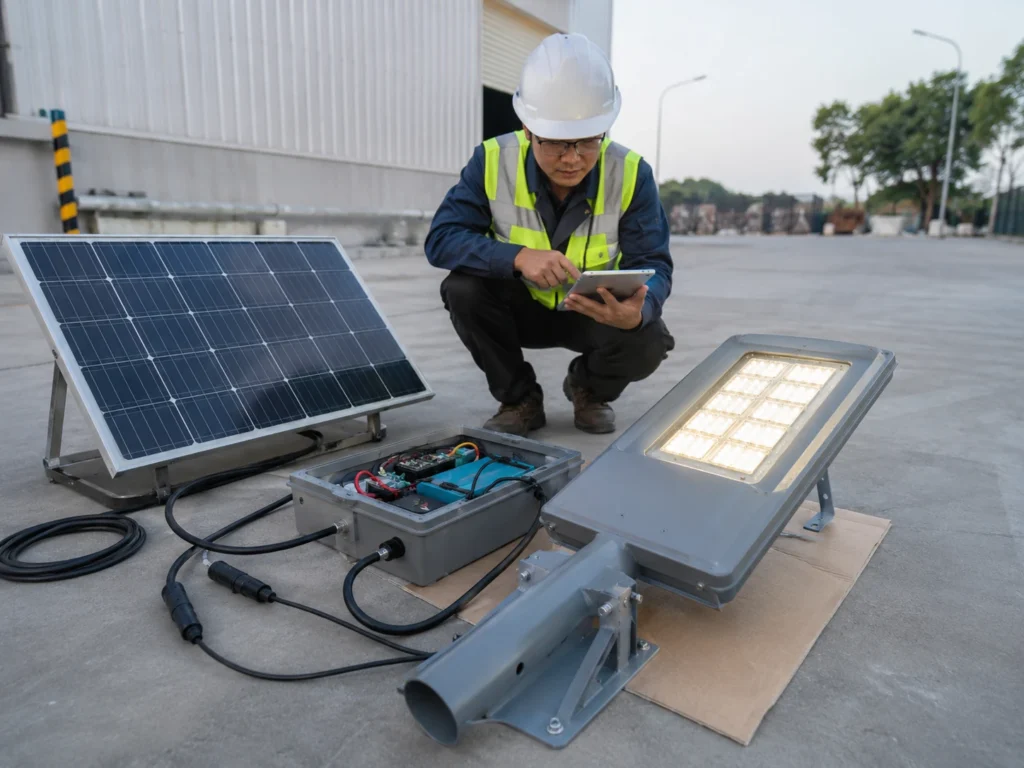
Quick Answer To test solar street lights before pole installation, assemble the lamp, solar panel, battery, controller, and cables on the ground, then check battery status, perform a cover-and-uncover test for the photocell or daylight sensor, test LED output, confirm remote or motion sensor response, and restore the final operating mode before lifting the fixture […]
Solar Street Light Commissioning Checklist: Testing, Handover, and Project Records
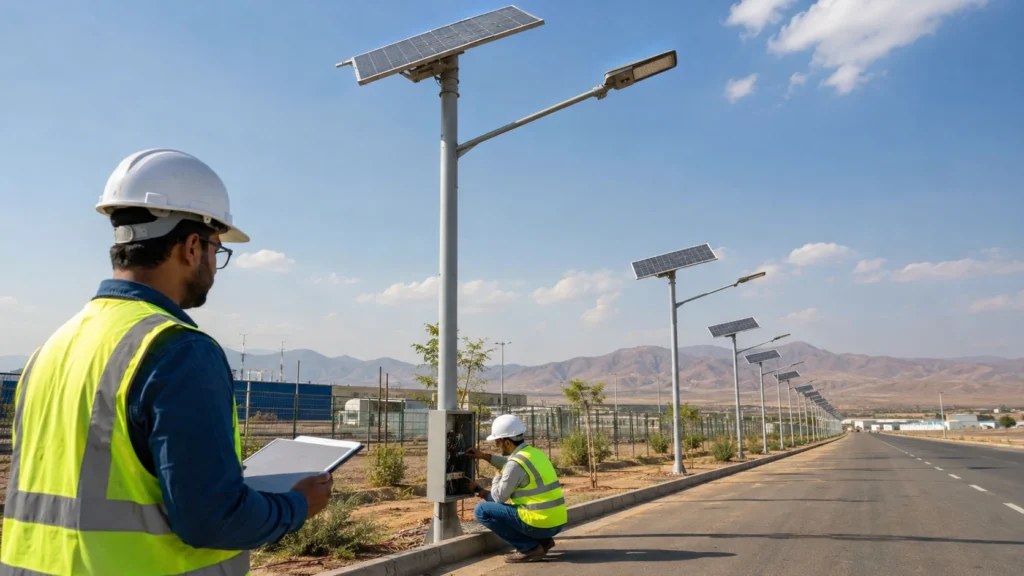
A solar street light that turns on after installation has passed only one possible check. Before an EPC team submits a commissioning package, it should also establish which equipment and settings were installed, which tests were performed, what the results mean, and whether any defects were retested and reviewed. For a municipal or infrastructure project, […]
Maintenance Requirements for Solar Street Lights in Desert Climates

Quick Answer Solar street lights in desert climates require more active maintenance than systems installed in mild urban environments. The main maintenance tasks include solar panel cleaning, battery and controller inspection, heat dissipation checks, cable and seal review, pole fastener tightening, and surface coating inspection. In many desert and semi-desert projects, solar panels should be […]
Smart Street Lighting Control: 4G/5G vs LoRaWAN vs Zigbee for Government Projects
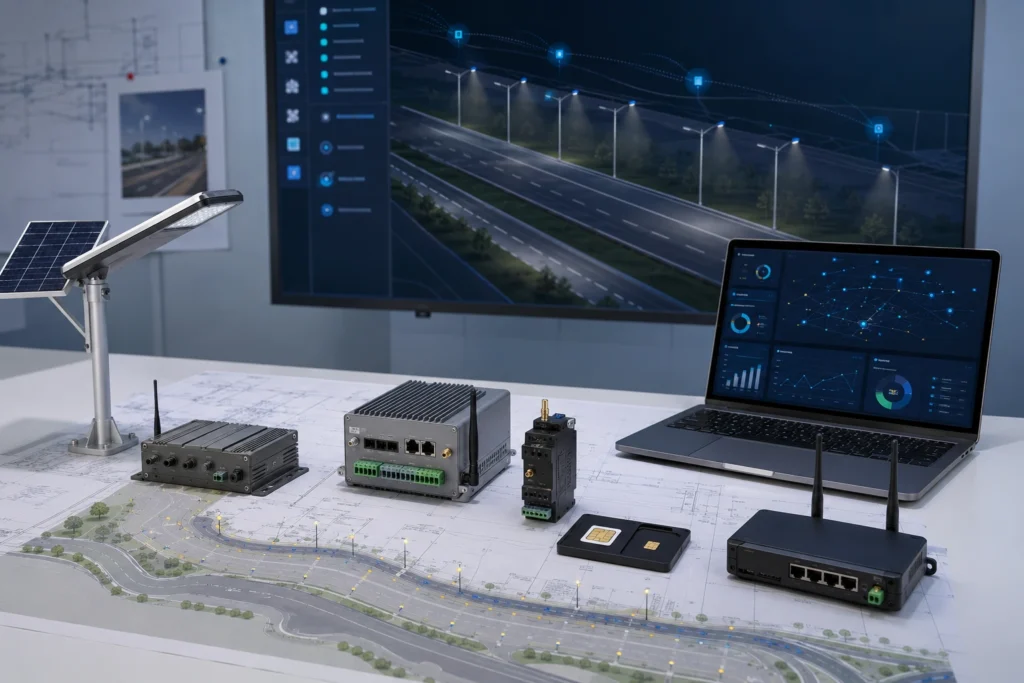
Quick Answer Smart street lighting control can use 4G/5G, LoRaWAN, Zigbee, NB-IoT, or other communication methods. There is no single best option for every government, municipal, or EPC project. For dispersed roads, highways, rural roads, and remote solar street lighting projects, 4G/5G or other cellular IoT options are often easier because each controller can connect […]
Type II vs Type III Optics for Roadway Lighting

Choosing between Type II and Type III optics is not only a product selection issue. For roadway lighting projects, optical distribution affects road coverage, uniformity, glare control, pole spacing, power demand, and whether the proposal can pass engineering review. For EPC contractors, municipal project teams, distributors, and lighting designers, the safer question is not simply: […]
When Does Hybrid Solar Street Lighting with Grid Backup Make Sense for Roadway Projects?

Quick Answer Hybrid solar street lighting with grid backup is best used when a roadway or public lighting project needs solar energy savings but cannot accept lighting failure during cloudy periods, rainy seasons, grid outages, or high-risk nighttime conditions. For most EPC and municipal projects, hybrid lighting does not mean exporting solar power to the […]