
Galvanized Street Light Pole Specifications: What to Confirm Before Quotation
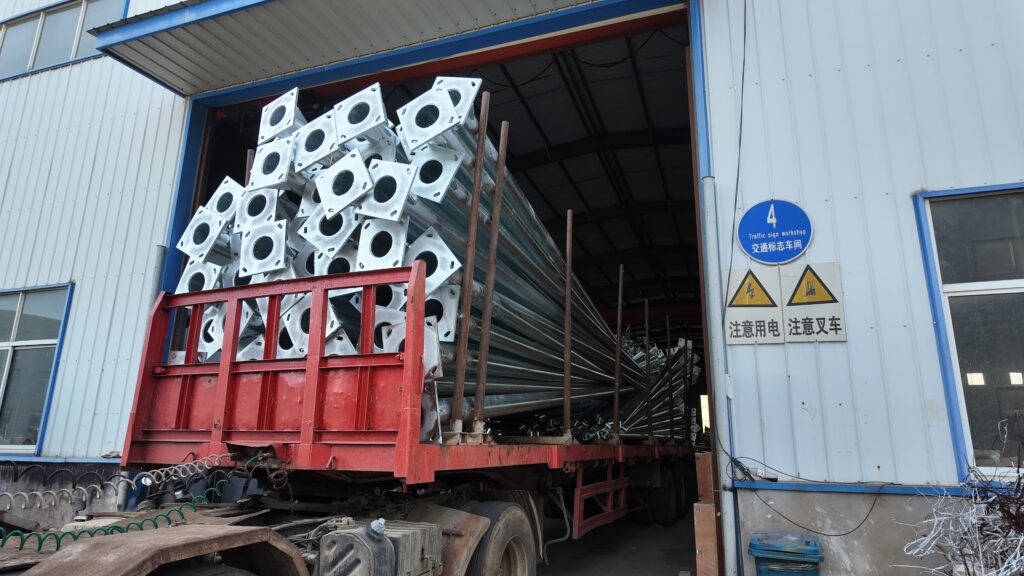
An RFQ that says “300 pcs, 9 m galvanized street light poles” may look clear, but it is still not detailed enough for three manufacturers to quote exactly the same pole. Pole height is only one part of the specification. Two 9 m galvanized poles can differ in steel grade, shaft geometry, wall thickness, arm […]
High Mast Pole Foundation Design: What Must Be Confirmed Before Construction
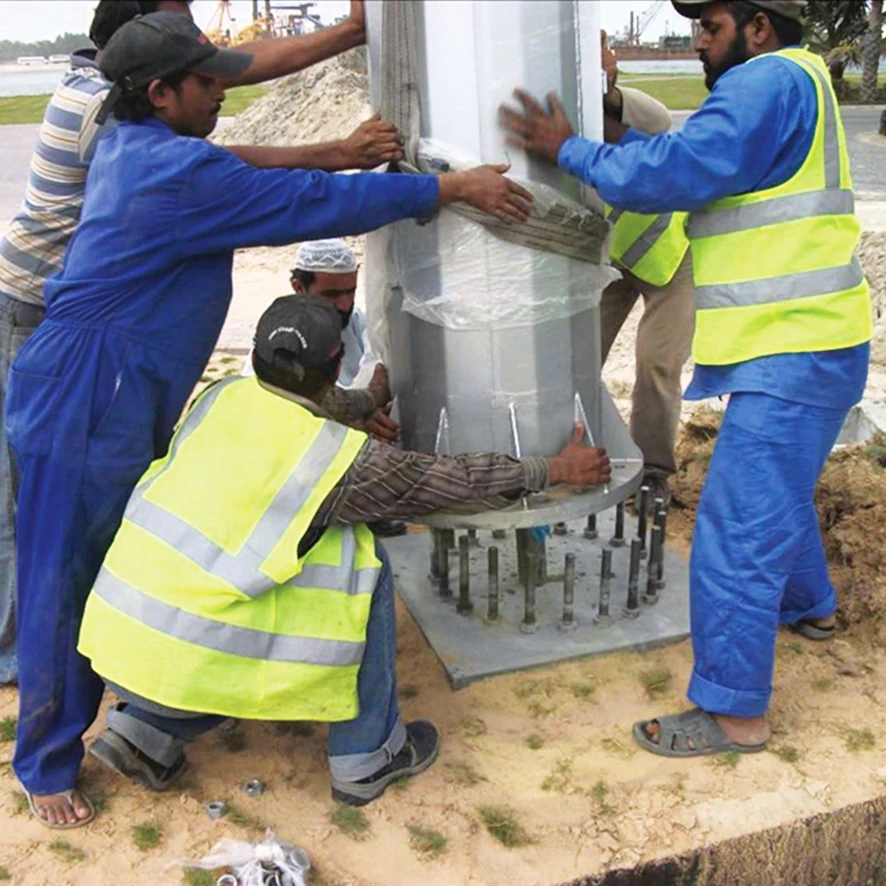
A 20 m, 25 m or 30 m high mast does not automatically come with one standard foundation size. Before excavation, anchor-bolt fabrication or concrete work begins, the project team needs to confirm what is actually being installed above ground, what loads the mast transfers to its base, and what ground conditions the foundation must […]
Shipping and Packing for Street Lighting Projects: How to Reduce Missing Parts and Damage Claims
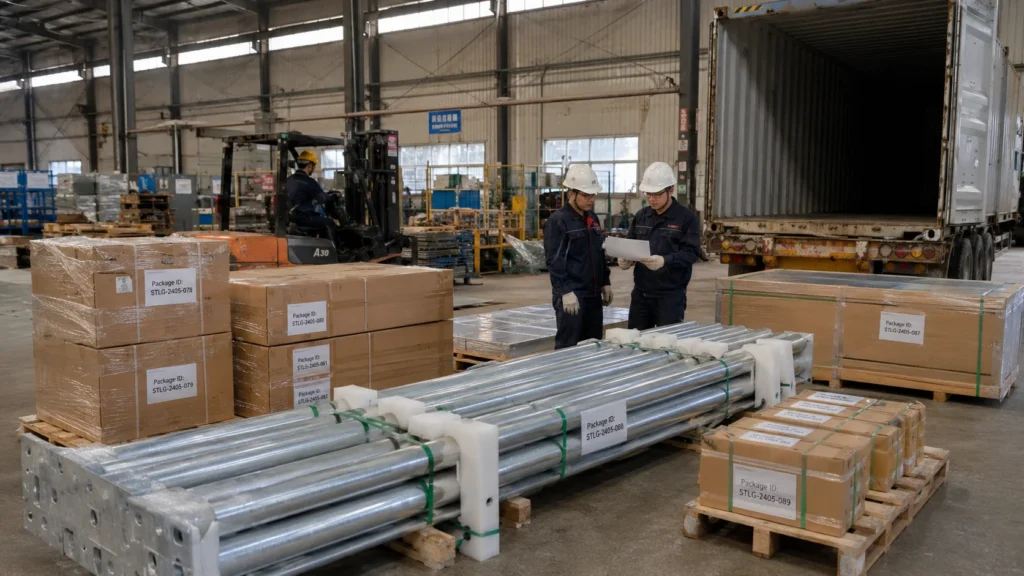
Shipping damage is not the only delivery risk in a street lighting project. A shipment may arrive with intact cartons but still delay installation because brackets are mixed, fasteners are missing, packages cannot be matched to the BOQ, or spare parts are not clearly separated from the contracted quantity. Reliable delivery depends on traceability as […]
Shipping and Packing for Street Lighting Projects: How to Reduce Missing Parts and Damage Claims
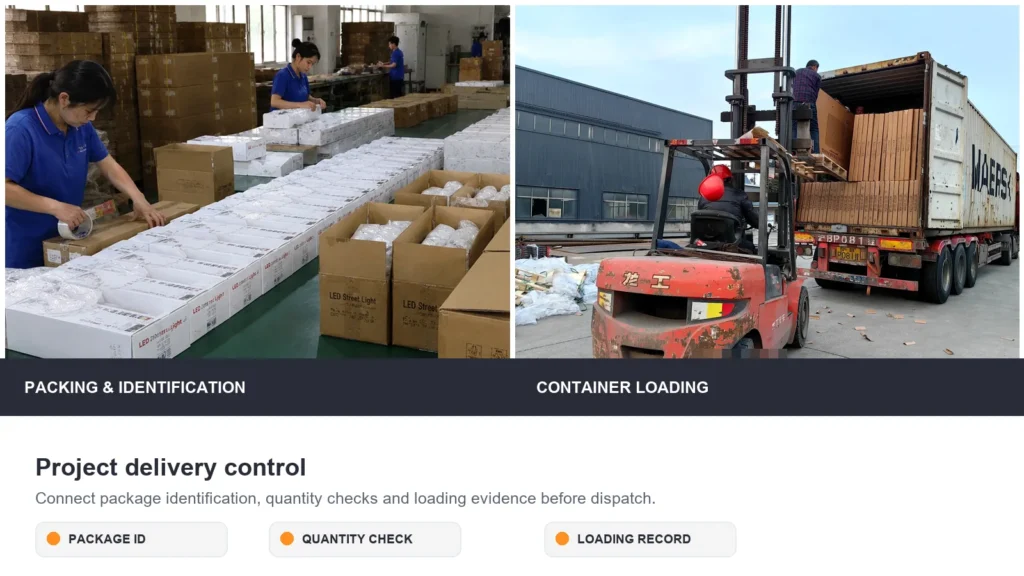
Shipping damage is not the only delivery risk in a street lighting project. A shipment may arrive with intact cartons but still delay installation because brackets are mixed, fasteners are missing, packages cannot be matched to the BOQ, or spare parts are not clearly separated from the ordered quantity. Reliable delivery depends on traceability as […]
How to Specify Lumen Maintenance and Maintenance Factor in Street Lighting Tenders
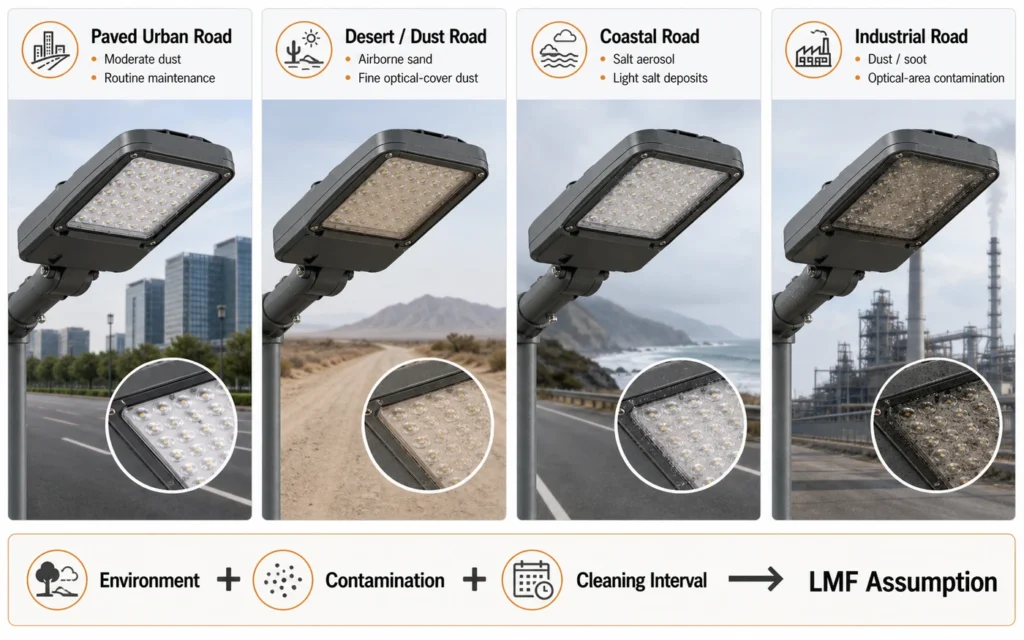
A street lighting tender should define whether its lighting requirements are maintained values, state the maintenance factor used for bid comparison, and require bidders to disclose how that factor was derived. The maintenance factor, or MF, is not the same as L70, L80 or L90. It must account for relevant light-output depreciation, luminaire dirt, component […]
After-Sales Support for EPC Solar Street Lighting Projects: Spares, SLA, Monitoring and Maintenance
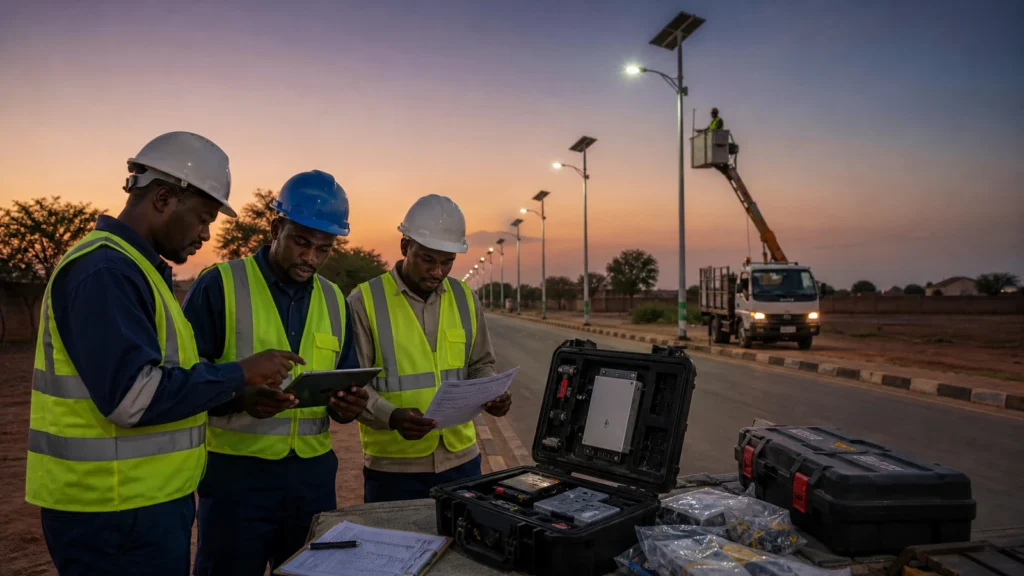
Effective after-sales support for an EPC solar street lighting project is not defined by warranty length alone. It requires an agreed spare-parts plan, measurable service timelines, a documented fault-evidence workflow, clear logistics and on-site responsibilities, maintainable product architecture, and—where justified—remote monitoring that leads to real corrective action. A statement such as “five-year warranty with a […]
Testing Lab Capabilities for Solar Street Lighting: What Buyers Can Actually Verify
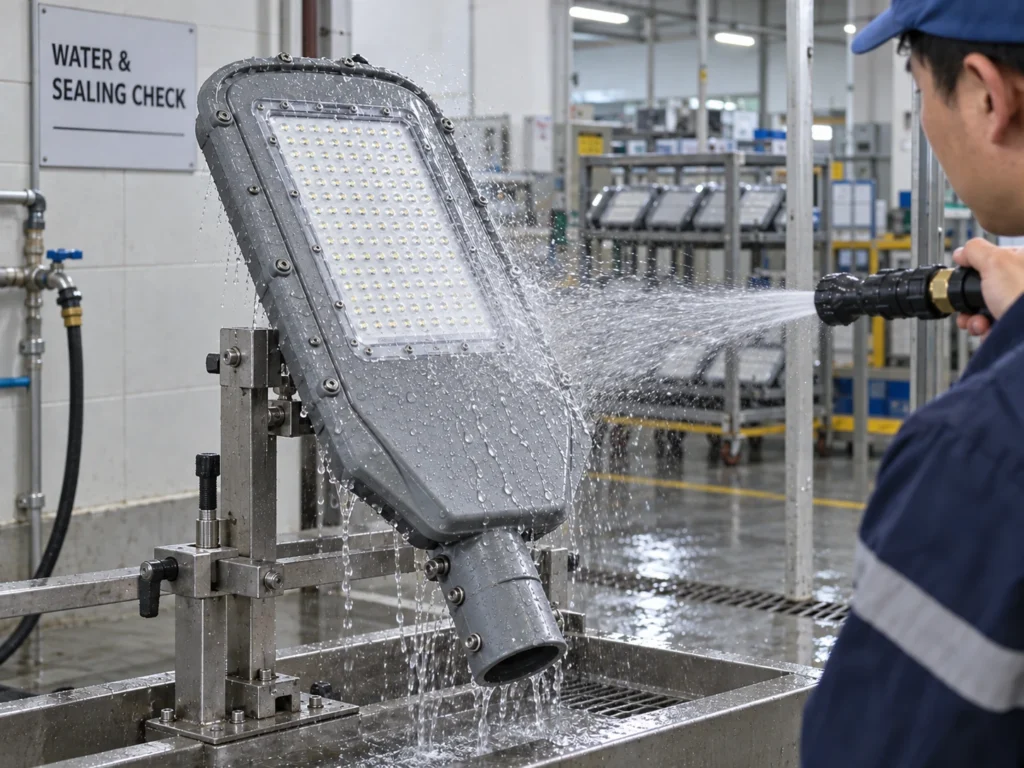
Solar street light suppliers often show aging racks, waterproof chambers, integrating spheres and photometric equipment during factory visits. However, equipment alone does not prove that the offered product has been properly tested—or that the available evidence will satisfy an EPC review, municipal approval process or tender requirement. A useful laboratory capability must connect the tested […]
Lighting Project Quality Control: How Buyers Should Verify IQC, IPQC, OQC and Batch Records

A factory’s IQC, IPQC and OQC flowchart does not prove that a specific lighting project order was properly controlled. For EPC contractors, municipal buyers and project consultants, credible quality evidence must connect the approved configuration to the component lots, production records, inspection results, nonconformity decisions and serial numbers released for shipment. This distinction matters in […]
IK10 Impact Resistance in Municipal Lighting: When It Matters and How to Specify It
Quick Answer IK10 is an impact-resistance classification representing 20 joules of external mechanical impact under defined test conditions. It can be valuable for municipal lighting installed where luminaires are accessible or exposed to repeated vandalism, thrown objects, or other credible impact risks. It is not automatically required for every public road, and it does not […]
How to Verify 220–230 lm/W Solar Street Light Claims with LM-79
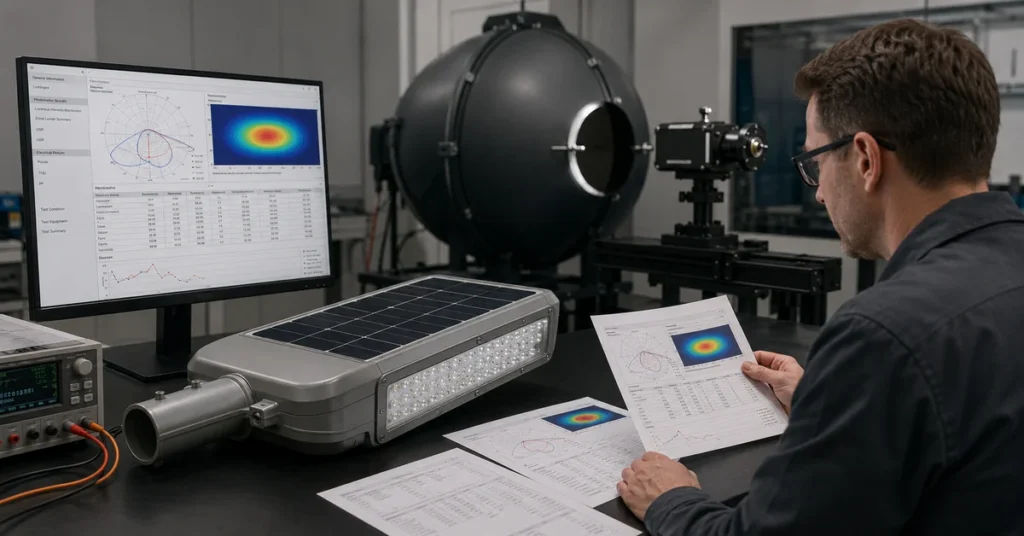
Quick Answer A solar street light rated at 220–230 lm/W may be technically possible, but the number alone does not prove the performance of the product proposed for a project. Before accepting the claim, buyers should confirm whether the figure refers to an LED package, LED module, complete luminaire, or an undefined “system efficiency.” A […]