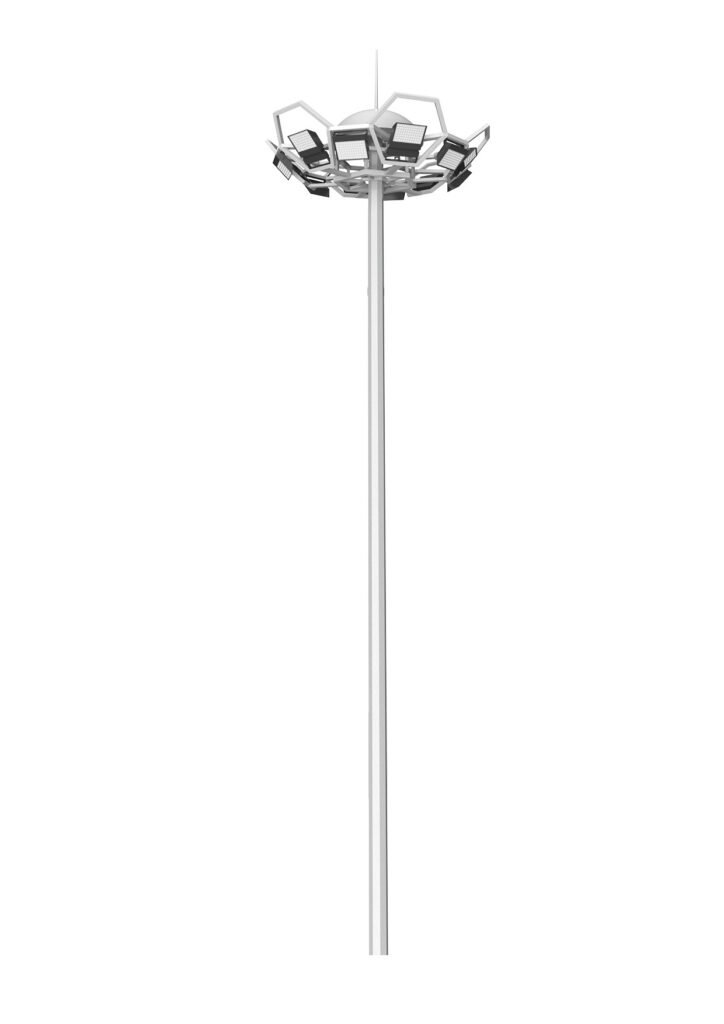
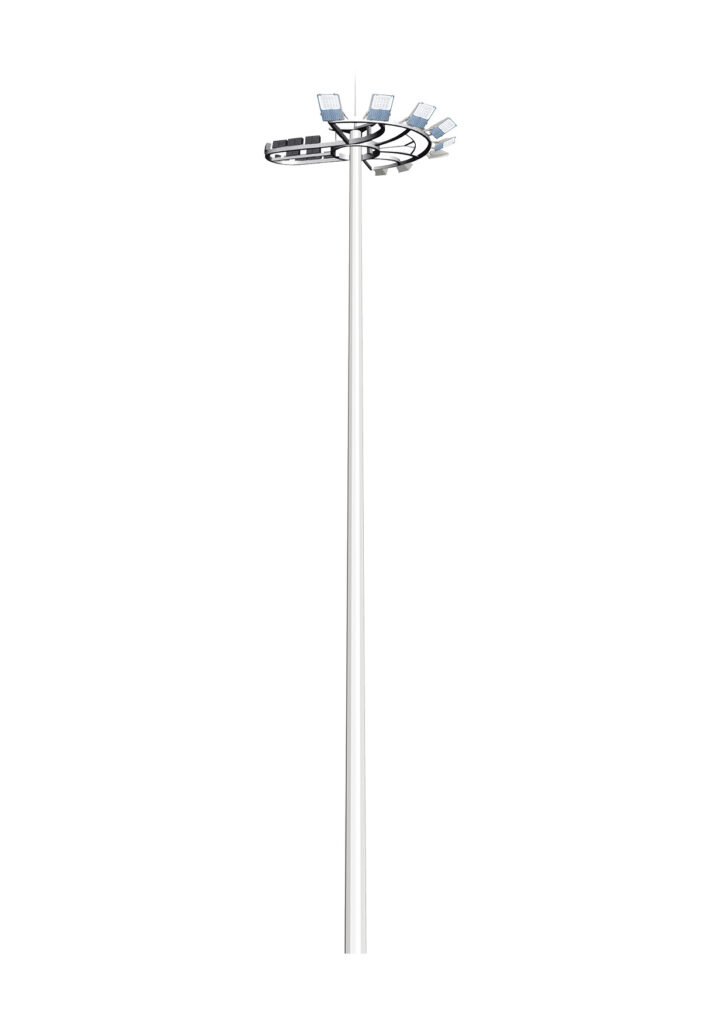
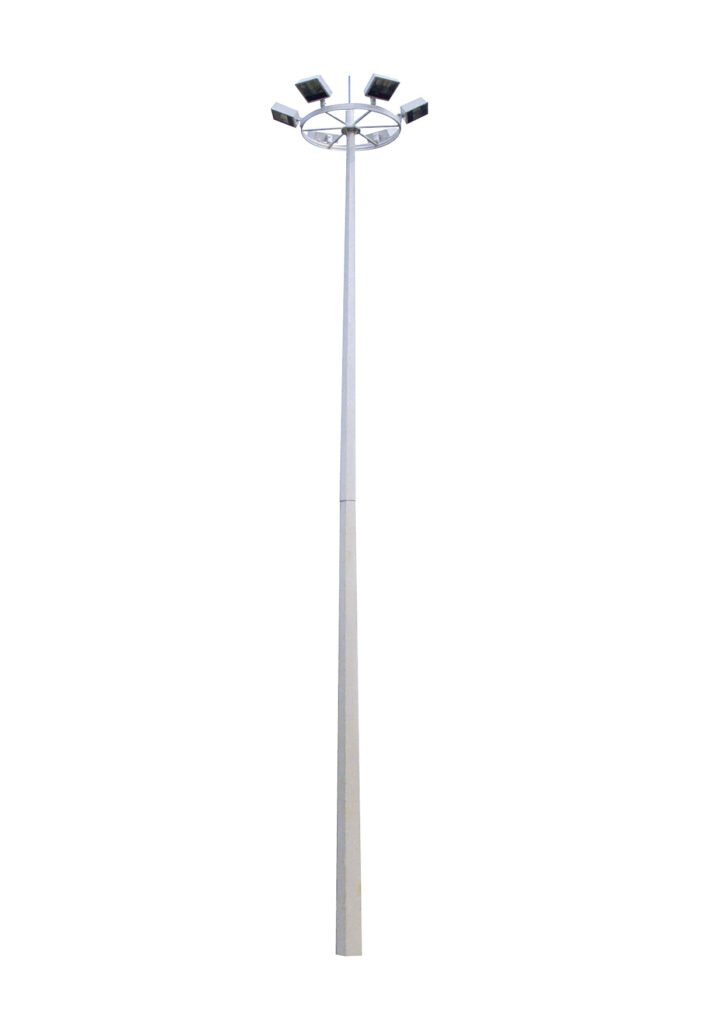
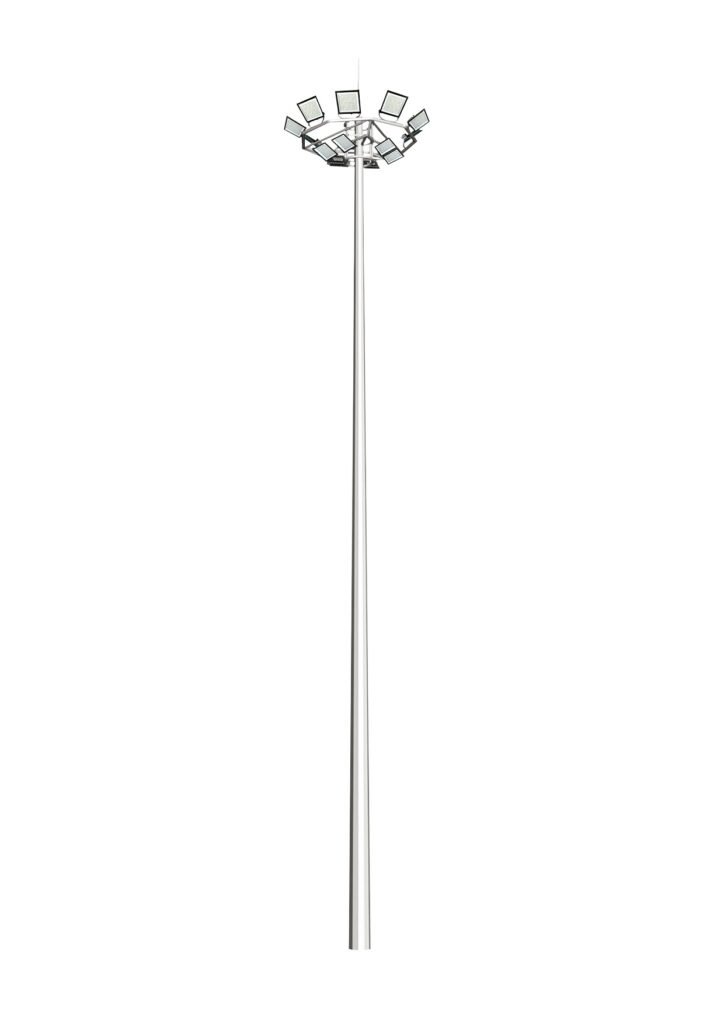
Large-area lighting cannot be selected by mast height or luminaire wattage alone. Site geometry, target zones, mast locations, optics, aiming, wind, foundation interfaces, power and maintenance access must be reviewed as one coordinated solution.
Sunlurio supports project review for ports, logistics and industrial yards, airports, sports areas and large public spaces. The final layout and documents follow the confirmed site, performance targets and selected system configuration.
A workable high mast lighting solution coordinates the area boundary, activity zones, mast quantity and locations, mounting height, luminaire arrangement, optics, aiming, maintenance factor, wind/loading basis, foundation interface and service method.
Changing one input can affect several others. A higher mast is not automatically a better design, and fewer poles do not automatically create better coverage or lower project risk.
Decision rule: Confirm the project inputs and acceptance criteria before freezing the layout, BOM or construction documents.
Missing non-final inputs can be marked Not confirmed yet. The preliminary review will identify what must be confirmed before photometric, structural or civil decisions are finalized.
Candidate mast locations should reflect the area shape, working zones, roads, buildings, obstructions, underground services, no-spill boundaries and safe maintenance access. The number and location of masts are then reviewed with mounting height, optics, luminaire quantity and aiming.
No universal mast spacing applies to every port, yard, airport or sports area.
Mounting height affects coverage, aiming distance, glare, structure, wind-exposed area, foundation loads, maintenance access, transport and installation. Height options should therefore be compared against the same site geometry and acceptance targets.
Historical project heights demonstrate delivered configurations only. They do not define a standard range or maximum height for a new project.
The luminaire family, optic, quantity, arrangement and aiming direction should be selected together. Review should consider average and minimum illuminance, uniformity, glare, spill light, obstacles, camera or driver sightlines, maintenance factor and the matched IES/LDT file.
An aiming schedule should record fixture groups and directions so installation, commissioning and later maintenance can follow the agreed design intent.
A DIALux or Relux review requires confirmed geometry, calculation zones, target criteria, candidate mast positions, mounting height, luminaire arrangement, optics, aiming, maintenance factor and photometric files matched to the selected luminaire, optic and BOM.
Preliminary calculations can support option screening. Final results remain project- and configuration-specific and are not a guarantee for a different site.
Useful inputs include the project wind speed and standard, terrain or exposure conditions, mast geometry, headframe and installed equipment, corrosion environment and applicable approval requirements. The installed-system loading—not the bare mast alone—must be considered.
Final structural details follow the confirmed system, project basis and approved drawings.
Foundation inputs depend on mast geometry, installed loads, wind basis, soil and groundwater conditions, underground constraints and project requirements. Base plate and anchor-bolt details must match the reviewed mast system.
A foundation reference may support early coordination. It is not a universal final construction foundation and may require project-specific civil design and local approval.

A lowering system may support ground-level service where its operating procedure, components and safety controls suit the project. Crane maintenance may be appropriate where access, exclusion zones and scheduling can be controlled.
Review the service corridor, local maintenance capability, inspection points, spare-parts strategy, fixture grouping and the method for restoring the approved aiming after maintenance. No single maintenance architecture is universal.
Review the available voltage and frequency, feeder and cable route, cabinet or distribution scope, switching, circuit and surge protection, grounding and any dimming, scheduling or remote-control requirement.
Control functions are confirmed against the selected drivers, system architecture and project scope. They are not implied for every high mast installation.
The project team should agree the calculation zones, lux and uniformity criteria, glare or spill-light boundaries, aiming references, measurement method, maintenance factor, responsibilities and required handover records.
Commissioning compares the installed system with the approved layout and records deviations. Photometric acceptance does not replace structural, electrical or civil inspection.
Historical configurations show how project inputs lead to different solutions; they are not standard specifications for a new site.

Share constraints and receive a solution-ready response.

Typical constraints by region—coastal, hot, dusty, and heavy-rain environments.
Start with the site/application, area dimensions or drawing, target zones, lighting criteria, preferred mast height or locations if specified, available wind/soil/power information, maintenance method and required documents. Missing non-final inputs can be identified during review.
There is no universal count. Area geometry, obstacles, target zones, mounting height, optics, aiming, maintenance factor, glare/spill-light limits and operational constraints must be reviewed together.
No. A height option may affect coverage, glare, structure, foundation loading, maintenance and installation. It must be compared against the actual project criteria.
No. The report must use the project geometry, targets, layout and an IES/LDT file matched to the selected luminaire, optic and BOM.
A foundation reference or interface drawing can be coordinated after the mast, wind, site and soil inputs are reviewed. Final construction design is project-specific and may require local approval.
No. Lowering and crane-maintenance paths should be compared against access, safety, operating capability and lifecycle requirements.
No universal coverage should be assumed. Selected real certificates and test records may be shown, while applicability to the selected luminaire, mast component, electrical scope and BOM is confirmed during project review.
For high mast layout review, use DIALux support, datasheets and drawings, and engineering support to confirm document needs before quotation.
Share the available site plan, area dimensions, target zones, lighting criteria, mast constraints, wind and foundation information, maintenance preference, electrical/control scope, tender documents and required outputs.
We will identify the initial solution direction, missing engineering inputs and the next photometric, structural or document-review step.
WhatsApp us