Project buyers often ask for a galvanized street light pole price before the supply scope is fully defined. A useful quotation cannot be built from pole height alone. It must match the structural basis, surface treatment, accessories, inspection and document requirements, packing, delivery basis and commercial exclusions required by the project.
This guide explains how purchase price is formed, how to compare galvanized lighting pole suppliers on the same basis and what information to provide before requesting a reliable quotation.
Galvanized Street Light Pole Price Summary
There is no useful one-price answer for every galvanized street light pole. Two poles described with the same nominal height can have different geometry, structural requirements, arm arrangements, base connections, finishes, inspection scope and delivery obligations. Each difference can change the supplier’s material, fabrication, quality-control, packing or logistics scope.
For procurement, the right question is not only “What is the pole price?” It is also “What is included in that price?” Buyers should compare a confirmed technical and commercial scope before comparing totals. A lower headline amount may simply exclude anchors, drawings, inspection, packing or freight that another quotation includes.
Why One Galvanized Pole Does Not Have One Universal Project Price
A galvanized lighting pole is normally configured for a particular road, site, luminaire arrangement and procurement package. The quotation therefore depends on the information supplied by the buyer and the responsibilities assigned to the supplier.
A budget enquiry may begin with limited information. That is acceptable, but the result should be identified as preliminary and its assumptions should be visible. A firm project quotation requires an aligned drawing, specification or documented design basis. Missing inputs can be reviewed before final quotation; they should not be silently guessed.
The purchase price of a galvanized street light pole changes when the structural specification, surface treatment, accessories, inspection scope, documentation, packing or delivery basis changes.
Main Factors That Change Pole Purchase Price
Pole structure
Height, material, pole form, geometry, structural thickness requirement and arm arrangement affect material use and fabrication work. These inputs must follow the approved project basis or drawing. A supplier should not substitute a lighter or different pole merely to reduce the headline price.
Base and installation interface
The quotation should state the flange or base-plate scope, whether anchor bolts are included, the access-door configuration where relevant and any foundation-coordination responsibility. An apparently similar offer may exclude components that another supplier includes.
Loading and engineering basis
Luminaire, bracket and other equipment loads, together with the project wind or design requirement, influence the required pole configuration. The buyer should provide the available site and loading information and identify who is responsible for final engineering confirmation.
Surface treatment and environment
The required galvanized finish, any specified paint or powder-coating combination, the corrosion environment and the project acceptance basis can change process and inspection scope. Coastal or aggressive environments require project-specific review rather than an automatic public surcharge.
Hot-dip galvanizing is carried out through qualified subcontractors under controlled procurement and quality procedures.
Quantity and production planning
Quantity can affect production planning, packing efficiency and shipment configuration. It may influence commercial pricing, but it does not create an automatic public discount. The quoted quantity and any option quantities should be clearly identified.
Inspection and documentation
Project inspection, traceability, third-party inspection, drawing review and the required quality-document package add defined responsibilities. A quotation that includes these items should not be compared directly with one that provides only an unverified product description.
Packing and logistics
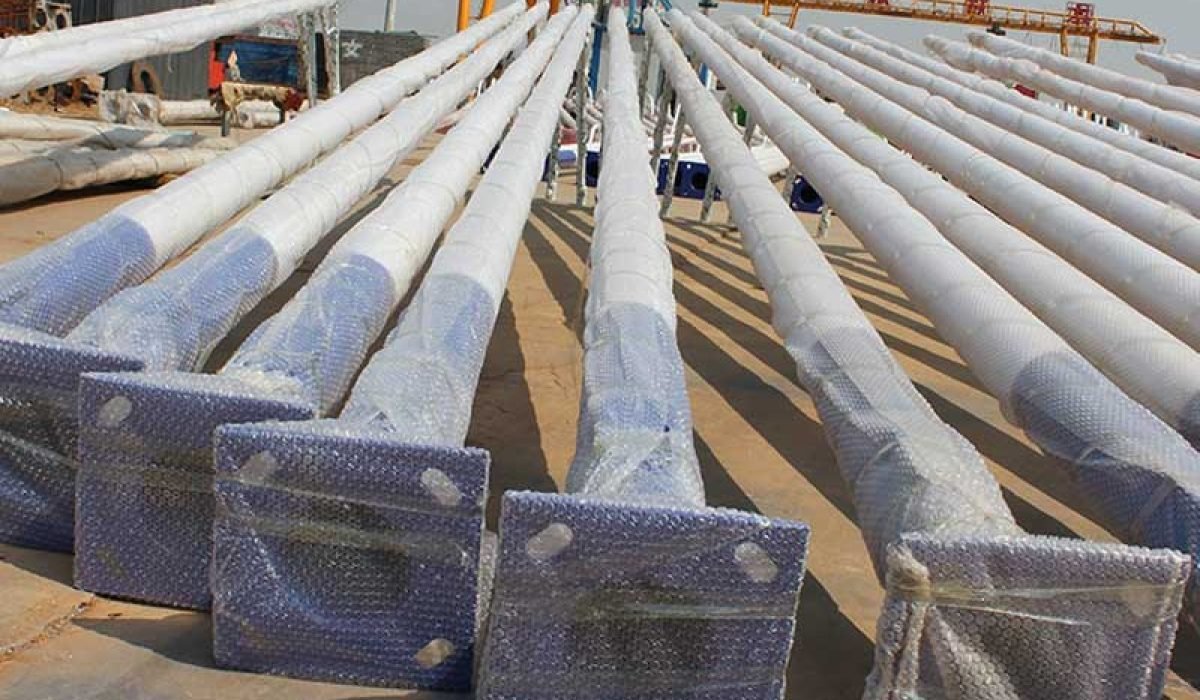
Packing method, transport protection, shipment configuration, destination, container or loading requirements, Incoterm and delivery scope can materially change the commercial total. Each supplier should quote on the same logistics basis.
Structural Scope: Compare the Same Pole Before Comparing Price
Before comparing prices, confirm that suppliers are quoting the same pole. The review should cover material, pole form, structural basis, arm configuration, base connection, anchors, access arrangement and equipment-loading assumptions. If one supplier has interpreted a missing input differently, the quotations are not yet comparable.
Structural dimensions must follow approved drawings or project engineering. This page does not provide universal wall thicknesses, diameters, flange sizes, anchor sizes or foundation dimensions. For the design-input boundary, review pole dimensions and structural design inputs.
Ask each supplier to list deviations and assumptions next to the quotation. This makes technical normalization possible before commercial selection.
Surface Treatment, Inspection and Documentation Scope
“Galvanized” alone does not define the complete quotation scope. The project may specify a treatment basis, corrosion environment, inspection point, traceability record or document package. Any additional coating system should be clearly separated from hot-dip galvanizing so the buyer can see what process is proposed.
The quotation should identify which inspection and documents are included, which are available on request and which require separate agreement. Third-party inspection responsibility, attendance, timing and document review should also be visible when requested.
For detailed tender and quality-control boundaries, see galvanizing standards and inspection requirements. The applicable project specification remains the controlling basis.
Quantity, Packing, Freight and Delivery Basis
Commercial pricing may change with quantity, delivery schedule, inspection scope and logistics requirements. Buyers should therefore compare the same quantity, packing basis, destination, Incoterm and requested delivery window.
Confirm whether the quotation includes inland transport, export packing, port handling, ocean or local freight, insurance, customs responsibility and delivery to the final site. If these items are outside the supplier’s scope, the exclusions should be explicit. A product-only amount and a delivered project amount are not comparable totals.
How to Compare Galvanized Pole Suppliers
Supplier evaluation should go beyond the headline price. A galvanized pole manufacturer or supplier should show that it understands the BOQ or specification, has identified missing inputs and can explain the basis of the offer.
Check whether structural inputs are confirmed and whether drawings can be provided for review. Verify that arm, flange, anchor and accessory scope is clear. Confirm the proposed surface treatment and ask what galvanizing or quality evidence is available where required.
Inspection responsibility, traceability, packing and delivery obligations should be written rather than assumed. Warranty wording and commercial exclusions should be visible. Engineering support before final quotation is especially important when the enquiry contains incomplete or conflicting requirements.
Do not rank suppliers only by location, marketplace listing or marketing language. Compare the completeness, traceability and commercial clarity of their responses.
Compare Like With Like — Quotation Review Checklist
Pole and accessory scope
- Are material, pole form, structural basis and arm arrangement aligned?
- Are flange, anchors, access components and luminaire interfaces included or excluded?
- Are drawings, revisions, assumptions and deviations identified?
Surface treatment and environment
- Is the proposed surface treatment clearly described?
- Is any paint or powder-coating layer separated from galvanizing?
- Has the project corrosion environment been considered without an unsupported universal claim?
Inspection and evidence
- Are inspection responsibilities and hold points clear?
- Is third-party inspection included, optional or excluded?
- Are traceability records and the required quality documents defined?
Commercial and delivery basis
- Are quantity, packing, destination, Incoterm and delivery scope aligned?
- Are freight, insurance, customs and site-delivery responsibilities visible?
- Are quotation validity, schedule assumptions and exclusions stated?
Warranty and after-sales scope
- Is the warranty written, conditional and linked to the approved specification and environment?
- Are remedies, exclusions and buyer responsibilities clear?
- Is technical support available for drawing and specification clarification?
Where the approved lighting-pole warranty is relevant, the controlled wording is: “Lighting pole warranty: 5 years, subject to the approved specification, environment and written terms.”
What to Send Before Requesting a Pole Quotation
Provide the following information where available. Buyers do not need to have every item at the first enquiry; missing inputs can be reviewed before final quotation.
- country, city and application;
- project stage and required quantity;
- pole height, material and pole form or geometry;
- luminaire or equipment load and arm arrangement;
- wind or design requirement supplied by the project team;
- corrosion environment and required surface treatment;
- flange or base-plate scope and anchor-bolt scope;
- foundation information, existing drawing, BOQ or specification;
- inspection and third-party inspection requirements;
- required engineering, quality and document package;
- packing requirement and delivery destination;
- Incoterm, if known, and requested delivery schedule.
If alternates are acceptable, ask the supplier to present them separately from the compliant base offer. This prevents an alternative specification from being mistaken for a direct price comparison.
Purchase Price vs Lifecycle Cost
Purchase price is the confirmed commercial amount for the agreed supply scope. Lifecycle cost is the project-specific longer-term cost of inspection access, maintenance, repair and replacement. They are related but not interchangeable.
This page focuses on purchase-price formation and supplier quotation. For longer-term decision factors, review galvanized pole lifecycle cost.
Related Decision Paths
- Start with what a galvanized street light pole is for definition, benefits and common uses.
- Review galvanized poles for coastal environments when marine exposure or chloride risk is relevant.
These pages provide context; the quotation must still follow the approved project specification and commercial scope.
Frequently Asked Questions
How much does a galvanized street light pole cost?
There is no reliable universal project price. A supplier needs the structural basis, configuration, quantity, treatment, inspection, packing and delivery requirements before preparing a comparable quotation.
Why do two suppliers quote different prices for the same pole height?
Height is only one input. The suppliers may be quoting different materials, geometry, structural assumptions, arms, base components, surface treatments, documents, packing or delivery obligations. Normalize the scope before comparing totals.
Does wall thickness affect pole price?
Structural thickness influences material and fabrication scope, but it must come from the approved drawing or design basis. It should not be selected from a generic public price chart.
Does galvanizing specification affect quotation cost?
Project-specified treatment, inspection and documentation requirements can change the quotation scope. The supplier should state the proposed process and acceptance basis without assuming a universal surcharge.
Does order quantity affect pole pricing?
Quantity can affect production planning, packing and logistics economics. Any commercial adjustment should be stated in the project quotation rather than presented as an automatic discount.
What should be included when comparing supplier quotations?
Compare the pole and accessory scope, surface treatment, inspection, documents, packing, freight basis, Incoterm, schedule, warranty, deviations and exclusions. The technical basis must match before the totals are meaningful.
What information is needed before requesting a pole quotation?
Send available project location, application, quantity, drawing or BOQ, structural and loading inputs, treatment requirement, inspection scope, packing, destination and delivery basis. Missing information can be reviewed before final quotation.
Is the lowest purchase price always the best project value?
Not necessarily. A lower amount may reflect a different technical scope or excluded inspection, documents, accessories or logistics. Compare the compliant supply scope first, then assess purchase price together with project risk and the separate lifecycle decision.
Request a Project-Specific Pole Quotation
A useful quotation begins with a clear technical and commercial basis. Send the information available for your project, and identify any missing inputs that require review before the final offer.