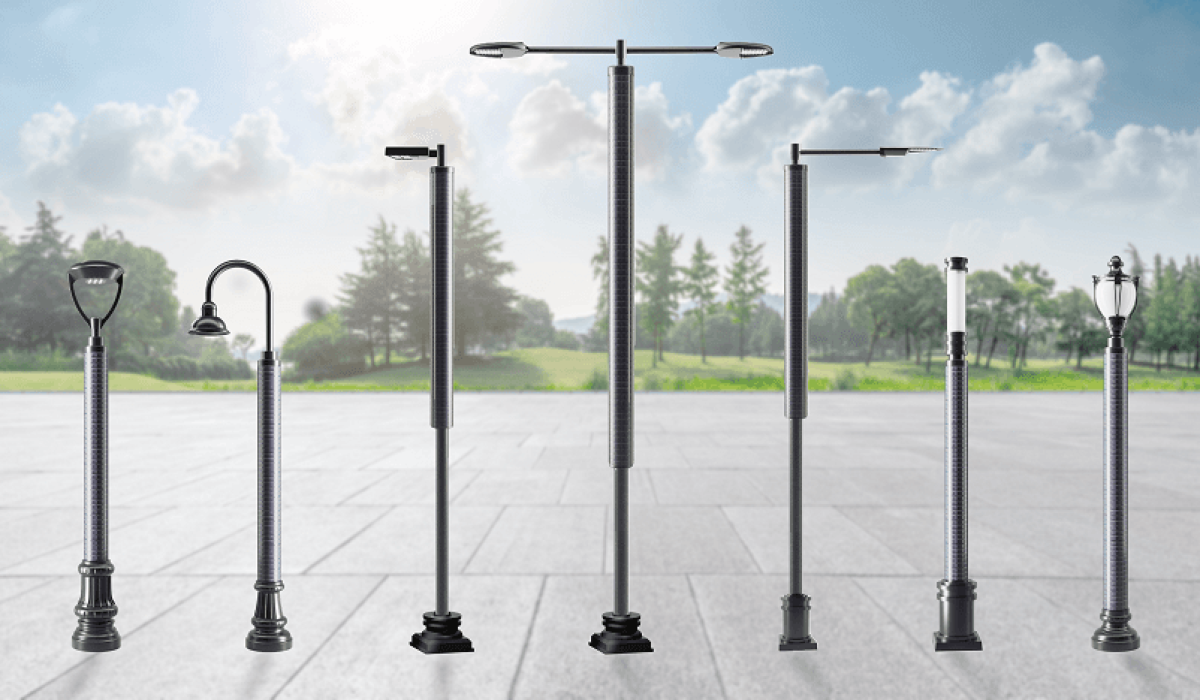
A galvanized street light pole is a steel lighting support protected with a zinc coating to help manage corrosion in outdoor service. It may support an LED luminaire, a solar lighting assembly, a bracket, a camera or other project equipment, but the final pole configuration must be selected from the actual site, loading and installation requirements.
For project buyers, the useful starting point is not a universal height, wall thickness or service-life promise. It is understanding what the pole is, how galvanizing protects the steel, which pole form suits the application and which engineering inputs must be confirmed before production.
Quick Definition
A galvanized street light pole is a fabricated steel pole that receives a zinc-based corrosion-protection layer through hot-dip galvanizing. The steel provides the structural form, while the zinc coating helps separate the steel surface from the surrounding environment and reduces the risk of corrosion exposure.
Galvanizing does not make every pole interchangeable. Pole geometry, mounting arrangement, foundation interface, equipment load, site exposure and the project specification still determine whether a proposed pole is suitable.
How a Galvanized Street Light Pole Is Made
The production route depends on the pole form and project design, but the high-level sequence normally includes:
- Steel preparation and fabrication — Steel is cut, formed and welded into the required pole geometry. Base plates, access openings, brackets and other interfaces are added where the approved design requires them.
- Surface preparation — The fabricated pole is prepared so the steel surface can receive the zinc coating. The detailed procedure and acceptance requirements depend on the applicable production and project controls.
- Hot-dip galvanizing — Hot-dip galvanizing is carried out through qualified subcontractors under controlled procurement and quality procedures.
- Inspection and records — The finished pole is reviewed against the confirmed project requirements. Identification, inspection records and other documents are prepared according to the project stage and agreed document scope.
Projects may define different inspection, traceability or documentation requirements. Buyers who need that detail should review the applicable galvanizing standards and inspection requirements before approving production.
How Zinc Protection Works
Zinc helps protect the steel in two related ways. First, the coating acts as a barrier between the steel and the surrounding environment. Second, zinc can provide sacrificial protection at small exposed areas, helping reduce direct corrosion of the steel.
The protection still depends on the condition and continuity of the coating. Cutting, welding, transport damage, installation damage or later modification can expose areas that need inspection and an appropriate repair decision. Site exposure also matters: a normal inland road, an industrial area and a marine environment do not create the same corrosion conditions.
Common Pole Forms and Applications
Galvanized lighting poles are available in several general forms. The correct choice depends on the lighting equipment, mounting arrangement, appearance, site access and structural design.
- Tapered polygonal poles are widely used for roadway and municipal lighting where a fabricated, gradually tapered shaft is appropriate.
- Round or conical poles provide a simple profile for streets, parking areas, campuses and other outdoor spaces.
- Tubular poles can suit straightforward lighting arrangements where the project design calls for a uniform or fabricated tube section.
- Decorative poles combine a protected steel structure with architectural features selected for parks, walkways, civic areas or coordinated streetscapes.
- High-mast structures support large-area lighting systems for locations such as interchanges, ports, yards and industrial sites, but they require a separate project-specific design process.
Common applications include urban and rural roads, highways, parking areas, industrial facilities, campuses, public spaces and infrastructure projects. The application name alone does not define the pole: road geometry, luminaire arrangement, wind exposure, foundation conditions and project documentation still need review.
Main Benefits of Galvanized Lighting Poles
Corrosion protection for outdoor steel
The zinc coating is used to reduce direct corrosion exposure and help preserve the steel section during service. This is the main reason galvanizing is specified for many outdoor lighting projects.
A practical base for project-specific finishes
Some projects use the galvanized surface as the final external finish. Others may add a compatible decorative or project-specified coating system. The required finish should be confirmed before production rather than assumed from the pole type alone.
Support for different lighting applications
Galvanized steel can be fabricated into different pole forms and interfaces. This gives designers flexibility to coordinate the pole with luminaires, brackets and project equipment, subject to the approved structural design.
More controlled maintenance planning
Galvanizing can reduce reliance on a paint-only corrosion barrier, but it does not remove the need for inspection. Transport damage, installation work, site exposure and later modifications should be considered in the maintenance and repair plan.
What Affects Service Life
The service life of a galvanized lighting pole depends on the exposure environment, coating condition, fabrication quality, structural design, handling damage and maintenance or repair conditions.
Galvanizing is used to reduce corrosion exposure and help preserve the steel section during service, but the project environment and specification still determine the required corrosion-protection approach.
Important factors include:
- Exposure environment — Humidity, pollutants, airborne salts, standing water and local site conditions can change the corrosion risk.
- Coating condition — Coverage, handling damage and any later cutting, drilling or welding affect the protective system.
- Fabrication and design details — The pole form, drainage details, interfaces and structural design influence how the pole performs in its intended location.
- Transport and installation — Damage during packing, loading, unloading or erection should be identified and assessed before acceptance.
- Inspection and repair — The project should define how damage or deterioration is recorded, evaluated and repaired.
Marine and salt-affected sites require their own exposure review. See the decision guide for galvanized poles for coastal environments rather than applying a general inland assumption.
For maintenance and replacement economics, use the separate guide to galvanized pole lifecycle cost.
What Buyers Should Confirm Before Choosing a Pole
A buyer should confirm the project inputs before treating any pole description as a final specification.
Application and lighting arrangement
Define the road, parking area, public space, industrial site or other application. Confirm the luminaire type, bracket arrangement and any additional equipment that the pole may carry.
Site and structural inputs
Review the site exposure, installation method, wind and loading basis, foundation interface and other engineering inputs. The separate guide to pole dimensions and structural design inputs explains why these values must come from the project rather than a universal pole table.
Corrosion-protection requirement
State whether hot-dip galvanizing is the required protective system and whether the project needs an additional finish. Coastal, industrial or otherwise aggressive exposure may need more specific review.
Inspection and document scope
Confirm which drawings, traceability records, inspection records and project documents are required before approval, production or shipment. Document availability depends on the project stage and agreed release level.
Commercial comparison basis
Compare suppliers using the same pole configuration, material and protective-system scope, inspection requirements, documents, packing and delivery terms. The guide to galvanized pole price and supplier comparison provides the appropriate commercial decision path.
Related Engineering Decision Paths
- Need to define geometry, mounting interfaces or structural inputs? Review pole dimensions and structural design inputs in the section above.
- Need a project-specific coastal assessment? Use the coastal environments decision guide.
- Need inspection, traceability or tender-document guidance? Use the standards and inspection requirements guide.
- Need to compare maintenance and replacement economics? Use the lifecycle cost guide.
- Need a supplier comparison or quotation basis? Use the price and supplier comparison guide.
Each page has a separate role. This Generic Definition page explains the product; the linked guides handle the detailed engineering, environmental, lifecycle and commercial decisions.
Frequently Asked Questions
What is the difference between a galvanized pole and an untreated steel pole?
A galvanized pole has a zinc-based protective coating, while untreated steel does not have that corrosion-protection layer. The final suitability of either system still depends on the project environment, design and maintenance plan.
Is every galvanized street light pole made the same way?
No. Pole form, fabrication details, mounting interfaces, protective-system requirements, inspection scope and project documents can differ. Buyers should compare proposals against the same confirmed project inputs.
Does galvanizing make a lighting pole maintenance-free?
No. Galvanizing supports corrosion protection, but the pole should still be reviewed for transport or installation damage, site exposure, later modifications and any repair needs defined by the project.
Can a galvanized pole be used in a coastal environment?
It may be considered, but the exposure conditions and project corrosion-protection requirements must be assessed specifically. A general galvanized-pole description is not a substitute for a coastal design review.
How should pole dimensions be selected?
Dimensions should follow the lighting arrangement, equipment loads, wind and site inputs, mounting interfaces, foundation approach and the applicable structural design. They should not be selected from a universal generic range.
What documents should a buyer request?
The required package may include approved drawings, configuration records, inspection records, traceability information and packing or shipment documents. The exact package depends on the project stage, specification and agreed release scope.
Can the same pole support LED, solar or smart-lighting equipment?
A steel pole can be configured for different equipment, but the luminaire, solar components, brackets, cameras or other devices change the loading and interface requirements. The complete assembly must be reviewed as a project configuration.
Review Your Lighting Pole Requirements
Share the application, site conditions, lighting arrangement, equipment loads, mounting interfaces, corrosion-protection requirement and document needs with the project team. These inputs allow the pole configuration to be reviewed before drawings, production or quotation are finalized.
Primary: Review your lighting pole requirements
Secondary: View the lighting pole product and project configuration