High Mast Light System for Stadiums, Ports, and Highways
Quick Answer: What Is a High Mast Lighting System?
A high mast lighting system should be selected by lighting area, mast height, target lux, uniformity, wind speed, corrosion environment, lifting system, foundation conditions, and required project documents. For ports, airports, stadiums, highways, and industrial yards, wattage alone is not enough. The final configuration should be reviewed with IES/LDT files, DIALux or AGi32 simulation, GA drawings, foundation reference, and BOQ matching notes.
Engineering Review Inputs
Application Areas and Design Inputs
| Application Area | Typical Mast Height | Main Lighting Concern | Required Project Inputs | Suggested Documents |
|---|---|---|---|---|
| Container Port / Logistics Yard | 25 – 40 m | Wide-area coverage, glare control, wind exposure | Yard layout, mast position, target lux, wind speed | DIALux / AGi32, GA drawing, foundation reference |
| Airport Apron / Service Area | 20 – 35 m | Uniformity, glare control, operational safety | Apron drawing, target lux, mounting restrictions | IES/LDT, lighting simulation, layout drawing |
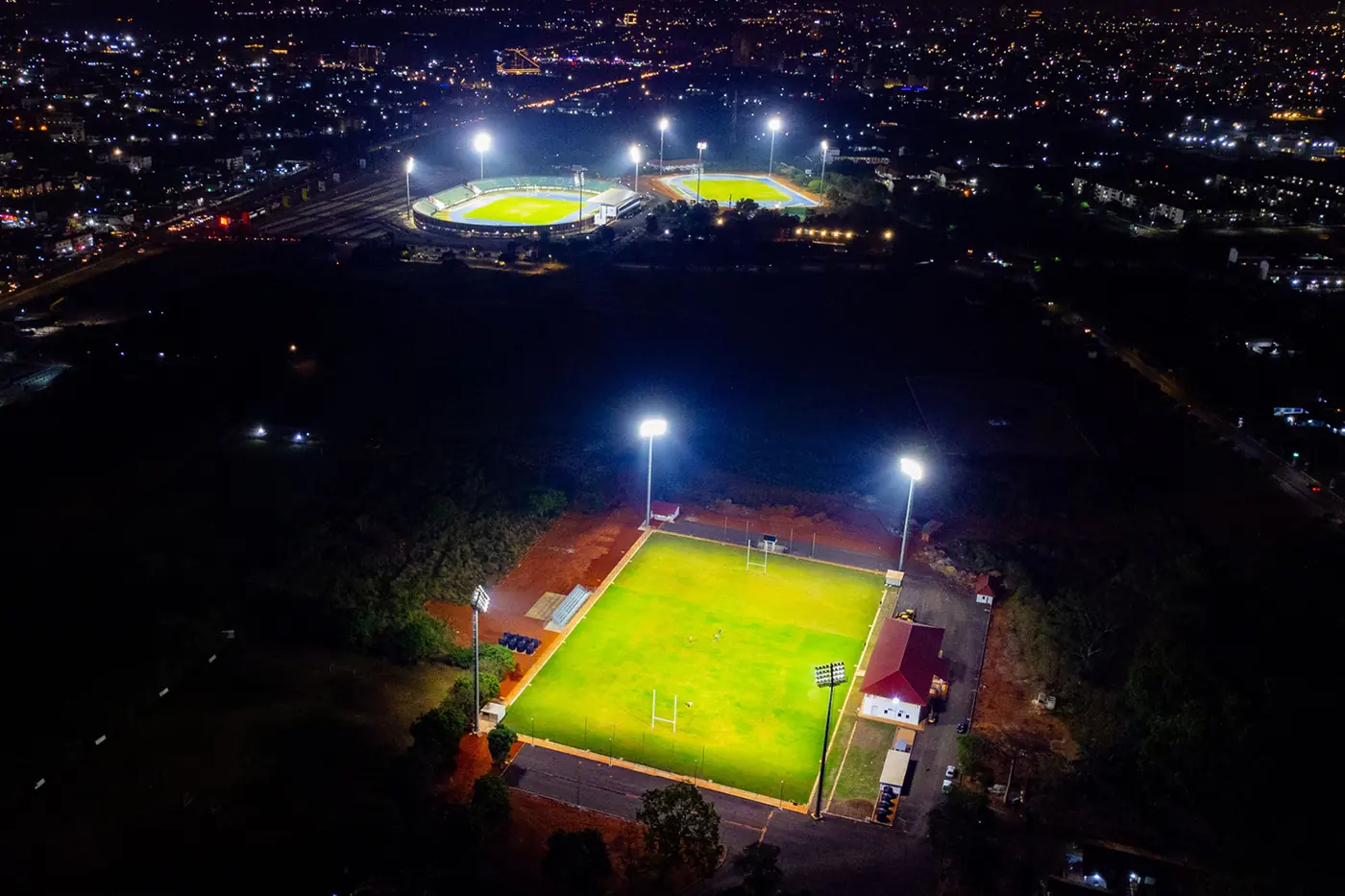
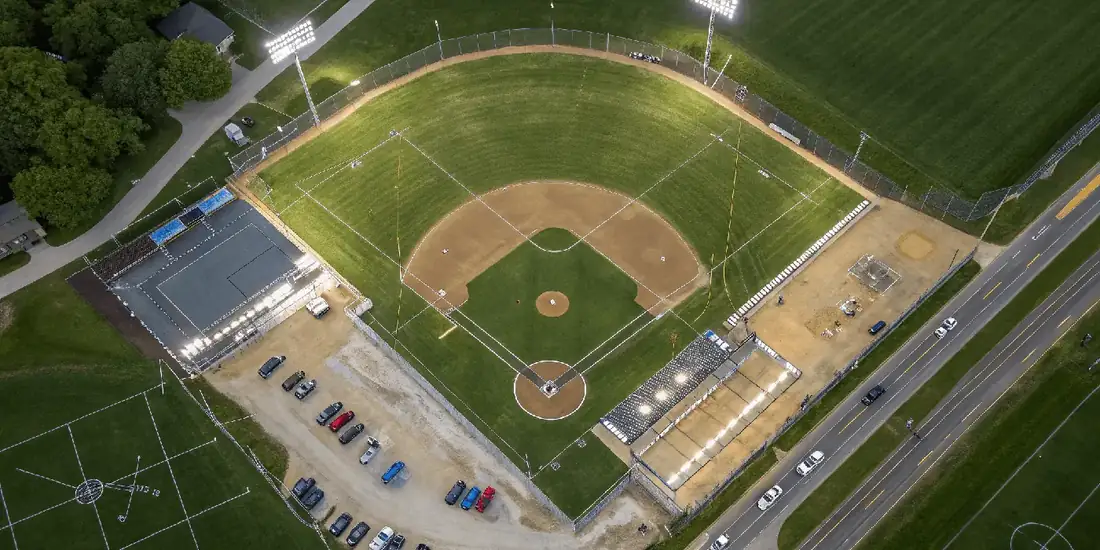
| Stadium / Sports Field | 20 – 40 m | Target lux, uniformity, beam aiming | Field dimensions, sports level, target lux | DIALux / AGi32, beam angle notes, luminaire layout |
| Highway Interchange | 20 – 35 m | Road visibility, glare, pole position | Road layout, pole position, lighting class | Lighting layout, pole/foundation notes |
| Industrial Yard / Parking Area | 15 – 30 m | Safety lighting, coverage, maintenance | Area dimensions, operating hours, voltage | Datasheet, layout, BOQ notes |
High Mast System Engineering Scope

System materials and scope for high mast projects
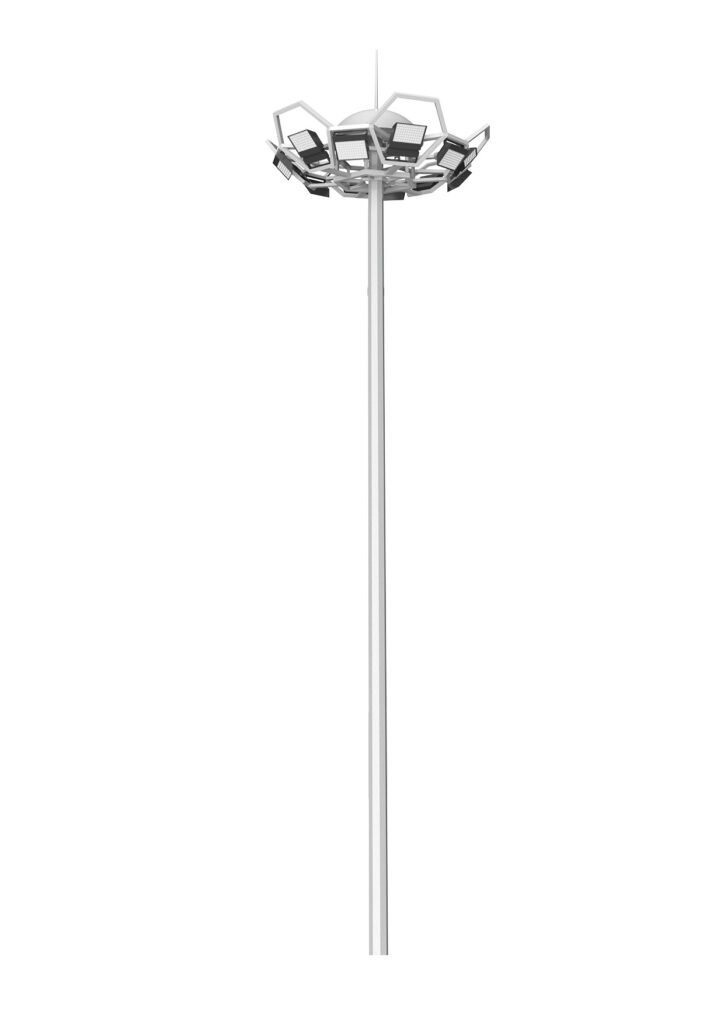
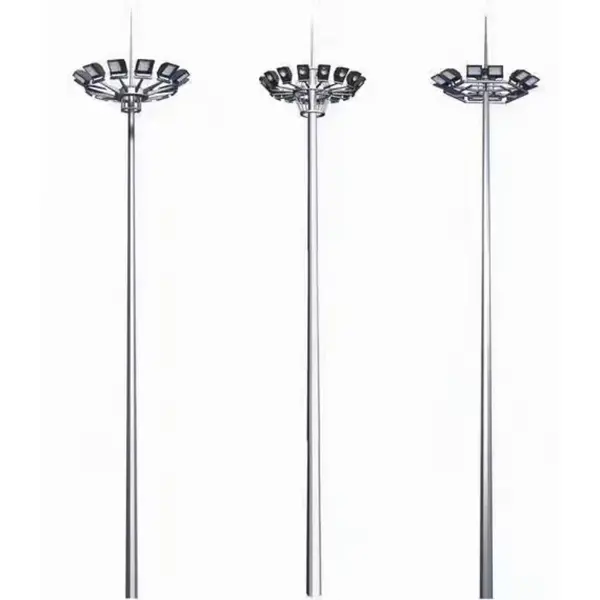
High mast lighting should not be selected only by wattage. The mast height, luminaire quantity, beam angle, lowering method, wind speed, foundation interface and document pack should be reviewed together before final quotation.
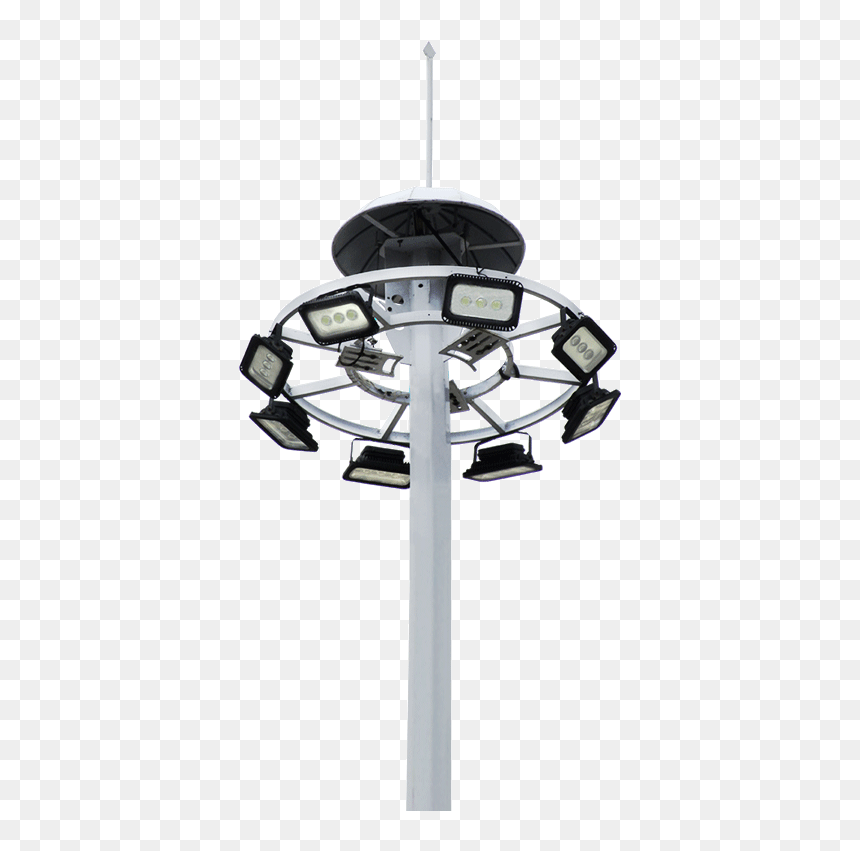
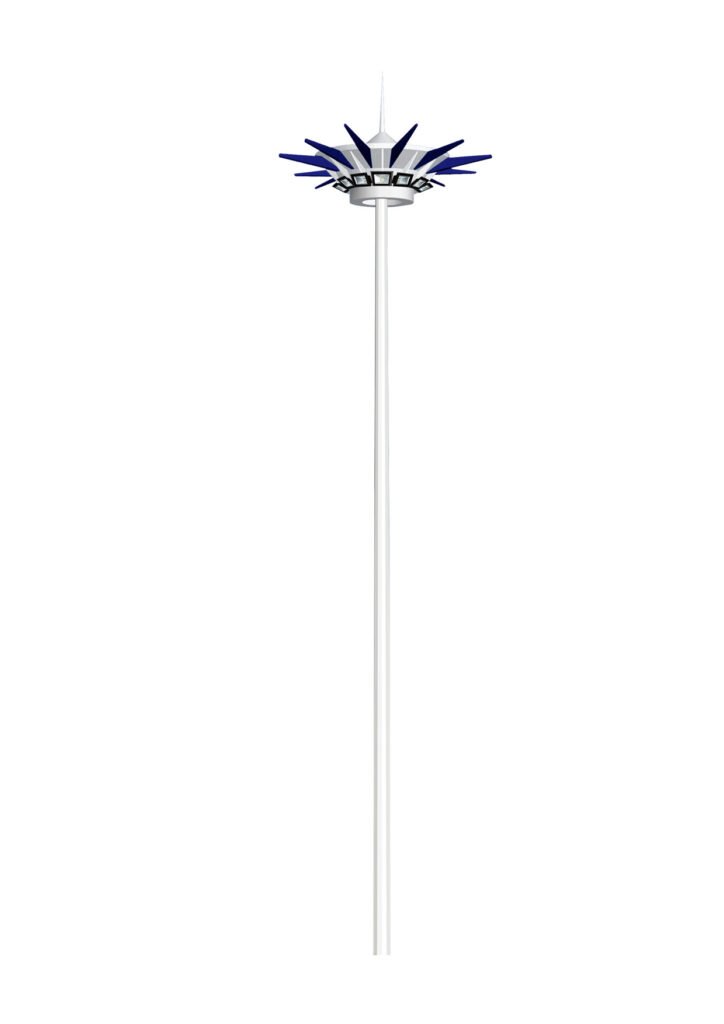
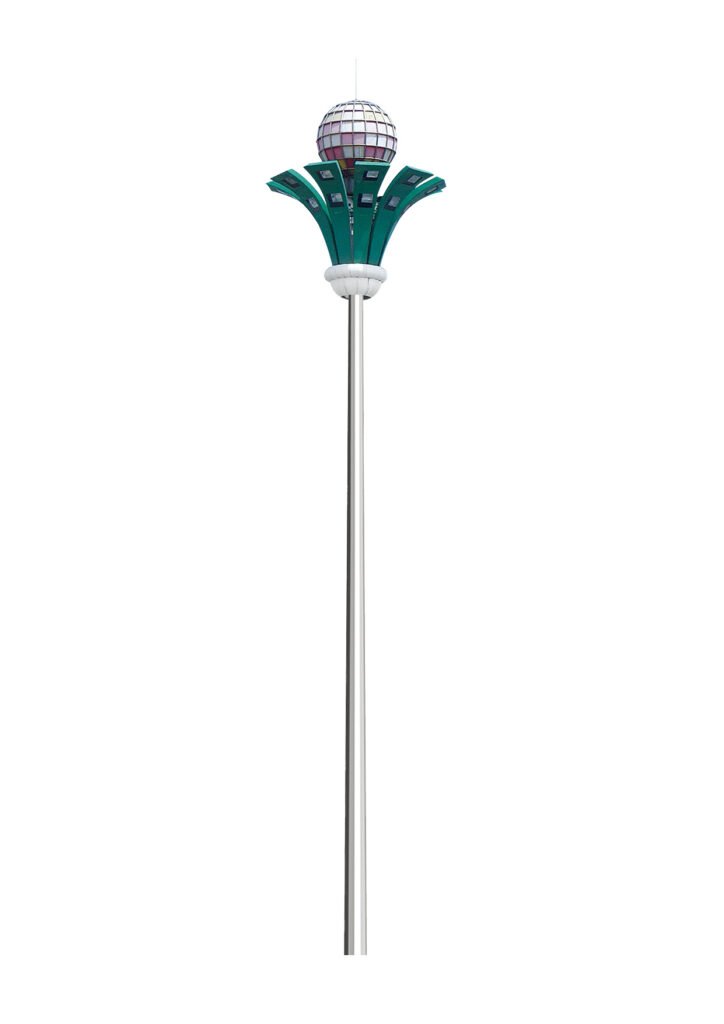
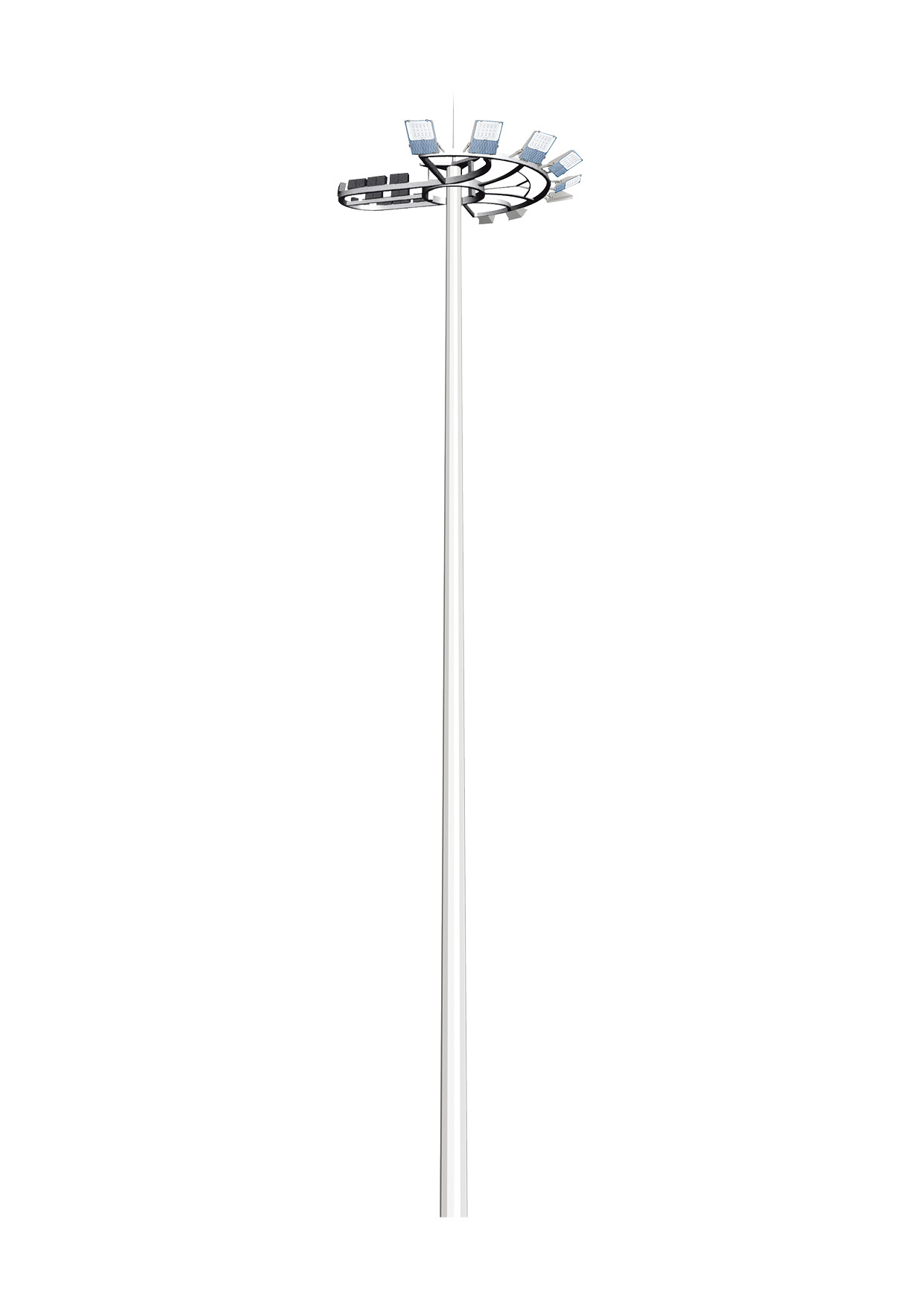
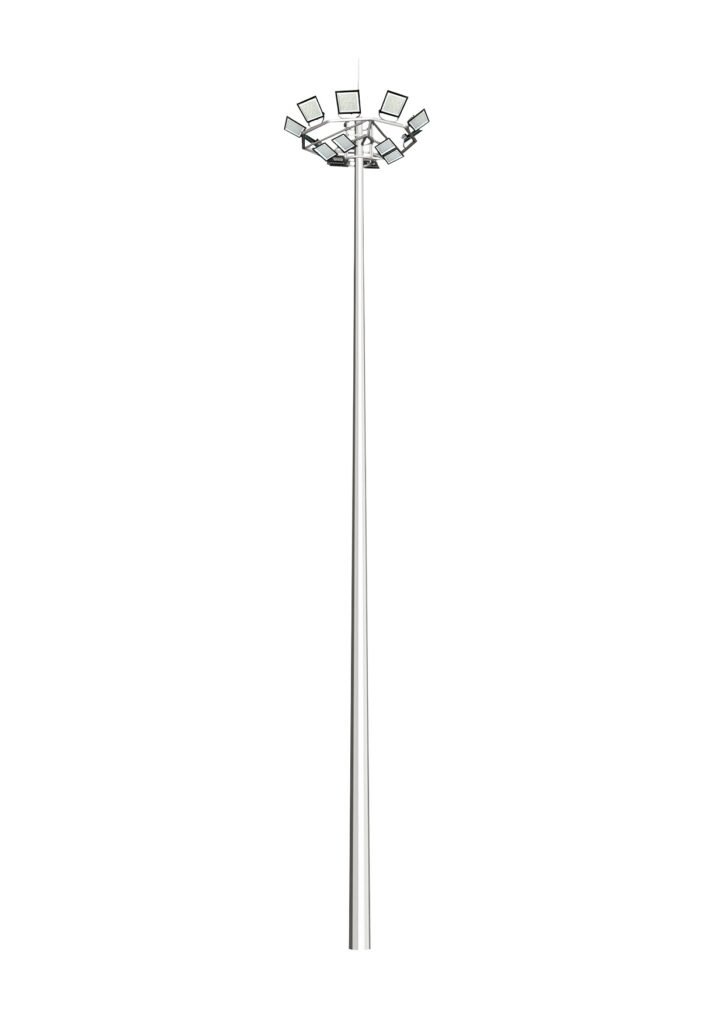
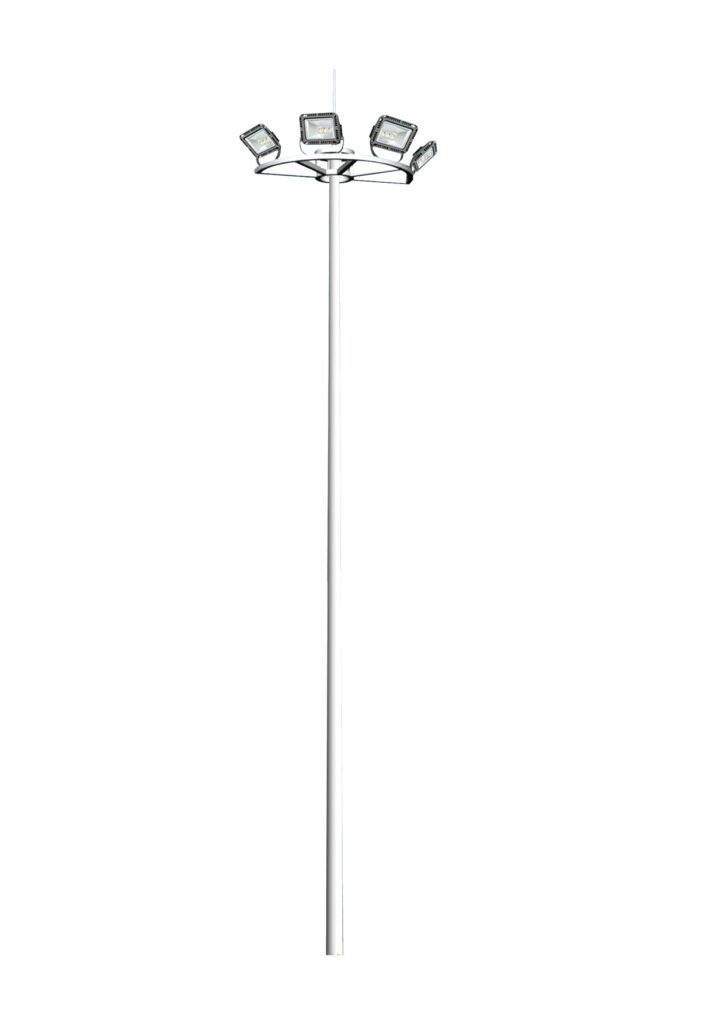
- High mast pole with hot-dip galvanized steel structure
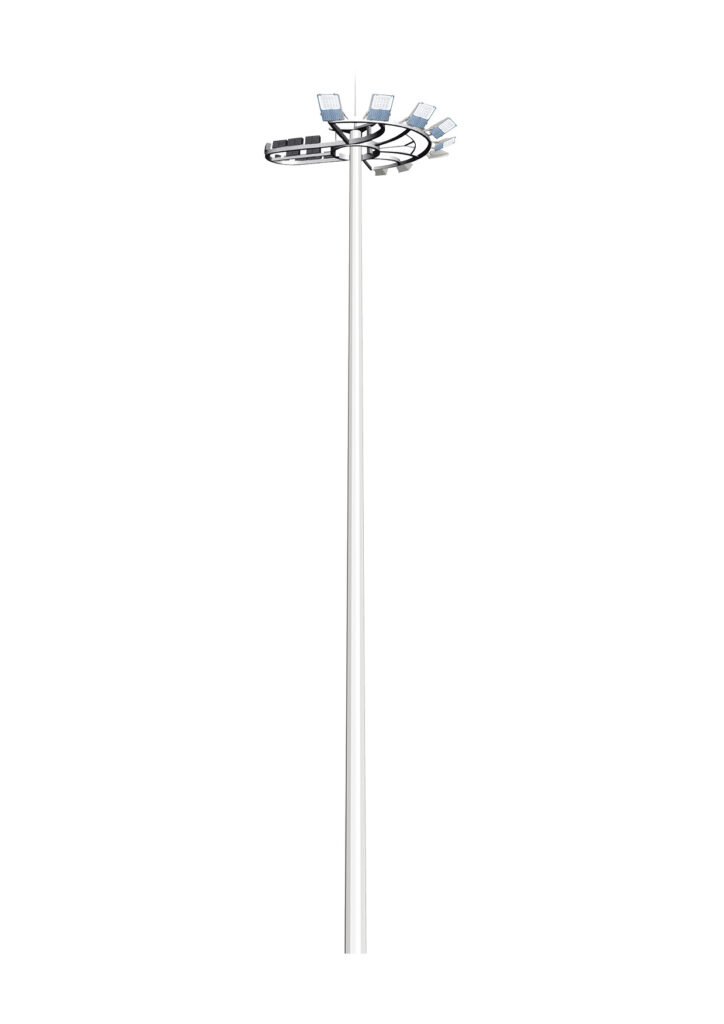
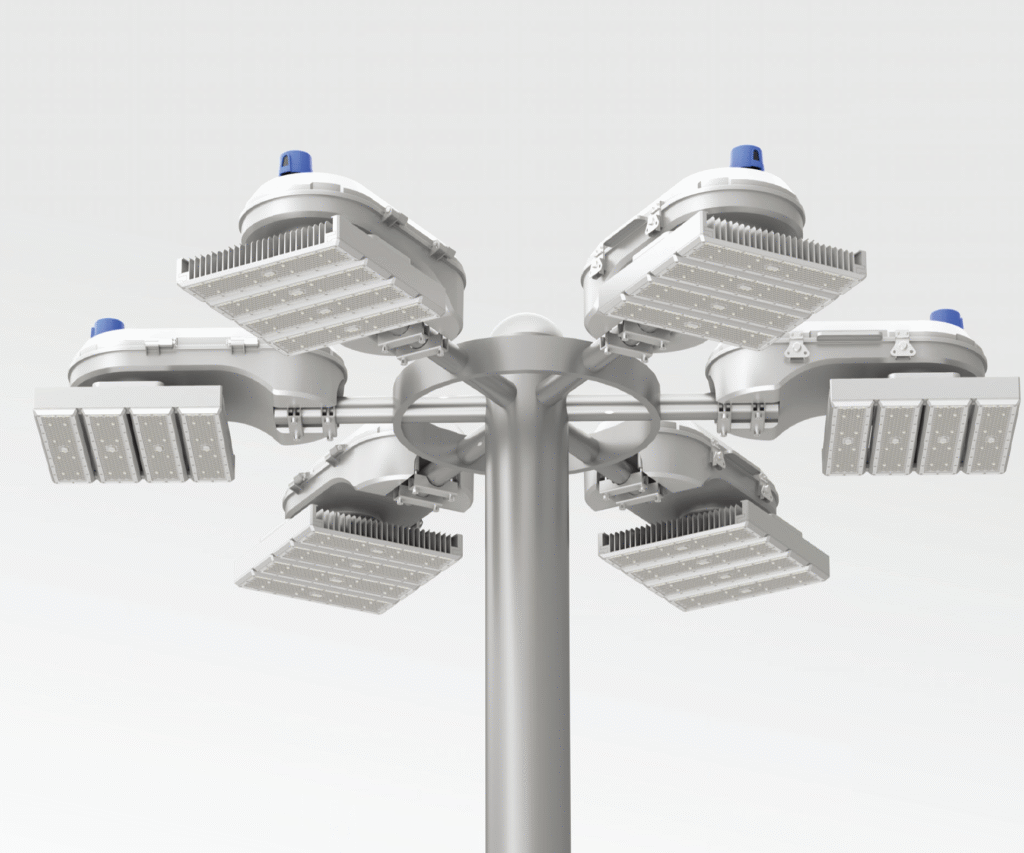
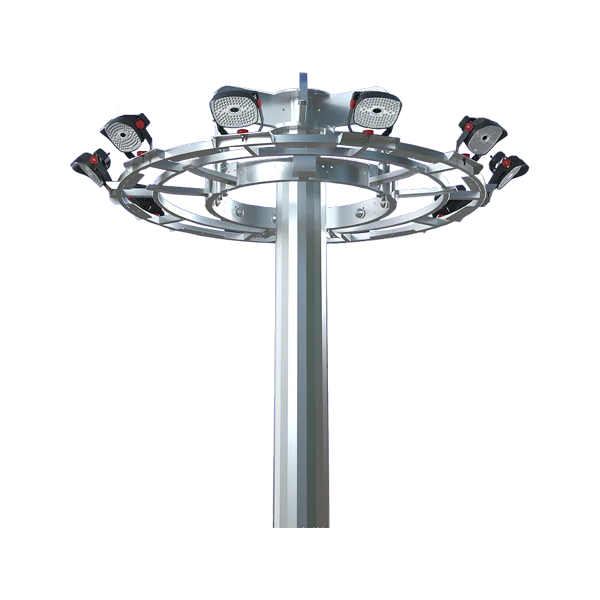
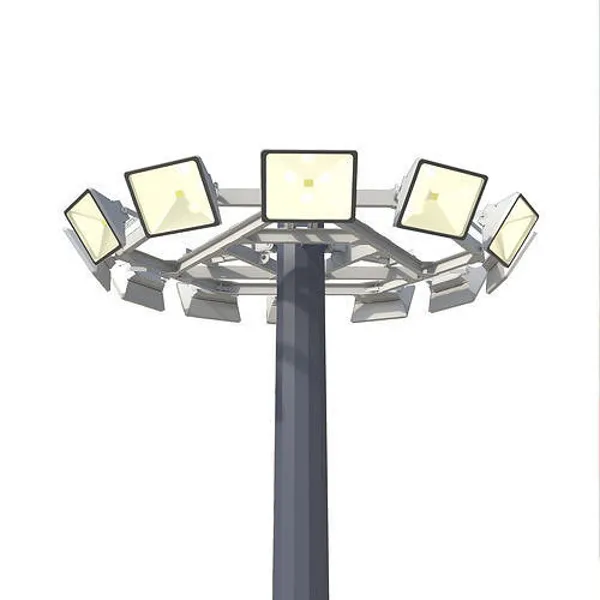
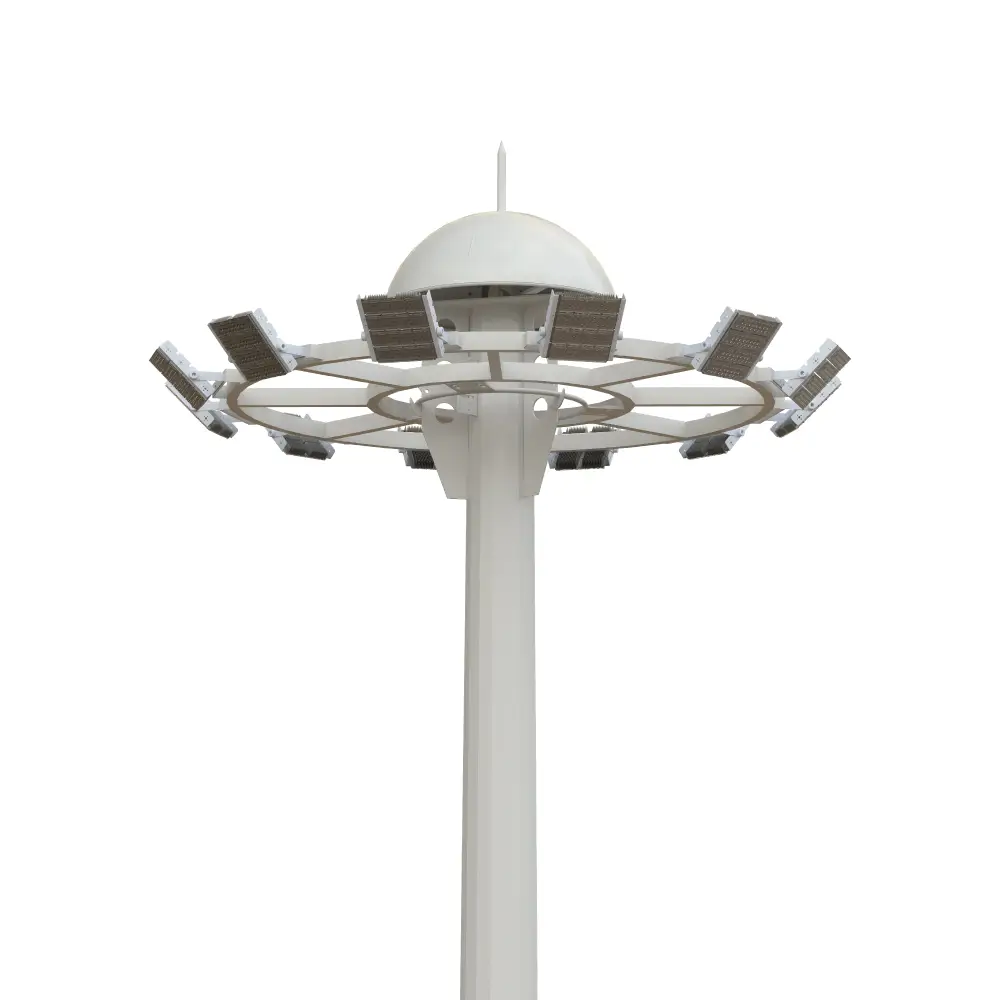
- Lighting ring or luminaire carriage according to project layout
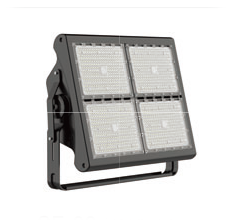
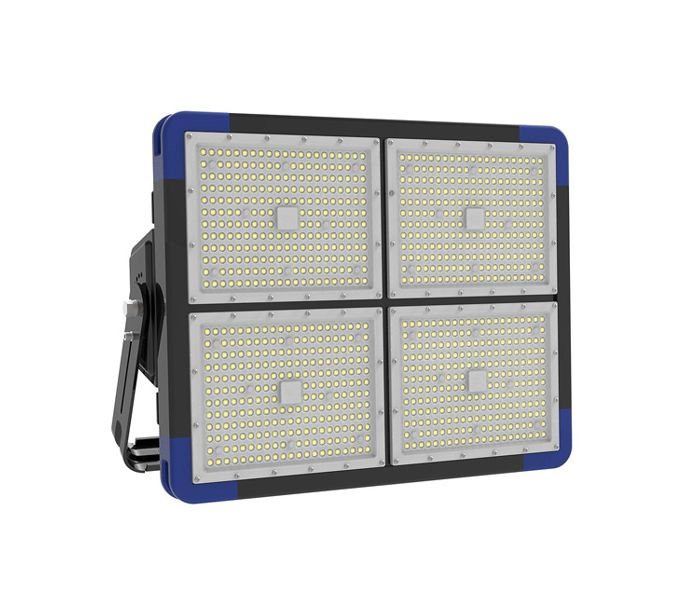
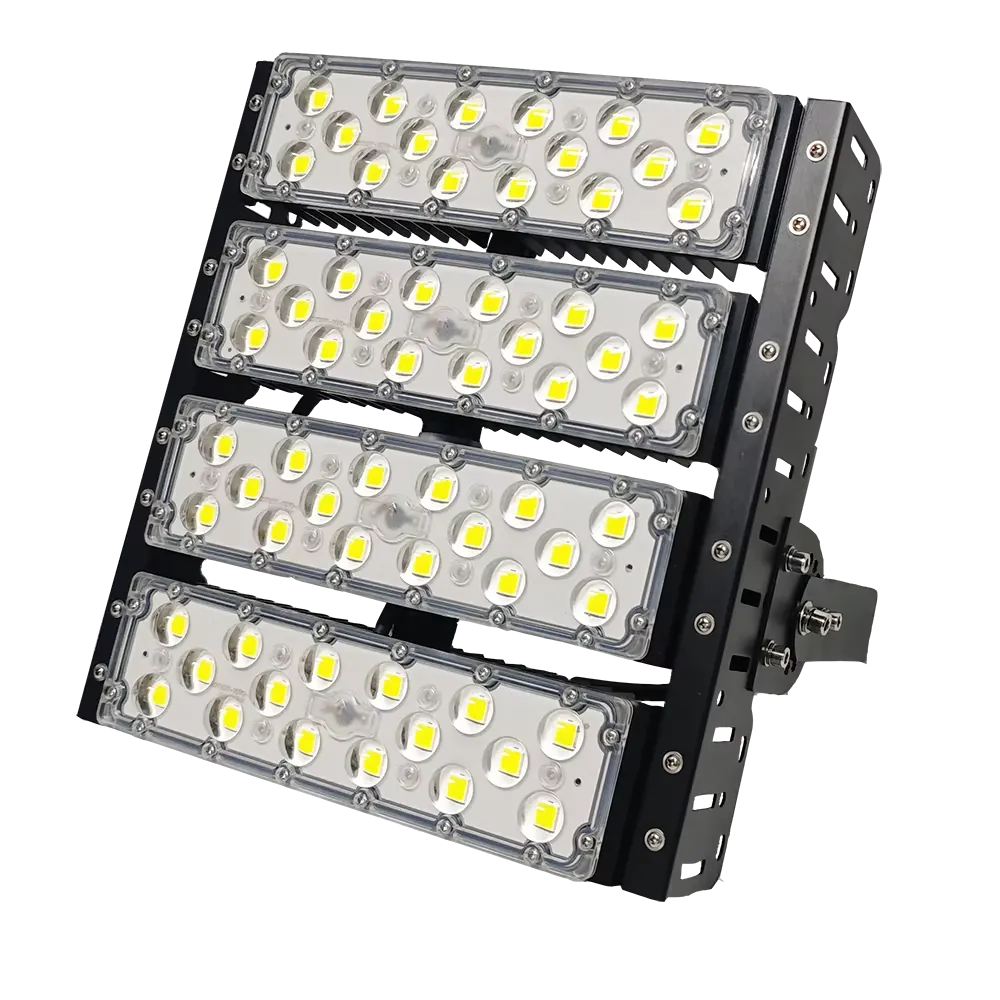
- LED floodlight modules selected by beam angle and target lux
- Motorized or manual lowering system, cable, control cabinet and SPD
- Anchor bolts and foundation reference drawing support
- DIALux / lighting layout, IES/LDT, GA drawing and BOQ matching notes
Lighting Design Support and Project Workflow
Project Input Review
Area drawing, mast height, target lux, wind speed, voltage, and document requirements are reviewed before configuration.
Lighting Simulation
IES/LDT files, beam angle selection, DIALux or AGi32 layout, lux level, and uniformity can be reviewed according to project needs.
Structure Coordination
Mast height, lighting ring, flange, anchor bolts, foundation reference, wind speed, and maintenance method are coordinated with site conditions.
Document Pack
Datasheet and GA drawing, IES/LDT, simulation output, BOQ matching notes, and installation guidance can be prepared according to confirmed scope.
Structure, Foundation and Maintenance Review
Review structure-related risk before production
High mast projects should be reviewed not only by luminaire wattage, but also by mast height, wind speed, luminaire quantity, flange size, anchor bolts, foundation coordination, corrosion environment, and maintenance method. For approval-oriented projects, structure-related drawings, foundation reference, and maintenance notes should be aligned with confirmed project inputs.
Wind Load Review
Wind speed, mast height, luminaire quantity, and site exposure should be reviewed before final configuration.
Flange & Anchor Bolt Coordination
Flange size, anchor bolt layout, and civil interface should match the mast structure and project site.
Foundation Reference Support
Foundation notes or reference drawings can support early civil coordination before final local approval.
Lifting System and Maintenance
Motorized or manual lowering systems can improve maintenance access and reduce work-at-height risk where applicable.
Corrosion Environment Review
Coastal, port, industrial, or humid environments may require stronger surface treatment and corrosion review.
Installation Access Review
Site access, crane access, assembly method, and maintenance route should be checked before production and shipment.
High Mast Document Pack for Tender and Engineering Review
Datasheet
For technical submission, product comparison, and preliminary specification review.
IES / LDT Photometric Files
For lighting simulation, beam angle review, and lux/uniformity calculation.
DIALux / AGi32 Simulation Support
For pole layout, target lux, uniformity, and beam aiming review.
GA Drawing
For dimensional approval, mast layout, luminaire arrangement, and project coordination.
Foundation Reference
For early civil coordination, anchor bolt interface, and foundation discussion.
BOQ Matching Notes
For tender clarification, item matching, and technical deviation review.
Manufacturing and Project Support
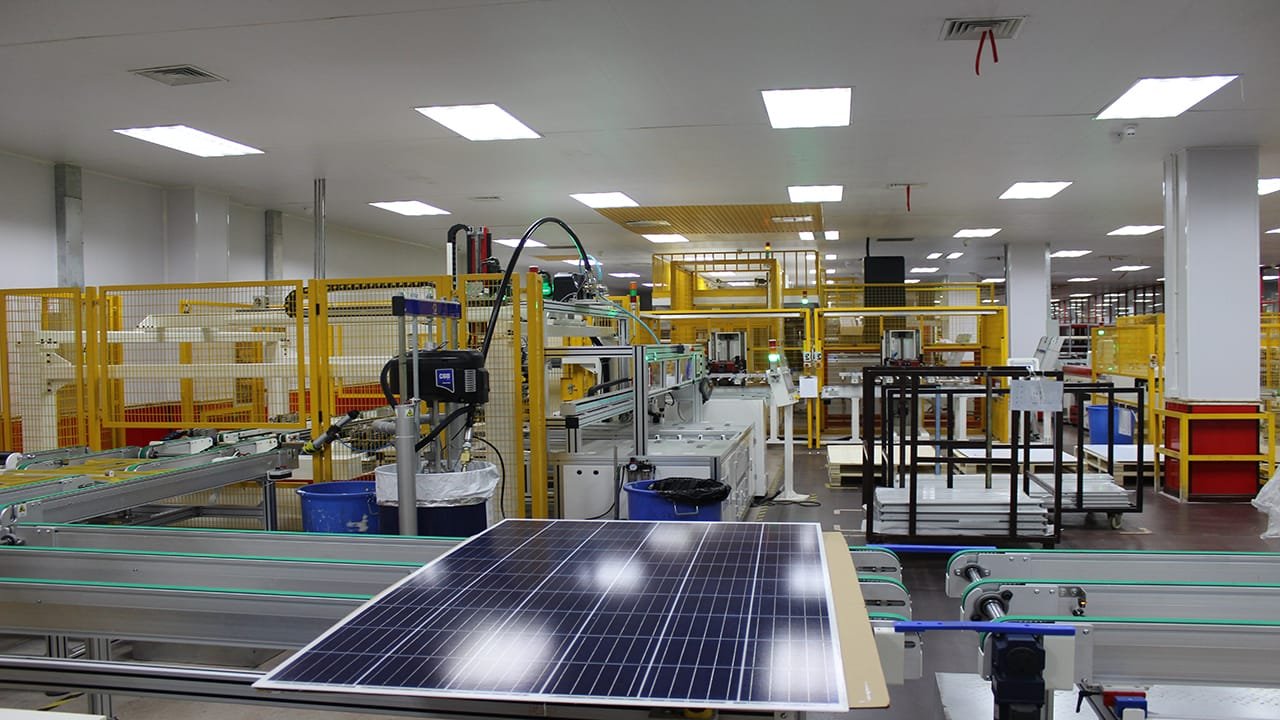
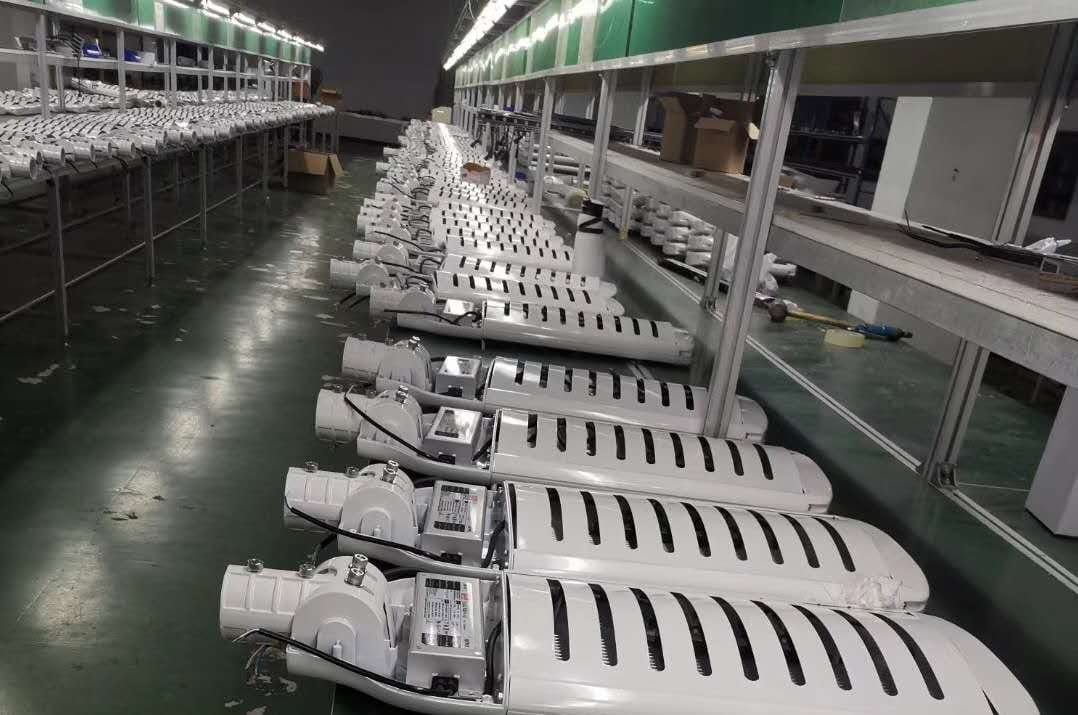
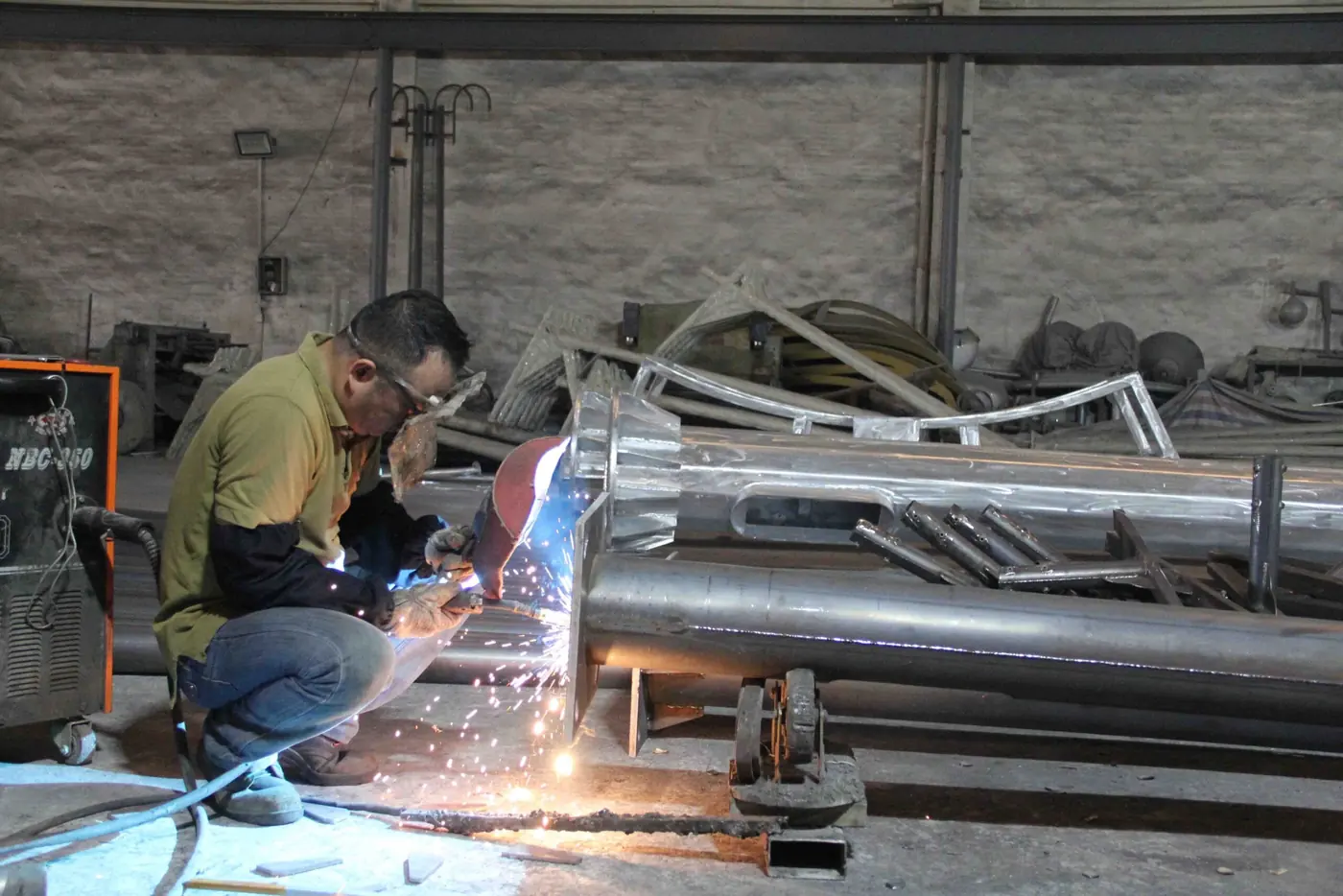
Pole Fabrication
Pole sections, wall thickness, flange interfaces, and fabrication consistency should match the project configuration.
Welding & Flange Inspection
Welding quality, flange alignment, and anchor-bolt interface checks help reduce installation risk on site.
Hot-Dip Galvanizing / Surface Treatment
Surface treatment and corrosion protection should be reviewed for coastal, port, industrial, or humid environments.
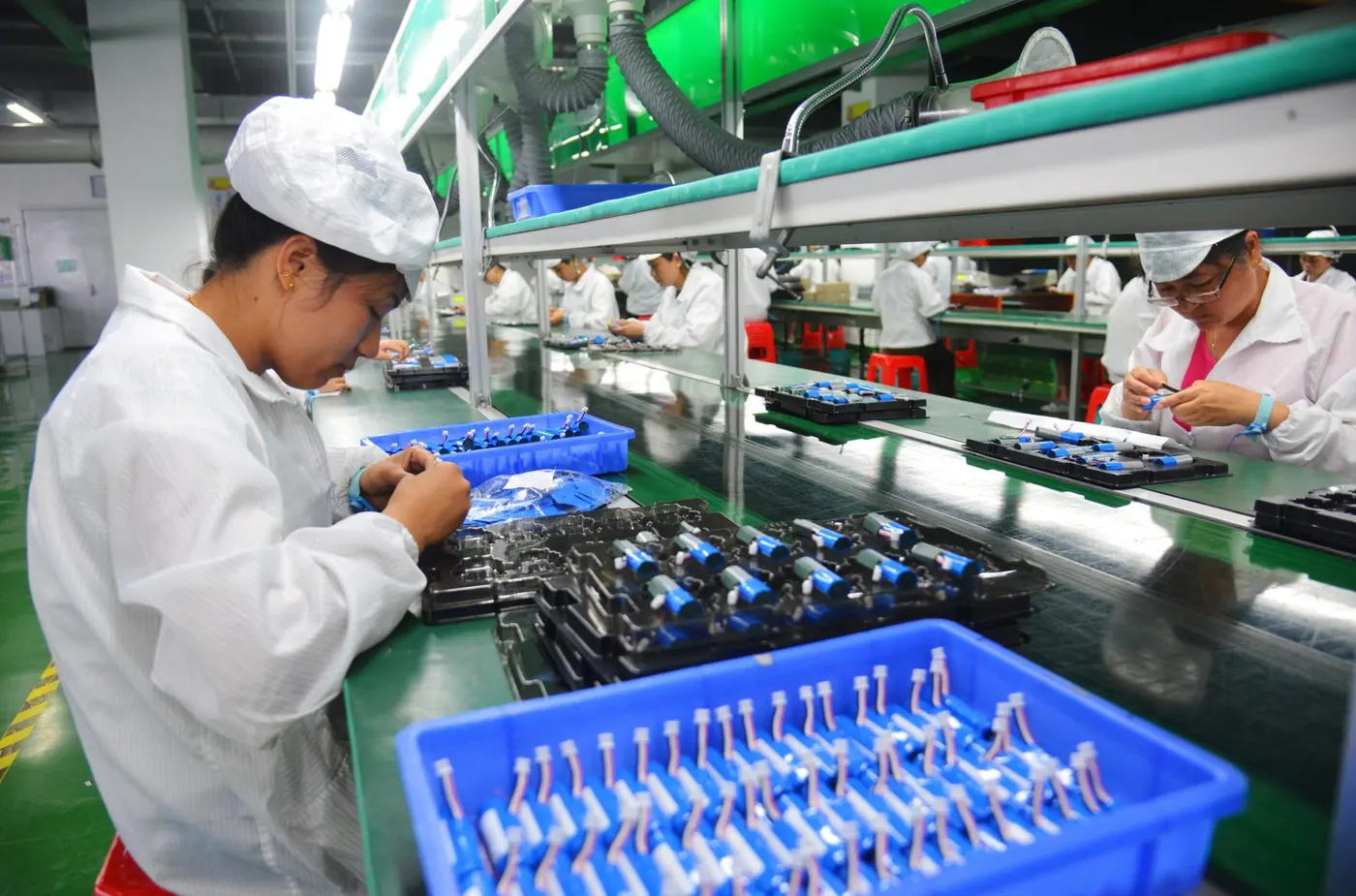
Luminaire Assembly & Packing Coordination
LED floodlight assembly, driver matching, SPD, packing, and batch delivery coordination support project consistency.
Related Outdoor and Large-Area Lighting Project Experience
Project experience kept factual
Selected references from outdoor lighting, public-area, solar street light and large-area lighting programs. High mast details are shared only when the project type and configuration are relevant.
High Mast Lighting Project
Scope: large-area outdoor lighting review.
Support: mast configuration, lighting layout, and document coordination.
Municipal Outdoor Lighting Program
Scope: solar street lighting / public lighting.
Support: batch project supply, document support, and delivery coordination.
Public Road Lighting Program
Scope: outdoor lighting project support.
Support: product configuration, delivery coordination, and project documentation.
Togo
Project type: public solar street lighting program. Lighting scope: outdoor road and public-area lighting. Support delivered: model mapping and project documentation.
Ghana
Project type: public outdoor lighting program. Lighting scope: road and large-area lighting references. Support delivered: configuration notes and delivery coordination.
Cote d'Ivoire
Project type: municipal solar street lighting. Lighting scope: public road lighting. Support delivered: project documentation and model matching.
Nepal
Project type: solar street light project. Lighting scope: public outdoor lighting. Support delivered: product configuration and shipment support.
Zambia
Project type: high mast lighting inquiry and supply reference. Lighting scope: large-area lighting. Support delivered: model review and documentation support.
Cambodia
Project type: public solar street lighting program. Lighting scope: road and community lighting. Support delivered: program configuration support.
Additional References
Project type: outdoor and large-area lighting references. Lighting scope: shared according to relevance. Support delivered: documents available on request.
FAQs
Common questions about high mast lighting selection.
Request High Mast Project Configuration
Need a high mast lighting layout or project document pack?
Share your area drawing, mast height, target lux, wind speed, and required documents. Our engineering team will review the suitable configuration path and document list for your project.
Products Overview
High Mast Product Direction
AC High Mast Lighting
Best for stadiums, highways, ports, airports, interchanges, and industrial yards with stable grid power supply.
- Key review: pole height, luminaire quantity, target lux, uniformity, wind load, and foundation.
- Documents: datasheet, IES/LDT, DIALux, drawings, BOQ mapping notes.
Solar / Project High Mast Lighting
Best for off-grid or special-area projects where solar power, autonomy, battery capacity, and PV layout must be reviewed.
- Key review: solar radiation, autonomy target, PV/battery sizing, pole structure, and maintenance access.
- Documents: configuration sheet, datasheet, DIALux support, drawings, BOQ notes where applicable.
High Mast Lighting Solutions for Large-Scale Outdoor Projects
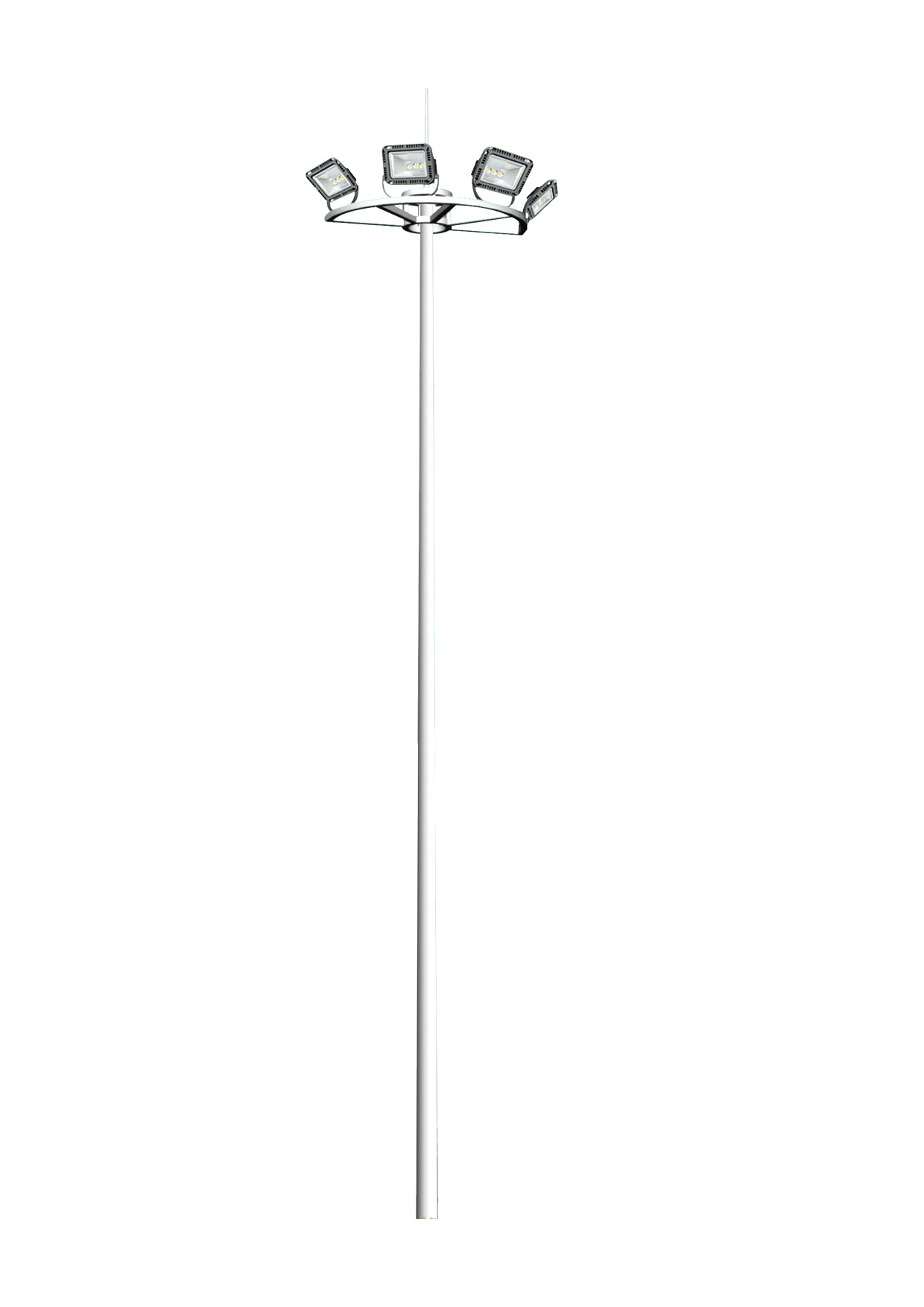
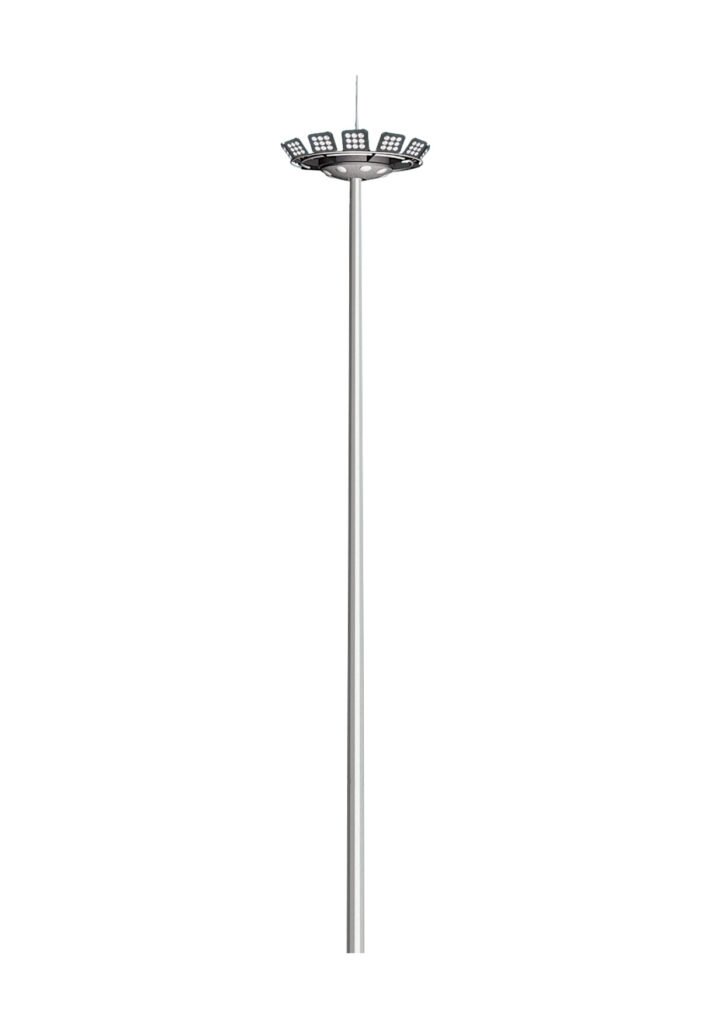
High mast lighting systems are configured for stadiums, highways, airports, ports, and industrial zones by reviewing mast height, luminaire quantity, beam distribution, wind load, corrosion exposure, foundation requirements, lowering system, and maintenance access. LED flood modules, drivers, control options, and pole structures are matched to site conditions and required documents rather than selected by wattage alone.
The Sunlurio SL-HM Series can be reviewed for coastal, port, and high-humidity projects where corrosion protection, wind load, maintenance access, and batch documentation are important.
SL-HM Series / AC High Mast Lighting / Stadium & Road Lighting
Up to 230 lm/W ultra-high luminous efficiency, providing stronger illumination with lower power consumption.
Compatible with AC 220V / 50 Hz electrical systems, ensuring steady performance under fluctuating voltages.
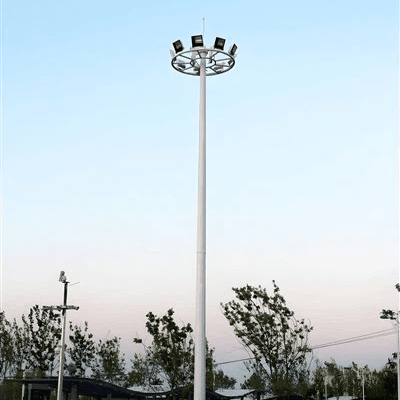
Modular LED floodlight design — 300 W / 500 W options for 20 m, 25 m, and 30 m pole heights, with customizable lamp heads and beam angles precisely engineered for different applications.
Famous-brand IP67 isolated drivers for safety and consistent output.
Hot-dip galvanized steel poles with anti-corrosion finish for years of outdoor endurance.
Tool-free access and maintenance platform for easy servicing and inspection.
Sunlurio supplies the complete high mast lighting system — from pole structure to LED luminaire and control integration.
Series SL-HM AC High Mast Lighting – Engineered by Sunlurio for Professional Projects
The Sunlurio SL-HM Series is a grid-powered high mast lighting system for highways, stadiums, ports, airports, and industrial zones. Configuration review can include LED module output, driver specification, mast height, wind load, hot-dip galvanizing, corrosion exposure, lowering system, foundation, surge protection, smart control options, and maintenance access. Warranty terms, certificates, drawings, and photometric files should be confirmed according to the selected configuration and project requirements.

Pole Fabrication
Pole sections, wall thickness, flange interfaces and fabrication consistency are reviewed against the project configuration.

Welding and Flange Inspection
Welding quality, flange alignment and anchor-bolt interface checks help reduce installation risk.

Surface Treatment Review
Galvanizing or surface protection should consider coastal, port, industrial or humid environments.

Luminaire Assembly and Packing
Driver matching, SPD, packing and batch delivery coordination support project consistency.
Why Project Buyers Work with Sunlurio
At Sunlurio, we don’t just assemble solar street lights — we engineer long-life outdoor lighting systems designed for real-world performance. Each unit is tested for brightness, corrosion resistance, and battery endurance before shipment. From African highways to coastal parks in Southeast Asia, our lights deliver consistent illumination for 3–5 rainy days, ensuring safety and sustainability everywhere.
Finished Projects
Years Experience
What Is High Mast Lighting?
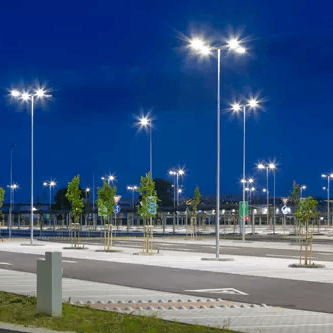
Quick Answer: High mast lighting is a large-area lighting system using tall poles, multiple high-power luminaires, and controlled beam distribution to illuminate ports, stadiums, highways, airports, logistics yards, and industrial areas.
Large Area Coverage
High mast systems cover wide outdoor areas with fewer pole locations.
Engineering Review Required
Pole height, luminaire quantity, beam angle, target lux, wind load, and foundation must be reviewed before quotation.
Maintenance Planning
Lifting systems, access method, spare parts, and safety procedure should be considered during design.
High Mast Project Inputs Before Quotation

Luminous Efficiency (lm/W)
Indicates how much light the fixture produces per watt of power. The higher the value, the more energy-efficient the light.
Power Rating (Wattage)
Determines how bright the light is. Typical configurations range from 300 W to 1200 W, depending on pole height and the area to be illuminated.

Pole Height & Structure
Common options are 20 m, 25 m, and 30 m. Make sure the pole is hot-dip galvanized steel with proper wind-load resistance and a safe base design.
IP & IK Ratings
These define resistance to dust, water, and impact. For outdoor projects, choose IP65/IP66 and IK08–IK10 fixtures to ensure durability.

Input Voltage & Power Supply
Confirm compatibility with your local electrical system (e.g., AC 220–240 V, 50/60 Hz). High-quality lights use isolated IP67 drivers for stable output and surge protection.
Certification & Warranty
Ensure the product is CE, RoHS, and ISO certified, with a minimum 3–5 year warranty to protect your investment.