
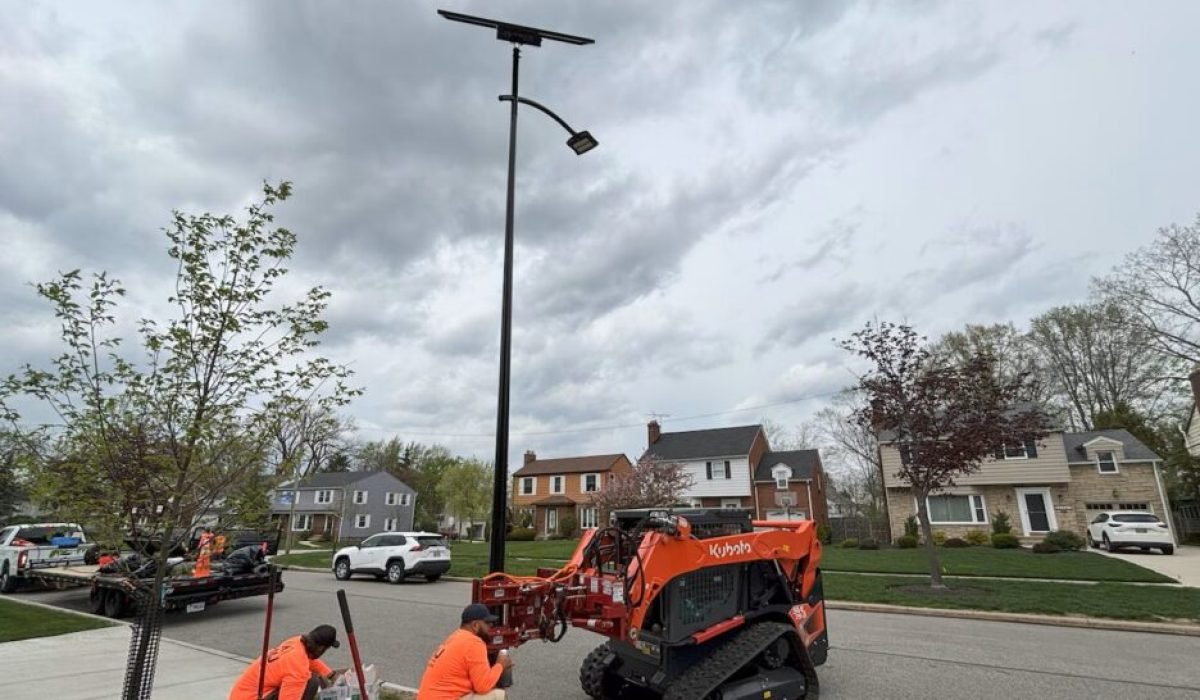
A practical guide shaped by real African road projects — written for planners, EPC teams, and municipalities who want safer, brighter cities powered by clean energy.
Snippet Answer:
Road solar lighting design requires proper assessment of traffic needs, shading, PV sizing, battery autonomy, optics, pole spacing, and installation quality. When done well, it delivers safer roads, lower energy costs, and sustainable night-time visibility for African cities.
Why Are African Municipalities Shifting to Solar Road Lighting?

The reason is simple: reliable lighting builds safer, more connected communities — even in places where the grid struggles.
In the past decade on national roads in Kenya, Uganda, Ghana, and Zambia, I’ve seen how solar lighting brings immediate benefits:
- Safer roads with fewer night accidents
- More active evening businesses
- Improved pedestrian confidence
- Reliable light during power cuts
- Faster project deployment compared to grid solutions
Solar lighting has become a symbol of modern infrastructure — clean, visible, and built for the future.
What Makes Road Solar Lighting Successful?
Visibility & Safety
Uniform lighting and correct optical distribution matter more than raw lumen numbers.
Energy Balance
PV and battery sizing must match local conditions — rainy seasons, dust, shading, and temperature all play real roles.
Long-Term Reliability
A well-designed solar system should deliver 5–10 years of dependable service, surviving rainy seasons, cloudy weeks, and harsh operating environments.
Key Assessments Before Designing Solar Road Lighting
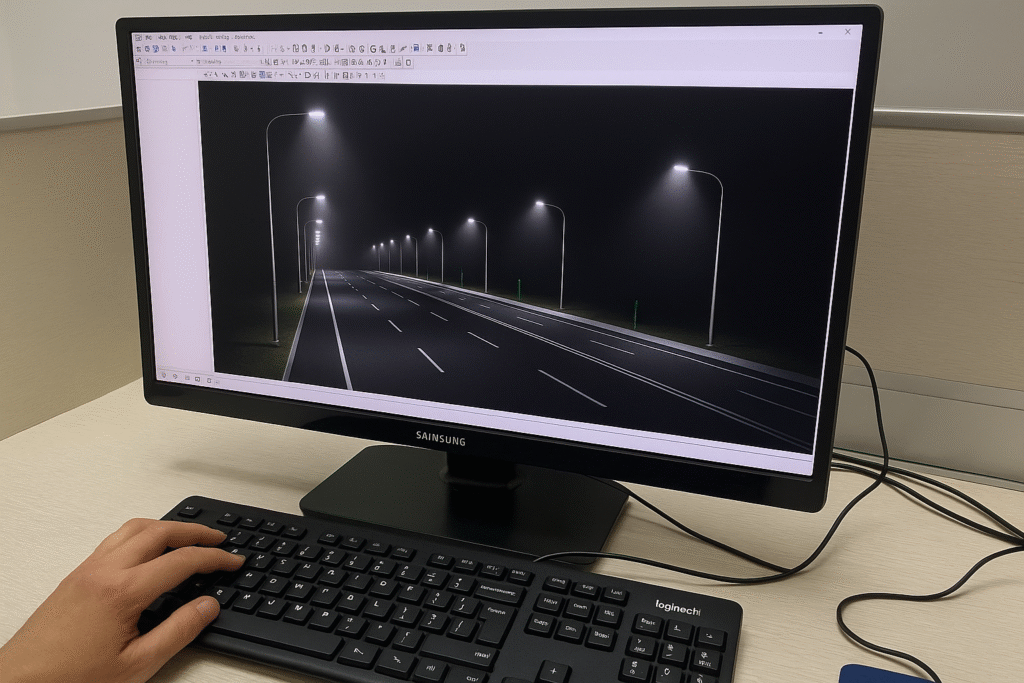
Road Type & Traffic Characteristics
Highways, township roads, community roads, and pedestrian connectors require different illumination strategies.
Safety Requirements
Municipalities aim to improve:
- Driver visibility
- Night-time reaction time
- Accident prevention
- Community safety and comfort
In Ghana’s Eastern Corridor upgrade, strengthening optics and uniformity directly reduced nighttime accidents.
Shading & Surrounding Environment
Even in Africa’s sunny climate, shading is a major design risk.
A project in Lusaka suffered nearly 40% reduced PV yield simply because a row of trees shaded the panels.
Lesson: shading evaluation is not optional.
Local Climate & Solar Resource
Each region has unique environmental factors:
- Coastal salt corrosion (Tanzania, Senegal)
- Long rainy seasons (Uganda)
- High dust levels (Kenya, Nigeria)
- High temperatures (Botswana, Zambia)
Local climate should always determine design margins.
Core Components for Road Solar Lighting Design

Photovoltaic (PV) System
Tilt angle, orientation, and sizing determine daily energy availability.
In Uganda and Sierra Leone, adding 20–30% PV oversizing is often necessary to survive long rainy seasons.
Battery System
LiFePO₄ batteries perform best in African climates due to their stability and long cycle life.
A minimum of 2–3 days of autonomy ensures good performance through cloudy periods.
LED Luminaire & Optics
Road lighting requires correct optical patterns:
- Type II / Type III → community & municipal roads
- Type V → open areas, roundabouts
Optics often matter more than wattage.
In Accra, a project passed monitoring only after switching to a wider Type III distribution.
Smart Controls & Sensors
Efficient controllers and dimming profiles extend battery life and optimize system output.
Poles & Structures
Pole height and durability should match:
- Road width
- Wind load
- Corrosion risks
- Installation constraints
Coastal roads may require thicker galvanization due to salt exposure.
Practical Solar Lighting Design Calculations
Daily Lighting Load
LED wattage × lighting hours × dimming adjustment
PV Sizing (climate-adjusted)
Dry areas: ×1.15
Rainy climates: ×1.25–1.35
Battery Sizing
Daily load × 2.5 days autonomy
This ensures stable lighting through cloudy spells.
Pole Height and Spacing Recommendations
Pole Height
- 6–7 m → community roads
- 8–9 m → municipal roads
- 10–12 m → dual carriageway
Pole Spacing
- 25–35 m → narrow roads
- 35–45 m → wider municipal roads
Spacing always depends on optics and required uniformity.
Installation Best Practices
- Ensure consistent PV orientation
- Avoid angled or leaning poles
- Confirm cable connections and sealing
- Verify illumination at night before handover
- Clean battery ventilation paths
- Document GPS locations for maintenance
One Kenyan national road project failed early because contractors installed all PV modules facing west. Small installation errors have big consequences.
Maintenance: Low-Maintenance, Not Zero-Maintenance
Recommended schedule:
- Clean PV panels every 2–3 months
- Tighten pole hardware annually
- Inspect battery enclosures for heat and moisture
- Test sensors and dimming performance
- Monitor IoT systems where available
Routine care significantly increases system lifespan.
Common Challenges in African Road Projects
Shading from vegetation
Solution: strategic pole positioning + trimming.
Long rainy seasons
Solution: extra PV wattage and higher autonomy days.
Budget limitations
Solution: optimized pole spacing + smart dimming.
Multi-lot procurement inconsistencies
Solution: unified optics and dimming across lots.
Harsh climates
Solution: reinforced corrosion protection and structural upgrades.
The Future of Municipal Road Solar Lighting in Africa

Road lighting in Africa is moving toward:
- Smarter adaptive lighting
- Higher-density batteries
- Lighter, more efficient PV modules
- Predictive IoT maintenance
- Modular system upgrades
But each city will adopt technologies at its own pace.
Solar lighting succeeds because it can scale with local needs and budgets.
What Solar Lighting Brings to African Cities
Safer Roads
Drivers see better. Pedestrians walk with confidence. Night-time accidents decrease.
Longer Business Hours
Shops along municipal roads stay open later, creating more income opportunities.
Clean, Reliable Infrastructure
Solar avoids grid outages, cable theft, and rising electricity costs.
Visible Progress
Every night, the lights remind the community that development is happening.
Final Thoughts
After working on municipal road lighting across East and West Africa, my strongest conclusion is this:
Solar lighting is not just infrastructure — it is a development tool.
It brings safety, economic opportunity, and sustainability to the communities that need it most.
For any new road upgrade, I recommend starting with a pilot segment that spans one rainy season.
This single step gives municipalities confidence and ensures long-term success.
Author
Yori Wang
Senior Project & Sales Manager, Sunlurio
15+ Years in African municipal road lighting, EPC delivery, LiFePO₄ energy systems, and PV–battery engineering.
Lighting roads is lighting the future — safely, sustainably, and proudly.