
Bring light to the next work area.
The Sunlurio SL-350 mobile solar light tower brings lighting to roadworks, construction compounds and temporary yards without permanent lighting poles. Solar panels, battery storage, LED lights and an electric mast travel together on one trailer.
Choose AGM, GEL lead-acid or LiFePO4 lithium batteries, a 1,400 Wp or 2,000 Wp solar array, and a lighting package for your work area. The 6 m electric mast is the starting configuration. Tell us your location and nightly working hours; we will help you compare the options.
SOLAR ARRAY OPTIONS
BATTERY CHEMISTRY OPTIONS
ELECTRIC MAST · CUSTOMIZABLE
STORAGE CAPACITY OPTIONS
A road crew may finish one section and move to the next. A contractor may need light around a storage yard before permanent services are installed. A trailer-mounted tower lets the lighting position move with the work, without installing permanent poles at each location.
Solar charging reduces routine fuel deliveries, while battery-powered lighting avoids a diesel engine running beside the crew. AC charging provides another option when a suitable external supply is available. Short winter days, shading and long shifts affect how often that extra charging may be needed.
Start with the places people actually use: walking routes, work faces, loading points and vehicle entrances. We use those areas, the operating hours and available charging conditions to help you choose the lighting and battery package. This gives you a more useful comparison than lamp wattage alone.
The tower is most useful when the site layout changes or lighting is needed for a limited period. For a permanently occupied site with fixed lighting positions, permanent lighting may be the better long-term choice. For fixed roads and access routes, compare our solar street light systems. For smaller fixed entrances or perimeter areas with a suitable wall or pole, compare SL-FL solar flood lights. Leave room for the panels to open and plan a safe route for moving the trailer between positions.
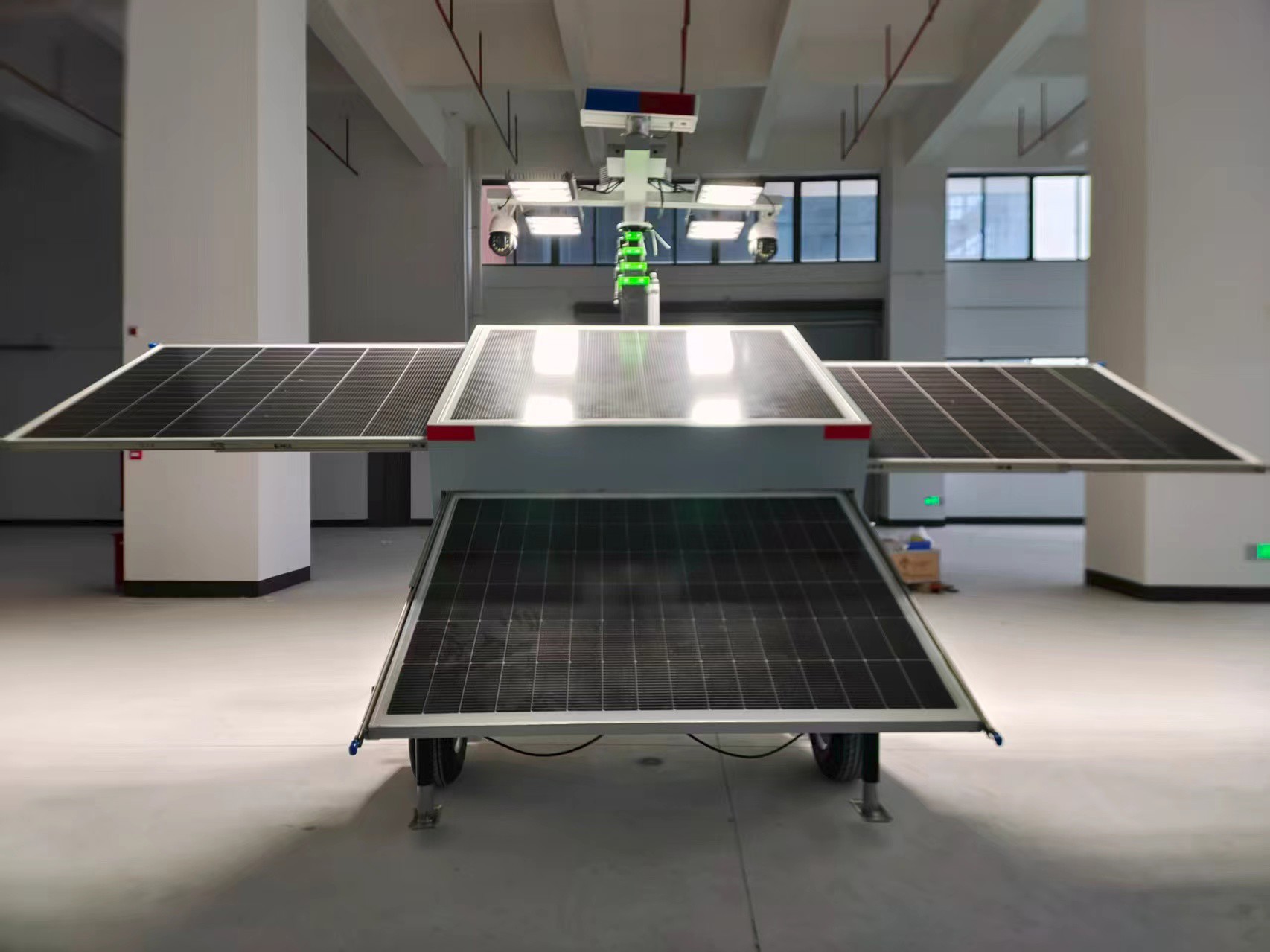
The SL-350 series offers four 350 W or four 500 W monocrystalline panels, giving 1,400 Wp or 2,000 Wp of rated solar capacity. These ratings describe panel output under standard test conditions. The energy collected on your site depends on the season, panel exposure, shading, temperature and cleanliness. Leave room for the panels to open and keep their sun-facing area clear of buildings, stacked material and parked equipment.
Battery choices include 24 V AGM systems with 6 kWh or 12 kWh of nominal storage, and a 48 V, 12 kWh LiFePO4 system. GEL capacity and voltage are selected for the project. We match the charging and electrical equipment to the chosen battery.
Nominal capacity is the energy rating used to compare batteries. The energy available for a shift also depends on discharge limits, temperature and battery condition. Lighting, cameras and external equipment all use the same reserve. Our LiFePO4 and AGM battery comparison explains the differences in usable energy, charging and maintenance.
The 6 m electric mast uses galvanized Q235 steel. The 24 V configuration has a 24 V mast drive; we match the power supply to the battery system you choose. Stabilizer legs support the parked trailer, and the single axle has a handbrake and leaf-spring suspension. Lower and secure the mast and panels before moving the unit.
Electric-hydraulic versions with a 3–7 m height range are another option. We list the chosen lift mechanism, height and permitted head load together, so your crew receives the operating instructions for that arrangement.
MPPT control manages solar charging. An AC 220 V input lets you charge from a suitable external supply when needed. The specified inverter provides a 3,000 W AC 220 V output for compatible equipment.
Before connecting a tool or appliance, check its running power and starting current. Its operating time matters too: a load can stay within the inverter limit and still use most of the battery energy needed for lighting.
The SL-350 is a configurable series. Select the solar panels, lighting power and battery together, then add cameras, warning equipment or automatic controls if your site needs them. The table shows the available choices; your order sheet will identify the exact combination supplied. AGM and GEL are both lead-acid batteries. LiFePO4 is the lithium battery option.
| Solar array options | 4 × 350 W = 1,400 Wp; or 4 × 500 W = 2,000 Wp |
|---|---|
| Solar cell type | High-efficiency monocrystalline silicon |
| Battery technologies | AGM lead-acid; GEL lead-acid; lithium iron phosphate (LiFePO4) |
| AGM battery options | 24 V / 6 kWh or 24 V / 12 kWh nominal capacity |
| LiFePO4 battery option | 48 V / 12 kWh nominal capacity |
| GEL configuration | Capacity and system voltage selected for the project |
| Solar charge control | MPPT; controller matched to array and battery system |
| AC charging input | AC 220 V, 50–60 Hz |
| Inverter output | 3,000 W, AC 220 V, 50–60 Hz; matched to battery system |
| Lighting package options | 400 W, 500 W or 600 W nominal total; luminaire layout selected with the configuration |
|---|---|
| Lamp arrangements by lighting package | 400 W: 2 × 200 W or 4 × 100 W; 500 W: 2 × 250 W; 600 W: 4 × 150 W. Confirm the selected arrangement with the order. |
| Dimming interface | 0–10 V |
| Warm-white option | 3,000–3,500 K |
| Neutral-white option | 4,000–4,500 K |
| Cool-white option | 6,000–6,500 K |
| Digital controller option | Manual, light-sensor and timer operating modes |
| Lighting coverage | Based on the required lux level, work area, lamp aiming and obstructions; assessed for the selected lighting package. |
| Mast height | 6 m; project-specific height can be discussed |
|---|---|
| Lifting method | Electric lifting; 24 V drive in the 24 V system. Supply adapted for other battery configurations. |
| Mast construction | Galvanized Q235 structural steel |
| Specified mast load rating | 50 kg; subject to the approved equipment arrangement |
| Retracted mast height | 2 m; mast dimension, not the complete transport height |
| Axle and parking | Single axle with handbrake |
| Suspension | Leaf springs |
| Tyres | 175/70 R13 tubeless |
| Tow connection | Triangular towbar with 2-inch ball coupling |
| Support equipment | Retractable stabilizer legs; trailer jack rated at 800 kg. This is the jack rating, not the trailer payload. |
| Operator controls | Emergency stop button and AC 220 V outlet |
| Transport dimensions | 2,100 × 1,850 × 2,850 mm, including towbar |
| Unit weight | 450 kg for the 1,400 Wp reference unit; 650 kg for the 2,000 Wp reference unit. Battery and accessory choices change the final shipping weight. |
| Camera specification | 8 MP camera; specified supply 12 V / 3 A. This supply rating is not a measurement of continuous power consumption. |
|---|---|
| Camera functions | 360° pan, 90° tilt, night vision and tracking |
| Warning light | AC 220 V warning-light option |
| Audio option | 2.4 GHz wireless loudspeaker with playback function |
| Remote viewing and recording | Camera count, network and recording equipment selected for the site |
We list the battery, charger, lights and accessories together on your order sheet, with dimensions and shipping weight for that combination. Tell us the destination and intended towing route so we can discuss the trailer equipment and the documents needed for local registration.
Choose 6 kWh or 12 kWh at 24 V. AGM is a sealed lead-acid battery option. For a fair comparison with other batteries, consider usable energy, charging time and replacement access, as well as the nominal capacity.
GEL is another lead-acid option. We select its capacity, voltage and charging profile for your site. Tell us if your maintenance team prefers GEL or if an existing equipment specification requires it.
The lithium option uses a 48 V, 12 kWh LiFePO4 battery. We match its battery management system, charger, protection and inverter as one electrical package. This lets you compare the complete lithium configuration with the AGM and GEL alternatives.
A useful operating plan tells us when full output is needed and when a lower level is acceptable. For example, a crew may need full lighting during active work, then reduced lighting around an access gate after the shift. A suitable dimming schedule can reduce nightly energy demand, provided the remaining light still meets the purpose of that area.
Here is what the lighting alone uses over an eight-hour shift: 400 W needs 3.2 kWh, 500 W needs 4.0 kWh, and 600 W needs 4.8 kWh. Cameras, external equipment and system losses add to those figures. These are energy calculations, not tested runtimes.
That difference matters when choosing between 6 kWh and 12 kWh of nominal storage. Allow for the battery’s usable discharge range and a reserve for poor charging weather. A larger battery provides more storage, but the solar array still needs enough daylight to recharge it.
Long nights and cloudy weather draw on the same battery reserve. We compare the expected nightly load with the charging energy available in your operating season, then discuss whether 6 kWh, 12 kWh or a project-specific GEL package is suitable.
The charging plan matters as much as the storage size. A larger battery can support a greater energy reserve, but it takes more charging energy to replenish after use. We match the panel array, battery voltage, charger settings and protection so the proposed system works as a complete package.
Send the country, nearest town, operating season and lighting schedule. We can help compare the storage choices and discuss whether AC charging should be part of the operating routine. Include any cameras, communication devices or AC equipment so the energy budget covers everything connected to the tower. See how we review lighting requirements and site inputs when developing a proposal.
Roadworks and utility maintenance: position the trailer clear of vehicle movements and aim the lights at the work. We consider approaching traffic, glare and shadows from machinery when discussing the layout. Your crew needs visibility across the task area, including access routes and the edges of the work zone.
Construction compounds and storage yards: use the trailer where a permanent lighting position would restrict changing storage layouts. Consider access routes, loading points and shadows behind containers. Camera options can be discussed for monitoring needs, with communications and recording selected for the site. For a larger fixed layout, see our industrial and logistics yard lighting guide.
Remote work areas and mining support: solar charging can reduce the need to deliver fuel to the lighting position. We review dust, wind, ground conditions and nightly operating hours with you. For hazardous areas, send the required equipment classification first; this tower is not specified as explosion-proof equipment.
Temporary events and emergency support: battery-powered lighting avoids a local diesel engine running next to the work area. Deployment planning should include charging access, safe pedestrian routes and secure positioning. When poor weather is part of the emergency scenario, arrange the charging and backup plan before the equipment is needed.
These application illustrations show the two-head tower arrangement in night-time work settings. Use them to discuss lighting positions and equipment choices. The lamps, panels, battery and accessories for your order will be listed together on your configuration sheet.
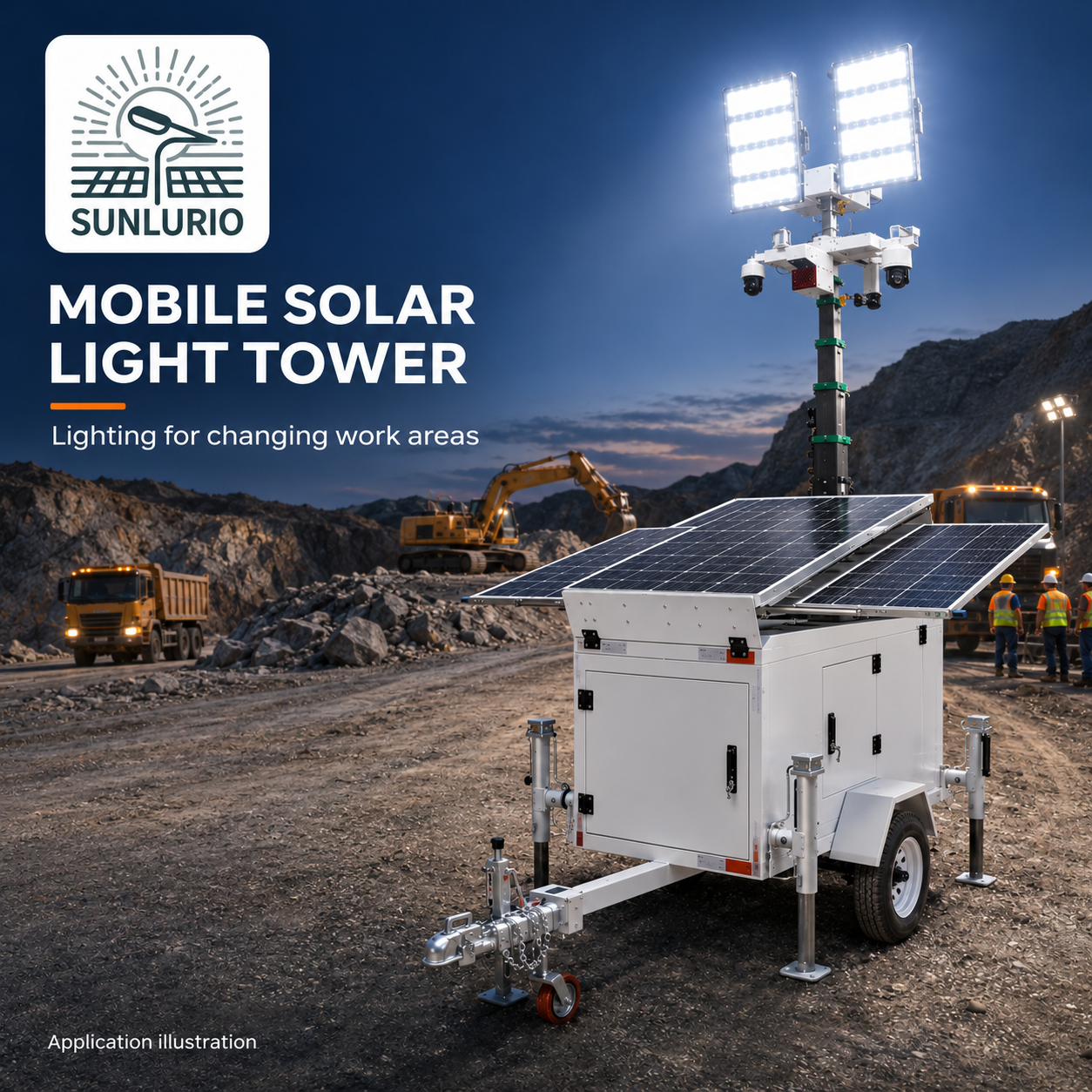
Plan lighting around access routes, equipment and the current work face. We help compare the light-head arrangement and nightly energy demand for the area your crew needs to use.
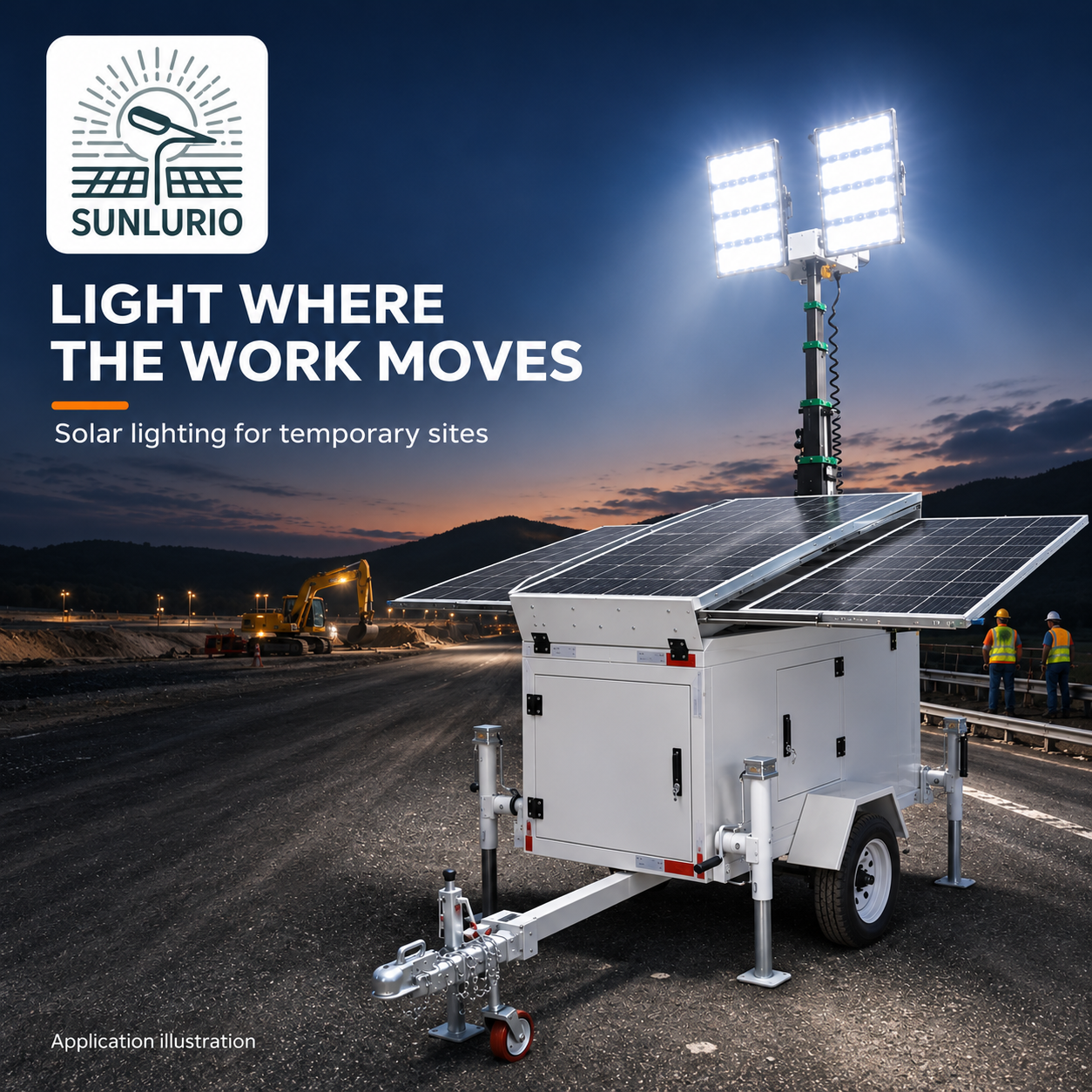
Move lighting as work shifts between entrances, storage areas and active tasks. Share a site photo and working hours so we can discuss the lights, battery and optional cameras as one package.
Before raising the mast, choose a firm, suitable position, apply the parking arrangements and set the stabilizers as instructed. Keep clear of overhead conductors and leave enough space for the panels and the intended lighting direction. Grounding, electrical connections and operating wind limits must follow the unit documentation and local site requirements.
Use the operating sequence supplied with your unit to open the panels, raise the mast and set the light direction. Once the lights are on, walk the working area to check for dark patches and glare, including behind machinery and stored materials. Adjust the lighting from the designated operating position.
Before relocation, lower and secure the mast, stow and lock the panels, secure loose items and retract the supports as instructed. Check the hitch, tyres and load security before each move. Public-road towing arrangements should be agreed for the destination and route during order preparation.
Routine care includes cleaning the panel surfaces, inspecting cables and connectors, checking the support legs and keeping the enclosure ventilation clear. Periodic checks should also cover tyres, the hitch, lifting components and battery condition. A solar tower removes engine-service tasks from the lighting unit, but it still needs an inspection and maintenance routine.
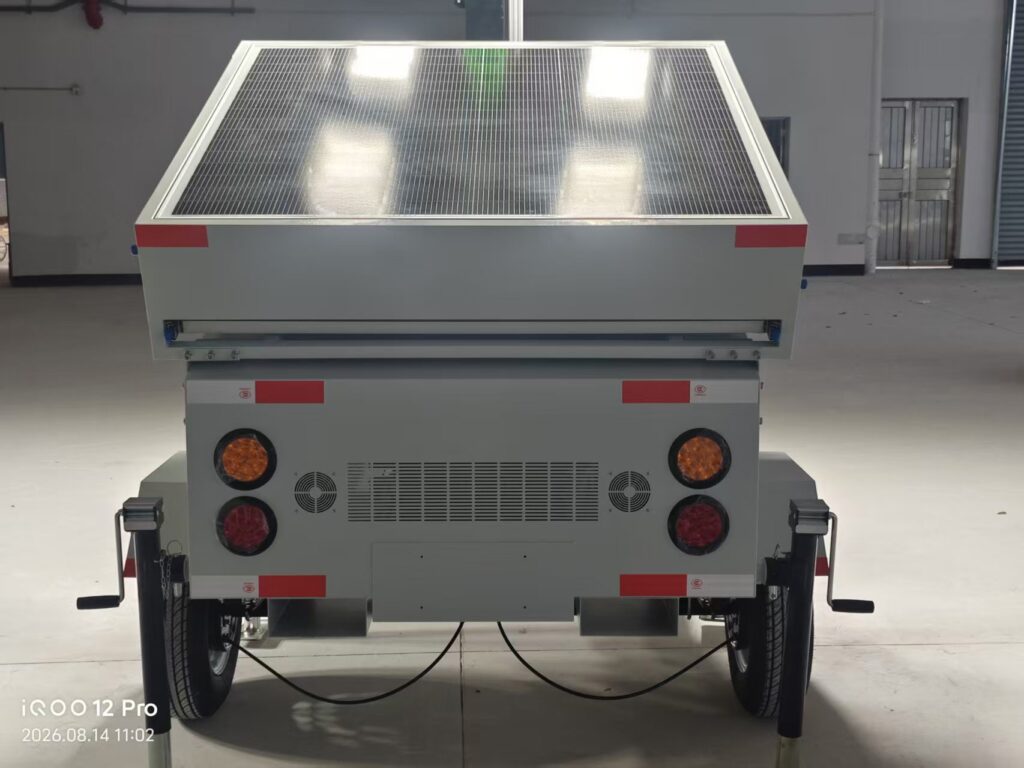
Add cameras if your site needs monitoring alongside lighting. The 8 MP option includes night vision, tracking, 360-degree pan and 90-degree tilt.
For remote viewing, we help you choose the camera quantity, recording and communication equipment around the connection available on site and the people who need access. Include any mobile-data or network requirements when discussing the package, along with how long the cameras should operate each day.
The warning package combines a warning light with a wireless loudspeaker. Discuss how it will be used and any local restrictions on warning-light colours or audible announcements. Add these electrical loads to the operating schedule if they will remain active after the lighting shift.
Choose manual switching, light-sensor operation or a timer to suit the site routine. A timer can follow shift hours; a light sensor responds to changing daylight. For unattended locations, plan who checks the battery, responds to alerts and arranges extra charging during poor weather. Include these tasks in the handover to the person looking after the unit.
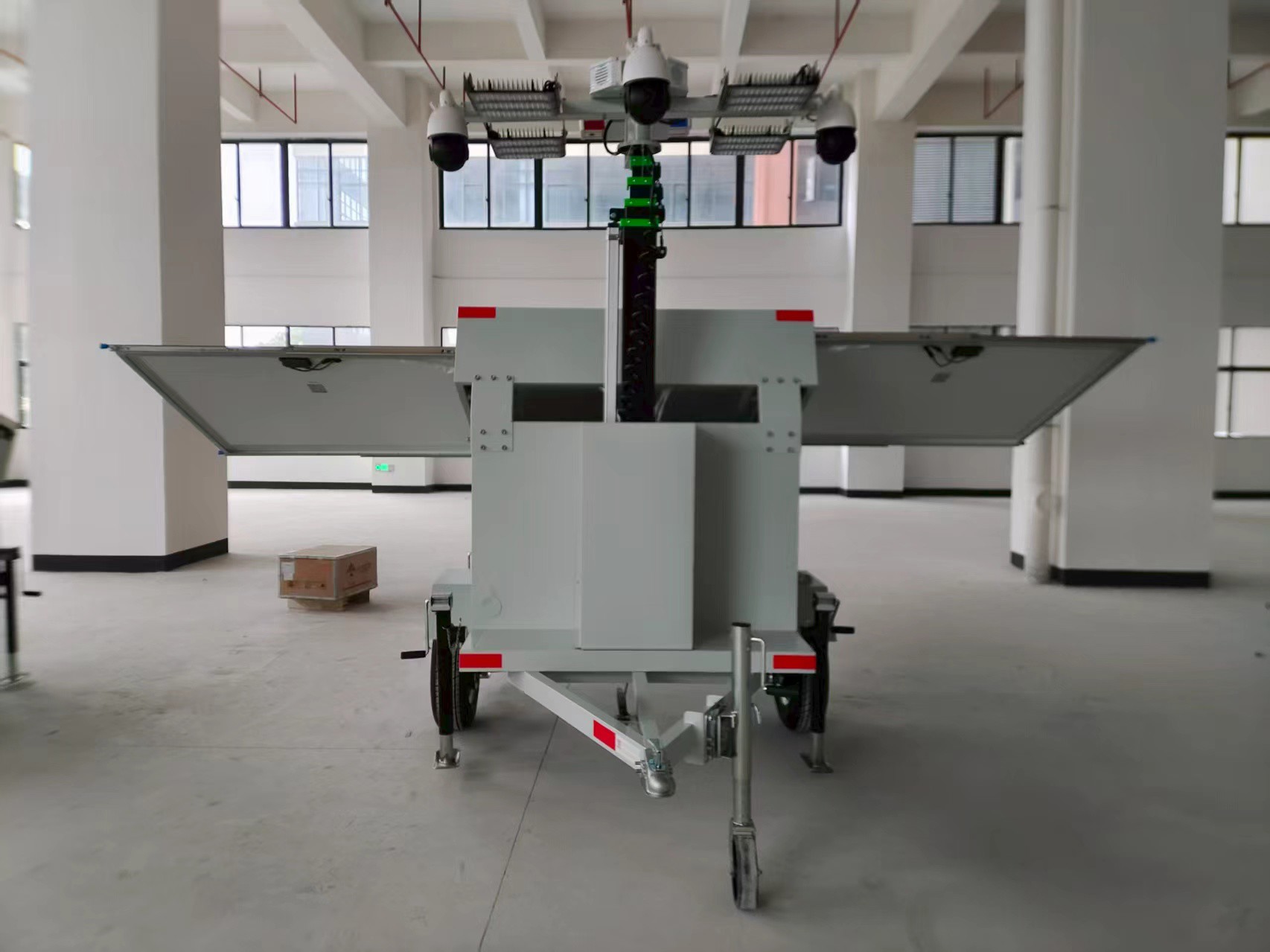
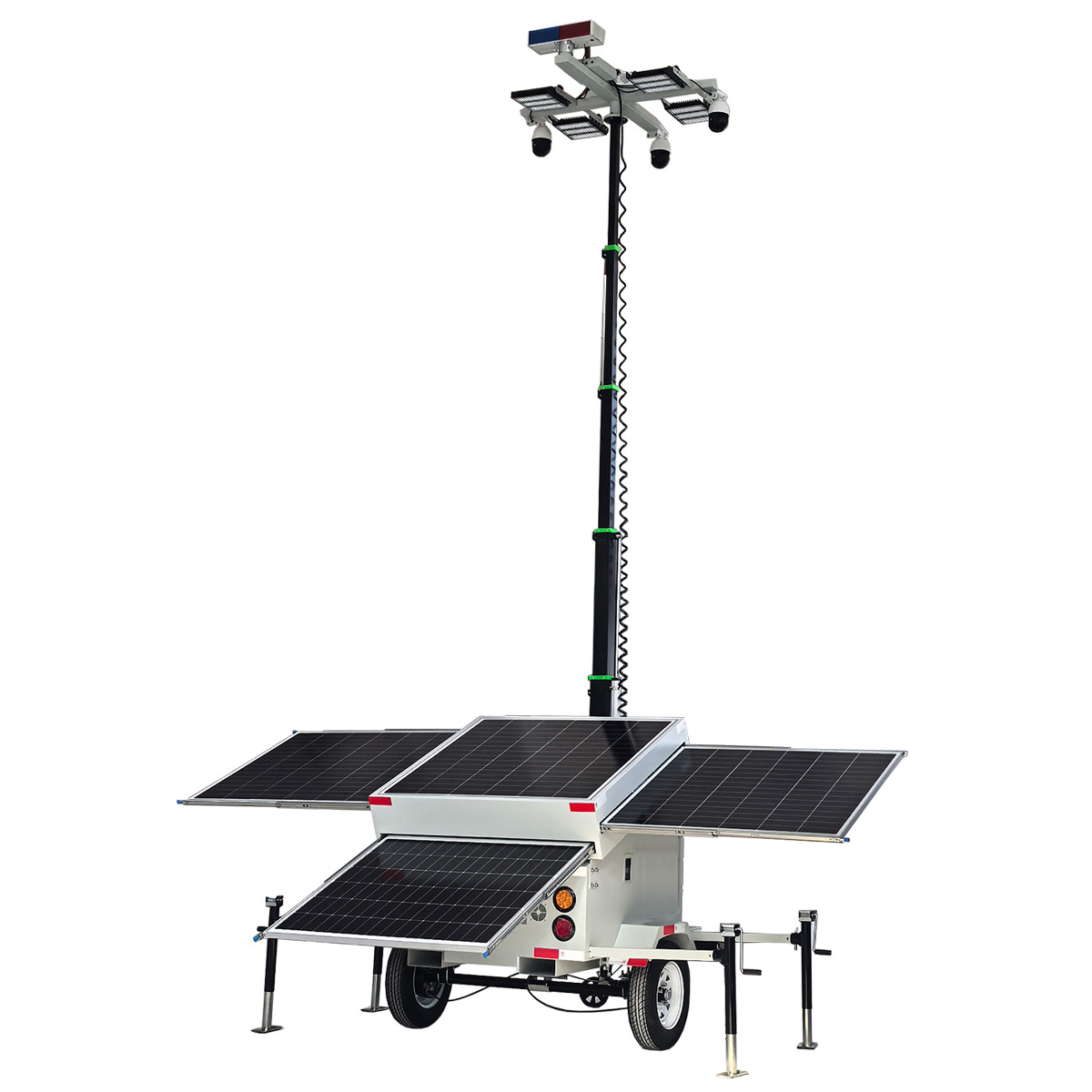
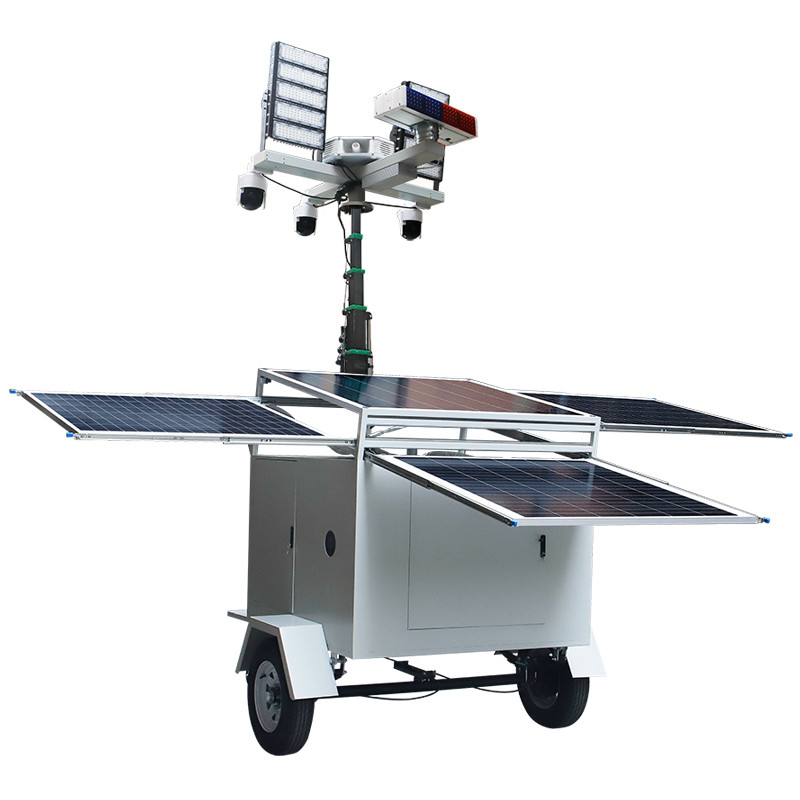
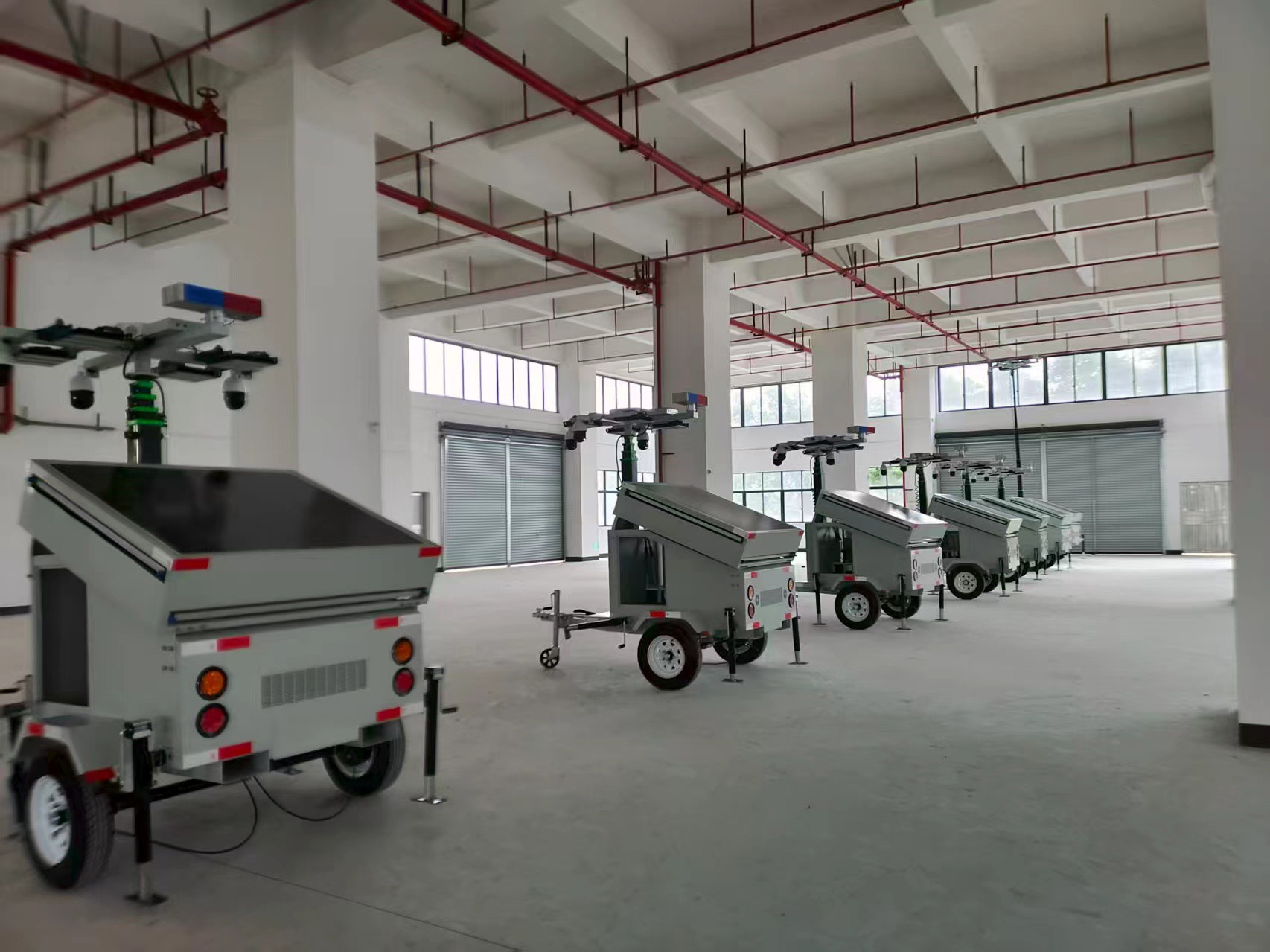
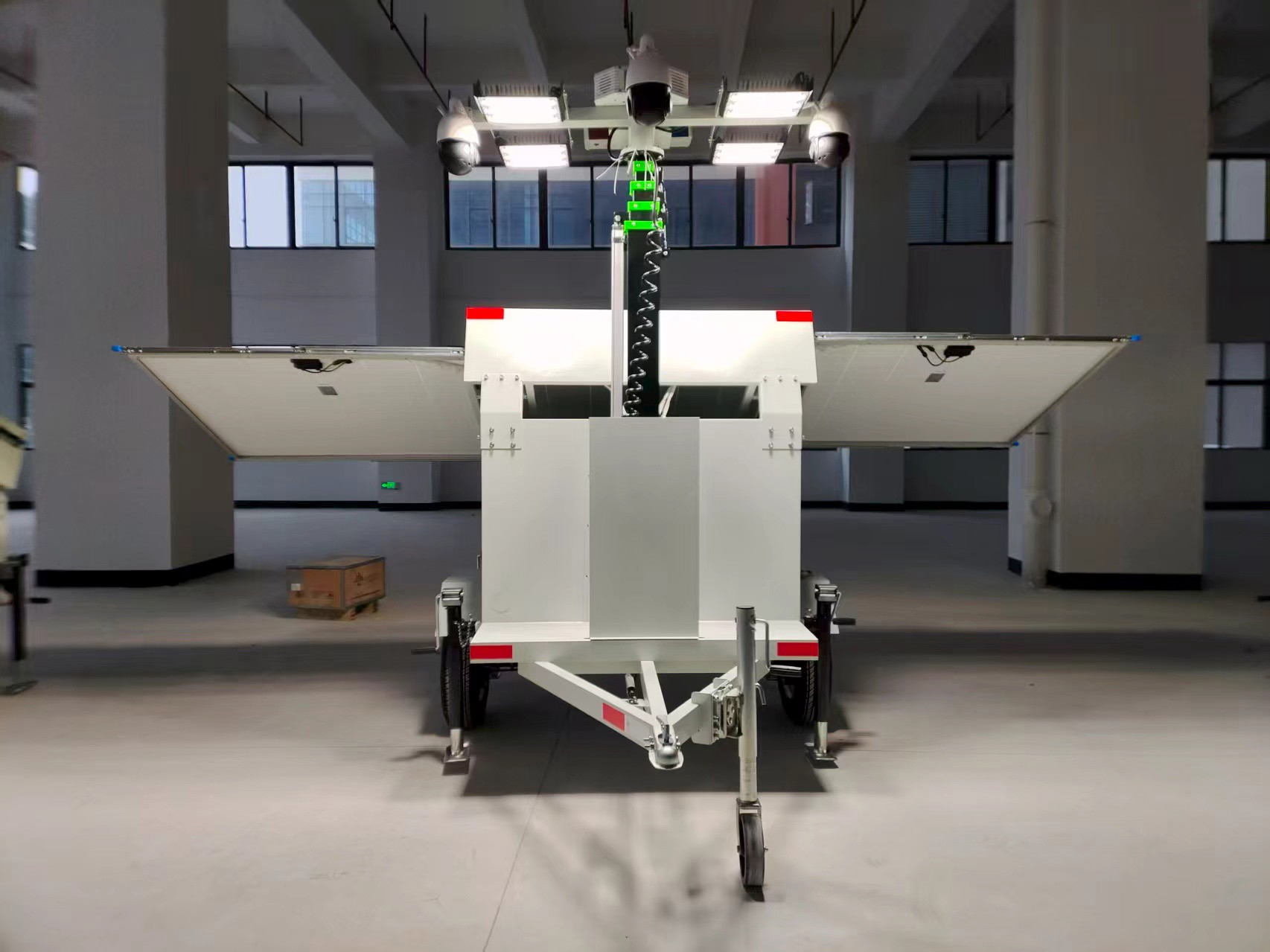
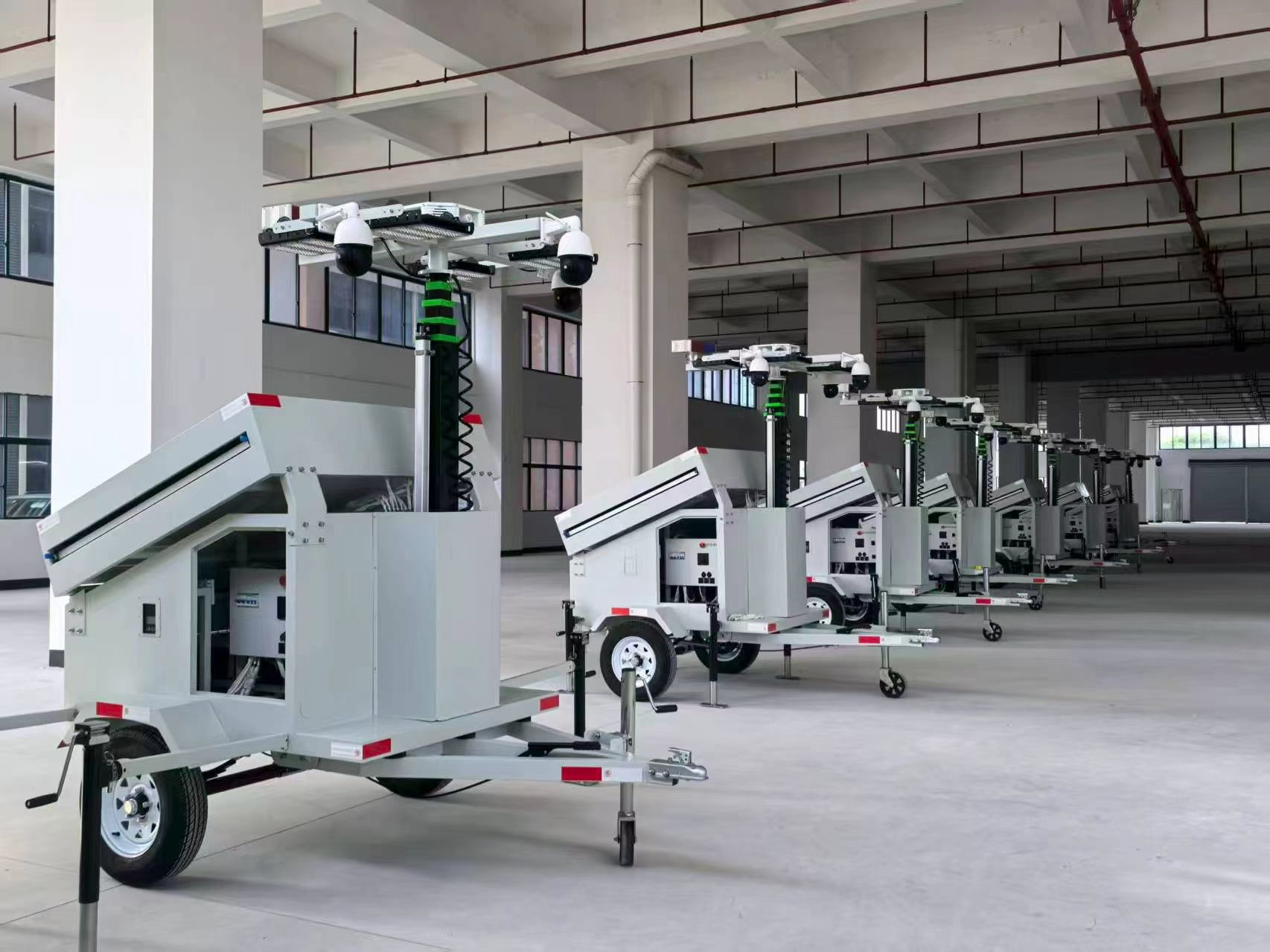
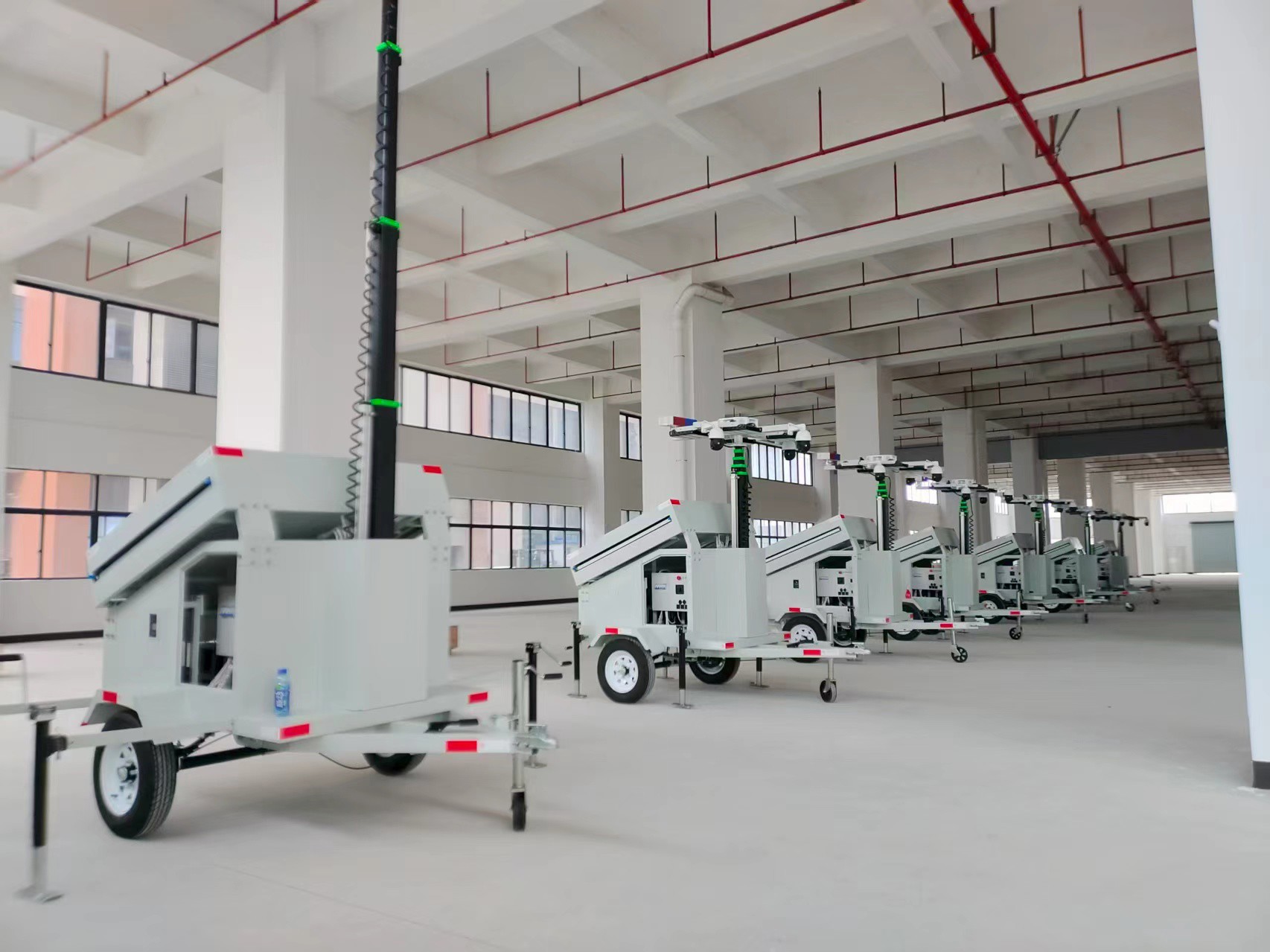
Use these photos to compare the panel layout, light-head arrangement, stabilizer legs and access to the equipment cabinet. The four-module units and the two-head versions give you different arrangements to discuss for the shape of your working area.
We put the selected lamps, AGM/GEL/LiFePO4 battery, panel rating and accessories on one configuration sheet. Your team can then compare complete packages and identify the equipment to be delivered, including camera quantity and warning functions.
If your consultant needs dimensions, electrical details, lighting data or operating instructions, send the document list and deadline. Our drawings and datasheets request guide explains how to prepare a model-based document list. Our team will review the requirements, identify the files available for your configuration and explain any further design work needed. A site sketch helps us discuss the lighting area; the operating schedule helps us compare battery options.
Before choosing a configuration, learn more about our assembly and inspection approach on the Manufacturing & Quality page.
Tell us where the tower will be used and how many hours it needs to run each night. We’ll help you compare suitable configurations. Discuss My Configuration.
Choose between two-head and four-module arrangements around the directions you need to light. The 400 W package can use 2 × 200 W or 4 × 100 W; the 500 W package uses 2 × 250 W, and the 600 W package uses 4 × 150 W. Head count alone does not determine coverage: aiming, light distribution and the work-area shape matter too.
The photos also show optional cameras and warning equipment. We include the accessories you select in the configuration sheet and energy budget.
TWO-HEAD CONFIGURATION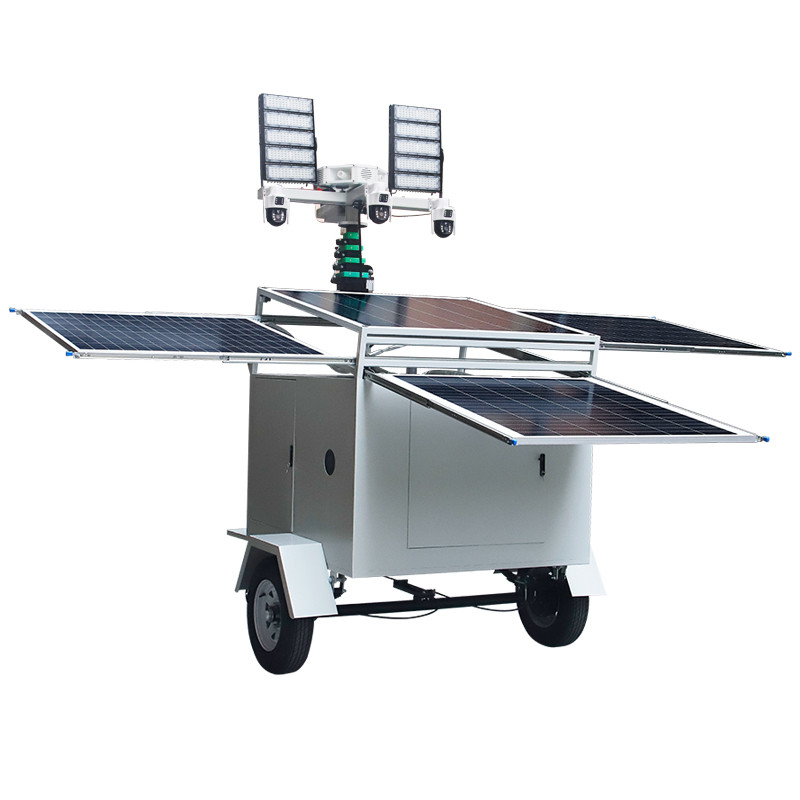 123LIGHTING & SITE MONITORING
Yes. Choose AGM or GEL lead-acid batteries, or LiFePO4 lithium batteries. AGM options are 6 kWh or 12 kWh at 24 V; the listed LiFePO4 option is 12 kWh at 48 V. GEL capacity is selected for the project. We match the charger, protection and inverter to the chosen battery system.
The useful area depends on the selected lighting package, required lux level, luminaire arrangement, aiming and obstructions. A yard used for access lighting and a detailed work face need different levels of light. Share a sketch and the task to be carried out so the layout can be assessed against a meaningful target.
The battery supplies the lights when solar input is low. We size the reserve around the lighting load, hours of use and the cloudy period you need to cover, using the site’s operating season. AC charging can be included in the plan where a suitable supply is available.
Yes, if the selected electrical system can support the combined load and the planned operating hours. Tell us each device’s running power, starting demand and hours of use. We can then include those loads when comparing batteries, rather than leaving the lighting short of energy.
A project location, a simple site sketch and the required lighting hours are enough to begin the discussion. If you already have a lux target, equipment list or technical specification, include it. You do not need a completed design to ask an initial question.
Your order configuration will list the trailer, mast, solar array, battery, lights, charger and inverter. Cameras, warning lights, loudspeaker and automatic controls are selected separately. Before ordering, agree the operating instructions, spare-parts needs and written warranty terms, including who handles parts delivery and any local service. Share any required technical documents with us early so we can check their applicability to the chosen unit.
Start with your location, the area you want to light and your nightly working hours. We will help compare lamp, panel and battery options and identify the details needed for a proposal. If the layout is still changing, a marked-up photo or simple sketch is enough to start. Add any camera, tool-power or document requirements you already know.
Prefer email? Send your site details to sales@sunlurio.com.
WhatsApp us