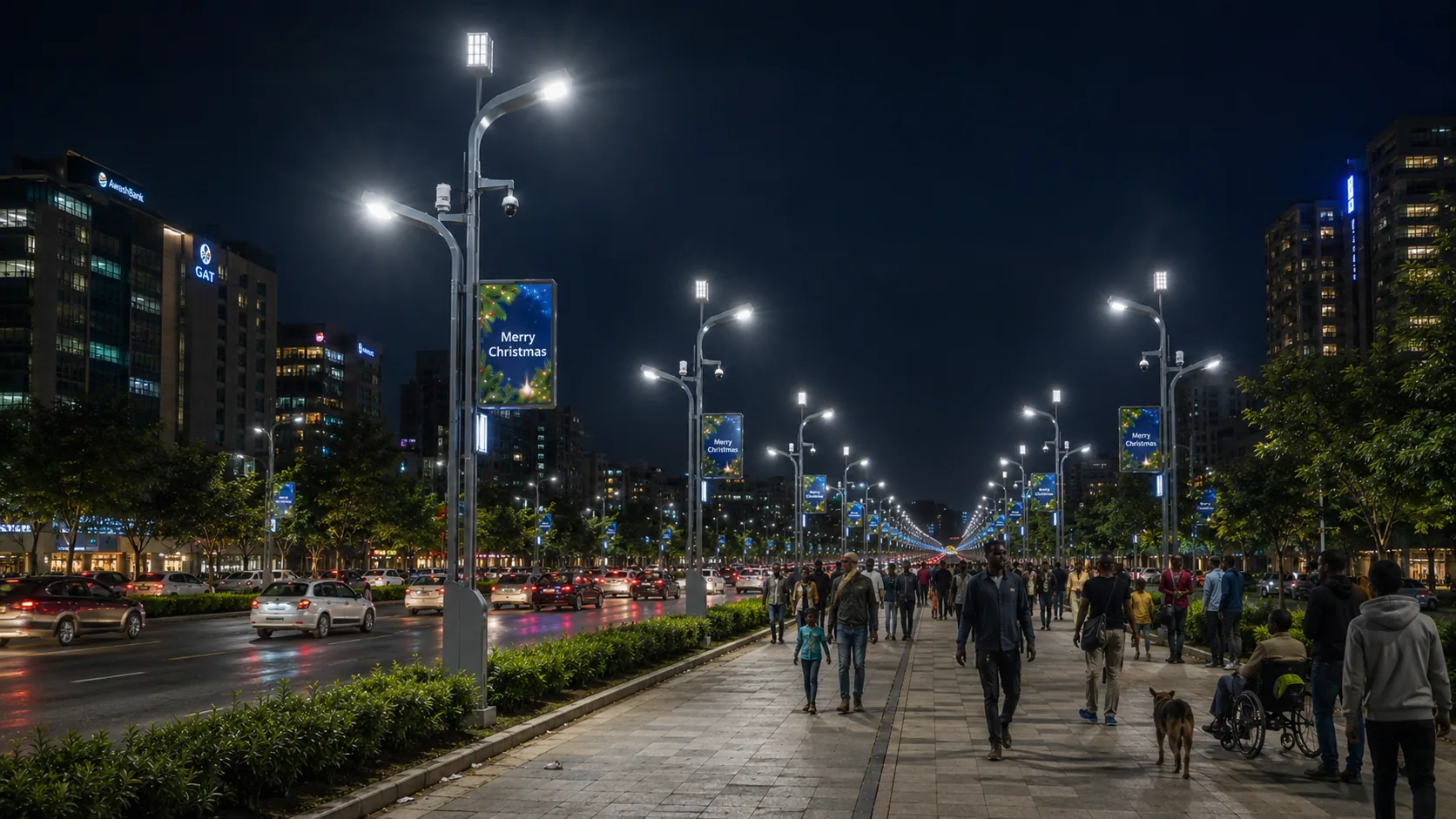
Plan public-street lighting around people, operating hours and long-term service. Sunlurio helps municipal, EPC and consultant teams coordinate solar, AC LED and smart lighting with project-specific engineering and procurement documents.
A municipal street serves residents, drivers, pedestrians and the teams who keep it operating. Start with the surrounding use and ownership responsibilities, then agree the lighting criteria, system configuration and handover files.
Local streets, residential communities, village access roads and mixed-use public areas. Especially relevant where tender criteria, sensitive boundaries or planned dimming shape the project.
Crossings and school approaches, bright-to-dark transitions, homes close to luminaires, retained infrastructure or limited service access. These conditions need coordinated lighting and operating decisions.
Windows, balconies and front doors can be sensitive to backlight. Record these boundaries before choosing luminaire orientation and the night-time profile.
Map pedestrians, vehicles, shops, parking and crossings. Check how users move between brighter areas and quieter access routes.
Identify reusable poles, cabling and cabinets; note grid availability and local service capability. Retrofit condition and maintenance logistics affect the system choice.
Send what is available. Missing information can be identified during preliminary review; a complete tender package is not needed to start.
Location; street and area dimensions; pedestrian and vehicle activity; public facilities, entrances and nearby homes.
Pole height and positions; spacing; arms; cable routes; cabinets and visible condition. Include site photos and available drawings.
Consultant or tender targets; areas to assess; uniformity and glare concerns; crossings and transitions; local environmental limits.
Grid or solar conditions; operating hours; dimming schedule; controls. For solar, add shading, solar resource, runtime and autonomy assumptions.
Maintenance access; component replacement constraints; corrosion, dust and rainfall exposure; local spare-parts and service arrangements.
BOQ, drawings and tender documents; project programme; required engineering outputs; acceptance and handover responsibilities.
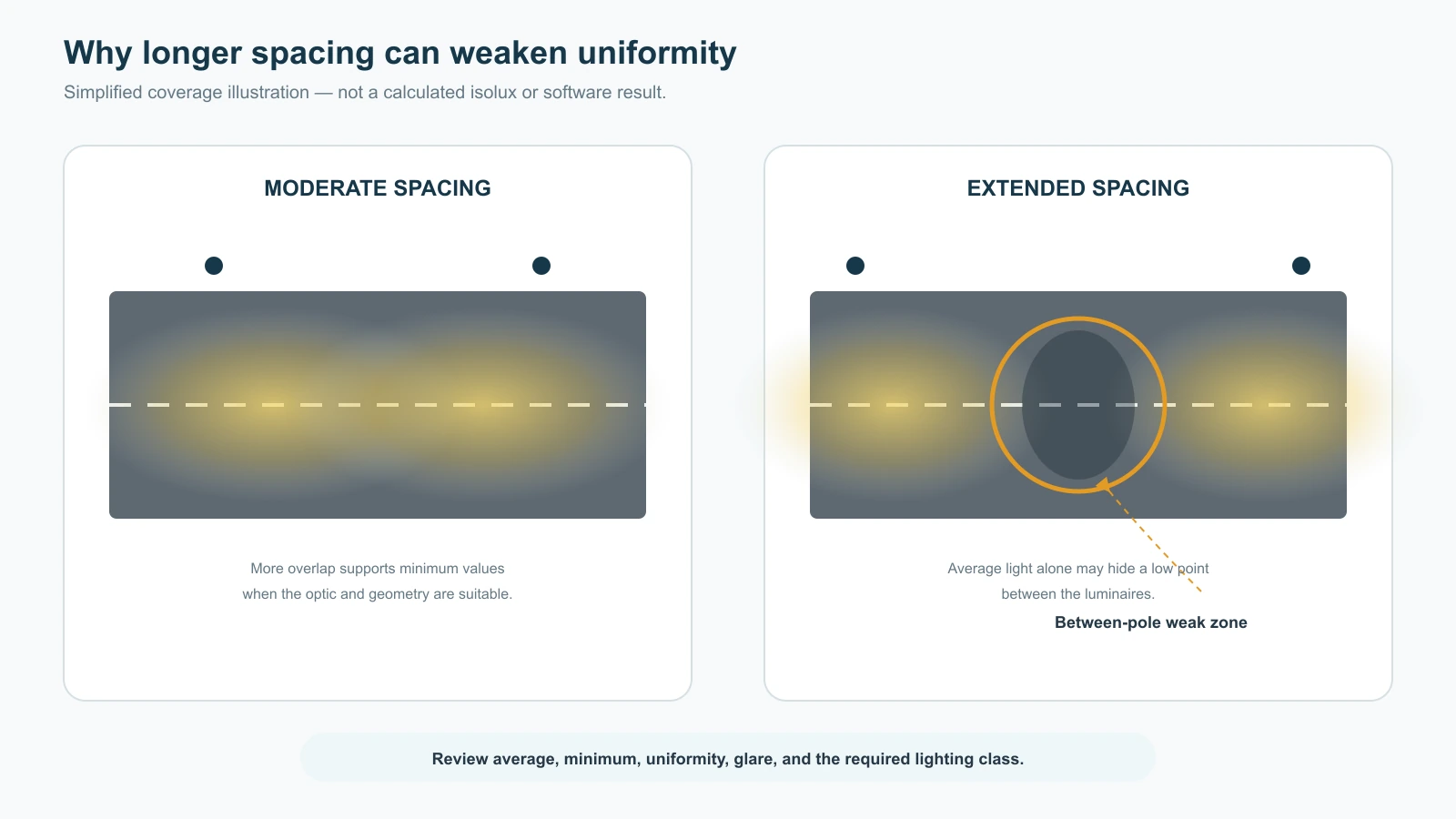
Average brightness alone does not describe how a public street feels or operates. Assess the distribution of light across the areas people actually use.
Uneven lighting can leave abrupt changes between main streets, access paths and entrances. Assess the agreed areas and transition zones with matched photometric files.
Light directed toward drivers or pedestrians can reduce visual comfort. Review aiming, mounting position and optics together with the viewing directions.
Homes, shopfronts and public facilities have different night-time needs. Review spill and backlight at those interfaces, alongside operating hours and local criteria.
CCT follows local requirements and the selected model. The standard project range is 4000–5000K; 6500K is optional where suitable. Lighting supports visibility but does not guarantee accident prevention, crime reduction or zero complaints.
For detailed pole layout and optical design, see Road Lighting & DIALux Design →
| Engineering Check | What We Review |
|---|---|
| Maintained Illuminance | Required lighting after maintenance assumptions, not only initial output. |
| Uniformity | Minimum values and dark transitions across the usable area. |
| Glare & Aiming | Optic, tilt and luminaire orientation against the street and surrounding use. |
| Maintenance Factor | Operating hours, environment and maintenance planning against maintained performance. |
| Sensitive Boundaries | Spill light / backlight toward homes, entrances and pedestrian-sensitive areas. |
Lighting targets should follow the applicable tender, consultant requirement or agreed project standard. A generic lux target alone does not define pole spacing, optic or luminaire configuration.
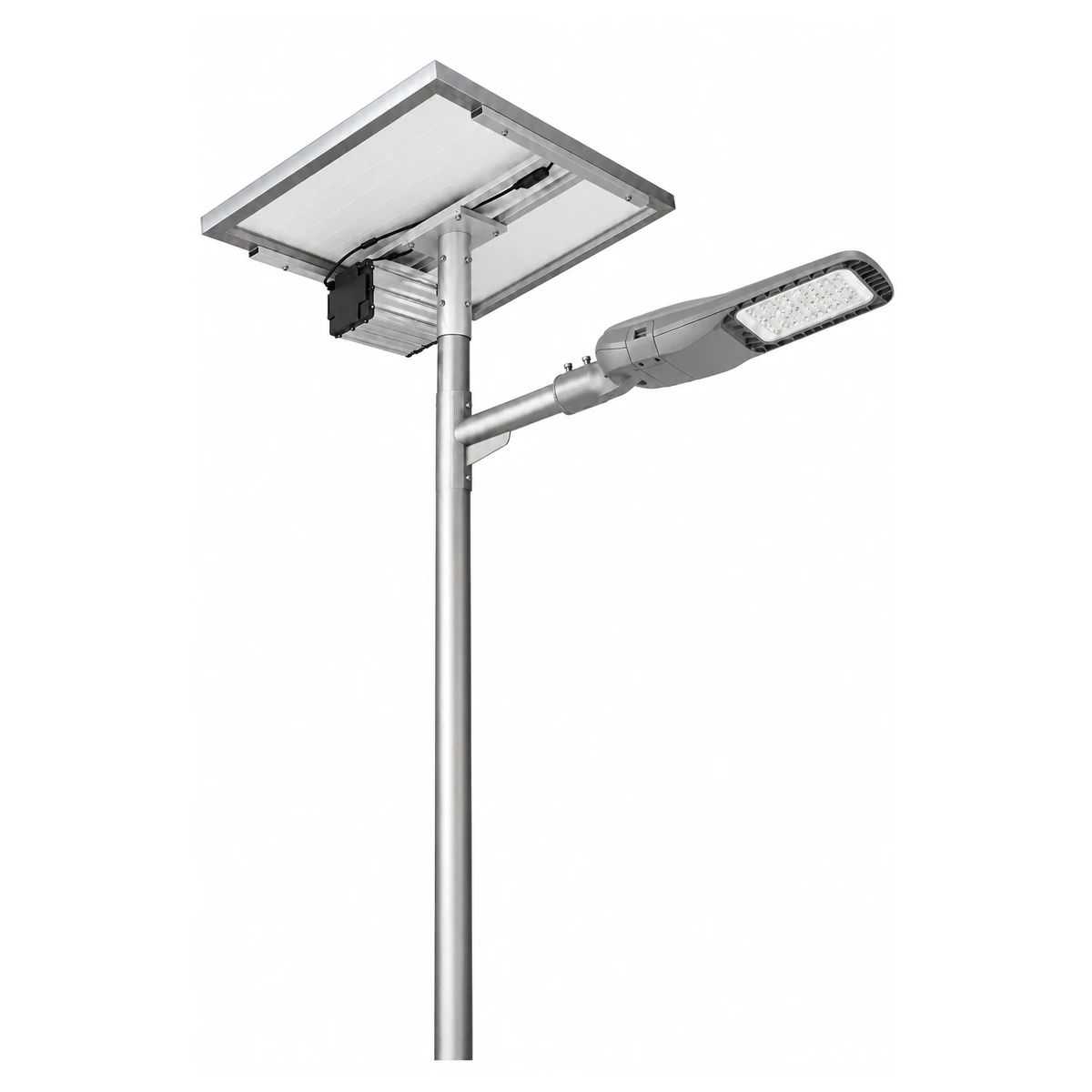
Fits sites with limited grid access or constrained trenching. Solar resource, shading, operating profile and autonomy determine the configuration. Plan battery and controller access, replacement and local spares.
Fits reliable grid supply and suitable retained infrastructure. Check voltage, cabling, poles, driver/SPD and dimming interfaces. Retrofit compatibility and isolation arrangements need project-specific checks.
Fits an identified need for dimming, monitoring or fault alerts. Agree communication architecture, platform integration, commissioning and responsibility for responding to faults.
Hybrid and retrofit options should follow the existing infrastructure and operating brief. Grid backup, cloud services, 4G and protocol compatibility are not assumed in every configuration.
| Project Condition | Preliminary Path |
|---|---|
| Grid unavailable or trenching/cabling difficult | Start by evaluating Solar Street Lighting |
| Reliable grid and suitable retained infrastructure | Start by evaluating AC LED Street Lighting |
| Dimming, monitoring or fault alerts required | Evaluate a Smart Control layer |
| Mixed existing infrastructure / retrofit condition | Review a project-specific hybrid / retrofit path |
This is a preliminary routing guide, not a final configuration. Smart controls may be layered onto suitable AC or project-specific lighting systems; they are not automatically a separate power architecture.
For an initial comparison by road function, power supply and maintenance needs, see our municipal road lighting application guide.
A useful municipal lighting plan gives the operating team a practical way to inspect, isolate and service the installed system. Resolve access and replacement arrangements before the equipment schedule is frozen.
Provide access to luminaires, drivers, controllers and solar batteries. Coordinate isolation, traffic management and work-at-height arrangements with the local operating team.
Keep model, driver, optic, controller and fastener records consistent. Agree replaceable components, spare quantities and supply responsibilities for the selected system.
Set operating hours and dimming against actual public use. For smart systems, define alert handling and who owns the communication and platform tasks.
Plan inspection and cleaning for the environment, including corrosion exposure. Retain asset IDs, as-built drawings, maintenance records and warranty boundaries.
Service intervals, spare quantities and responsibilities are project-specific. Maintainability is not a promise of maintenance-free operation or a fixed service SLA.
Align the BOQ, selected equipment and engineering files before tender submission or order release. A public datasheet is a starting point; it is not an approved project configuration.
Bring the site brief, constraints and available drawings together before freezing the configuration.
Coordinate the equipment schedule, datasheets, drawings, scope exclusions and tender clarifications.
Use matched IES/LDT files, agreed areas and documented assumptions for DIALux outputs.
From approved design to installed street: align model and document revisions; record installation deviations; complete the agreed inspection or measurements; hand over as-built drawings, QC records, O&M guidance, spare arrangements and warranty boundaries.
Detailed engineering files are released through the project review process. Generic files do not prove the installed result, and document support does not guarantee government approval.
Site brief, existing infrastructure, lighting targets, power condition and available BOQ/drawings.
Outcome: identify missing information and define the preliminary configuration path.
BOQ mapping; datasheets; matched IES/LDT files; DIALux assumptions / outputs; drawings; clarification notes; applicable deviations.

Inspection / QC records; approved / as-built information; O&M guidance; spare arrangements; warranty boundaries; final document revisions.
Final engineering-file release depends on the confirmed model, BOM, optic and agreed project scope.
Ghana · Public / Community / Village Roads
2015–2020 · 12,000 sets · 80W LED · 9m poles
All-in-One system supply, tender/bid support and engineering document coordination, including IES, BOQ and DIALux.
Engineering relevance: Public / community roads; solar deployment.
United States · Community Roads
2024 · 210 sets · 60W LED · 7m poles
System supply and engineering document coordination, with IES, DIALux, pole drawings and wiring diagrams.
Engineering relevance: Community-road AC lighting; engineering document support.
Vietnam · Municipal / Town Roads
2024 · 500 sets · 50W LED · 6m poles
Complete-system supply and technical document support for municipal/town road lighting.
Engineering relevance: Municipal / town-road AC lighting; technical document support.
These are historical project configurations, not universal design recommendations. Installation was carried out by the client/EPC/local team; Sunlurio installation was not included.
Discuss your deployment conditions → Coastal, hot, dusty and high-rainfall environments need their own operating and maintenance assumptions.
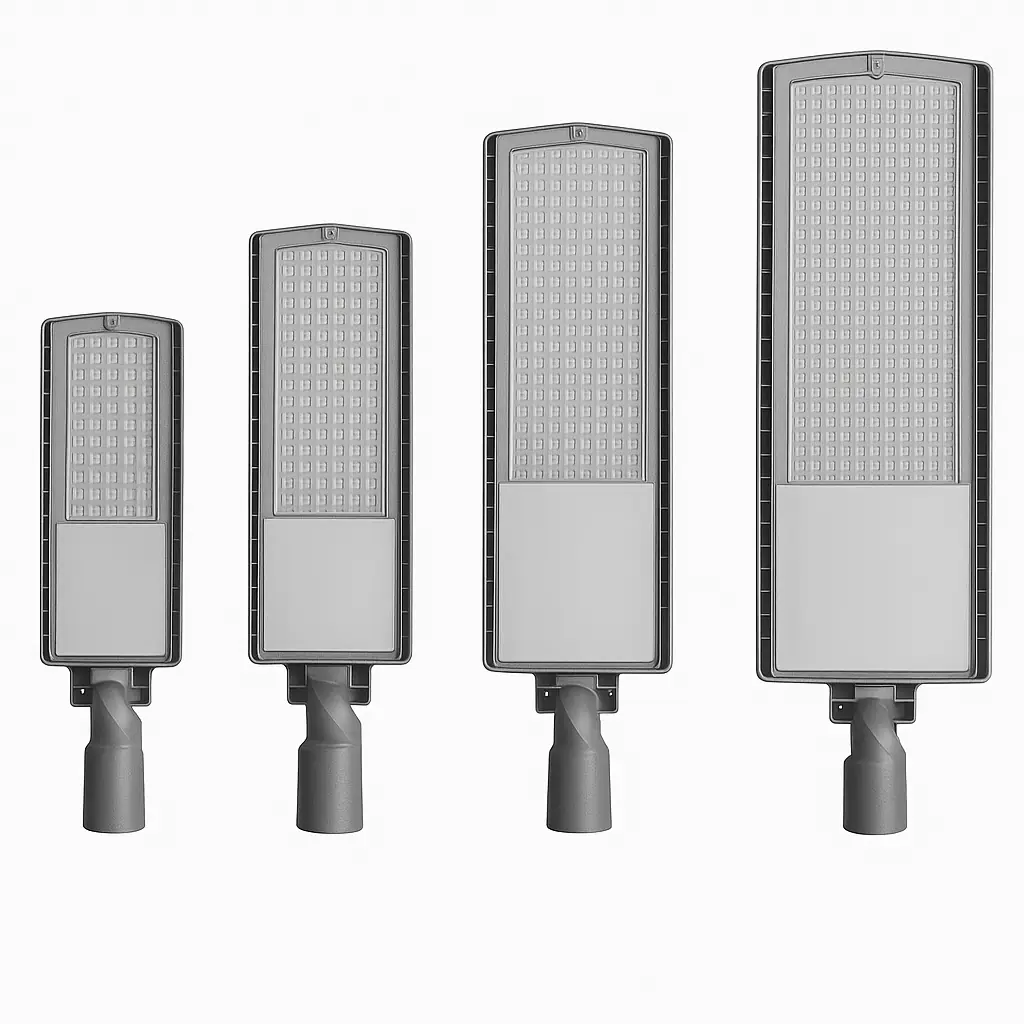
Explore product families after the site and operating brief are clear. Final models and configurations follow the project requirements.
Send the location, street/site dimensions, pole information, public-use context, power condition and operating hours. Add targets, BOQ and drawings if available. Preliminary review can identify the remaining information.
Use the agreed lighting criteria and actual public-use areas, with matched photometric files. Check transitions, viewing directions, mounting geometry and sensitive boundaries—not average brightness alone.
Compare grid access and civil work with solar resource, shading, runtime, autonomy and maintenance access. Existing infrastructure, operating cost assumptions and local service capability influence the decision.
Use project-specific photometric modelling when consultant or tender criteria require it, or when geometry and sensitive areas need detailed assessment. The model needs matched IES/LDT files and documented inputs.
The tender may call for a BOQ, datasheets, photometric files or simulations, drawings, QC/inspection information and warranty scope. Agree document revisions and release requirements against the actual tender; there is no universal file pack.
Set out access, isolation, component replacement, inspection and cleaning before procurement. Agree spare coordination, records and responsibilities with the operating team; intervals and service commitments are project-specific.
They follow the site geometry, lighting criteria, optics, infrastructure and engineering checks. Historical project configurations are references, not a fixed spacing or pole-height rule.
Yes, subject to the chosen equipment and project architecture. Check controller interfaces, communication coverage, platform integration, commissioning and who will act on alerts. Cloud or 4G access is not automatically included.
No. Lighting can support visibility and public-space operation, but cannot guarantee lower crime, fewer accidents or government approval. Those outcomes involve factors beyond the lighting system.
Share street/site dimensions, pole information, target lighting criteria, operating hours and power conditions. Include BOQ and drawings if available, plus maintenance or environmental constraints.
Preliminary review supports configuration and document planning. Final performance and supply scope are confirmed for the specific project.
WhatsApp us
Share your project location, road width, pole height, spacing, working hours, backup days, and required documents. Our team can help prepare configuration guidance, datasheets, IES/LDT files, DIALux support when applicable, drawings, and BOQ matching notes.