
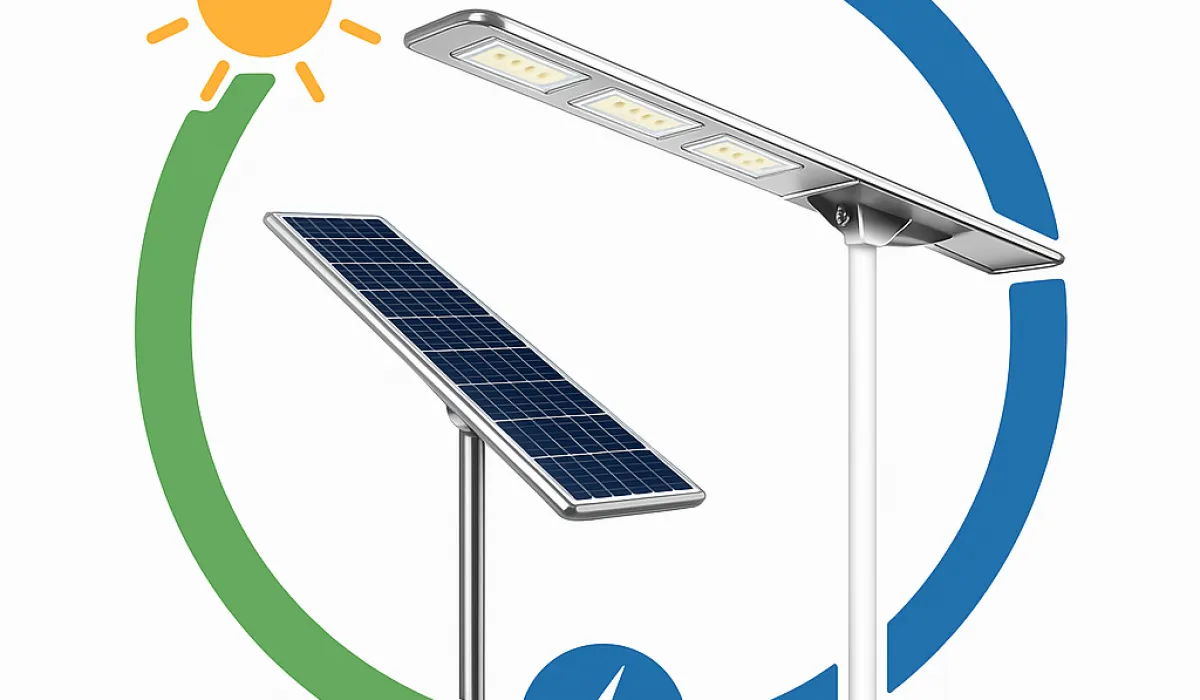
What Is an All-in-One Solar Street Light?
In simple terms, an all-in-one solar street light brings together the solar panel, LED lamp, battery, controller, and motion sensor into one compact design—making installation far easier than traditional setups.
It’s a self-sustained outdoor lighting system that charges during the day and automatically lights up at night, no grid required.
In our field experience, this design became a practical option for off-grid and municipal projects. Fewer cables mean fewer things that can go wrong, and that’s exactly what busy installers and project managers appreciate on-site.
Put simply: One pole, one light, one complete solar system.
How Does an All-in-One Solar Street Light Work?
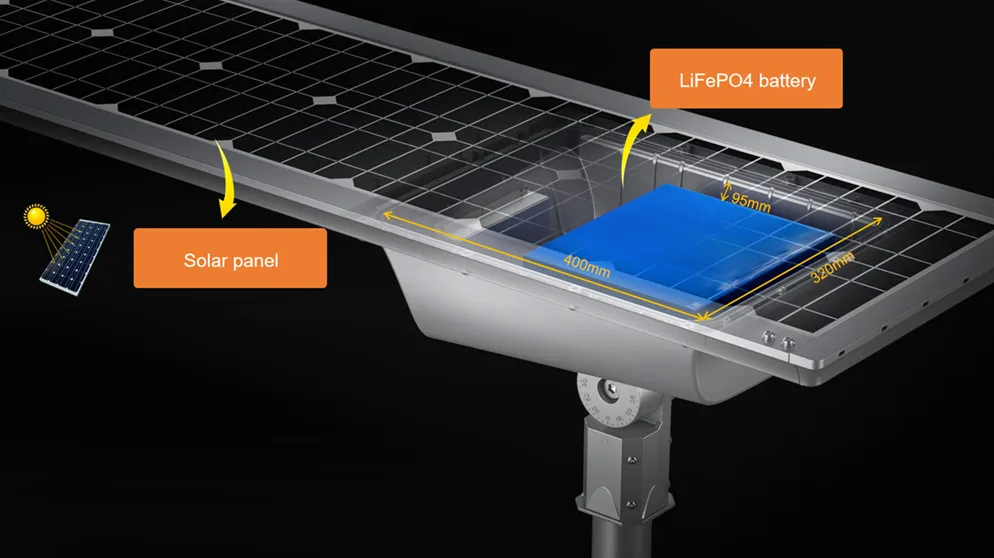
Each day follows the same rhythm: charging at sunrise, lighting up at dusk.
Here’s what happens step by step:
-
Daytime Charging
The solar panel quietly does its job—absorbing sunlight and turning it into energy stored inside the lithium battery. -
Energy Storage
Throughout the day, that power builds up and stays ready for night use. -
Smart Regulation
The MPPT controller balances input and output, protecting the system from overcharge or over-discharge. -
Automatic Lighting
When evening comes, the light sensor tells the LEDs to turn on automatically.
No switch. No wires. Just light. -
Motion Detection
When there’s movement, the PIR sensor boosts brightness; when it’s quiet, it dims down to save energy.
Because it runs purely on solar power, there’s no need to worry about electricity bills—or power cuts.
Inside the System: Key Components and What They Do
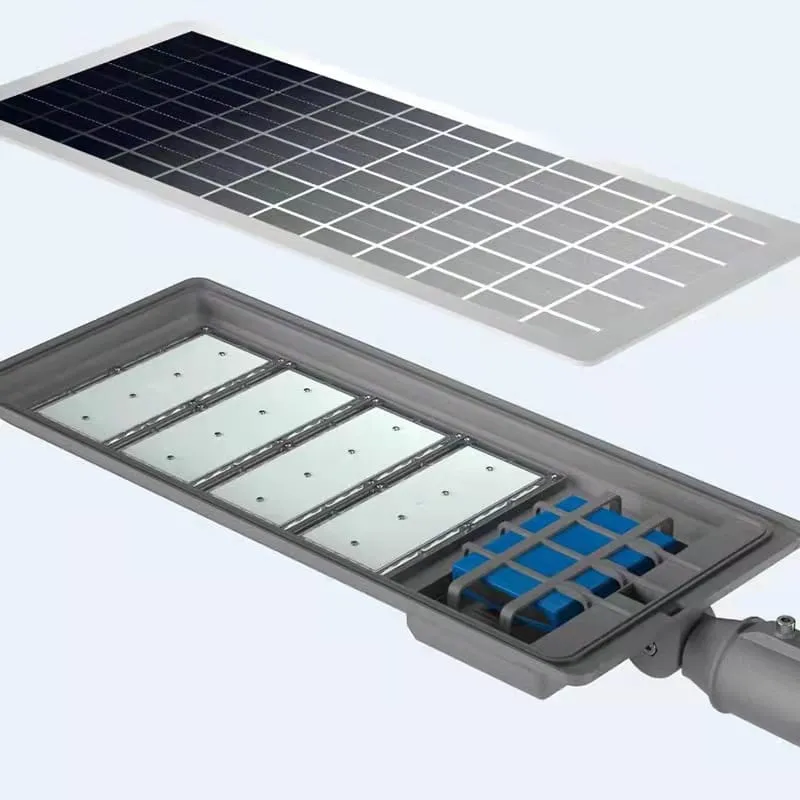
| Component | Role | Why It Matters |
|---|---|---|
| Solar Panel | Converts sunlight into DC power | Free energy from the sun, every day |
| LED Module | Provides high-brightness illumination | Long lifespan, minimal maintenance |
| Lithium Battery (LiFePO₄) | Stores solar energy | Reliable for 5–8 years, works even after cloudy days |
| MPPT Controller | Manages charging and discharging | Keeps the system efficient and stable |
| Motion Sensor | Adjusts brightness on demand | Extends battery life and improves safety |
| Aluminum Housing | Protects internal parts | Resists corrosion and dissipates heat effectively |
| Remote or Smart Control | Enables settings and monitoring | Useful for citywide or commercial projects |
As many installers note, these compact systems are easier to handle on-site. Fewer parts, faster setup, and less downtime during maintenance.
Traditional vs. All-in-One Solar Street Lights
| Feature | Traditional Solar Street Light | All-in-One Solar Street Light |
|---|---|---|
| Design | Panel, lamp, and battery installed separately | All components integrated in one unit |
| Battery Type | Lead-acid | Lithium or LiFePO₄ |
| Light Source | HPS or Metal Halide | Energy-smart LED |
| Installation | Requires wiring and connections | Simple mounting, plug-and-play |
| Maintenance | Frequent checks | Minimal, mostly cleaning |
| Efficiency | Average | Optimized with MPPT + dimming |
With everything built into one frame, installation often takes less than an hour—and many installers report years of trouble-free use.
From Cities to Rural Roads: Real Advantages in Practice
1. Quick Installation, Fewer Headaches
No cables. No grid. Just sunlight and smart design.
Even local technicians in Uganda and Zambia install these in under 30 minutes per pole.
2. Zero Electricity Cost
Once installed, they rely only on sunlight—meaning your electricity bills stay at zero.
3. Energy-Smart Lighting
Modern LEDs deliver up to 200 lm/W, providing wide, uniform coverage with lower energy draw.
Many city engineers find the light color (4000–5000K) ideal for visibility and safety.
4. Smart Control, Real Autonomy
Motion sensors and timers let the light “think” for itself—dim when quiet, brighten when needed.
That efficiency helps the system survive 3–5 nights of cloudy weather.
5. Built to Last
The die-cast aluminum body with IP65+ protection keeps it working in harsh environments—sand, salt, and rain included.
Installer’s Perspective:
“We’ve put them up in coastal towns where salt air usually eats metal alive. These ones? Still solid after two rainy seasons.” — Site supervisor, Mombasa 2024
6. Ideal for Off-Grid Areas
Schools, health posts, and rural roads benefit the most.
When you can light a 5 km road with no grid connection, that’s not just savings—it’s inclusion.
Field Insight: Real Projects, Real Impact
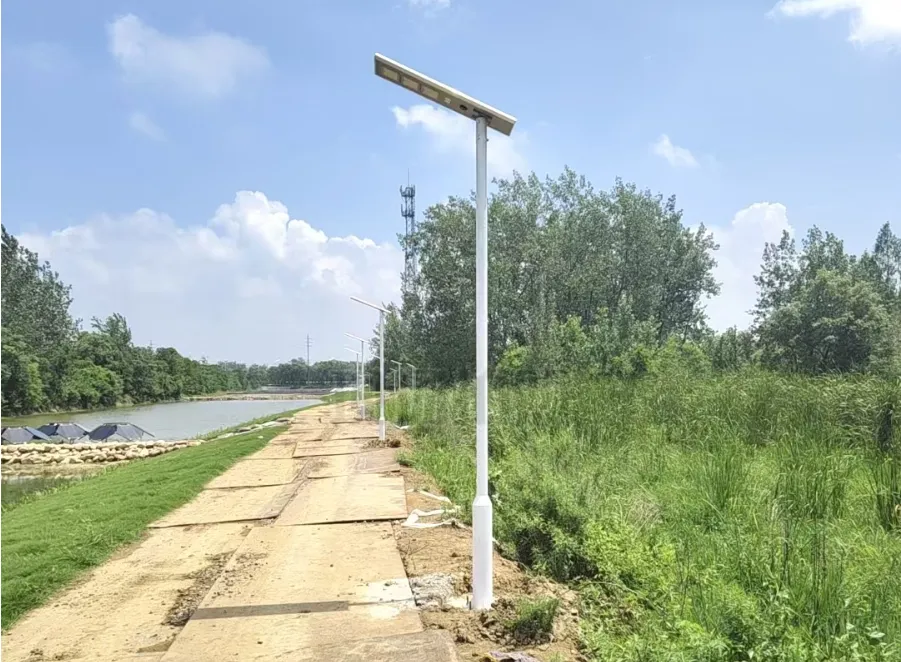
In 2023, Sunlurio supplied integrated solar street lights for Jinja and Masaka, Uganda.
The outcome surprised even local officials: lower installation costs, 60% power savings, and significantly safer public spaces after dark.
Engineers noted how the modular design simplified future maintenance and replacements—no complex wiring to trace.
These are the moments that prove design simplicity isn’t just about convenience—it’s about long-term reliability.
Choosing the Right All-in-One Solar Street Light

A few key factors make the difference between a short-lived product and a lasting investment:
- Wattage & Brightness: Match wattage to road width (40–150W range fits most needs).
- Battery & Backup: Choose models with ≥3 nights autonomy for cloudy conditions.
- Control Mode: Decide between motion sensing, timer, or hybrid control.
- Pole Height: 5–9 meters is common—ask for a DIALux layout before ordering.
- Certifications: Look for IP65+, CE, RoHS, ISO9001.
- Warranty & Support: Reliable brands offer at least 3 years of coverage.
✅ Pro Tip:
Always check actual lumen data—not just wattage. A 60W light at 180 lm/W performs better than a 100W at 120 lm/W.
Common Questions from Buyers and Installers
Q: What happens when the weather stays cloudy for several days?
Most users find that a full charge lasts 3–5 nights, so occasional cloudy weather isn’t an issue.
Q: How long before I need to replace the battery?
Typically 5–8 years, depending on use and temperature.
Q: Does it need any wiring or connection to the grid?
No. Everything is built-in. Just mount it on the pole and it works automatically.
Q: What’s the difference between lithium-ion and LiFePO₄ batteries?
LiFePO₄ performs better in hot climates and offers higher cycle life—ideal for Africa, the Middle East, and Southeast Asia.
Q: Is maintenance complicated?
Not at all. Just clean the solar panel every few months to keep charging efficient.
A Human View: What These Lights Mean on the Ground
A single solar street light standing tall on a rural road tells a quiet story—how technology can reach people once left in the dark.
Each one becomes more than just hardware; it’s a small promise of safety, study hours, and opportunity.
“When kids walk home under a solar street light, that’s when technology feels real.”
— Project Engineer, Masaka 2024
Conclusion: The Quiet Revolution of Integrated Lighting
All-in-one solar street lights are not just efficient—they’re practical, proven, and built for the realities of the field.
For cities and EPCs aiming at energy independence, they offer a direct path to lower costs and sustainable growth.
A single pole, quietly powered by sunlight, can change how an entire community moves after sunset.