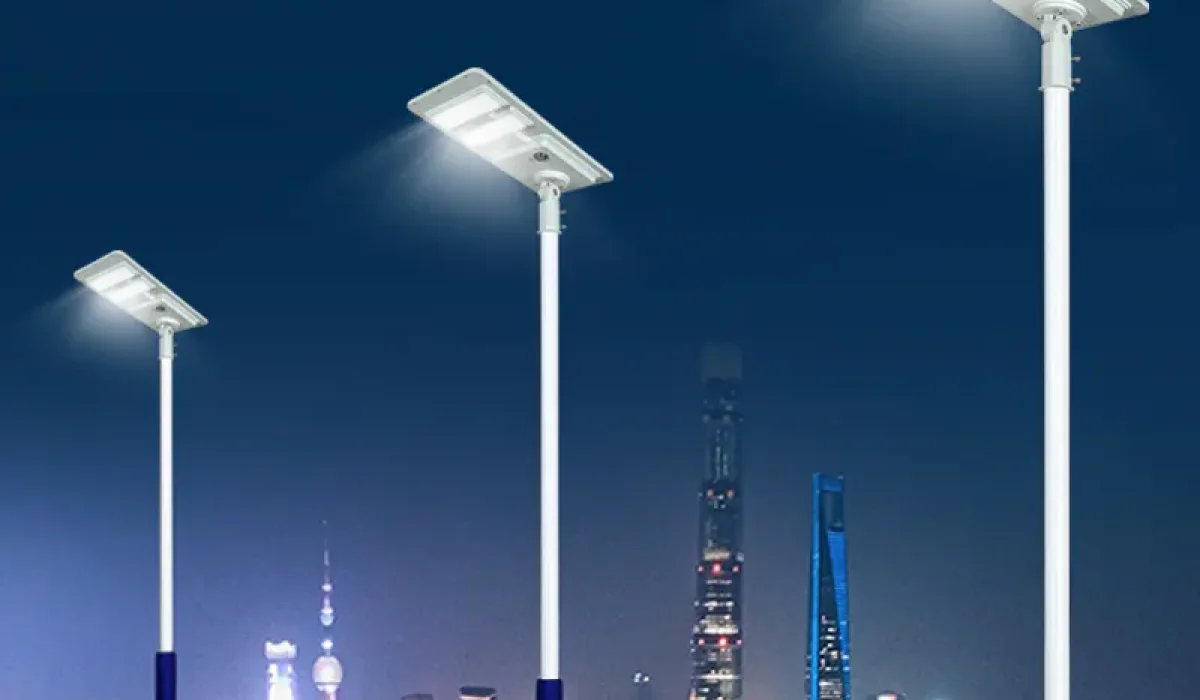
Batteries are the heartbeat of every solar light — quiet, constant, and essential.
They store sunlight during the day and release it after dark, driving energy efficiency, reliability, and sustainability. Without the right battery, even the best solar panel is just a sun catcher, not a light source.
Source of project figures: The figures and project observations referenced here are based on calculations and operational feedback provided by local customers and project teams. They are customer-reported reference data rather than independently audited performance results. Actual outcomes may vary depending on project specifications, equipment configurations, operating conditions, and calculation assumptions.
Introduction: Why Batteries Make or Break Solar Lighting
From city parks to remote roads, solar lights are reshaping how we illuminate public spaces. They sit at the intersection of renewable energy and practical design — simple on the outside, surprisingly smart inside.
And at the core of that system sits the battery, the hidden engine that decides how long your light stays on after sunset.
Think of a solar light as a rhythm: the sun charges it by day, and the battery returns that energy at night. It’s a cycle that saves power, reduces carbon footprints, and extends the reach of clean energy far beyond the grid.
So how do these small batteries make such a big difference in energy savings and sustainability? Let’s dig in.
What Batteries Actually Do in Solar Lights
By day, solar panels collect sunlight and convert it into electricity. A small controller regulates the flow and feeds it into the battery — like a savings account for energy.
After dusk, sensors automatically tell the LEDs to draw from that stored power.
In a simple flow:
☀️ Daytime: Sunlight → Panel → Controller → Battery Storage
🌙 Nighttime: Battery → Controller → LED Illumination
This process makes solar lights fully independent from the grid — ideal for off-grid homes, rural communities, and smart cities alike.
A strong battery means longer light hours, brighter performance, and more reliability during cloudy or rainy days. In short, the right battery keeps your solar light shining long after sunset.
Inside the Battery Room: Types That Power Solar Lights
Lead-Acid Batteries — The Old Workhorse
Lead-acid batteries are the oldest players in solar lighting. They’re cheap, sturdy, and easy to source.
But they’re also heavy, have shorter lifespans, and carry environmental baggage due to lead content.
They still work well in low-cost, large-scale projects like rural roads or farm compounds — but the world is quickly moving on.
Lithium-Ion Batteries — The Modern Standard
Lightweight, high-capacity, and long-lasting, lithium-ion batteries have become the go-to for solar lighting today.
Energy density, charge/discharge limits and cycle life vary by chemistry and battery-pack design. A declared cycle count is meaningful only with the depth of discharge, temperature, end-of-life capacity criterion and manufacturer test records; it is not itself a calendar-life or warranty guarantee.
A previous Nairobi City Park anecdote claimed a 40% reduction in maintenance visits after a battery upgrade. The affected asset register, actual battery models, maintenance tickets, reporting period and project attribution have not been verified; the percentage cannot be presented as a confirmed Hitech outcome.
Legacy Chemistries: NiCd and NiMH
Nickel-based batteries (NiCd and NiMH) once dominated solar lights.
NiCd stands up well to heat but uses toxic cadmium. NiMH is safer and eco-friendlier, offering solid midrange performance — still common in small garden or pathway lights.
Quick Comparison: Performance Snapshot
Engineering comparison: Battery family is an initial selection criterion, not a tested cycle-life, calendar-life, safety or cost guarantee. Verify the complete offered cell/pack/BMS against the actual project operating conditions.
| Battery family | Typical trade-offs to evaluate | Project-specific data required |
|---|---|---|
| Lead-acid | Supply availability and upfront cost versus size, depth-of-discharge limits, replacement labour and recycling | Exact model, usable Wh, discharge profile, temperature, maintenance, local recycling and warranty |
| Lithium-ion (including LiFePO₄ and other chemistries) | Cell chemistry, pack energy, service access, BMS protections and thermal management; not all lithium-ion packs are identical | Cell/pack BOM, cycle-retention test conditions, calendar/temperature constraints, safety evidence and written warranty |
| NiCd | Temperature and cycling requirements versus cadmium handling and regulated end-of-life arrangements | Approved cells, declared performance, environmental constraints, disposal and maintenance plan |
| NiMH | Application-specific capacity, self-discharge, temperatures and replacement access, especially for smaller systems | Model datasheet, tested capacity at temperature, charging profile, service access and warranty |
Where applicable to an offered industrial lithium battery, check the scope of IEC 62620 and request the manufacturer’s declared test unit and results. Cycle count cannot by itself establish calendar life, pack life or an entire luminaire warranty.
How Batteries Drive Energy Efficiency
It’s easy to overlook the battery — until your light goes out before midnight.
The better a battery can store and release energy, the less power is wasted between sunrise and sunset.
Smart solar systems now include Battery Management Systems (BMS) that track temperature, voltage, and charge levels in real time. Pair that with motion sensors and automatic dimming, and any reduced nightly energy demand must be calculated from the actual load and dimming schedule; no universal 30–40% reduction is established.
In other words, smarter batteries don’t just store energy — they help use it wisely.
Illustrative Grid-Energy Comparison (Not a Verified Project)
Let’s say a traditional grid-powered streetlight consumes 400 kWh per year, costing about $60 annually.
A standalone solar street light can avoid purchased grid electricity for its lighting load, but PV panels, battery/BMS, controls, cleaning, replacement, labour and disposal remain lifecycle costs. No general five-year 80% saving follows from the battery chemistry alone.
For a municipal tender, calculate five-year installed and operating costs plus lifecycle emissions against the same delivered lighting service and a stated grid or diesel baseline; do not infer monetary or emissions savings without a traceable model.
Why Batteries Matter for Sustainability
Solar light batteries are key to making renewable lighting sustainable — not just functional.
They reduce fossil fuel dependence, support carbon-neutral goals, and extend product lifespan.
Every year that a battery lasts longer means fewer replacements, less e-waste, and fewer mined materials.
An earlier edition attributed the following claim to an unnamed engineer in a Mombasa coastal project. The project identity, original interview and authorization have not been verified:
Battery reliability under rainy-season conditions must be checked using the installed model, dated fault log, energy balance and BMS/controller records; no zero-failure statement has been independently verified for this project.
That’s the kind of quiet sustainability that lasts beyond the marketing claims.
Battery Materials and the Environment
- Lead-acid: Lead handling requires regulated collection and recycling. High potential recyclability is not the same as a verified local collection or recovery rate.
- NiCd: Restricted due to hazardous waste.
- Lithium & NiMH: Environmental outcomes depend on the cell chemistry, sourcing, recycling process and the destination’s actual collection and treatment systems.
- Emerging technologies: Solid-state and novel-carbon systems require product-specific qualification. Research targets are not evidence of commercial pack safety, field life or environmental performance.
Waste reduction depends on the actual battery mass, replacement schedule, recycled content, transport and end-of-life treatment. A generic eight-year life or 50% material-waste saving is not established by chemistry alone.
Looking Ahead: Future Battery Innovations
Solar lighting’s future is tied to better batteries. Here’s what’s coming:
- Lithium–sulfur: An emerging technology whose practical pack energy density, price, cycle retention and field availability require independent verification.
- Solid-state variants: Commercial readiness, cell chemistry, pack safety and operating life require model-specific test data; no technology eliminates all failure or fire risks.
- Sodium-ion: Compare real offered cell and pack specifications, thermal limits, durability, supply support and end-of-life handling rather than assuming a universal cost advantage.
But the real leap will come from smart batteries — those that predict, adapt, and self-optimize.
Imagine solar lights that sense cloudy weather and dim automatically, or microgrids where lamps share stored energy across a park. Such features can be evaluated in a pilot only after matching the controller architecture, communications, storage, lighting design and maintenance data. No named Singapore or Cape Town pilot is asserted here without documented project evidence.
Choosing the Right Battery for Your Solar Lights
When you’re selecting solar lighting — whether for a backyard or a commercial project — keep a few things in mind:
- Pick lithium-based or NiMH batteries for efficiency and sustainability.
- Check cycle performance alongside depth of discharge, tested temperature, capacity retention, calendar aging, BMS limits and the actual written warranty.
- Request the destination- and model-matched safety, transport and environmental evidence. UN 38.3 addresses applicable transport testing; CE and RoHS documents serve different conformity purposes, and none alone certifies system service life.
- Prefer modular designs for easy replacement.
- Pair with efficient panels to maximize daily charging.
A bit of planning upfront means years of steady light — and no surprise blackouts.
Frequently Asked Questions
What battery lasts the longest in solar lights?
Compare the actual battery pack, BMS and environment under identical energy-load and temperature assumptions. LiFePO₄ is a lithium-ion chemistry, not a separate non-lithium alternative; a chemistry name does not establish the longest installed life.
How long do solar light batteries usually last?
Use the specified cell and pack model’s cycle-retention test, calendar-aging assumptions, site temperature, depth of discharge and warranty. There is no reliable universal two-to-eight-year service-life figure.
Can I replace my solar light battery?
Only where the delivered product’s approved SOP, enclosure and battery design permit safe replacement. Confirm the actual SKU, cable connectors, BMS compatibility, isolation requirements and spare-part supply.
Do batteries really save energy in solar lights?
Batteries store PV electricity for later use, but charging, storage and discharge have losses. Energy savings and autonomy depend on conversion efficiency, sizing, load and controls, not a claim of recovering every watt.
Which is more environmentally suitable: NiMH or lithium?
Compare actual pack life, usable energy, replacement frequency, materials, transport, collection infrastructure and recycling outcomes for the project location. Chemistry alone cannot establish environmental superiority.
How do I dispose of old solar batteries?
Take them to an e-waste or battery recycling facility. Never toss them into general waste bins.
Conclusion: A Quiet Revolution in Every Solar Light
Every solar light tells the same simple story — sunlight captured, stored, and returned.
Behind that story is a small battery doing big work: saving energy, reducing emissions, and keeping communities bright through the night.
Each lamp that glows after dusk is proof that sustainability doesn’t need to shout.
Sometimes, it hums quietly inside a small battery — one charge at a time.