LED lights have become the cornerstone of modern lighting, offering high efficiency while helping save energy and reduce maintenance costs. Understanding key facts about LEDs can help you make more informed lighting choices. Whether you are selecting lighting for home use or for street lighting systems, mastering the basics of LED technology will save you time and money.
What Are the Important Facts About LED?

LEDs (Light Emitting Diodes) are a highly efficient lighting solution widely used in residential, commercial, and industrial sectors. Understanding the key features of LEDs will help you make better decisions for your lighting needs.
- Energy Efficiency: LEDs consume less electricity compared to traditional light sources, helping reduce energy bills.
- Long Lifespan: LEDs last significantly longer than incandescent and fluorescent lights, reducing replacement frequency.
- Non-toxic and Eco-friendly: LED systems require material and end-of-life management: drivers, circuit boards, coatings, solder and housings may contain regulated substances. Confirm product-specific RoHS documentation and destination-country electronics recycling arrangements instead of claiming all LEDs are non-toxic or universally recyclable.
- Instant Light: LEDs reach full brightness instantly, without any warm-up time.
Knowing the different types of LEDs, like SMD and COB, will help you choose the best product for your specific application, ensuring you get the best performance and cost-effectiveness.
What Are the Key Principles of LED?

LEDs work by passing current through a semiconductor material, which releases light when electrons combine with holes in the material. This process is different from the heat-based light emission of traditional bulbs, making LEDs more efficient and durable. Understanding the principles behind LED technology can help you select the right products for your needs.
Why Understanding LED Types Is Crucial?
There are many different types of LEDs, the most common being SMD (Surface Mounted Diode) and COB (Chip on Board). These two LED types differ in design, light output, application suitability, and cost. Understanding these differences helps you make the right choice based on your lighting requirements.
Types of LEDs
SMD LED
SMD LED typically describes a surface-mount LED package assembled onto a printed circuit board. The final beam shape depends on the package, secondary optic and luminaire design, not the SMD mounting format alone.
- Advantages:
- Can provide efficient output where the identified LED package, driver, optics and heat sinking are appropriately designed and tested.
- Street- and area-lighting distribution must be demonstrated by the complete fixture’s IES/LDT file and mounting arrangement.
- Flexible and suitable for a variety of applications.
- Common Applications: Street lights, floodlights, high-bay lights, linear lights.
COB LED
COB LED (chip on board) places multiple LED dies on a common substrate. Light output, beam control and suitability depend on its power rating, thermal design, phosphor and secondary optics; COB does not inherently produce a narrower beam or higher complete-luminaire efficacy.
- Advantages:
- CRI and spectrum must be checked against the selected chip/phosphor and luminaire test result; high CRI is not inherent to all COB LEDs.
- May be suitable for directed illumination with a matching reflector/lens design and acceptable glare/thermal performance.
- Cost and assembly are model-specific; review board design, heat sinking, optics, serviceability and full fixture quotation.
- Common Applications: Downlights, track lights, spotlights.
Other LED Types (Optional)
In addition to SMD and COB, there are other types such as MCOB (Multi-Chip on Board) and MCCOB (Miniature Chip on Board). These are used in applications requiring high power or brightness, typically in specialized industrial lighting.
SMD vs. COB LED Comparison
Basic Structure & Design
- SMD LED: Comprised of individual LED chips mounted directly on a circuit board, ideal for general, widespread lighting applications like street lighting and commercial spaces.
- COB LED: Multiple LED chips are packaged together on a single board, providing high-intensity light, ideal for focused lighting applications such as spotlights and downlights.
Advantages and Disadvantages of SMD LEDs
Advantages:
- Efficiency: Compare measured complete-luminaire lumens per watt and electrical input under the same test conditions, not the LED package label alone.
- Beam control: SMD packages can be used with roadway optics; require an IES/LDT file showing uniformity, glare and distribution on the actual site.
- Easy installation: Can be easily integrated into various lighting systems.
Disadvantages:
- Production costs: Depend on package type, production quantity, substrate, optics and thermal/mechanical design; obtain a matched supplier quotation.
- Focused applications: Can be achieved with suitable primary or secondary optical design; assess the finished luminaire rather than assuming an SMD limit.
Advantages and Disadvantages of COB LEDs

Advantages:
- Luminous output: COB performance depends on the identified module’s measured output, CRI, thermal loading and optics.
- Easy installation: Simplified installation process compared to other LED types.
- Cost: Compare installed module, driver, heatsink, optics and service replacement costs with a matched SMD alternative.
Disadvantages:
- Heat management: Requires better heat dissipation, which can complicate the system.
- Glare issues: Concentrated light output may cause glare, requiring careful installation and use of diffusers.
Key Factors to Consider When Choosing Between SMD and COB LEDs
Efficiency and Light Output
Neither SMD nor COB packaging guarantees higher efficacy or a particular road-lighting beam pattern. Compare complete-luminaire flux, input watts, efficacy, measured color/CRI, intensity distribution, operating temperature and driver efficiency for the offered models. ANSI/IES LM-79 provides optical and electrical measurement methodology for complete SSL products.
Heat Management
Thermal requirements depend on real package power density, junction-to-case thermal resistance, heatsink design, enclosure ambient temperature and driver losses. Both COB and SMD fixtures can be reliable or poorly designed; packaging alone cannot establish operating temperature.
Cost and Installation
No universal relative manufacturing or installed-cost ranking applies to COB versus SMD. Compare the complete driver/module/optics assembly, mounting, replacement access and tested performance against a specific BOQ.
Longevity and Maintenance
LED lifetime must be assessed from the identified package’s LM-80/TM-21 conditions, installed junction temperature, driver/electronic reliability and luminaire repair/warranty plan. A package-based SMD versus COB lifetime ranking is not supported without matched test and field records.
Applications of SMD and COB LEDs
Applications of SMD LEDs
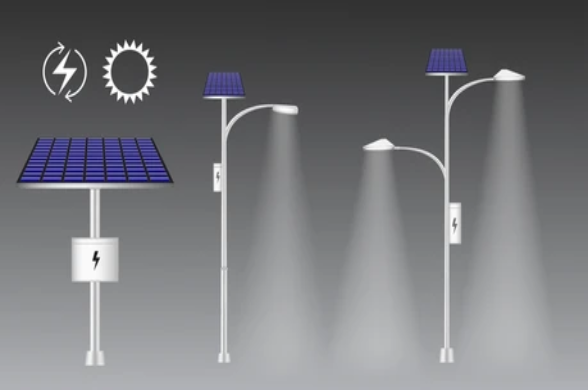
SMD LEDs are ideal for wide-area lighting, such as street lights, floodlights, and high-bay lights. They provide even lighting across large areas, making them perfect for outdoor and industrial applications.
Applications of COB LEDs
COB LEDs are commonly used in indoor lighting applications, including downlights, track lights, and spotlights. They provide intense, concentrated light, making them perfect for showcasing products or highlighting specific areas.
Hybrid Applications
In some large-scale lighting projects, both SMD and COB LEDs may be used together. For example, SMD LEDs can provide broad coverage for the general area, while COB LEDs can be used for specific, focused lighting in key areas.
Summary: SMD vs. COB LED Comparison
Quick Comparison Table
Engineering buyer comparison: Packaging architecture is not a substitute for complete-luminaire performance testing.
| Review item | SMD-based LED fixture | COB-based LED fixture |
|---|---|---|
| Electrical and optical efficacy | Use the offered complete luminaire’s tested flux, input W, lm/W and IES/LDT distribution, not a package stereotype | |
| Glare, color and uniformity | Check package, lens and installed road-layout results | Check module, reflector/lens and installed road-layout results |
| Thermal and operating life | Check actual PCB/heat-sink temperature, driver and module aging data | Check actual substrate/heat-sink temperature, driver and module aging data |
| Lifecycle cost and recyclability | Quote full fixture, repair parts and identified recycling streams | Quote full fixture, repair parts and identified recycling streams |
For municipal or EPC lighting, select the exact fixture from model-matched complete-luminaire testing, photometric files, temperature/driver evidence, written warranty and an auditable cost comparison. Submit a road-lighting BOQ for preliminary LED module and photometry review; SMD/COB packaging alone cannot establish compliance.
Frequently Asked Questions
1. What are the best applications for SMD LEDs?
SMD LEDs are ideal for street lighting, commercial spaces, and outdoor floodlights, where large area coverage is required.
2. How do I install COB LEDs?
Installation and maintenance depend on the offered finished fixture and its approved electrical/thermal assembly instructions; COB packaging by itself does not make installation easier.
3. Which type of LED is more energy-efficient?
Do not assume a universal efficacy advantage from SMD packaging. Select the tested complete luminaire that satisfies the required maintained road lighting, glare/optics and operating cost criteria.