Source of project figures: The figures and project observations referenced here are based on calculations and operational feedback provided by local customers and project teams. They are customer-reported reference data rather than independently audited performance results. Actual outcomes may vary depending on project specifications, equipment configurations, operating conditions, and calculation assumptions.
Smart solar street lights are a smarter, safer, and greener choice because they operate entirely on renewable solar energy, can avoid purchased grid electricity for a fully off-grid lighting load, while total five-year savings still depend on the installed system cost, battery replacements, maintenance and the comparator, improve public safety with motion-activated LED lighting, and require minimal maintenance1. They also support environmental goals by avoiding grid electricity during off-grid operation (manufacturing, battery replacement and disposal still have lifecycle impacts) and reducing light pollution2, making them ideal for modern urban and rural projects.
Tired of high maintenance1 costs, rising electricity bills, and dark, unsafe streets? I know exactly how frustrating that can be. For rural-road procurement, compare actual grid-cable protection and service costs with the solar system’s PV, battery, foundation and maintenance requirements. This comparison should be completed against the buyer’s actual project BOQ and required lighting service.
By combining solar power, energy-efficient LED technology3, and intelligent controls, these lights deliver reliable illumination along with major economic and social benefits. For government and EPC buyers, practical value comes from the offered model’s energy balance, photometry, controls and documented maintenance plan—not from unverified field anecdotes.
What Exactly Are Smart Solar Street Lights?
A smart solar street light isn’t just a pole with a solar panel slapped on top. It’s an integrated, self-sufficient system that includes:
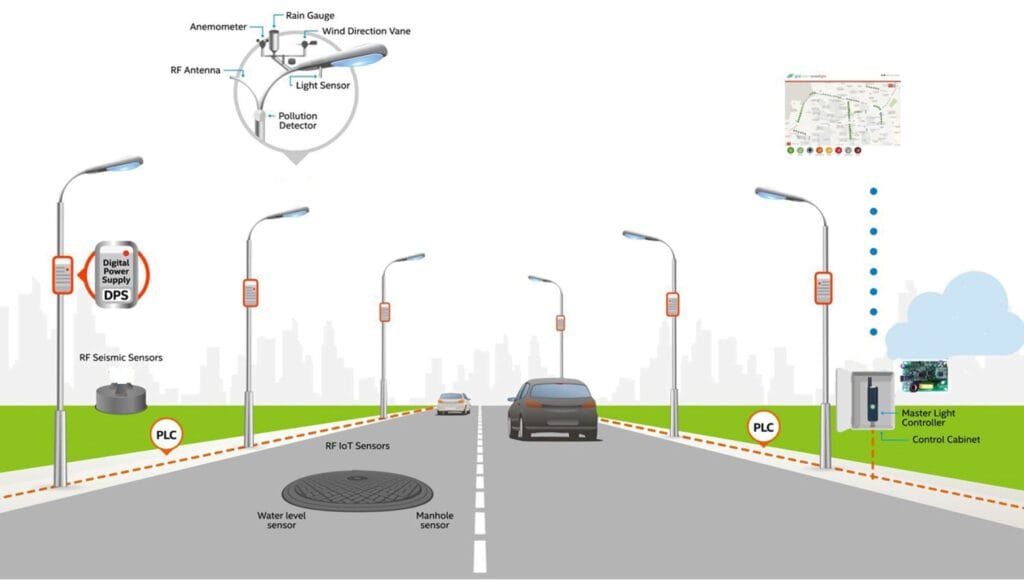
- High-efficiency solar panels4
- Long-lasting lithium batteries5
- Robust LED fixtures
- Motion sensors and adaptive dimming
- IoT modules6 for remote monitoring and data analysis
These components work together to ensure independent operation—even during bad weather or in remote areas with no grid access.
Key Advantages of Smart Solar Street Lights
💡 Big Savings on Energy and Costs
A grid-connected lighting system and a standalone solar design have different purchased-energy and lifecycle costs. The earlier 70% customer-bill figure is not supported by a matched before-and-after account. Smart solar lights run fully on renewable energy, and the use of efficient LEDs means lower power consumption while maintaining excellent brightness.
Any municipal budget reallocation attributed to a project requires the buyer’s dated cost records and budgeting decisions. The earlier coastal-city anecdote is not presented as verified company experience.
🌃 Improved Safety for Public Spaces
I once visited a park where parents were afraid to let their kids play after sunset. After we installed smart solar street lights, the entire mood changed.
With motion sensors7, the lights instantly brighten when people or vehicles pass by:
- Better visibility for pedestrians and drivers
- A deterrent to petty crime and vandalism
- A more welcoming atmosphere for community activities
Residents often tell me they feel "safer and more alive" at night after these systems are installed.
🔧 Minimal Maintenance
Before switching to solar, I used to see maintenance1 teams out every month fixing cables and replacing bulbs. With smart solar street lights, that’s mostly history.
- Service-life planning based on identified component and field evidence; 10–15 years is not a blanket system guarantee
- Simple periodic cleaning of panels and battery checks
- Compare maintenance costs using equivalent cleaning, inspection, battery replacement, repair labour and travel records. A universal 60% reduction is not verified.
The former Malaysia customer quotation is not matched to an identified contract, lighting model, maintenance period or customer permission. For a Malaysian tender, request the actual maintenance-cost baseline and dated service records before claiming savings.
🌍 Flexible Installation Almost Anywhere
The beauty of smart solar street lights is freedom. No grid? No problem.
- Rural roads, remote villages
- Coastal areas and islands
- Large parking lots, nature trails, or temporary event spaces
Standalone solar lighting may avoid certain grid-connection works, but pole foundations, lifting, civil access, utility clearances, site wiring, commissioning and safety inspections still apply. Installation time depends on the approved scope and schedule; an earlier 48-hour mountain-village claim is not supported by a verifiable project work log.
Municipal Park Lighting: How to Verify the Project Outcome
An earlier edition referred to a 2023 Nairobi park conversion of 200 luminaires, but the owner, contract, quantity, supplied models and acceptance records have not been verified. The checklist below describes the records buyers should request, not confirmed Hitech installation results.
For a credible before-and-after assessment, collect:
- Metered grid electricity, load schedules, electricity tariffs and like-for-like operating hours; the former 75% saving is not verified
- Work orders, inspection and replacement costs, asset register and equal comparison periods; the former 80% reduction is not verified
- Visitor counts or documented community-use surveys with an agreed baseline, if social benefits are claimed
Improved public-space use and perceptions of safety should be assessed using documented baseline surveys, reliable site observations and comparable operating periods. Do not attribute unverified quotations or municipal findings to the Nairobi example.
Environmental Benefits
As someone deeply passionate about sustainability, this is my favorite part.
- No on-site fuel combustion for a purely off-grid solar light, while production, logistics, batteries and end-of-life management remain part of lifecycle emissions
- Less light pollution thanks to focused LED optics
- Supports municipal green initiatives and climate goals
When I see a city proudly list "carbon-neutral lighting" in their environmental reports, it always feels like a win.
Can They Handle Harsh Weather?
Smart solar lighting systems can be configured for demanding climates, subject to model-specific electrical temperature limits, IP/IK evidence, corrosion protection, structure and maintenance plans. A first-person typhoon anecdote is not accepted as structural proof.
- Heavy rain and humid conditions? No problem.
- Extreme temperatures from –30°C to 60°C? Still shining.
- Dusty, salty, or coastal environments? Thanks to corrosion-resistant materials and protective coatings, they hold up impressively.
Rainy-day autonomy must be calculated for the specified PV generation, usable battery Wh, depth of discharge, dimming schedule, system losses and worst-month local solar resources. A single 3–5-day autonomy promise does not apply across all smart solar lighting models.
Why Choose Hitech-China?
Sunlurio is the outdoor project-lighting brand of Qingdao Hitech New Energy Co., Ltd. Project experience, contract scope, test reports and after-sales capacity should be matched to verified references before use in an EPC or government bid.
We provide:
- Custom lighting plans tailored to local needs
- Galvanized and powder-coated poles for extra durability
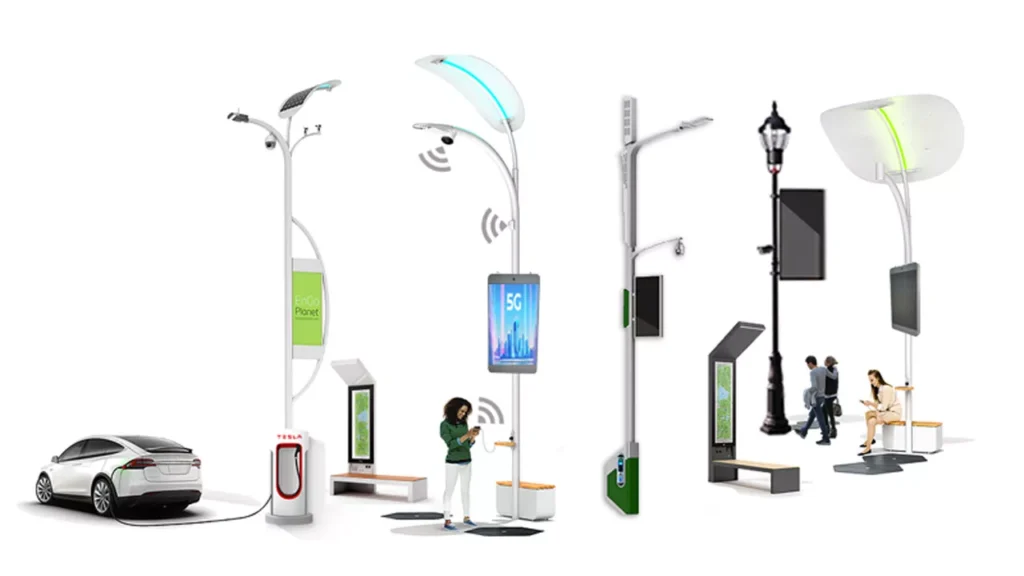
- Integration with CCTV, Wi-Fi, and smart sensors to future-proof your projects
I always say: we don’t just sell lights, we build solutions that improve lives and communities.
Frequently Asked Questions
How long do these lights last?
Assess the selected battery, luminaire, controller and PV module separately under the operating profile and temperature. Cycle count, calendar life and warranty do not establish a universal 10–15-year system life.
What maintenance1 is required?
Maintenance includes condition-based PV cleaning, battery/BMS and controller checks, fastener, cable connector and seal inspection, corrosion review and replacement planning. The exact schedule follows the offered equipment and site environment.
Do they work during cloudy or rainy days?
Only if the actual PV/battery configuration and dimming schedule are sized to meet the stated project autonomy under worst-month solar and temperature assumptions. Check usable Wh and the energy-balance calculation for the tender.
Can you adjust brightness or color temperature?
Absolutely. You can fine-tune brightness levels and choose warmer or cooler color temperatures to match your environment.
Are they safe in strong winds or storms?
Wind resistance must be verified for the complete offered pole, luminaire and PV assembly against the project design wind criteria, exposure, effective projected area, soil/foundation assumptions and applicable structural calculations. No universal 150 km/h rating is claimed here.
What if one light stops working?
Each unit operates independently. If one fails, others stay functional, and usually only a simple battery replacement or minor repair is needed.
Do they come with a warranty?
Confirm the offered model’s written warranty, coverage, exclusions, operating limits and service process before ordering.
Can they integrate with security cameras or other devices?
Yes! Many projects include CCTV, Wi-Fi modules, and even environmental sensors for smart city upgrades.
Final Thoughts
Smart solar street lights combine cost savings, safety, and environmental responsibility into one intelligent system. They transform streets and public spaces into safer, greener, and more inviting areas—without the hassle of traditional infrastructure.
Ready to transform your streets and cut long-term costs?
Contact us Now
Explanatory Notes
- Find out how easy it is to maintain solar street lights compared to traditional options.
- Explore the impact of smart solar street lights on minimizing light pollution in urban areas.
- Discover why LED technology is a game-changer for energy efficiency and longevity.
- Get insights on the most efficient solar panels for effective street lighting solutions.
- Learn about the benefits of lithium batteries in powering solar street lights.
- Understand how IoT modules enable remote monitoring and data analysis for street lights.
- Find out how motion sensors enhance public safety and energy efficiency in street lighting.