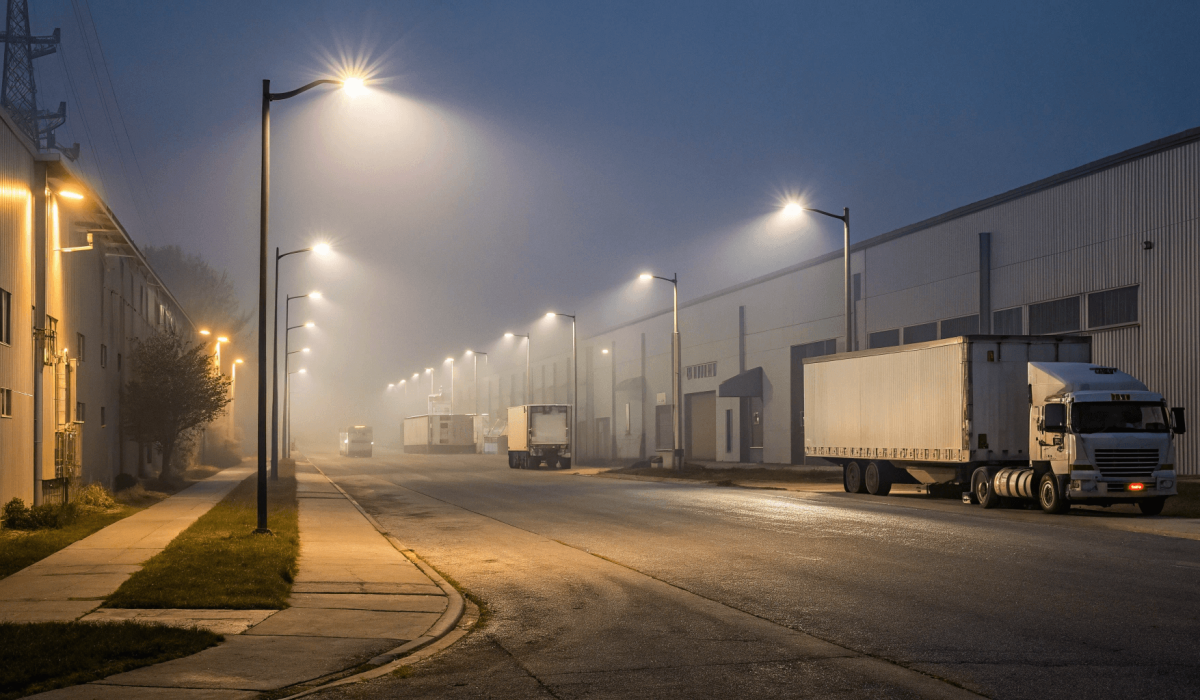
Thinking about investing in AC street lights but feeling overwhelmed by all the specs and jargon? You’re not alone.
AC street lights are reliable, grid-connected lighting solutions designed for cities, industries, and large infrastructure projects. They offer consistent brightness, high performance, and smooth integration with existing power systems.
If you’re new to this type of lighting, don’t stress. I’m here to guide you through the basics, break down the complex terms, and help you make an informed choice with confidence.
What Exactly is an AC Street Light?
You might hear “AC” and immediately think of something complicated, but it’s actually simpler than you think.
An AC street light is powered directly from the local or national power grid. It uses alternating current (AC) to light up streets, buildings, and public spaces.
- Definition: AC street lights are LED lights that draw electricity from the power grid.
- How they work: A driver converts AC input into regulated power for the LEDs. Confirm the complete luminaire input-voltage range, frequency and protection requirements for the site.
- AC vs. DC Lights:
- AC street lights require a constant grid connection, while DC lights usually run on solar power or batteries.
- Brightness and reliability depend on the complete luminaire, power supply, operating schedule and site conditions. AC or DC alone does not determine performance.
The Key Benefits of AC Street Lights
- Stable power supply from the grid (no worrying about cloudy days or battery life).
- No reliance on sunlight or batteries, making them perfect for urban areas.
- Easier to install in cities where electricity is already available.
- Compatible with smart city features like remote monitoring, dimming, and sensors.
Where Are AC Street Lights Commonly Used?

If the location has reliable electricity, there’s a good chance you’ll see AC street lights.
AC street lights are widely used in urban, industrial, and public areas where continuous grid power is available.
- Urban and suburban roads: Areas with full grid coverage need consistent lighting all night long.
- Industrial parks and factories: Bright, reliable lighting is key for safety, especially in nighttime operations.
- Commercial spaces: Think parking lots, shopping malls, and office buildings—these places need consistent visibility for safety and security.
- Government infrastructure: Airports, highways, and train stations rely on AC-powered street lights to maintain safety and regulation.
- Smart city upgrades: With cities modernizing to smart infrastructures, AC lights are the go-to solution because they’re easy to connect to smart tech like sensors and cameras.
Key Specifications You Need to Know
I know the specs can feel like a maze, but don’t worry—let’s break them down into the essentials.
Focus on wattage, voltage, lumens, color temperature, IP rating, and materials. These are the core elements that will help you choose the right product.
-
Wattage & Brightness (Lumens):
- Compare tested luminaire output and input power for the exact model and optic.
- Use road width, pole height, spacing and the required illuminance or luminance and uniformity to select the configuration.
- Confirm the layout with a model-specific IES/LDT file and photometric calculation; wattage alone does not establish application suitability.
-
Voltage Range:
- Check the input-voltage range and frequency stated on the complete luminaire datasheet against the measured site supply. Do not infer compatibility from a single nominal voltage.
-
Color Temperature:
- 3000K: Warm white (ideal for residential areas)
- 4000K: Neutral white (good for commercial spaces)
- 6000K: Cool daylight; select only when appropriate for the project specification, visual task and local environmental requirements.
-
IP Rating:
- Look for at least IP65 if you plan to use the lights outdoors, ensuring they’re protected from dust and water.
-
Beam Angle & Light Distribution:
- Review the complete optical distribution, mounting height, tilt, road width and pole spacing together.
- Use photometric files to check useful coverage, uniformity, glare and spill light; a beam-angle label alone is insufficient.
-
Housing Material & Heat Dissipation:
- Aluminum is the best material because it’s durable and lightweight.
- A good heat sink ensures the light lasts longer.
Common Mistakes to Avoid When Buying AC Street Lights
Even experienced buyers can miss a few important details.
Most mistakes come from overlooking the specifics, or not considering the environment. Don’t rush your decision!
- Wrong voltage: A nominal voltage label alone does not establish compatibility. Check whether the actual site voltage and frequency fall within the complete luminaire rated input range; also review supply variation and surge protection.
- Low IP rating: Indoor-rated fixtures aren’t designed for outdoor conditions. Water damage will shorten their lifespan.
- Incorrect beam angle: An optic selected without checking road geometry, mounting position and the photometric layout can produce dark areas, glare or spill light.
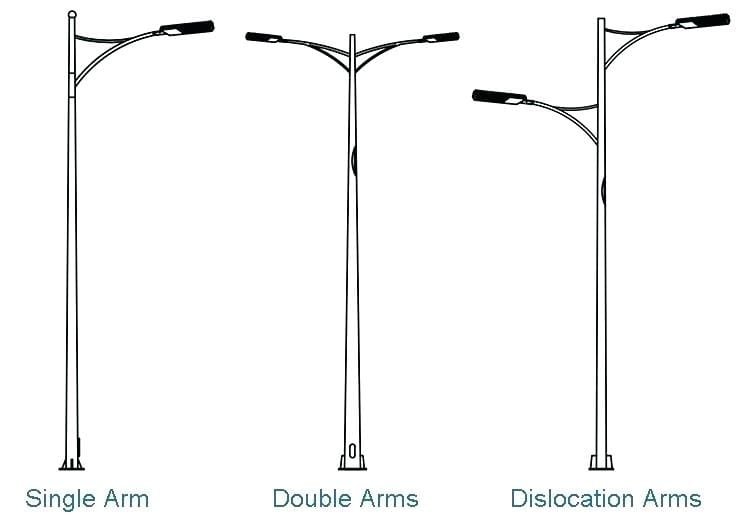
- Incorrect pole planning: If pole height or spacing isn’t correct, your lighting won’t cover the area properly.
- Difficult maintenance: If the fixture design doesn’t allow easy access, replacing parts or performing repairs will be a hassle.
How to Choose the Right AC Street Light for Your Project
Choosing the right AC street light isn’t just about picking what looks good—it’s about matching the light to your project needs.
Start by identifying your goals and budget, and then match features like brightness, beam angle, and IP rating to your project.
-
Understand your project:
- What are you lighting? A road, parking lot, or industrial zone?
- How large is the area to cover?
-
Match brightness to usage:
- Define road geometry, pole height and spacing, operating hours and dimming schedule.
- Confirm the required lighting level, uniformity and glare limits from the project specification.
- Compare suitable optics and power settings through photometric calculation rather than selecting watts from the road category alone.
-
Check your grid voltage:
- Be sure the light matches your local grid. In many African countries, the voltage is usually around 220V–240V.
-
Choose certified products:
- Request the market-specific conformity documents and test reports applicable to the exact model. CE marking is a declaration of conformity, not an independent quality certification. Check report scope and model traceability against the tender requirements.
-
Long lifespan:
- Pay attention to heat management, both for the LED chips and drivers, to ensure longevity.
-
Ask for photometric simulations:
- A reliable supplier should be able to provide a simulation to show how the light will distribute across your area.
Frequently Asked Questions
Still unsure? Here are some common questions I get from clients.

-
Are AC street lights more energy-efficient than DC?
- Not exactly. Compare complete-system input power, delivered light, optical distribution and operating schedules under equivalent lighting requirements. AC or DC supply alone does not establish which system is more efficient.
-
How long do AC street lights last?
- Use model-specific lifetime evidence and its stated temperature and operating conditions. LED lumen maintenance, driver reliability, seals and serviceability all matter; a component lifetime is not a warranty for the complete luminaire.
-
Can AC lights work with smart city tech?
- Yes! Many modern AC lights are designed to integrate with smart city systems, allowing for features like dimming, motion sensors, and remote monitoring.
-
What’s the typical cost?
- Request a quotation for the specified luminaire, quantity, controls, warranty and delivery terms. Compare the complete installed scope, including poles, foundations, cabling and maintenance, rather than an unsupported universal unit-price range.
Final Tips from the Experts
There are hundreds of manufacturers out there, but not all of them offer the same level of quality.
Choose a trusted supplier who understands your needs.
Always ask about the warranty, service, and potential upgrades, such as dimming or remote control capabilities.