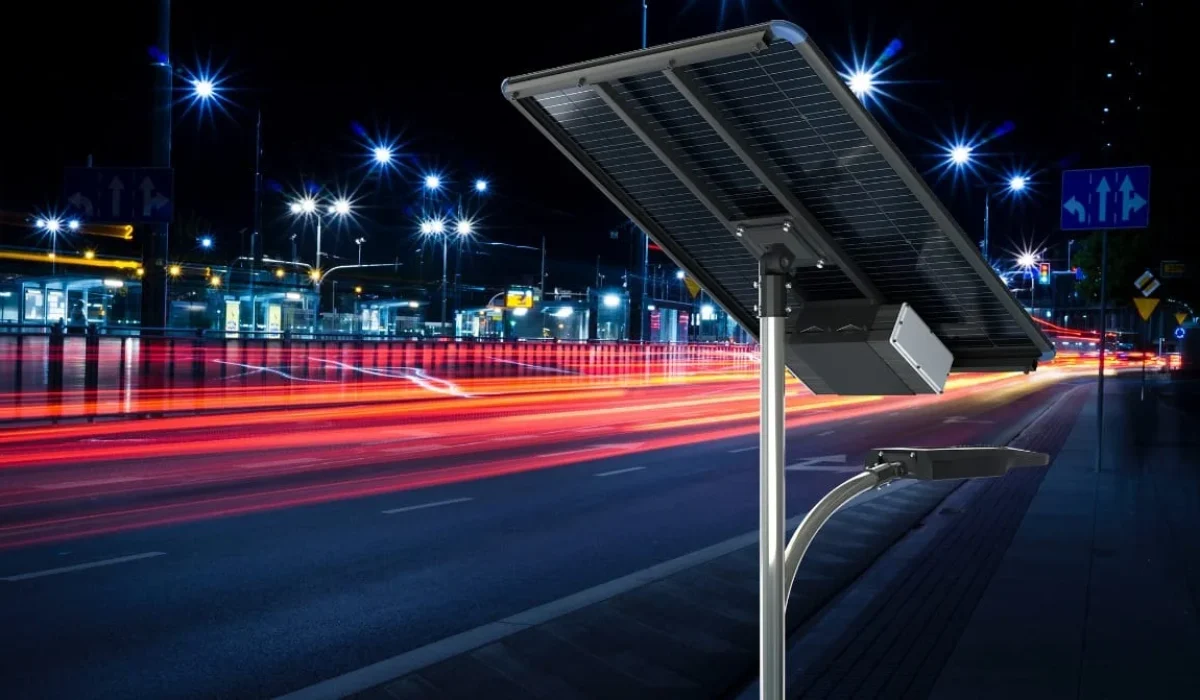
An EPC procurement guide to evaluating cost and performance for solar LED lighting projects in campuses, industrial parks, ports, estates and municipal roads. Savings depend on the actual lighting design, site resource, installed BOM, civil works and service plan.
Source of project figures: The figures and project observations referenced here are based on calculations and operational feedback provided by local customers and project teams. They are customer-reported reference data rather than independently audited performance results. Actual outcomes may vary depending on project specifications, equipment configurations, operating conditions, and calculation assumptions.
Why Cost-Saving Matters in Commercial Solar LED Lighting Projects?
Commercial solar projects fail or succeed long before installation — usually at the design and planning stage.
Cost overruns in EPC lighting projects can result from inadequate road/site assessment, unverified optical performance, energy-balance assumptions or excessive design margins. The former 15-year personal experience and 30–40% oversizing examples lack matched project records and are not offered as measured results or an entire system-life guarantee. A smarter approach doesn’t mean cutting corners; it means removing waste.
The following five strategies identify potential areas for project optimization; no saving should compromise specified road illumination, safety, autonomous operation, warranty or maintainability without an approved technical review.
1. How Does a Thorough Site Assessment Reduce Solar LED Lighting Project Cost?

Accurate site assessment prevents oversizing, misplacement, shading issues, and unnecessary hardware.
In real deployments — especially in industrial yards or university campuses — even a single incorrectly placed pole can force you to upgrade the battery, increase panel size, or add a second fixture. All of this drives cost up.
Key Cost-Saving Actions
- Use solar pathfinder tools to analyze shading and sun hours
- Evaluate seasonal variations (rainy season in West Africa vs. dry season in Gulf)
- Avoid placing lights near tree clusters, warehouse edges, or high-shadow zones
- Confirm mounting heights vs. required lux levels using simulation
- Validate the IES/LDT layout, solar-resource and operating-profile assumptions with a lighting engineer; no universal 30% reduction is established
Why this saves money:
Better siting and reduced shading may improve PV yield. Any change in panel or battery sizing must still meet the worst-month energy balance, specified autonomy and maintainability; lower lifecycle cost requires a like-for-like model.
2. Why Choosing High-Efficiency Panels & LEDs Cuts Total Project Cost?
High-efficiency components reduce system size, meaning:
- smaller panels
- smaller batteries
- fewer poles only when approved road/site photometry, spacing, wind loads and structure calculations justify the configuration
- fixture quantity optimized using the actual lighting layout, optics, maintained targets and glare—not efficiency alone
- lower transport and installation cost
An earlier example attributed a 20% fixture-count reduction to a 150-to-210 lm/W efficiency change across Kenyan industrial sites. Without matching installation layouts, complete-luminaire photometric reports, pole arrangements and purchased BOMs, neither the project count nor savings are verified. LED chip/module efficacy must not be substituted for the complete luminaire’s measured efficacy.
Cost-Saving Tips
- Compare the actual offered PV module’s rated power, module efficiency, area, temperature coefficient, mounting loads and warranty under the site conditions
- Specify the offered model’s complete-luminaire flux, measured lm/W, electrical input and optics from its test report and IES/LDT file; do not promise a fixed 190–220 lm/W across all models
- Focus on lifecycle, not upfront cost — a cheap LED often dies early
- Use LM-80/TM-21 LED component lumen-maintenance evidence only within its testing scope; separately verify driver, luminaire, battery, PV and pole service lives and written warranties. This is not a 15-year complete-system guarantee.
Bottom line:
Higher complete-luminaire efficacy may lower load for an equal maintained lighting target. Any smaller battery/PV, pole count or cost must then be confirmed by photometric design and worst-month energy and financial models.
3. How Optimized System Design Prevents Overspending?

Over-designing is one of the most common (and expensive) mistakes in Solar LED Lighting Projects.
A 200 Ah and 100 Ah battery cannot be compared without voltage, usable Wh, allowable depth of discharge, BMS limits, temperature and autonomy requirement. Likewise, pole and fixture counts require a documented lighting calculation, not an anecdotal oversizing claim.
Smart Design Principles
- Use model-matched IES/DIALux or AGi32 photometry to meet the required maintained lighting targets; separately calculate nightly Wh from actual input power and duty profile, then size usable battery Wh and PV recharge for the worst month
- Match lumen output to actual lux requirements (EN13201 or local standards)
- Size storage reserve for the project’s worst solar month, specified nightly profile, autonomy, temperature derating and recharge margin; avoid removing required resilience based on a coastal/non-coastal label
- Standardize approved component sizes where feasible, but preserve project-specific pole heights, spacing, lighting distribution, wind loads and foundation design
- Consider modular designs (easier maintenance + scalable)
Why this matters:
Right design = no waste.
Every oversized component directly increases CAPEX and OPEX.
4. How Incentives, Grants & Rebates Reduce Project Cost?
Some jurisdictions publish programme-specific renewable-energy support, but eligibility and funding vary by country, contracting entity, technology and year. Confirm the current programme before including any incentive in an EPC price comparison.
Most EPC teams simply overlook these programs due to paperwork fatigue.
What to Look For
- Federal & regional renewable-energy subsidies
- Utility company rebates for LED efficiency improvements
- Carbon-credit or green-building incentives
- Accelerated depreciation benefits for renewable assets
- Government programs for rural electrification or smart-city upgrades
Any subsidy, rebate, tax or carbon-credit value must be tied to a current published programme, eligible equipment, beneficiary, application rules and available budget; the earlier 5–35% range is not a verified offer.
5. Why Long-Term Maintenance Planning Saves Money?
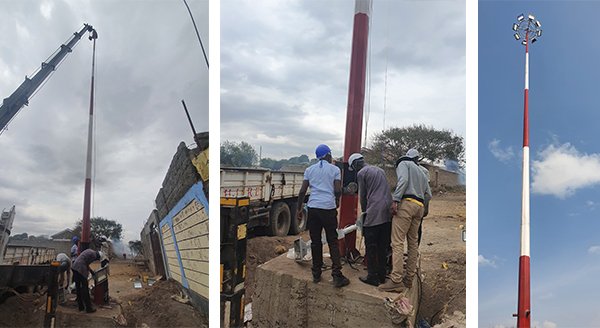
A commercial solar lighting project is only as good as its maintenance plan.
Failures may arise during commissioning or at any stage of service. Battery aging, controls, corrosion, seals and LED drivers require inspection based on the supplied design, environmental exposure and actual maintenance records; no universal year-two-or-three failure schedule is established.
Maintenance-Based Cost Control
- Use corrosion-resistant poles (hot-dip galvanized or powder-coated)
- Specify the destination tender’s applicable IP/IK, corrosion and electrical requirements and request model-specific test evidence; an IP rating alone does not guarantee outdoor lifetime
- Choose PV cleaning intervals from actual soiling, rainfall, access, panel guidance and site inspection records; a fixed quarterly rule is not suitable for every location
- Implement smart monitoring if budget allows (reduces field visits)
- Choose components with available support & documentation
The value of PV cleaning depends on before-and-after irradiance-adjusted energy readings and site soiling. The former 10–20% recovery claim is not supported by matched measurements; do not apply it as a savings assumption in a BOQ.
Conclusion: What’s the Smart Way to Cut Solar LED Lighting Project Costs?
Reducing cost doesn’t mean buying cheaper components —
it means avoiding waste, optimizing design, and protecting system lifespan.
The five strategies:
- Conduct a site assessment
- Use high-efficiency panels & LEDs
- Optimize system configuration
- Leverage incentives
- Plan for long-term maintenance
For tender-stage planning, request verified project references separately from general engineering practices. The earlier references to Tema Port, Kigali and Dubai do not establish the exact roles, quantities, lighting results or cost savings claimed here without matched project records. Apply the five steps to the actual project BOQ and approval requirements.
For tender-stage checks, connect cost planning with government project specifications for brightness, durability, and documentation. Submit the BOQ for preliminary technical review with road/site geometry, control schedule, energy design assumptions, civil interfaces and warranty requirements.