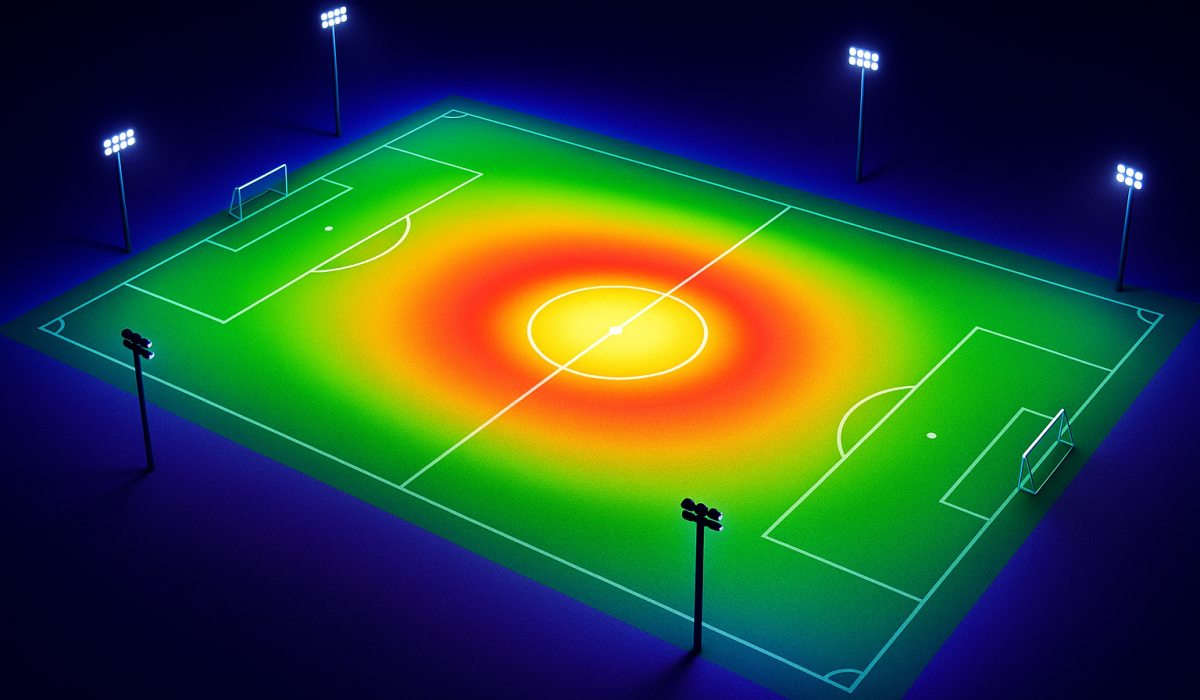
Upgrading LED stadium lighting calls for more than a brighter fixture: buyers must review operating energy, beam control, maintainability and broadcast requirements. Qingdao Hitech New Energy has directly participated in lighting-related projects at Wankhede Stadium (India), Lusail Stadium (Qatar), Manila City Sports Complex (Philippines) and King Saud University Stadium (Saudi Arabia). Our broadly similar scope included LED floodlight and accessory supply, high-mast poles and steel structures, IES/DIALux lighting design, control and electrical technical support, and site installation or installation guidance. Final project acceptance was not carried out by Hitech; project-specific installation roles and measured results require the corresponding records.
1. LED Stadium Lights Save Power and Lower Operating Costs
LED stadium lighting can reduce operating electricity when compared with an appropriately defined existing HID or halogen installation. Quantify the potential benefit using the old and proposed input power, operating hours, dimming profile and electricity tariff; no universal percentage applies to every stadium.
Before claiming energy savings, document the baseline fixture inventory, operating schedule and meter readings. The earlier article referred to Abuja National Stadium and several precise savings percentages; Abuja has not been confirmed as a Hitech project, and those figures are not used here as our measured performance results.
Lower verified energy use can reduce operating expense. Availability of sustainability incentives or subsidies must be checked against the project country and the responsible authority’s current programme.
💡 Key takeaway: Less energy use = lower utility bills and cleaner operations.
2. LED Stadium Lights Last Much Longer

LED luminaire life and maintenance planning must be based on the specified model’s thermal design, driver and LED depreciation evidence, operating environment and written warranty. Published hour ratings are not a fixed, guaranteed service life for every stadium fixture.
Stadium maintenance often requires planned access equipment and outage windows. LED upgrades may reduce replacement frequency, but claims of an 80% maintenance reduction or zero fixture failures at Lusail require dated project maintenance records and are not stated as verified results here.
💡 Key takeaway: Long life = fewer replacements, reduced downtime, and lower maintenance costs.
3. LED Stadium Lights Offer Precise Lighting Control
Modern LED systems allow precise dimming, color adjustment, and programmable lighting sequences — letting you tailor brightness for each event or match.
Depending on the selected equipment, operators may program dimming scenes for sports and event use. At Wankhede Stadium in India, Hitech’s confirmed contribution was within the stadium-lighting supply and engineering-support scope described above; any particular mobile-app scene-control deployment must be checked against the project documentation.
This flexibility not only enhances player visibility but also elevates fan experience through dynamic lighting control.
💡 Key takeaway: Adjustable lighting improves comfort, safety, and atmosphere.
4. LED Stadium Lights Provide Versatility for Multiple Events
Stadiums no longer serve only sports — they host concerts, graduations, festivals, and national celebrations — and LED lighting adapts to them all.
Lighting-control design can support multiple venue uses when the controller, fixtures and interface are compatible. Hitech participated in the Manila City Sports Complex lighting-related project, but the earlier DMX-controlled holiday-event anecdote and crowd results have not been verified as project outcomes.
This adaptability increases a venue’s usability and revenue opportunities. Instead of renting external lighting rigs, facilities can use existing infrastructure for multiple event types.
💡 Key takeaway: One lighting system can support every event your venue hosts.
5. LED Lighting Enhances Presentation and Broadcast Quality
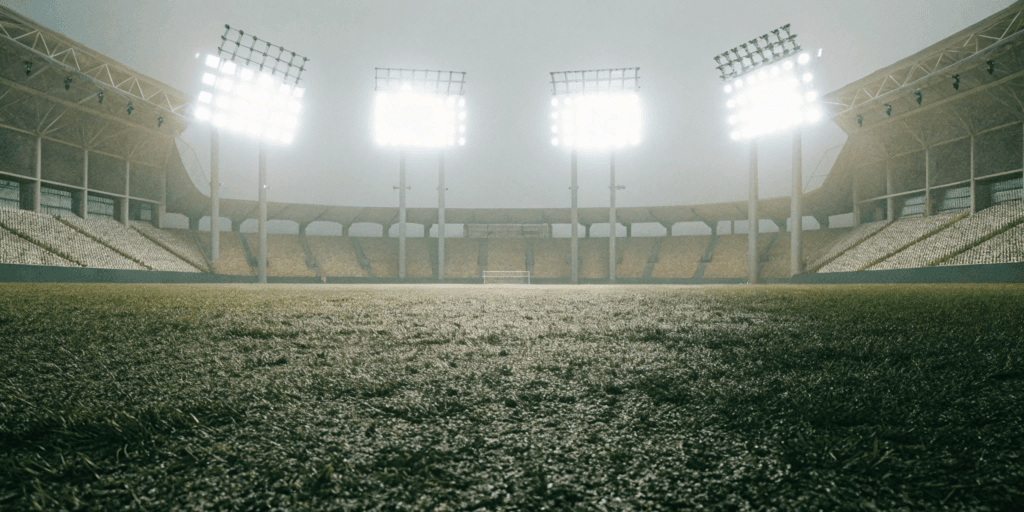
For televised events, LED stadium luminaires should be selected against the broadcaster’s specified illuminance, uniformity, color rendition, glare and flicker criteria. A generic LED label does not establish compliance with a particular broadcast standard.
At Lusail Stadium, Hitech participated in lighting-related engineering and supply work. The earlier figures of 2,000 lux, 0.72 uniformity and CRI ≥90 have not been verified against signed lighting-design or commissioning records and should not be treated as confirmed measured achievements. Ask for the project-specific IES/DIALux design and acceptance criteria when comparing bids.
Spectators also benefit: uniform light means fewer dark zones and no harsh reflections from glossy surfaces. For sponsors and broadcasters, it’s a visible upgrade in brand presentation and visual impact.
💡 Key takeaway: Better light equals better visuals — live and on screen.
6. LED Lights Generate Minimal Heat
LED luminaires generate heat and require engineered heat paths, thermal management and suitable drivers. Evaluate ambient temperature, heat-sink design, protection rating and rated output under the actual operating conditions instead of assuming LEDs remain cool.
In high-temperature environments, confirm the offered floodlight’s permitted ambient range, thermal derating and maintenance arrangement. Hitech has participated in a project at King Saud University Stadium in Riyadh, but a previously quoted 46°C no-performance-loss result and generic 45–50°C capability have not been corroborated by project-specific test records.
Cooler operation also improves safety for maintenance crews and reduces risks of heat-related electrical damage.
💡 Key takeaway: Less heat = longer fixture life and safer operation.
7. LED Lighting Systems Are Readily Available and Future-Proof
LED floodlights are widely considered for stadium upgrades, but technical eligibility depends on the applicable venue, electrical and broadcast requirements. No single technology choice automatically confirms regulatory compliance.
Control integration depends on the offered model and its tested interfaces. Check whether the required DALI, DMX512 or other protocol is supported and whether the controller, power distribution and existing infrastructure can accommodate it.
Future control changes may be possible, but should be evaluated for gateway, software, wiring, cybersecurity and compatibility requirements before being included in the project scope.
💡 Key takeaway: Check configuration-matched compliance records, controller compatibility and long-term service requirements before specifying a stadium lighting upgrade.
⚡ The Power of LED Stadium Lighting
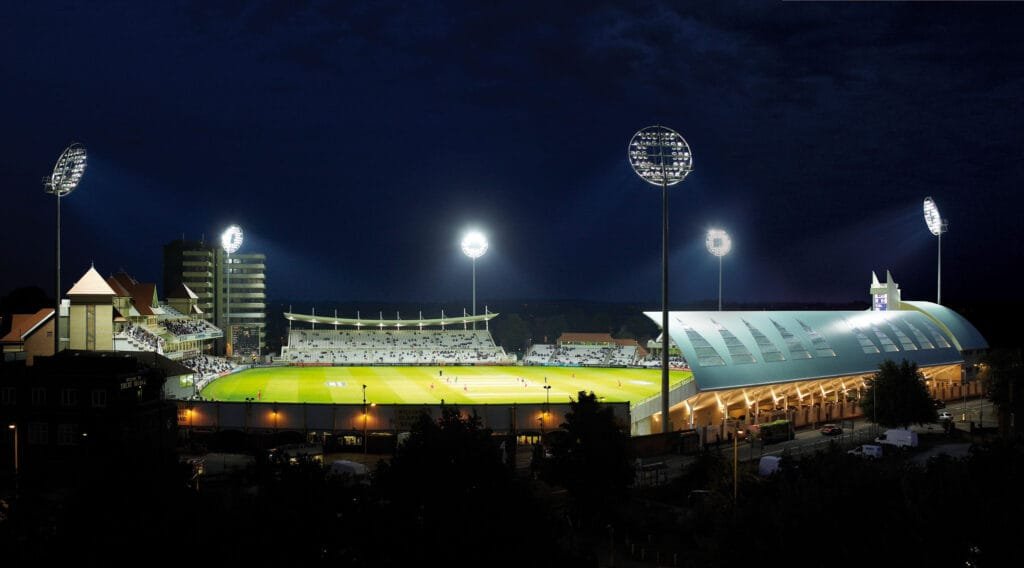
Upgrading to LED stadium lights delivers measurable and lasting benefits: reduced costs, improved visuals, and higher reliability.
These four named references document Hitech’s historical participation in equipment supply and engineering support, not turnkey EPC completion or final acceptance. Project-specific technical deliverables can be reviewed under appropriate commercial confidentiality; contracts and purchase orders are not published on this website.
In summary:
- Evaluate energy and maintenance savings using actual operating conditions and documented baselines
- Enhance visual clarity for fans and broadcasts
- Expand event flexibility and venue revenue
- Stay compliant with evolving energy and safety standards
💬 Every time the floodlights ignite, the atmosphere changes — and LED technology ensures that moment shines brighter, cleaner, and smarter than ever before.
CTA: Thinking about upgrading? Contact our stadium lighting specialists to get a customized LED lighting assessment for your venue.