Design boundary for EPC buyers: Galvanized-coating life, structural pole life and the maintenance interval are separate engineering questions. Check coating standard/edition, fabricated steel thickness, measured local/mean zinc coating, site corrosivity, installation interfaces, drainage, inspection and repair plans. Prior project cost figures must not be treated as independently verified fleet results without a documented basis.
Galvanized steel light poles can provide durable zinc-based corrosion protection where the coating is correctly specified, applied and maintained. No universal 20–50-year installed service life or maintenance-free guarantee is established. Unlike painted poles, galvanizing forms a bonded zinc layer that can provide local sacrificial protection at small defects; it does not automatically repair large damaged areas, making it ideal for coastal, industrial, and urban environments.
For a procurement specification: Hot-dip galvanizing supplies a protective zinc coating; structural integrity remains dependent on the pole design, corrosion exposure, connection detailing, inspection and any necessary repairs.
Why Do Traditional Steel Light Poles Rust So Fast?
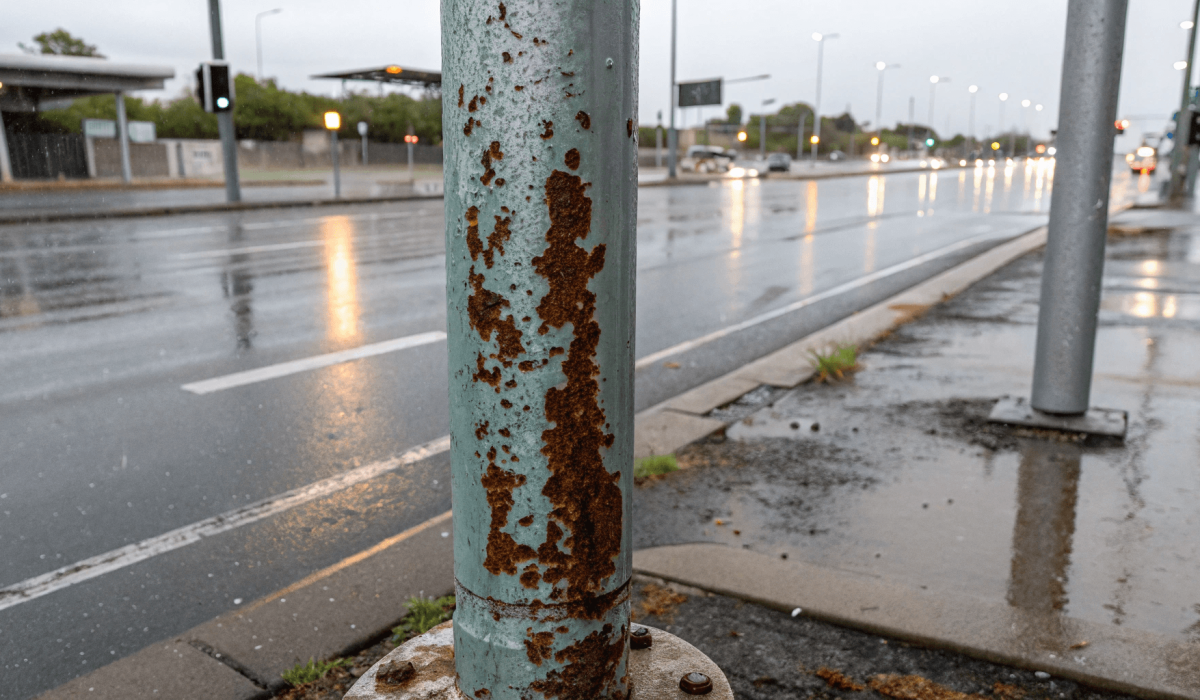
Exposed steel can corrode when moisture, atmospheric pollutants or salt reach its surface. Coating deterioration and structural section loss should be assessed by measured condition rather than visual rust descriptions alone.
A previous edition included a coastal-highway repainting anecdote and an unattributed contractor quotation. The site, paint specification, coating inspection history and maintenance accounts have not been matched; it is not offered as a documented Hitech project result.
- Rain, coastal fog, and pollution constantly attack exposed steel
- Paint can lose adhesion or crack under incompatible preparation, application or exposure; specify and inspect the actual coating system for the environment
- Significant corrosion can reduce steel section or damage connections; assess measured section loss, structural loads and the applicable repair criteria
What Is Galvanizing and Why Does It Work So Well?
Galvanizing involves immersing steel in molten zinc at around 860°F (460°C).
A zinc coating provides a barrier and sacrificial protection to steel. This protection is not unlimited: inspect damaged coating and specify repair based on the exposed area, coating condition and service environment.
Engineering functions and evidence to check:
- Zinc/iron alloy layers can improve coating abrasion performance; durability depends on the actual galvanized layer, handling and service conditions
- Barrier and localized sacrificial protection from the zinc coating; defects, standing water and highly aggressive exposure still need inspection
- Coating protection period estimated from the specified local zinc thickness, atmospheric corrosivity, drainage and the inspection/repair regime; do not assign a universal replacement year
Is Galvanizing Better Than Painting or Powder Coating Alone?
Buyer comparison: The coating systems below can each be engineered for appropriate exposure. Service life and economics depend on steel condition, material preparation, applied thickness, project atmosphere and maintenance.
| Review item | Hot-dip galvanized steel | Painted steel | Powder-coated steel / duplex |
|---|---|---|---|
| Coating evidence | ISO 1461 / ASTM A123 as applicable, thickness and repair records | Specified protective paint system, DFT, surface preparation, adhesion and corrosion testing | Matching coating specification and pretreatment; duplex requires substrate/topcoat compatibility |
| Service life | Exposure-dependent zinc consumption and inspection; no universal number of years | Exposure-, coating- and maintenance-dependent service period | Exposure and system compatibility determine protection and repair interval |
| Maintenance | Condition inspections and localized repairs where needed | Scheduled coating inspections and repair/recoating where needed | Condition inspections, adhesion, damage repair and approved re-coating |
| Project selection | Specify corrosion class, steel geometry, coating acceptance and lifecycle cost | Use where paint-system performance and planned maintenance are supported | Use when the coating specification, aesthetics and exposure justify it |
Repainting savings should be calculated from actual site coating specification, inspection intervals, access methods and labour rates. A previous narrative about multiple industrial-park clients has no matching cost and service records in this review.
Should You Add Powder Coating After Galvanizing?
Consider an approved duplex system when the purchaser requires a specified finish, appearance or additional protection. Verify substrate preparation and topcoat compatibility before promising any additional service life.
A prior Southeast Asian smart-city anecdote described a duplex finish, but contract scope, delivered coating system, dated inspection and maintenance costs have not been matched. For a new buyer, confirm the actual hot-dip galvanized substrate preparation, duplex-coating compatibility, adhesion and repair specification.
Extra benefits of adding powder coating:
- Extra UV resistance
- Scratch resistance
- Customized colors for branding
A duplex system can improve protection in a specified environment, but there is no verified universal 2.5× field-life multiplier for this company’s poles. Compare the actual system’s applicable tests, coating thickness and maintenance plan.
How Do Galvanized Poles Perform in Tough Conditions?

A previous Mexico coastal comparison claimed more than ten years for galvanized poles versus less than five for alternatives. The customer, pole batches, exposure, contract scope and inspection dates have not been established as a comparable company project record. Do not cite these figures as proven field performance.
- Coastal zones: Handle salt spray and sea breeze
- Industrial parks: Resist chemical corrosion and airborne pollutants
- Bridges and ports: Survive snow, ice, and acid rain
Do Galvanized Poles Save Money in the Long Run?
Installed cost and maintenance performance depend on the selected painted, galvanized or duplex finish and the actual service environment. Galvanizing can reduce some repainting requirements but does not eliminate all inspection, damage repair or eventual refurbishment.
The earlier 15-year city redevelopment claim of more than 40% cost savings lacks a matched project contract, installed-price baseline, maintenance account and undiscounted/discounted TCO model. This is not established as a verified Sunlurio project outcome. For a new bid, compare priced inspection, coating repair, repainting, access and replacement schedules at equal service scope.
Key reasons:
- Potentially less frequent repainting compared with a specified painted-only baseline, subject to coating condition and site inspection records
- Corrosion protection can mitigate one failure mechanism; structural integrity also requires design and regular inspection of sections, fixings and foundations
- Potential change in inspection, repair, access and materials costs to be demonstrated with a project-specific lifecycle model
The Galvanizing Process: How It Works
- Surface Prep: Thorough cleaning and pickling to remove rust and oil
- Hot-Dip Galvanizing: Steel dipped in molten zinc for full coverage
- Alloy Reaction: Zinc and steel form a bonded protective layer
- Optional Duplex System: Apply suitable surface preparation and an approved compatible coating procedure and curing plan; no universal 12-hour powder-coating window is specified here
- Inspection: Check coating thickness and adhesion before packaging
For batch hot-dip galvanized fabricated steel, identify the applicable ISO 1461:2022 or ASTM A123 edition and the project’s material category/steel section thickness. Required local and mean zinc thickness varies with the article and standard; a blanket 80 μm minimum is not correct for every galvanized component. Check coating measurement records, reference areas and approved repair methods. Fasteners and duplex topcoats may require additional applicable specifications.
Where Are Galvanized Light Poles Most Commonly Used?

| Area | Common Uses |
|---|---|
| Municipal Roads | Highways, major intersections |
| Urban Developments | Public squares, smart city projects |
| Parks & Sports Fields | Trails, stadiums, open-air facilities |
| Coastal Resorts | Beaches, promenades, marinas |
| Industrial Zones | Warehouses, refineries, logistics hubs |
| Temporary Construction | Easy-install, low-maintenance lighting |
What to Check Before Buying Galvanized Steel Poles
Before you commit, make sure:
- Specified local and mean zinc thickness matches the selected standard, material category, steel section and environment; verify documented measurements rather than applying a universal 80 μm criterion
- Manufacturer supplies traceable galvanizing inspection against the applicable ASTM A123 or ISO 1461:2022 edition and any project-specific requirements
- Option for powder coating if you need a branded or decorative finish
- Manufacturer provides model-matched coating inspection records, pole structural drawings, approved repair procedures and written project-specific warranty terms
FAQ
Do galvanized steel poles rust?
Yes, corrosion can occur once protection is consumed, damaged or inadequately specified. Galvanizing provides barrier and local sacrificial protection, but damaged coating and severe exposure require inspection and possible repair.
Is galvanizing more expensive than painting?
Upfront price and lifecycle economics vary by the steel section, coating systems, order size, exposure and field-maintenance scope. Obtain quotations and calculate total cost of ownership before claiming any saving.
Should I add powder coating after galvanizing?
A suitable duplex finish can provide custom color and additional protection, provided the zinc surface treatment, powder system, adhesion and service environment have been specified and tested.
How long do galvanized poles last?
No universal pole replacement interval follows from galvanizing alone. Assess zinc coating thickness and loss rate, environment, structural design and inspection/repair history. Coating protection life and structural pole life are different measures.
Where are galvanized poles most used?
They’re widely used on coastal roads, urban streets, industrial parks, sports fields, and any outdoor areas requiring long-term durability.
Conclusion: Specify Coating Life, Inspections and Lifecycle Cost
A low upfront coating price can be offset by additional site visits, repair and access costs, but the financial impact must be calculated from the offered pole and actual maintenance assumptions.
Galvanized steel poles provide:
- Exposure-specific zinc coating corrosion protection, confirmed by inspection and maintenance records
- Periodic coating, fixing and structural inspections, plus condition-based repair
- Traceable coating specifications and inspection records for procurement and maintenance teams
For municipal lighting procurement, request the galvanized steel grade, wall thickness, design wind and anchorage calculations, applicable coating specification, thickness inspection records, corrosion exposure class and priced maintenance scope before comparing pole options.
Need a pole specification or coating review? Submit the lighting-pole BOQ for preliminary review with mounting height, wind/site exposure, material grade, corrosion class, coating requirements and delivery scope.