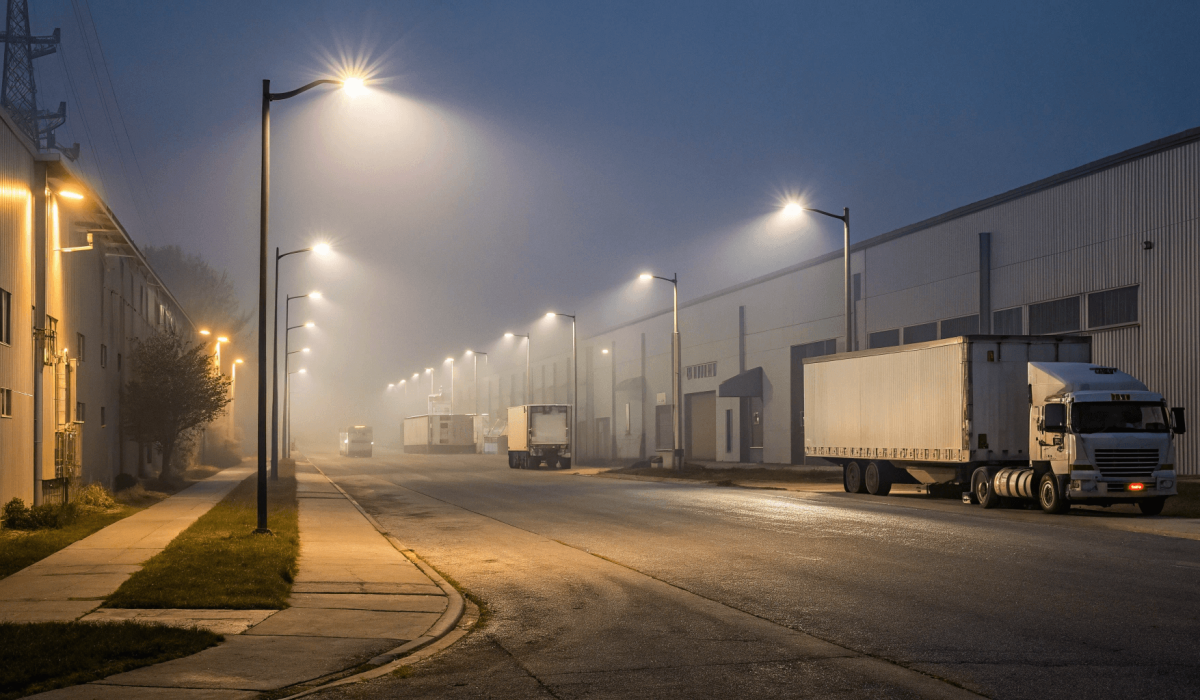
For a road-lighting project in western Uganda or a similar market, choosing pole height and spacing without checking the road profile and luminaire optics can leave dark areas or create unnecessary cost. This is an engineering risk example, not a verified account of a particular Hitech project.
For EPC and municipal buyers, pole height, wind resistance, corrosion protection, foundation design and photometric performance must be checked together. An acceptable pole cannot be selected from height or initial price alone.
Here’s what we’ve learned from real deployments in Africa and Southeast Asia about choosing the right pole for your project.
1. What’s the Purpose of the Lighting—And Who Will It Serve?
Lighting is never one-size-fits-all. Before picking materials or sizes, ask: What are you solving for?
At busy junctions, pole design may need to support long outreach arms, luminaires, signs or CCTV equipment. Parks and pedestrian areas can have very different glare, visual comfort and aesthetic requirements. Verify each attachment and load before specifying the structure.
Street lighting improves safety, sure—but is the need vehicular or pedestrian? Are you designing for functionality, aesthetics, or surveillance? These goals shape the pole spec.
Project requirements may come from a government tender, municipal authority, EPC contractor or engineering consultant. Spacing, corrosion protection and earthing provisions must be traced to the applicable project documents or formally adopted local regulations; a tender requirement should not be presented as a rule applying throughout a country.
2. Know Your Material—and Your Environment
Rainforest, coastal, desert and urban sites impose different wind, corrosion, access and soil conditions. Confirm the actual installation country and microclimate before choosing a pole material or coating system.
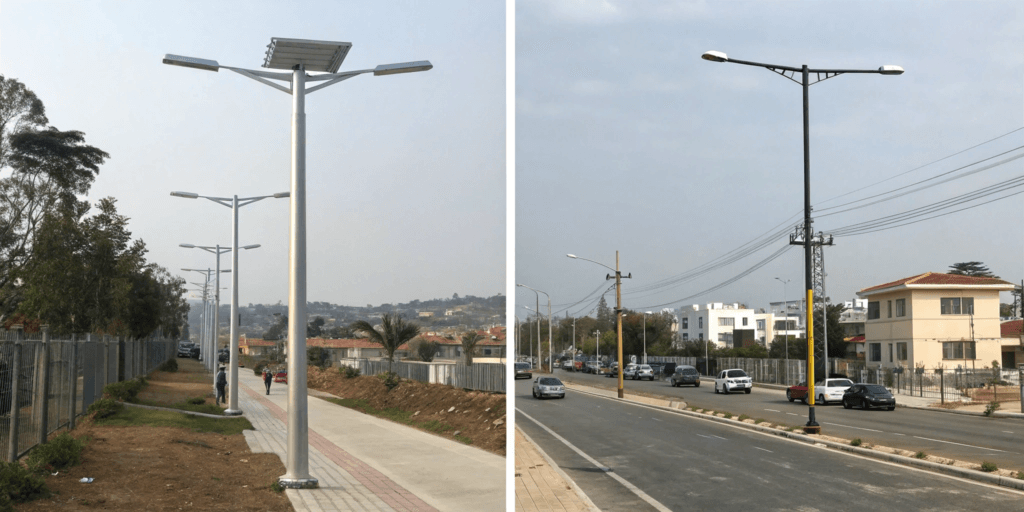
Quick take from our engineers:
| Material | Real-World Notes | Best Use Case | Maintenance Load |
|---|---|---|---|
| Steel | Structural steel must be sized for the loads; hot-dip galvanizing and optional coatings depend on exposure and specifications | High-traffic roads | Medium to high |
| Aluminum | Lightweight and corrosion-resistant in many environments; assess strength, dissimilar-metal joints and surface treatment | Coastal areas | Low |
| Fiberglass | Light, non-conductive, can look like wood | Parks or wet zones | Very low |
| Composite | Durable + decorative | Heritage or aesthetic districts | Low |
A coastal tender should compare coated steel, aluminum and other approved materials using the required design life, structural calculations, corrosion exposure, inspection plan and total installed cost. The earlier Tema Port anecdote and its zero-failure claim are not supported by project-specific records available for this page.
3. Height and Spacing: Don’t Guess. Calculate.
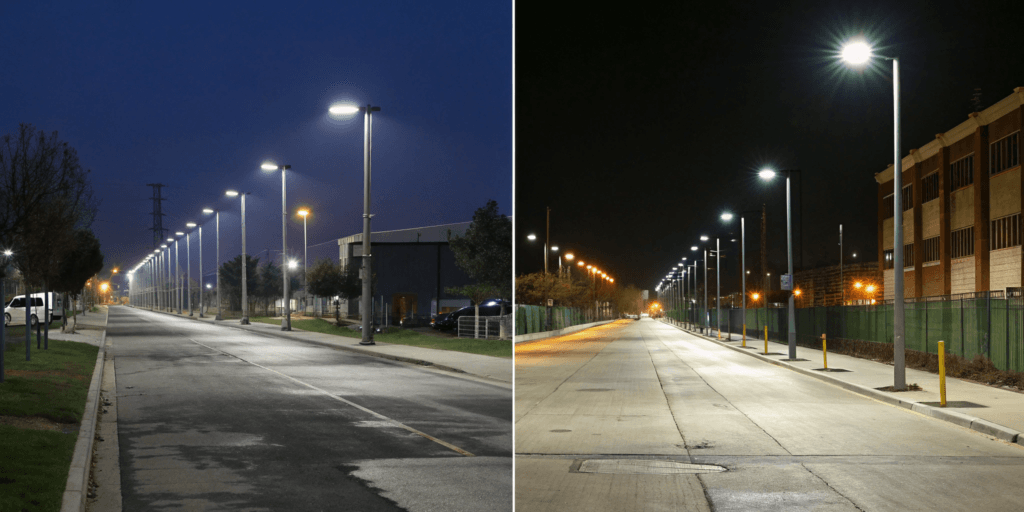
Do not specify a fixed pole-spacing-to-height ratio as a final design rule. Start with road width, lighting class, lane configuration, pole layout, mounting height, arm outreach and the exact luminaire IES/LDT distribution. Verify maintained illuminance or luminance, uniformity and glare in DIALux or the project’s approved photometric method.
For any proposed road layout, compare several height-and-spacing options using a consistent lighting class and maintenance factor. Include lighting controls and operating hours in the energy calculation, but do not treat dimming as a substitute for meeting the required lighting performance.
Pole height affects beam spread. Taller poles mean broader coverage but reduced ground intensity. And if you’re mounting not just lamps but also cameras, signage, or solar panels—check the wind load ratings.
Also, confirm that the light head’s beam angle matches your road width and pole height.
4. Smart Lighting Isn’t Optional Anymore
Smart controls may reduce operating energy when suitable for the road class, traffic profile and local requirements. Calculate proposed savings from the actual connected load, dimming schedule, tariff and control equipment costs; there is no verified universal 18% tariff rise or 50% cost saving for these projects.

We recommend:
- Use LEDs with adaptive dimming
- Install daylight sensors or motion triggers
- Consider hybrid poles (solar + grid) for remote zones
And yes, pole material matters too. Choose materials that minimize lifecycle emissions—like fiberglass or recycled aluminum.
5. Think in Lifespan, Not Just Budget
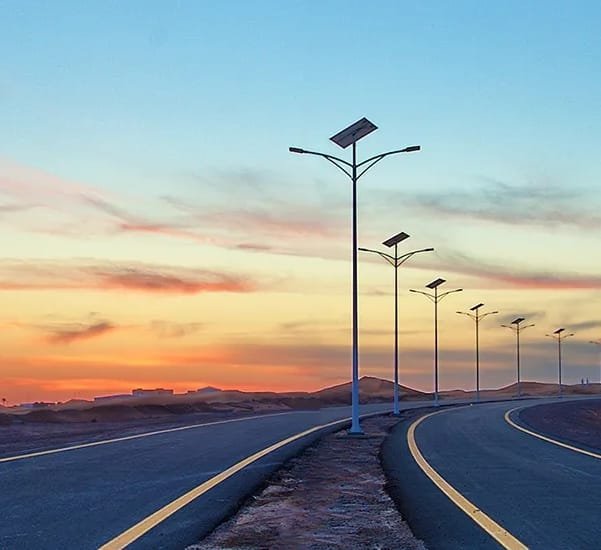
Compare the pole’s initial purchase and installation cost with corrosion inspection, coating repairs, foundation work, replacement access and expected service conditions. A low-priced pole can have a higher lifecycle cost when its design does not match the site.
Near-coastal or industrial exposure can accelerate corrosion of insufficiently protected steel. The earlier Senegal repainting example lacks a matched service record and should not be treated as a measured Hitech cost outcome. Ask for coating specification, zinc-thickness evidence, inspection intervals and repair provisions.
Factor in:
- Material durability (galvanization adds upfront cost but saves long-term)
- LED longevity
- Maintenance cycles and labor cost in your region
Final Word from the Field
Street poles aren’t just supports for lights—they’re part of a city’s spine. Choose well, and you’ll get safety, efficiency, and durability for years.
💡 Preparing a municipal or EPC lighting-pole BOQ? Share the installation country, road width, pole height, arm arrangement, design wind conditions, soil information and available lighting layout. Request a project BOQ and technical document review to establish the required drawings, structure checks and IES/DIALux evidence before quotation.