
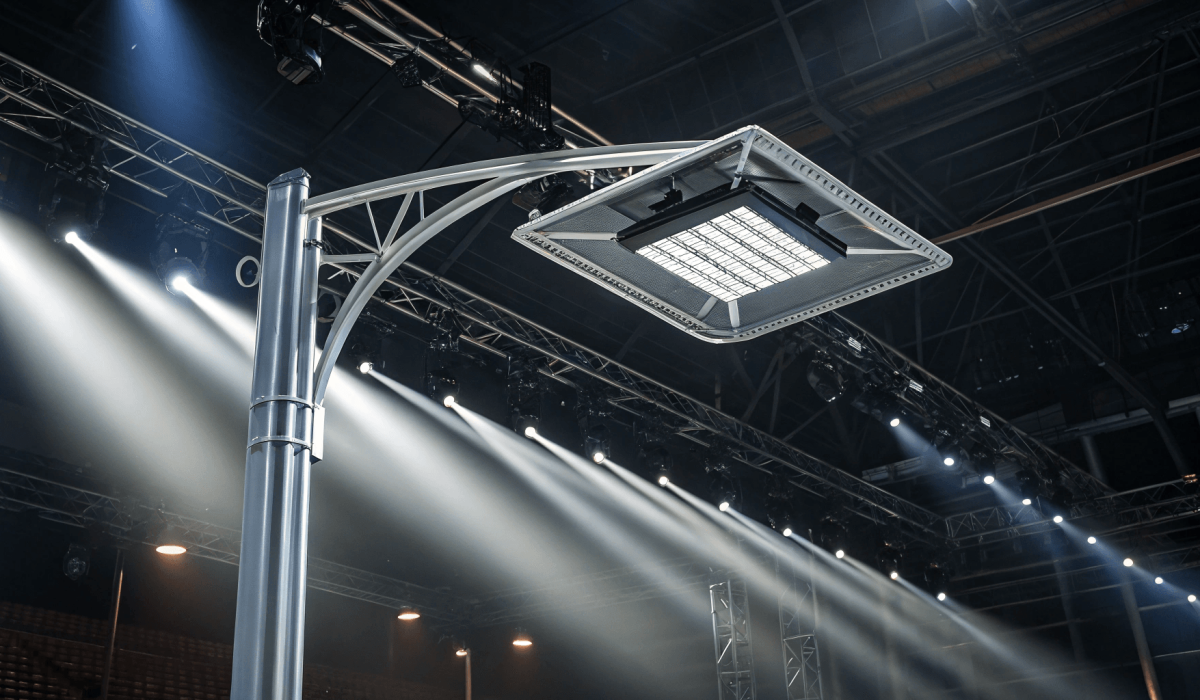
Smart solar street lights are evolving rapidly with AI and IoT, transforming urban infrastructure with intelligent lighting solutions. These innovations improve energy efficiency, extend battery life, and enable real-time remote monitoring—making cities safer, greener, and smarter.
How does AI adjust brightness and extend battery life?
AI dynamically adjusts brightness based on traffic, weather, and time, reducing energy consumption and extending battery life significantly.
Unlike traditional solar street lighting systems that operate on fixed schedules, AI-powered smart lighting solutions react in real-time. These systems use a combination of cameras, motion detectors, and environmental sensors to gather data and analyze patterns. This way, lighting output can be adjusted based on actual needs—without wasting energy during low-traffic hours or in bright moonlight.
The Role of AI in Smart Lighting
AI integrates multiple data sources to make intelligent decisions:
| Factor | AI Adjustment Mechanism |
|---|---|
| Traffic Density | Increases brightness when traffic is high, dims when low |
| Weather Conditions | Adjusts brightness based on cloud cover and solar energy availability |
| Time of Day | Gradual dimming and brightening according to natural light levels |
In some cities, AI-integrated lights have achieved up to 50% energy savings and 30% longer battery lifespans simply by adapting output to local conditions. This also extends autonomy during power outages or bad weather—critical in regions with frequent grid instability.
How does IoT enable remote monitoring and automatic maintenance?
IoT allows street lights to be remotely monitored and maintained automatically, reducing downtime and operational costs.
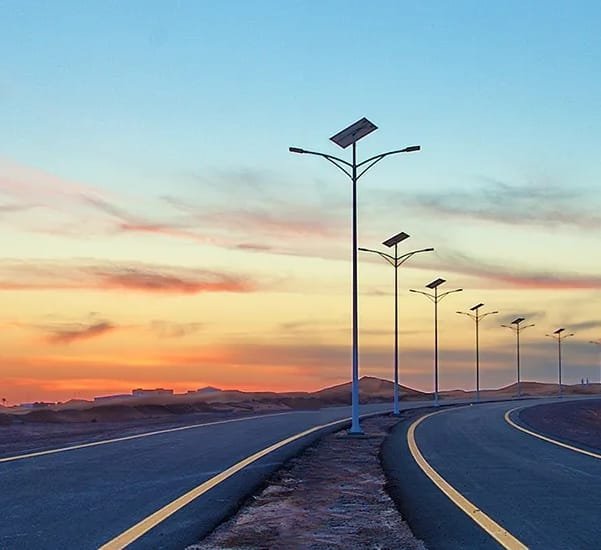
With IoT modules embedded into solar street lights, each unit becomes part of a connected network. These sensors continuously track system health—battery levels, LED status, controller performance—and transmit this data to a centralized control system.
Benefits of IoT in Smart Street Lights
-
Real-time Monitoring
- Operators can track performance, battery levels, and faults remotely.
- Smart alerts notify authorities about maintenance needs.
-
Predictive Maintenance
- IoT collects historical performance data, predicting potential failures before they occur.
- Proactive maintenance reduces repair costs.
-
Automated Fault Detection
- The system can identify faulty components and suggest solutions.
- Reduces downtime and ensures continuous operation.
-
Asset Optimization
- IoT dashboards help cities identify underperforming assets and prioritize upgrades.
- Historical data supports better budgeting and planning decisions.
This level of intelligence reduces technician visits and enhances uptime. It’s particularly useful in developing countries, where maintenance crews may be limited and site visits costly.
How does 5G enhance smart solar street lights?
5G improves data transmission speed and connectivity, making smart street lights more responsive and efficient.
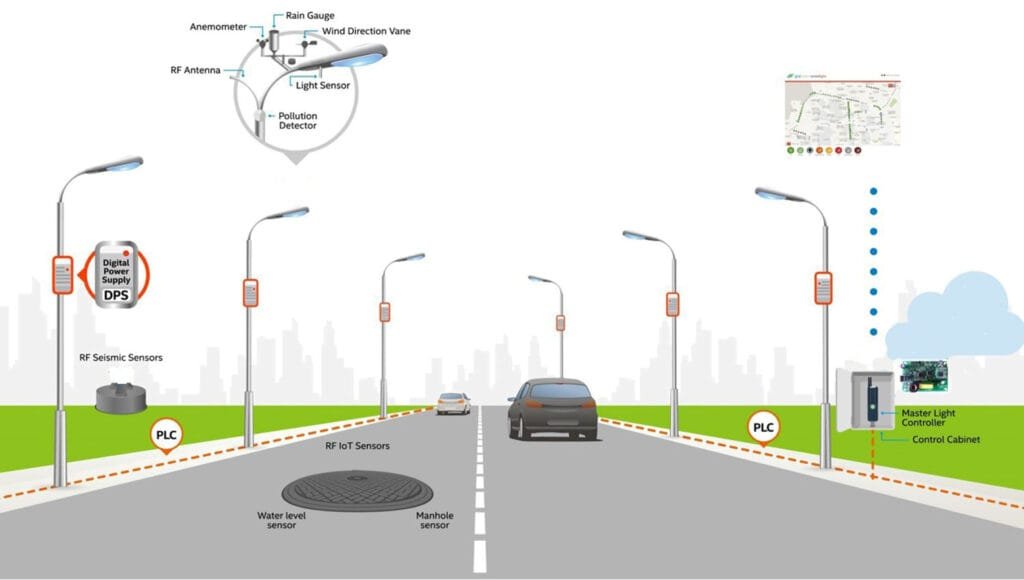
As lighting systems get smarter, they also require more bandwidth. That’s where 5G comes in—offering faster data rates and ultra-low latency communication. With 5G, streetlights can send and receive data in milliseconds, allowing near-instantaneous system-wide adjustments.
Advantages of 5G-enabled Smart Street Lights
-
Faster Data Processing
- 5G reduces latency, allowing real-time adjustments based on environmental conditions.
-
Seamless Connectivity
- More devices can be connected without network congestion.
- Ensures stable communication between street lights and control centers.
-
Integration with Smart Cities
- 5G-powered lights can communicate with other smart infrastructure, such as traffic signals and security cameras.
- Enables a fully interconnected urban environment.
-
Support for Advanced Features
- Enables integration of additional services—EV charging indicators, pollution monitoring, CCTV feeds.
In cities where we’ve tested 5G-connected lighting, remote software updates, camera integration, and smart grid balancing were achieved seamlessly—without downtime or physical access to the poles.
Conclusion
AI, IoT, and 5G are reshaping the future of solar street lights. These technologies work together to make lighting systems more intelligent, efficient, and responsive to changing conditions. By adjusting brightness, monitoring systems remotely, and facilitating city-wide connectivity, smart lights support sustainability and public safety.
If your city or business is planning to upgrade its infrastructure, now’s the time to consider intelligent lighting as a core part of your strategy.