
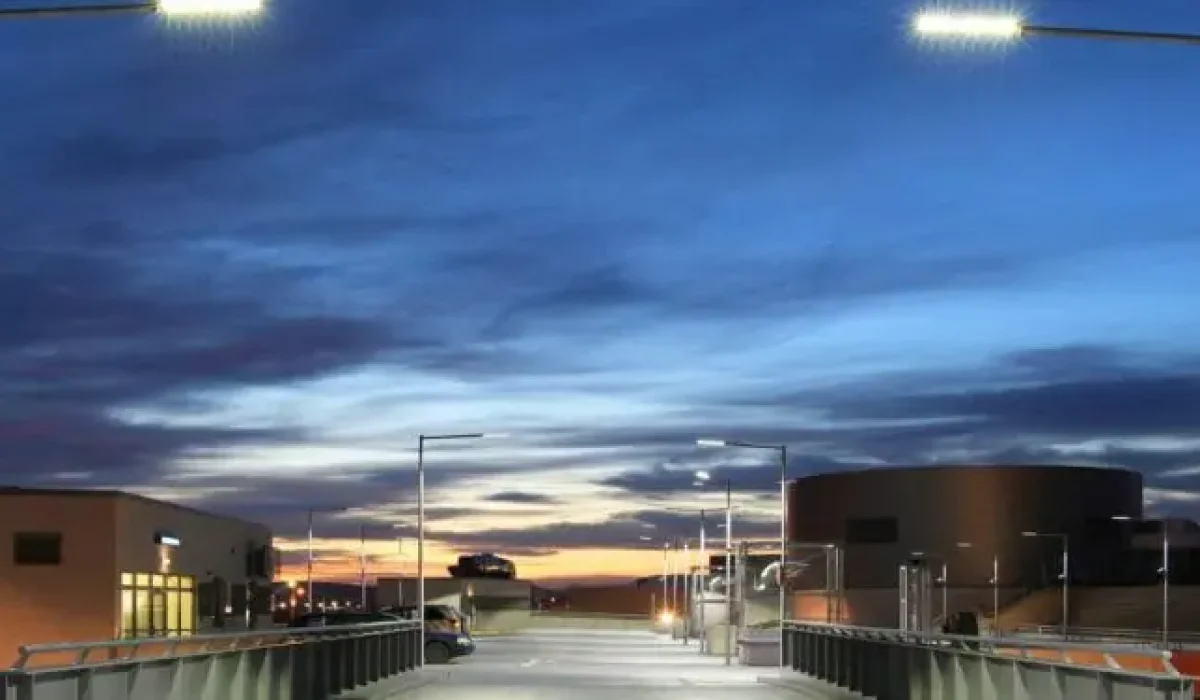
Solar street lighting systems are an eco-friendly, cost-effective alternative to traditional grid-powered lights. However, proper installation and routine maintenance are crucial for long-term efficiency and performance.
This guide covers essential installation procedures, troubleshooting methods, and preventative maintenance strategies to ensure reliable solar street lighting.
Precautions Before Installation

Before installing solar street lights, follow these key precautions to ensure safety and efficiency.
✅ Site Preparation
- Conduct a site survey to determine optimal locations for solar panels, poles, and batteries.
- Ensure there are no obstructions like trees or buildings that could cast shadows on the panels.
- Plan material storage and tool placement to streamline the installation process.
✅ Safety Training
- Conduct safety and technical training for personnel before beginning installation.
- Ensure all work is performed under professional supervision to avoid injuries.
- Wear protective gear, including helmets, gloves, and harnesses when working at heights.
Installation Guidelines for Solar Street Lights
Proper installation is essential for maximizing energy efficiency and durability.
Choosing the Right Solar Street Light Model
| Model | Installation Height (m) | Road Width (m) | Installation Distance (m) |
|---|---|---|---|
| 5W | 3 | 3-4 | 10-15 |
| 8W | 3 | 3-4 | 10-15 |
| 12W | 3 | 3-4 | 12-18 |
| 15W | 4 | 4-5 | 15-20 |
| 20W | 5 | 5-6 | 25-28 |
| 30W | 6 | 6-8 | 30-35 |
| 40W | 6 | 6-8 | 30-35 |
| 50W | 7 | 7-9 | 30-35 |
| 60W | 8 | 8-10 | 30-35 |
- Single-side installation is used for narrow roads, while dual-side installation improves coverage on wider streets.
- Pole height and spacing should be optimized based on road width and lighting needs.
Step-by-Step Installation Process
Step 1: Site Preparation and Foundation Setup
- Ensure the foundation is built on stable soil with a bearing capacity of at least 2KN/m².
- Excavate the foundation according to the installation drawings and remove any accumulated water.
- Install an embedded anchor cage and position anchor bolts parallel to the road.
Step 2: Installing the Light Pole and Solar Panel
- Pour concrete for the foundation, use a vibrator for compaction, and allow it to cure for at least 3 days.
- Use a crane or manual lifting tools to raise the pole safely.
- Thread wiring through the lamp pole before securing the panel and LED fixture.
Step 3: Fixing the Solar Panel and LED Light
- Secure the solar panel at the correct tilt angle to maximize sunlight exposure.
- Attach the LED light fixture to the lamp arm and adjust for optimal illumination.
Step 4: Wiring and System Setup
-
Connect components following the correct sequence:
LED Light → Solar Panel → Lithium Battery → Controller
-
Use waterproof plugs for all electrical connections to prevent short circuits.
-
Verify positive and negative terminals before turning on the system.
Step 5: Adjusting the Solar Panel Orientation
- Use a compass to align the solar panel southward (in the Northern Hemisphere) for maximum solar absorption.
- Double-check that all bolts and mounting brackets are secure before completing the installation.
Equipment Debugging & Testing
After installation, test the system to ensure proper functionality and performance.
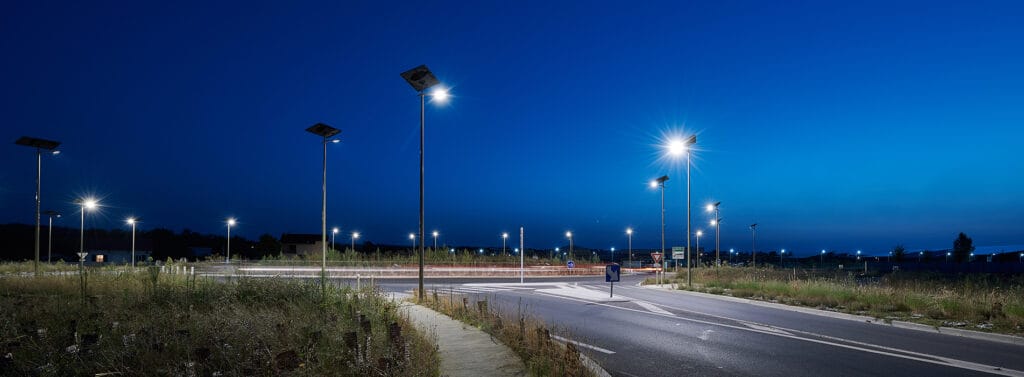
Checking System Power Configuration
- Ensure the solar panel, battery, LED, and controller are correctly matched.
- Measure module voltage before connection (typically 1.5x system voltage).
Performance Testing
- Charging Current Test: Monitor charging current in different weather conditions.
- Lamp Power Detection: Use a remote control to adjust brightness levels (100%, 70%, 50%, 25%).
- Data Transmission Test: Configure the light controller and confirm correct settings using "beep" feedback.
Troubleshooting Common Solar Street Light Issues
Even with proper installation, solar street lights may experience occasional malfunctions.
1. Solar Panel Issues
| Problem | Possible Cause | Solution |
|---|---|---|
| No power output | Short circuit, faulty wiring | Check wiring, replace damaged panels |
| Low voltage output | Dust accumulation, shading, damaged solar cells | Clean panels, remove obstructions |
2. LED Light Issues
| Problem | Possible Cause | Solution |
|---|---|---|
| Lights not turning on | Short circuit, LED damage, controller issues | Check wiring, replace damaged LEDs, reset controller |
| Dim or flickering light | Weak battery, poor connections | Inspect battery, secure wiring, replace battery |
3. Battery Issues
| Problem | Possible Cause | Solution |
|---|---|---|
| Battery not charging | Controller output too low, battery mismatch | Replace battery, check controller settings |
| Load has no output | Incorrect battery protection voltage | Adjust controller settings |
Preventative Maintenance for Solar Street Lights

Regular maintenance extends the lifespan and efficiency of solar street lights.
✅ Regular Inspections
- Clean solar panels every 3-6 months to remove dirt and debris.
- Inspect all electrical connections for corrosion and looseness.
- Check battery levels periodically and replace when necessary.
✅ Structural & Safety Checks
- Inspect light poles for rust or physical damage.
- Ensure mounting brackets and bolts are secure.
- Protect equipment from fire hazards and theft.
When to Call a Professional
Certain technical issues require expert assistance.
💡 Call a professional if:
- Complex electrical faults require specialized diagnostic tools.
- Firmware issues need expert configuration.
- Major failures occur in solar panels, batteries, or controllers.
- Large-scale maintenance is required for municipal or commercial installations.
Conclusion: Ensuring Long-Term Efficiency of Solar Street Lights
Solar LED street lights provide sustainable, cost-effective illumination, but proper installation and routine maintenance are essential for long-term performance.
✅ Follow best practices for installation to maximize energy efficiency.
✅ Perform routine maintenance to prevent common failures.
✅ Address minor issues early to avoid costly repairs.
✅ Invest in high-quality components for stable operation.
By implementing these strategies, solar street lighting systems will deliver reliable and efficient lighting for years to come.