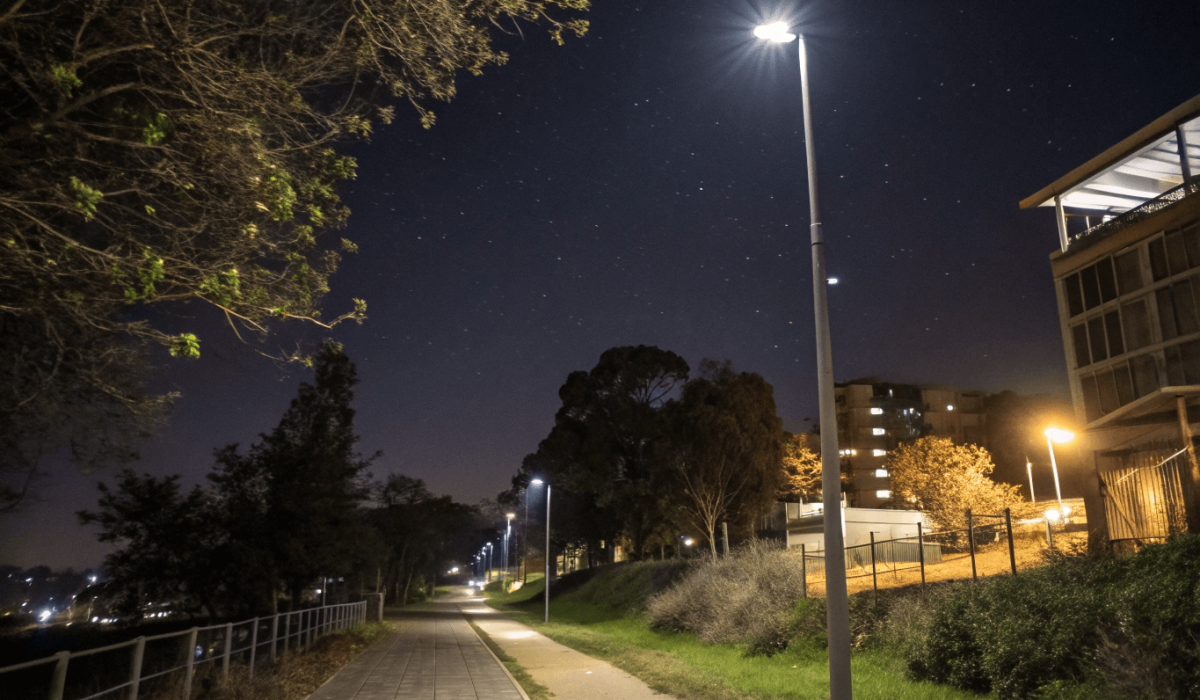
For an EPC or municipal AC LED street-light tender, seven technical groups must be evaluated together: (1) complete-luminaire power, flux, optics and colour performance; (2) LED source and traceable test data; (3) housing, thermal management and environmental durability; (4) driver input range, protection and compatibility; (5) IP/IK protection; (6) control and system integration; and (7) configuration-matched compliance documents and warranty. Start with the road-lighting class, layout and BOQ, then verify the offered model against the project requirements. A wattage claim alone is not enough.
Most AC LED street lights might look alike from a distance — but what’s inside makes all the difference.
For government, municipal and EPC procurement, compare bids against one approved set of requirements. Ask for the proposed luminaire model, IES/LDT photometric file, complete-luminaire measurements, mechanical drawings, surge specification and component-by-component warranty. The checks below help prevent non-equivalent quotations.
Wattage, Lumens & Color Temperature: More Than Just Brightness
A common trap: thinking that higher wattage automatically means brighter. It doesn’t.
- Wattage only tells you how much power the light uses, not how bright it is.
- Lumens describe a luminaire’s total light output; road visibility also depends on optical distribution, mounting height, spacing, maintenance factors and the specified lighting class.
- Color Temperature (Kelvin) affects how the light "feels" to our eyes.
Here’s what I usually recommend:
- 30 W class: Check the exact luminaire’s measured flux and photometry; suitability for paths or roads cannot be established from wattage alone.
- 100 W class: Compare complete-luminaire watts, lumens, distribution and glare against the required road width, layout and DIALux design.
- 150 W class: Large roads or wide areas require a photometric calculation and structural check; higher input power does not automatically make a model suitable.
Choose correlated colour temperature (CCT) and colour rendering from the tender specifications and local environmental requirements. Higher CCT does not inherently mean more measured lumens or better road performance. For current project options, request the offered model’s CCT, CRI, colour consistency and test report.
LED Chips: Why Chip Choice Changes Everything
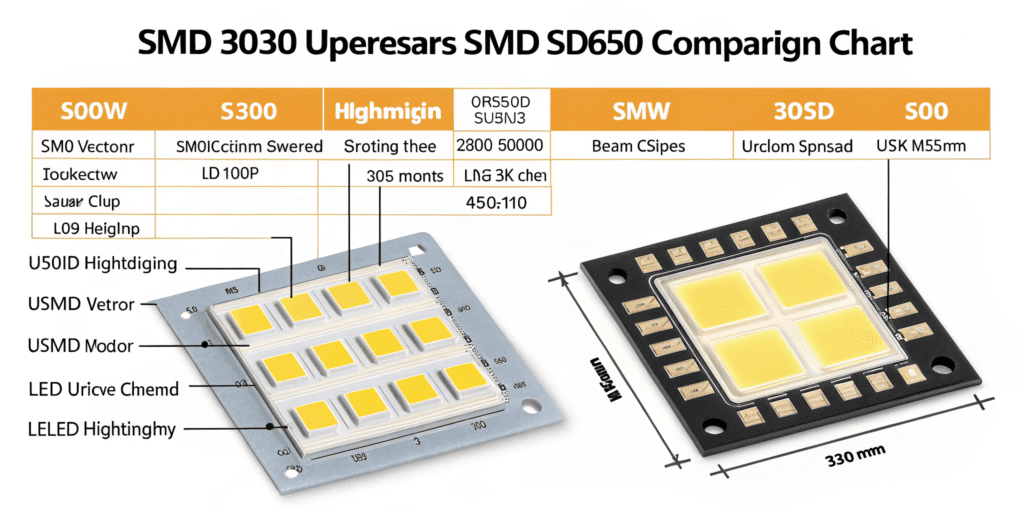
Your LED chip is the real heart of the light.
I’ve worked with lights that looked fine on paper, but cheap chips led to flickering or early failure within a year.
- 3030 packages: Package geometry alone does not establish total flux, efficiency or thermal performance; compare the exact LED bin, drive current and luminaire test results.
- 5050 packages: Size and package design vary by supplier; suitability depends on the LED arrangement, optics, driver and thermal design, not an automatic claim of brighter or wider-road coverage.
Specify the approved LED manufacturer and part family in the offered BOM where the tender requires it. Distinguish chip or module efficacy from the complete-luminaire efficacy and request a matching test report showing stabilized power, total lumens and optical distribution. Sunlurio’s currently indicated complete-luminaire range for relevant solar designs is approximately 200–210 lm/W, not a universal rating for every AC street-light model.
Housing Material & Heat Management: Your First Line of Defense
A strong housing isn’t just about looks — it keeps the whole system alive.
- Material: Die-cast aluminum is your best bet. It’s light, corrosion-resistant, and durable. Avoid plastic or thin metal housings that warp in heat.
- Thermal performance: Review ambient-temperature limits, heat-sink design, driver positioning and photometric/thermal test conditions. Poor heat management can shorten life, but no fixed halving of service life applies to every housing.
- Coastal or corrosive exposure: Request material, fastener, coating and corrosion-test information matched to the proposed configuration and exposure category. A generic 72-hour salt-spray result alone does not establish field durability.
Poor housing might save a bit up front, but you’ll pay it back in replacements and maintenance.
LED Driver: The Unsung Hero

The LED driver is like the heart’s pacemaker — it keeps everything stable.
If there’s one thing I see overlooked too often, it’s this.
- Role: Converts AC power to constant current, regulates voltage spikes, and keeps brightness steady.
- Driver output: Match the driver’s constant-current characteristics and programmable options to the LED modules, thermal limits, dimming method and the project’s required input-voltage range.
- Driver traceability: State the actual driver brand, model, rated input/output, efficiency, protections and warranty in the quotation/BOM; do not imply every listed brand is supplied in every model.
- Surge immunity: Agree the required test levels, installation protection and earthing scheme in the tender. Review the actual IEC 61000-4-5 test conditions and results; a universal 4–6 kV promise is not sufficient.
A weak driver can make even the best chips fail early. Check this carefully.
IP Rating: Real Outdoor Protection
We’ve all seen “outdoor lights” that fail after the first big storm.
- IP65: Dust-tight with protection against water jets under the specified test conditions. Verify the sealing scope and cable-entry arrangement of the offered luminaire.
- IP66: Dust-tight with protection against powerful water jets under the relevant test method. It is not, by itself, evidence of salt-corrosion resistance.
- IP67: Ingress classification includes temporary immersion under defined tests. It does not mean the luminaire or its installed cable joints can safely operate while flooded.
Good IP sealing also keeps bugs and fine dust out, protecting internal components. If you’re near the coast or in chemical zones, check for corrosion resistance too.
Control Options: Choose How Your Lights Behave
Controls aren’t just gadgets — they shape how you manage costs and energy.
- Manual: Basic but requires on-site switching.
- Photocell sensor: On at dusk, off at dawn — very common and efficient.
- Timer: Pre-set schedules, like 6 pm to 6 am.
- Smart control: Full remote management, dimming, failure alerts — great for large or smart city projects.
Some lights support more than one option — always clarify.
Certifications & Compliance: Your Project’s Safety Net
Certifications are more than just logos — they keep you legal and safe.
- Conformity route: Check the destination country’s mandatory regulations and the tender’s requested standards. CE, RoHS, UL and ENEC have different scopes and are not interchangeable universal approvals; request evidence for the actual offered model.
- Matched technical evidence: Use ANSI/IES LM-79 or equivalent complete-luminaire photometry where relevant; use LM-80 only for LED source lumen-maintenance testing, not finished-luminaire life. Obtain the actual IES/LDT distribution for lighting design, and check applicable IEC 60598-2-3, IEC 60529 and IEC 62262 evidence when specified. A laboratory or certification mark must match its report and scope.
- Written warranty: Sunlurio’s standard solar street-light quotation commonly starts from a five-year target, subject to the offered BOM and component terms; AC LED street-light coverage must be confirmed independently in the actual project quotation. Do not treat rated LED life as a blanket system warranty.
Projects have been delayed or rejected because suppliers lacked paperwork — don’t let that happen to you.
📌 Quick Last-Minute Checklist
- ✅ Clear chip brand and model (3030 or 5050).
- ✅ Driver brand, type, and surge specs are specified.
- ✅ Housing is die-cast aluminum with proper heat sink design.
- ✅ IP rating matches your local weather.
- ✅ Confirmed control type (manual, photocell, timer, smart).
- ✅ All certifications and test reports are included and valid.
💬 FAQs
How bright should a street light be?
Select the road-lighting class first, then verify the required maintained luminance or illuminance, uniformity and glare. Compare the complete-luminaire photometric files in DIALux (or another approved calculation method); there is no universal lumen threshold for every main road.
What’s the main difference between 3030 and 5050 chips?
3030 and 5050 refer to LED package formats, not guaranteed beam width, light output or efficacy. Compare the exact LED part, drive current, optics and complete-luminaire test report.
What’s the typical lifespan of an AC LED street light?
Expected service life depends on LED light-output maintenance, driver durability, thermal conditions, switching, ambient temperature and the project maintenance plan. Request the model-specific life evidence and written component warranty; a nominal 50,000-hour figure is not a blanket replacement or failure date.
Is IP65 waterproof enough?
Select the IP test rating for the specified exposure and verify all cable entries and connectors. Flood risk requires separate drainage and installation assessment; coastal operation also requires suitable materials and corrosion protection, which the IP code alone does not establish.
Why is the LED driver so important?
The driver regulates LED current and may provide dimming and protection functions. Check its measured flicker performance, surge-immunity test conditions, insulation, thermal rating and actual compatibility with the luminaire.
Final Thoughts
Choosing a street light isn’t just about picking something that “turns on.” It’s an investment in safety, reliability, and long-term cost savings.
By understanding these 7 specs, you’ll avoid common pitfalls and make choices you won’t regret years down the line.
Reviewing an AC street-light tender? Share the road classification, pole height and spacing, supply voltage, ambient conditions, control interface and BOQ. Request an engineering BOQ review so the proposed luminaire, IES/DIALux files, driver datasheet and compliance documents can be checked against the same project requirements.