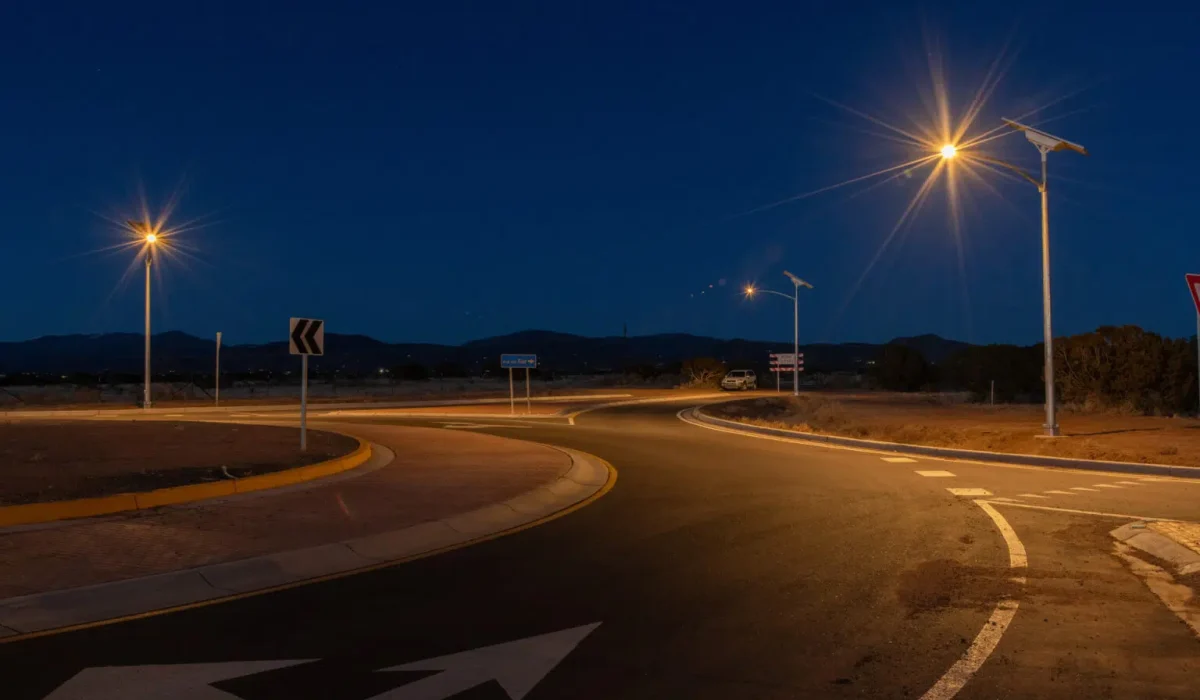
I’ll start with something most engineers already know from field work: solar street lights rarely fail because of the LEDs.
The usual culprits are energy imbalance, bad installation angles, inconsistent charge cycles, or simply environmental conditions nobody accounted for during design.
Independent third-party laboratory testing has measured LED module efficacy of up to 230 lm/W for applicable Sunlurio configurations using 3030, 5050 or 7070 LED packages. Separately, applicable complete LED luminaires have achieved 200–210 lm/W in third-party testing. These values describe different measurement levels and must not be used interchangeably.
For a 230lm/W vs 180lm/W comparison, first confirm whether both figures describe LED modules under comparable test conditions. Here, 180 lm/W is a comparison reference, not a verified rating for a specific batch of equipment. Module efficacy alone does not establish finished-luminaire output or rainy-season runtime; system breathing room depends on the complete energy balance.
Why 230lm/W LED Modules Can Matter in Real Deployments
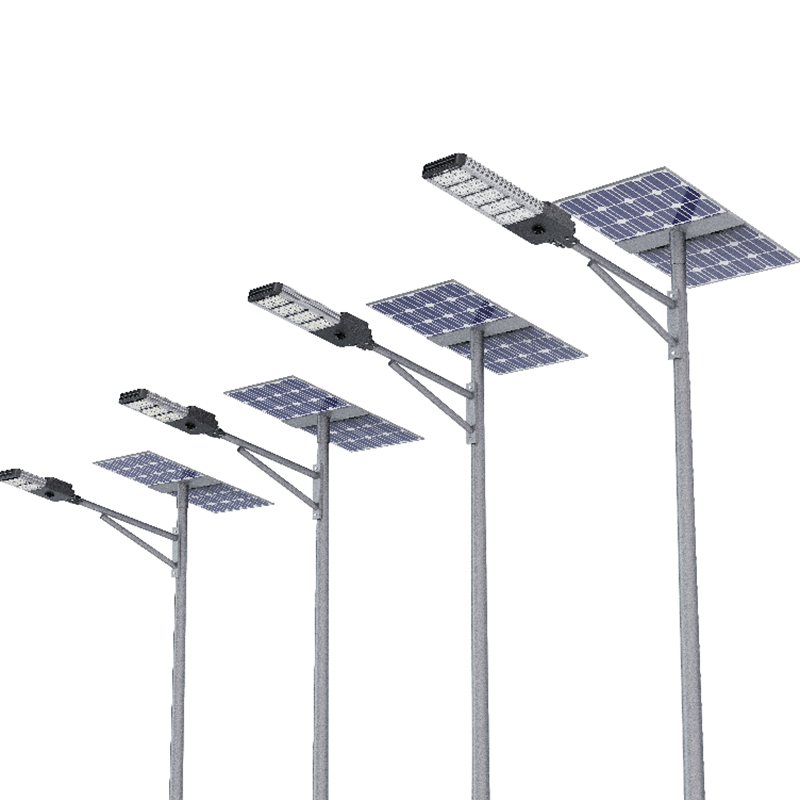
A field charging comparison requires configuration-matched records of finished-luminaire input power, delivered light, PV capacity and orientation, battery capacity, controller settings, weather and shading. A 180 lm/W versus 230 lm/W module label alone cannot establish how long either system remains fully charged.
Panel alignment, connector condition and installation quality can also affect the energy balance. Any claimed charging advantage needs to be separated from these variables.
A Short Detour: Installation Noise Engineers Usually Don’t Put in Reports
Installers don’t always orient panels exactly SSE.
Dust accumulation after four months can drop output by close to 10%.
One bracket slightly bent during transport throws the tilt off.
A single connector with extra resistance steals a few watts at the worst time.
Most systems work fine when they have margin.
At the same required light output and comparable optical distribution, higher finished-luminaire efficacy can reduce the lighting load. The resulting energy margin must be calculated from the actual luminaire power and operating profile, not the LED module rating alone.
Battery Cycling: The More Meaningful Difference
Battery lifespan variation isn’t caused by a single parameter.
It’s the combination of:
- Lower daily discharge
- Cooler cell temperatures
- More complete charges during shoulder months
- Fewer nights near empty
- Less aggressive balancing by the BMS
A battery-life comparison needs installation dates, configuration-matched operating records, temperature and depth-of-discharge histories, capacity-test methods and replacement criteria. A higher LED module efficacy does not by itself establish a longer battery replacement interval or a particular retained capacity.
Reducing the actual lighting energy demand may reduce battery cycling stress, provided the required road lighting is maintained and the charging strategy, battery configuration and environmental conditions are suitable.
Thermal Behavior: Where Efficiency Quietly Helps
Heat is an important design consideration, but a higher lm/W figure alone does not establish a lower junction or driver temperature.
For the same LED and thermal path, reducing drive current can reduce heat generation and junction temperature. Actual temperatures and degradation also depend on LED configuration, ambient conditions, housing and driver losses.
A thermal comparison between 180 lm/W and 230 lm/W modules needs matched operating conditions, input power and a documented junction-temperature measurement or estimation method. Module efficacy labels alone cannot verify a temperature advantage in an installed luminaire.
Control System Stability: Evaluate the Complete Energy Balance
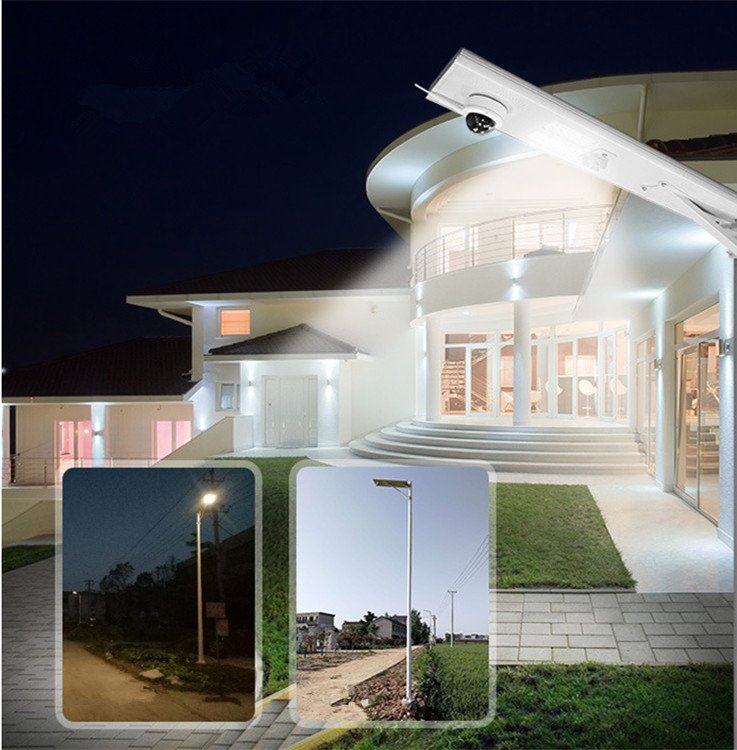
Controller SOC behaviour depends on solar harvest, actual luminaire demand, battery capacity and condition, temperature, dimming schedules and control settings. A 180 lm/W or 230 lm/W module rating alone does not predict SOC swings during bad weather.
At the required lighting output, a lower verified luminaire load may improve the energy balance. Confirm the effect using operating records, including:
- adaptive dimming schedules and delivered lighting levels
- daily charging energy and battery state of charge
- protection events and the conditions that triggered them
- measured energy use compared with design forecasts
I wouldn’t call it a guarantee, but the smarter the controller, the more it benefits from a stable load profile.
Mechanical Notes—Recalculate Before Resizing
PV and battery sizing must be recalculated from actual finished-luminaire input power, the dimming schedule, local solar resource, required autonomy and system losses. Do not reduce panel or battery capacity solely because an LED module is rated at 230 lm/W.
If the verified design permits different component sizes, assess mass, wind area, mounting details and pole loading separately. A module efficacy rating alone does not establish reduced vibration or pole stress.
So… Is 230lm/W Always Better?
Not in every scenario.
- In high-irradiance regions, assess local solar resource and the required lighting and autonomy rather than treating 180 lm/W as automatically sufficient.
- Additional PV or battery capacity changes the energy margin but does not replace verification of finished-luminaire efficacy and optical performance.
- For a short runtime such as 4–6 hours, confirm actual luminaire power, dimming and battery capacity; neither module rating alone proves suitability.
For municipal and peri-urban projects, compare module performance alongside finished-luminaire efficacy, optical distribution and project requirements. Reliability depends on the complete configuration, installation, operating conditions and maintenance; the 230 lm/W module figure is not a system-life guarantee.
Final Engineer’s View
If I had to summarize it in a sentence:
“Higher LED module efficacy can support an efficient lighting design, but system performance and service life must be assessed using the complete luminaire and project energy balance.”
Use the 230lm/W vs 180lm/W comparison only at a clearly defined measurement level and under comparable conditions. Verify the proposed luminaire and system configuration before making claims about charging, runtime, thermal performance or battery life.
If you need another version—shorter, more technical, or tailored for a solution-page cluster—I can prepare that too.