
Solar street lights may look similar from a distance, but in practice, they differ sharply in design, performance, and long-term reliability. Over fifteen years of lighting projects — from coastal Kenya to dusty Sahel towns — I’ve seen how the type of solar street light can make or break a project.
Let’s look at how each system behaves in real conditions, not just on spec sheets.
What Are the Main Solar Street Light Types?
In the solar industry, “type” means how the system integrates its solar panel, battery, LED lamp, and controller.
Some are sealed into one unit for speed and simplicity; others separate the components for power and flexibility.
And now, a third generation — smart solar street lights — is reshaping urban lighting through connectivity and data.
Here’s how they differ in the real world:
- Integrated (All-in-One) – quick to deploy, low maintenance, perfect for small towns.
- Split-Type – more flexible, powerful, and upgradeable for demanding sites.
- Smart IoT Systems – intelligent, sensor-driven, designed for cities that never sleep.
That said, paper specs don’t tell the full story. Let’s take a closer look.
What Makes Integrated Solar Street Lights So Popular in Rural Africa?

An integrated solar street light — or all-in-one type — packs its solar panel, battery, controller, and LED into a single aluminum shell.
No cables, no junction boxes — just bolt it onto the pole and walk away.
During a 2022 lighting rollout in northern Ghana, two technicians installed twelve units before dusk. Locals were stunned by the simplicity — no grid connection, no trenching, no confusion. That’s where this design shines.
Advantages in Real Projects
- Quick installation: a team of two can install 30+ units in a day.
- Compact structure: the panel and lamp stay aligned; less tampering, less theft.
- Minimal maintenance: sealed LiFePO₄ batteries and MPPT controllers handle routine fluctuations.
- Aesthetic value: the slim frame blends beautifully in parks and housing compounds.
Most 60W integrated models use 3.2V 20Ah LiFePO₄ batteries — enough for 10–12 hours of operation when sunlight exceeds 5.5 hours per day.
Where Integrated Lights Struggle
That simplicity has limits. The closed housing traps heat; in desert zones like northern Nigeria, I’ve seen battery packs swell within two summers.
They also can’t handle tall poles well — above 8 meters, brightness drops fast.
Best applications: rural roads, small municipalities, parks, and compounds with consistent sunlight.
Split-Type Solar Street Lights: Flexibility With Trade-Offs
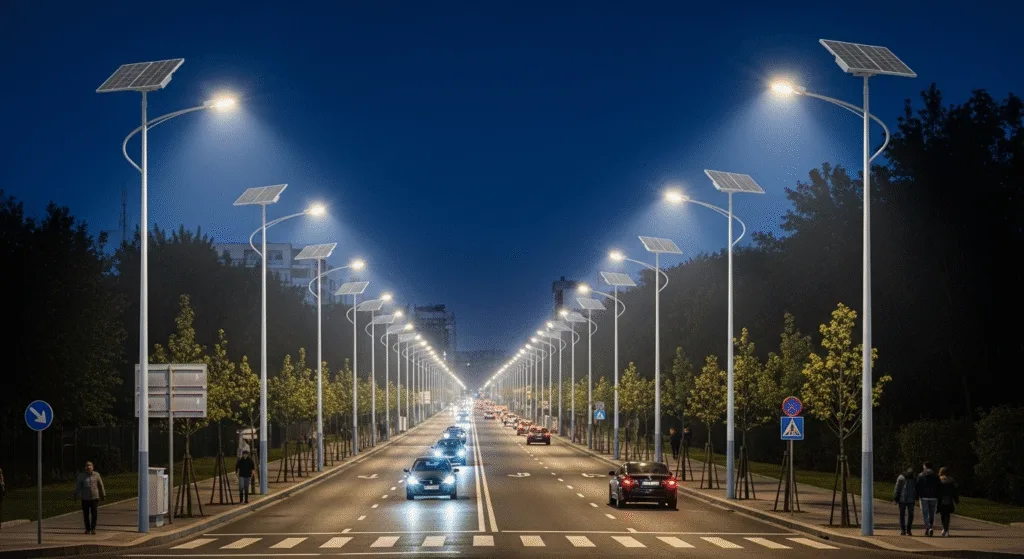
Split-type systems — also called separate solar street light types — are like a modular version of the integrated model.
The solar panel, battery, and LED head are all independent, connected through cables. It’s more work to assemble but far more flexible.
Surprisingly, in some coastal areas like Mombasa, split systems outperform integrated ones by over 40% in power output — mostly because their solar panels can be tilted perfectly for the sun and cleaned easily after salt exposure.
Key Benefits
- Customizable layout: adjust the panel’s tilt or direction anytime.
- Higher power range: supports 60W–300W setups for highways or ports.
- Serviceable components: replace or upgrade the battery without touching the lamp.
- Better heat control: separate enclosures reduce thermal buildup.
From our Kenya port project, 8-meter poles with 150W split-type lights achieved an average ground illuminance of 32 lux, exceeding EN13201 standards.
The Other Side of the Coin
But flexibility isn’t free. Split systems need:
- Longer installation time: cabling adds complexity and potential faults.
- Higher upfront cost: extra mounting hardware and wiring.
- Trained technicians: wrong polarity or loose connectors can cripple performance.
Still, for urban roads, logistics yards, airports, and parking areas, nothing beats their power and serviceability.
Smart Solar Street Lights: When Lighting Learns to Think
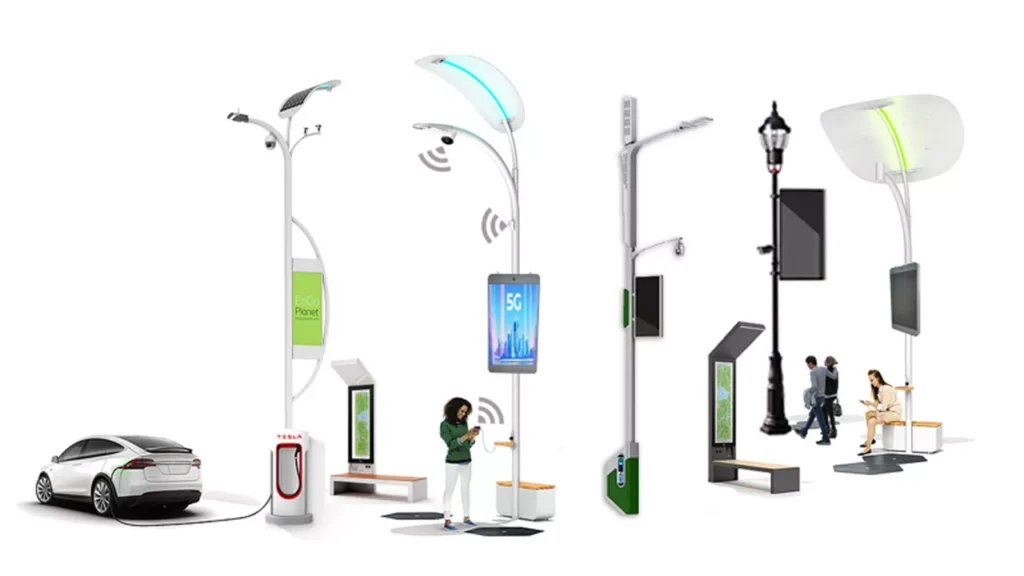
Now we move into the new generation — smart solar street lights.
These combine either integrated or split structures with IoT modules, motion sensors, and cloud control.
If you’ve ever seen a Nairobi boulevard dim to 30% when traffic clears and then brighten as a car passes — that’s IoT at work.
The system “learns” from usage patterns, cutting waste without compromising safety.
What Sets Smart Systems Apart
- Remote control: monitor battery health, solar input, and lamp status via app or web dashboard.
- Adaptive brightness: motion sensors boost light instantly when movement is detected.
- Energy optimization: dynamic dimming saves 30–40% energy over static systems.
- Predictive maintenance: automated fault alerts reduce on-site inspection trips.
In a 2023 smart corridor trial in Dar es Salaam, data logs showed maintenance costs dropped by 47% compared to conventional setups.
But Here’s the Catch
Connectivity isn’t universal.
In regions with unstable 4G or LoRa coverage, IoT lights lose their “smart” edge — they just revert to basic dusk-to-dawn mode.
Personally, I’d only recommend smart systems in cities with stable telecom infrastructure and active data management teams.
Ideal use cases: smart cities, industrial estates, and public parks where analytics and remote control add value.
Comparing Solar Street Light Types in the Field
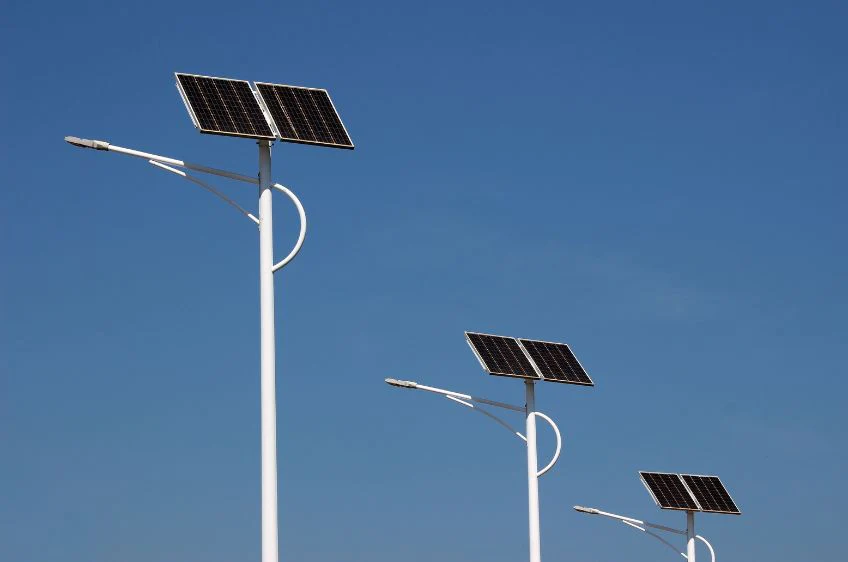
While tables help visualize specs, in the field, engineers judge lights by how they behave under dust, heat, and rain. Still, here’s a quick reference:
| Feature | Integrated Type | Split Type | Smart Type |
|---|---|---|---|
| Structure | All-in-one housing | Separate modules | IoT-enabled hybrid |
| Installation | Easiest | Moderate | Complex but guided |
| Maintenance | Minimal | Replaceable parts | Remote monitoring |
| Power Range | 30–150W | 60–300W | 60–300W + sensors |
| Control Mode | Auto light/timer | Programmable | IoT cloud & motion |
| Ideal Locations | Rural roads, compounds | Urban highways, ports | Smart cities, CBDs |
| Battery Type | Built-in LiFePO₄ | External LiFePO₄ or GEL | LiFePO₄ + IoT BMS |
That table is neat, but in reality, crews often decide based on terrain, theft risk, and maintenance budget more than specs.
Choosing the Right Type for Your Project
No one light fits all. The right solar street light type depends on sunlight, site access, and how much maintenance you can realistically manage.
| Scenario | Recommended Type |
|---|---|
| Remote villages, low budgets | Integrated |
| Urban roads, high brightness | Split |
| Smart city corridors or airports | Smart |
If sunlight hours drop below 4.5h/day, skip integrated models — they’ll dim too soon.
For high-mast installations above 8 m, go split or hybrid smart.
And always check the battery cycle life — most good LiFePO₄ packs rate above 2,000 cycles; anything less won’t last five years in the tropics.
That said, don’t just read datasheets. Visit an existing installation, talk to the maintenance team, and see what still shines after two rainy seasons.
Final Thoughts: Where Solar Street Lighting Is Headed
Each type has its place:
- Integrated lights simplify logistics.
- Split models win in endurance.
- Smart systems promise efficiency and control.
But personally, I believe smart solar street lights will dominate only when battery and network costs drop another 25% — otherwise, many cities still can’t justify the upfront expense.
As the technology matures, hybrid models will likely bridge the gap: the simplicity of all-in-one, the serviceability of split, and the brains of IoT.
That’s where the industry is headed — and, honestly, it’s an exciting time to be part of it.
Suggested Internal Links: