

A Real-World Guide for EPCs, Contractors and Municipal Engineers
Yes, solar street lights can still work without direct sunlight, but only if the system is designed for low-sunlight days. Panels can generate power even under clouds, and the battery then runs the lights for 1–5 autonomy days. If panel size, battery capacity and controller dimming are undersized, the lights will start to fail after a few rainy days.
If you’ve ever worked on a solar street lighting project in a rainy or cloudy region, you probably know this story:
- The project looks great during commissioning.
- Then the rainy season arrives.
- Entire sections of the road start to dim, flicker, or go completely dark.
For the end user, there is only one conclusion:
“The solar lights don’t work. The quality is bad.”
But your real pain is different:
- Complaints from the client, local community, and sometimes the media
- Emergency site visits, adding extra batteries or panels after installation
- Lost profit on the project – and lost trust for phase 2 or 3
Most of these failures start very early, when someone asks the wrong question:
“Can solar lights work without sunlight?”
The right question for EPCs, contractors, consultants and municipal engineers is:
“In our climate, how many low-sunlight days is this system designed to survive – and what happens after that?”
This article is written for B2B project owners, not people buying 10 USD garden lights.
It will help you:
- Explain to your client what solar can and cannot do in rainy season and winter
- Design around autonomy days instead of blind optimism
- Use a simple checklist to challenge suppliers and avoid rainy-season failures
- Turn this topic into a lead magnet to collect serious project enquiries
1. The Real Problem: Not the Sun, But Complaints and Rework
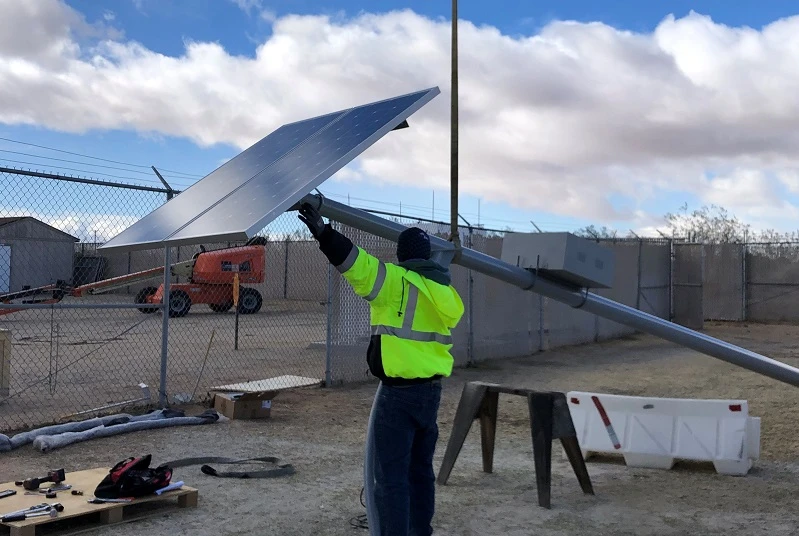
From a project perspective, your biggest risks are not just “clouds” or “winter”. They are:
- Blackouts on important roads after a few bad-weather days
- The client simplifying everything to:
“Solar doesn’t work here. We should have used grid lights.”
- Being forced to:
- Add batteries or panels at your own cost
- Increase maintenance visits and teams
- Carry the reputation of “the company whose solar lights failed in the rainy season”
Why does this happen?
Because during design and tender, most discussions stay at the wrong level:
“Will the solar lights still work without sunlight?”
Instead, you should be asking:
“For this city and road, are we designing for 1, 3 or 5 days of very poor sunlight?”
That question leads directly to the core concept that decides success or failure for off-grid solar street lighting projects.
2. One Metric That Decides Success: Autonomy Days
Autonomy days means:
The number of nights the system can operate from a fully charged battery
with little or almost no new solar input.
You can explain it to your client in simple language:
“If we design for 3 autonomy days, the lights should work normally
through about three very poor-sunlight days.
After that, they will start to dim – but they won’t go off all at once.”
Autonomy days are at the heart of:
- How your project behaves during rainy season or winter
- How much blackout risk the client is willing to accept
- Whether your price is seen as expensive, or as a reasonable insurance against failure
If you remember only one sentence from this article, let it be this:
“The question is not ‘Can solar lights work without sunlight?’
but ‘How many low-sunlight days are you paying for?’”
For critical roads and high-mast lighting, this question is even more important.
3. What Really Happens When There’s Not Enough Sun?
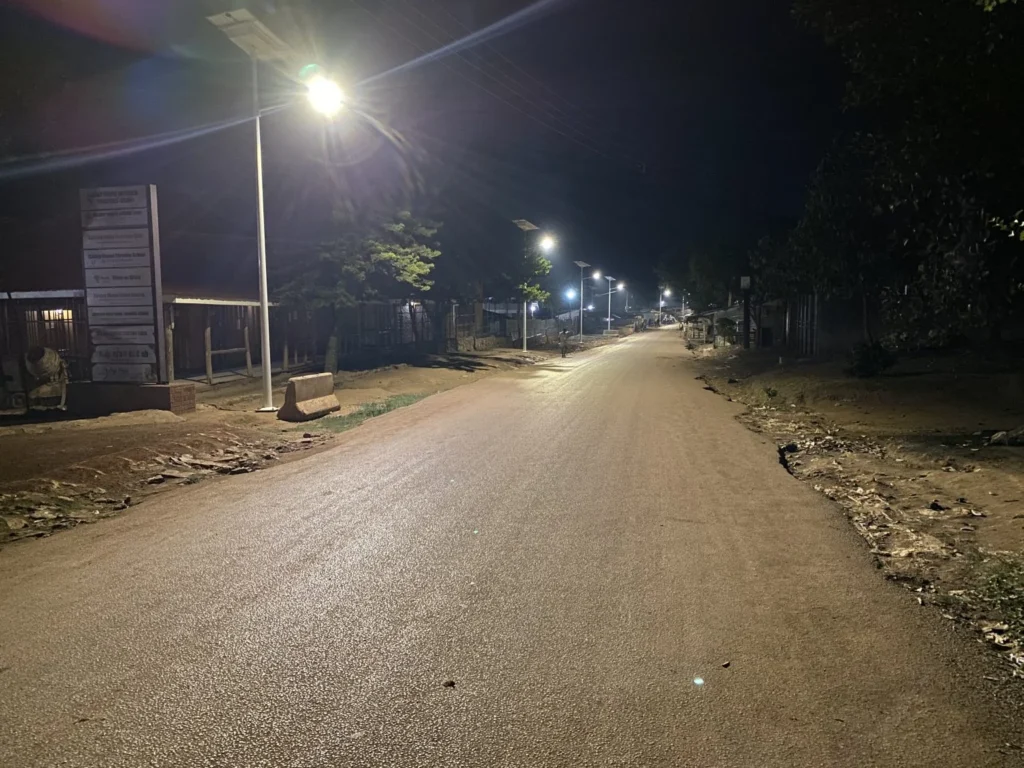
Let’s make it concrete with a simple table.
(Exact numbers depend on your design – this is to show the logic.)
| Scenario | Daytime sunlight | Typical charging | Night-time behaviour (typical) |
|---|---|---|---|
| Clear, sunny day | Strong direct sunlight | ≈100% of design energy | Runs at design brightness all night |
| Cloudy or overcast day | Diffuse light | ≈40–80% of design energy | May slightly dim or shorten runtime (if configured) |
| 3–5 consecutive rainy days | Very weak sunlight | Only small partial charge | Depends on autonomy days and control strategy |
| Panel permanently shaded | Almost no useful sunlight | Almost no effective charge | After a few days, lights go off and stay off |
What your client needs to understand:
- Yes, solar street lights can work on cloudy days and in winter
- But their behaviour depends entirely on:
- Autonomy days (panel + battery sizing)
- Control strategy (smart dimming vs “on until dead”)
- Installation quality (tilt, orientation, shading)
Your role is not to promise “solar works everywhere, all the time”.
Your role is to define:
“For this road, in this climate, we design for X autonomy days.
Here is what will happen if the weather is worse than that.”
This is the basis of a realistic solar street light design discussion.
4. Four Design Levers You Control as a Project Owner
Once autonomy days are clear, everything else is about choosing the right design levers.
4.1 Panel and Battery Sizing: The Foundation of Autonomy
- Small panel + small battery = a system that assumes almost every day is sunny
- For regions with long rainy or cloudy seasons, you typically need:
- Larger battery capacity (more stored energy)
- Slightly oversized panels (still charge under weak sunlight)
When you read a supplier’s proposal, don’t stop at “100 W panel, 40 Ah battery”. Ask:
“For our city and road type, what autonomy level are you actually designing for?
Which solar irradiation data did you use?”
If they cannot answer that clearly, the design is guesswork.
4.2 Luminous Efficacy: 230 lm/W vs 150 lm/W
For the same road and target lux level:
- A 230 lm/W luminaire needs much less power than a 150 lm/W one
- That means:
- Smaller battery for the same autonomy, or
- Longer autonomy for the same battery size
High-efficacy LED solar street lights are not just a marketing feature.
They are directly linked to how long your lights can survive low-sunlight periods.
4.3 Control Strategy: “Full Brightness or Off” vs Smart Dimming
Many low-cost systems follow this logic:
- Run at 100% power for as long as possible
- When battery voltage drops below a threshold → lights off everywhere
Engineering-grade systems do something different:
- As State of Charge (SoC) drops, they gradually reduce power
- They aim to keep basic lighting all night, instead of 3–4 hours at full power and then blackouts
In your technical specification, you can require suppliers to:
- Provide a simple SoC vs output table (e.g. 100% SoC = 100% power, 40% SoC = 60% power)
- Explain how the system behaves on Day 1, Day 2, Day 3 of low-sunlight conditions
4.4 Installation and Shading: The Silent Project Killer
Many “solar doesn’t work” stories are actually installation problems:
- Panels installed near trees, buildings or billboards
- Wrong tilt angle for the latitude (leading to dust and water buildup)
- Panels on different poles facing different directions
As the project owner or EPC, you should ensure:
- Clear requirements for tilt and orientation are in the specification
- Potential shading in 3–5 years (growing trees, new buildings) is considered
- The supplier provides installation drawings and training, and this is part of the contract
This is as important for off-grid solar street lights as it is for on-grid backup systems.
5. Budget vs Risk: A Table You Can Show Your Client
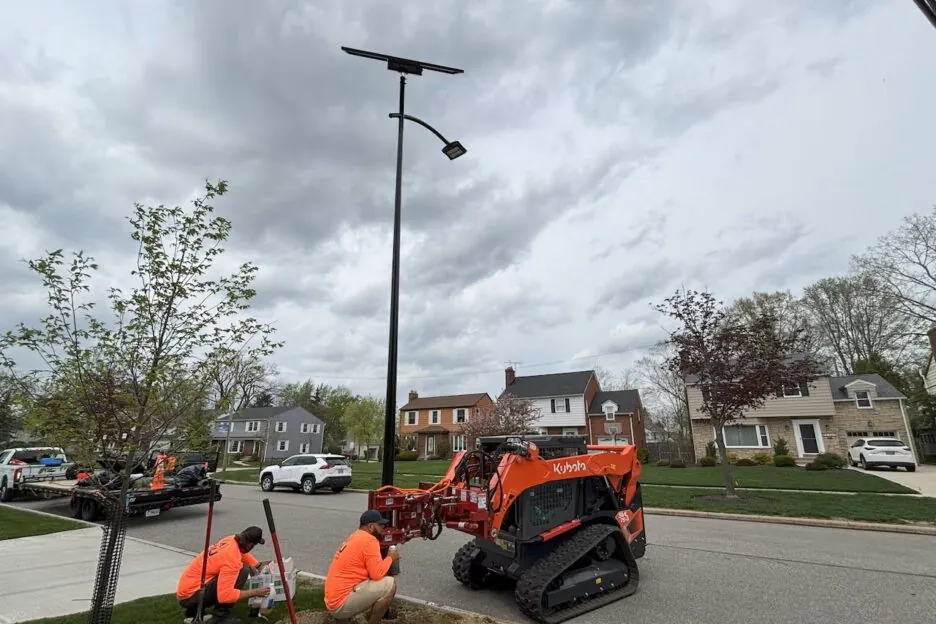
You can use a simple matrix like this to talk about budget and risk in a professional way
(adapt the autonomy days and wording for your city and project).
| Design level | Typical autonomy days | Typical application | Relative cost | Risk in long cloudy / rainy periods |
|---|---|---|---|---|
| Basic | 1–2 days | Dry regions, low-traffic roads | ★ | High – after 2–3 bad days, expect blackouts |
| Standard | ~3 days | Typical town streets, secondary roads | ★★ | Medium – acceptable in most climates |
| Enhanced | 3–5 days | City roads, key crossings, main routes | ★★★ | Low – may dim but rarely go dark |
| Heavy-duty | ≥5 days (custom) | Ports, critical junctions, no grid backup | ★★★★ | Very low – designed for extreme conditions |
This table shifts the conversation from:
“Why is your system more expensive than the others?”
to:
“Do you want a basic 1–2 day system with more blackout risk,
or a 3–5 day system that keeps your roads safe during long cloudy periods?”
Lead Magnet #1: Turn This Table Into a Downloadable Planning Sheet
You can convert this into a PDF / Excel sheet and use the article to collect leads for solar street lighting projects:
Free Project Planning Sheet – Autonomy vs Risk
Enter your Name, Company, Email, WhatsApp and Project Country/City,
and we’ll send you an editable PDF & Excel version of this table so you can:
- discuss autonomy vs risk with your client, and
- compare different solar suppliers on the same basis.
Only serious project people will take the time to fill this in –
that’s exactly the kind of lead you want.
6. The 8-Question Checklist to Challenge Any Supplier
Before you approve any solar street light design (including ours), you can ask:
- What autonomy days are you designing for in this project?
- Which solar irradiation data (city/year) did you use for your calculation?
- What is the luminous efficacy of your LED (lm/W)? Can you provide IES files?
- How does your controller behave when battery SoC drops from 100% to 30%?
- If we have 3–5 very bad-sunlight days, what will light output look like each night?
- Do you have reference projects in similar climates? What were the failure/complaint rates?
- Can you provide a simple design note (configuration + expected autonomy) and attach it to the contract?
- If large-scale blackouts are caused by undersized design, what is your warranty and responsibility?
Lead Magnet #2: Offer the Checklist as a One-Page PDF
In the article, you can invite readers like this:
Download the 8-Question Supplier Checklist (PDF)
Fill in your Name, Company, Role, Email and WhatsApp,
and we’ll send you a one-page checklist you can use for your next:
- tender evaluation,
- supplier meeting, or
- internal design review.
You can even attach it to your enquiry email so every supplier answers on the same basis.
This filters out casual readers and pulls in real decision-makers who are serious about solar street light design.
7. How Sunlurio Helps You De-Risk Low-Sunlight Projects
If your projects involve:
- 6–12 m solar street lights for villages, towns or city roads
- High-mast lighting for ports, yards, logistics hubs or industrial sites
- Locations with strong rainy seasons, frequent clouds or dust
you don’t just need a factory that ships hardware.
You need a partner who helps you do the thinking up front.
You can position Sunlurio in the article like this:
Sunlurio works as a technical manufacturing partner for road and yard lighting projects in Africa and the Middle East.
For challenging climates, we typically help project owners and EPCs to:
- choose a realistic autonomy level for each road type,
- size panel and battery for that autonomy,
- define control strategies for cloudy periods, and
- prepare drawings, BOQs and simple design notes you can attach to your tender or contract.
You can also link to your project references to show real installations in Africa and the Middle East.
Lead Magnet #3: Free Pre-Design Review (High-Quality Lead Hook)
Give readers a clear, useful reason to contact you. For example:
Free Pre-Design Review for Your Solar Street or High-Mast Lighting Project
If you have a real project on the table (tender, concept or ongoing), share the basics with us:
- Project country & city
- Road or site type (village road, town street, highway, yard, port, etc.)
- Pole height & spacing
- Required working hours per night
- Any existing BOQ or drawings (optional)
Leave your Name, Company, Role, Email and WhatsApp in the form,
and our engineering team will:
- suggest a suitable autonomy level for your climate,
- recommend a draft configuration (panel, battery, wattage), and
- highlight obvious risk points before you freeze the design.
This is not an auto-generated quote – it’s a quick engineering sanity check you can use internally or with your client.
This positions you as an engineering ally, not just a price sender.
8. FAQ: Short Answers You Can Reuse with Clients
Do solar street lights work on cloudy days?
Yes, if they’re designed for your climate.
On cloudy days, panels still receive diffuse light and can charge the battery, just at a lower rate.
With correct panel/battery sizing and smart control, your lights should work through typical cloudy days and only dim if bad weather lasts unusually long.
Can solar street lights work in winter?
They can, as long as winter is part of the design:
- Shorter days and lower sun angle
- Often more clouds, fog or dust
Winter projects usually need:
- Slightly larger panels and batteries
- Possibly shorter required lighting hours
- Smart dimming after midnight
How many days can solar street lights run without sun?
That is a design choice, not magic:
- 1–2 days autonomy → lower cost, higher blackout risk in long cloudy periods
- ≈3 days autonomy → acceptable for many municipal roads
- 3–5+ days autonomy → recommended for critical roads or harsh climates
If you’re unsure what’s reasonable for your city, you can use the Free Pre-Design Review to get a suggested range.
What if my client wants “no blackouts ever” but has a tight budget?
Be honest and professional:
- Explain that zero blackout risk would require very large panels and batteries
- Propose different autonomy levels for different sections:
- higher autonomy on critical roads
- standard autonomy on less critical areas
- Document the agreed autonomy level and its limits in your technical clarification and contract
You can also offer to prepare a one-page explanation of autonomy vs cost that your client can understand in five minutes. That alone can save you many difficult conversations later.