Lighting Poles for Street Lighting and Infrastructure Projects


Quick Answer: What Should Be Reviewed Before Selecting a Lighting Pole?
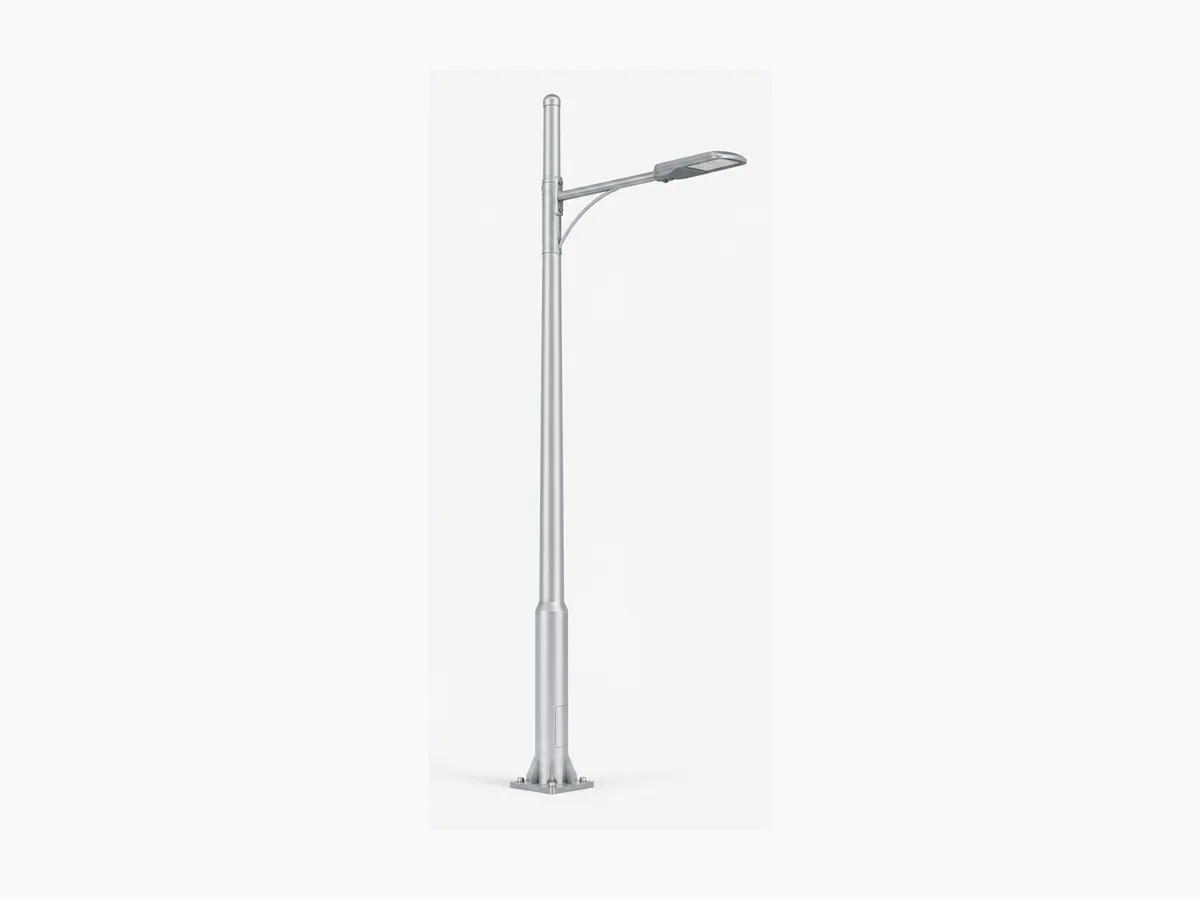
A lighting pole should be selected by pole height, material grade, wall thickness, top and bottom diameter, arm type, flange size, anchor bolt layout, wind speed, surface treatment, installation environment, and required drawings. For municipal roads, highways, solar street lights, smart street lights, parking areas, pathways, and coastal projects, pole configuration should be reviewed together with luminaire load, foundation condition, and local project drawing requirements.
Lighting Pole Structural Review Inputs
Pole Height
Typical range is 3-12 m for standard road and outdoor projects, or project-specific height according to application.
Material Type
Galvanized steel, powder-coated steel, anodized aluminum, stainless steel, decorative option, or custom project requirement.
Wall Thickness
Pole wall thickness should be reviewed according to height, luminaire load, arm length, and wind speed.
Top / Bottom Diameter
Top diameter and bottom diameter affect pole strength, appearance, and luminaire bracket compatibility.
Arm Type and Bracket
Single arm, double arm, decorative arm, outreach length, bracket angle, and luminaire mounting requirement.
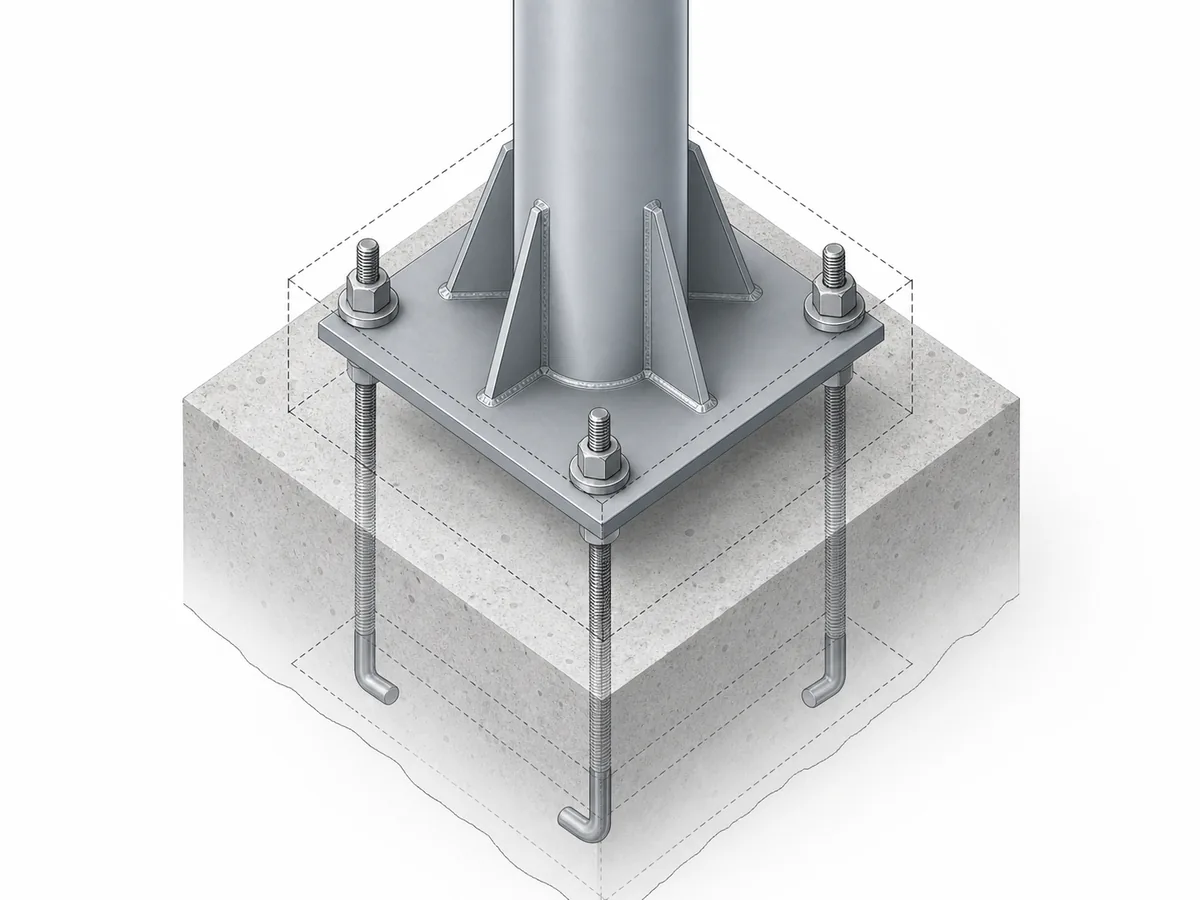
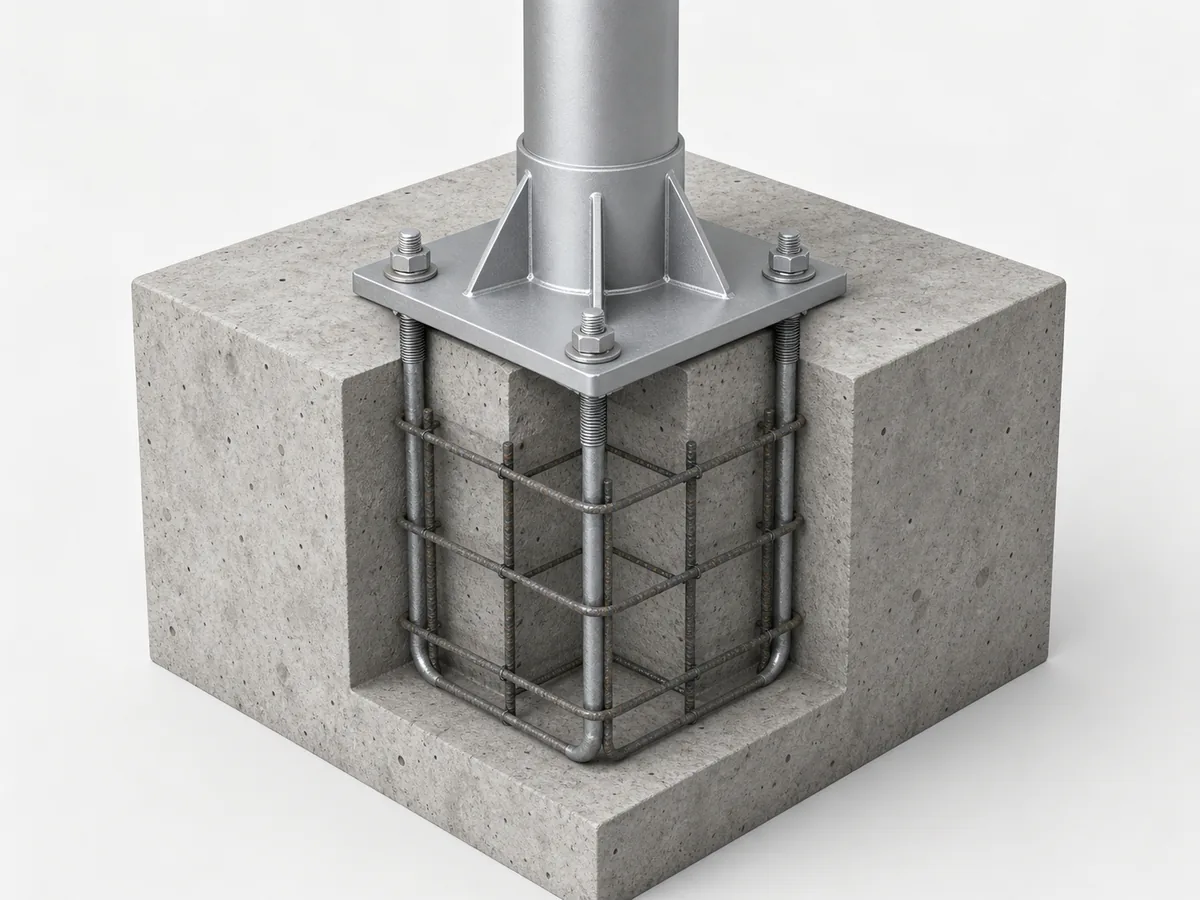
Flange and Anchor Bolts
Flange size, base plate, anchor bolt layout, and foundation interface should be confirmed by project requirement.
Wind Speed and Environment
Local wind speed, coastal exposure, corrosion environment, and open-area conditions affect structure and surface treatment.
Required Documents
Pole drawing, datasheet, anchor bolt layout, foundation reference, BOQ notes, and packing information.
Lighting Pole Product Families and Project Fit

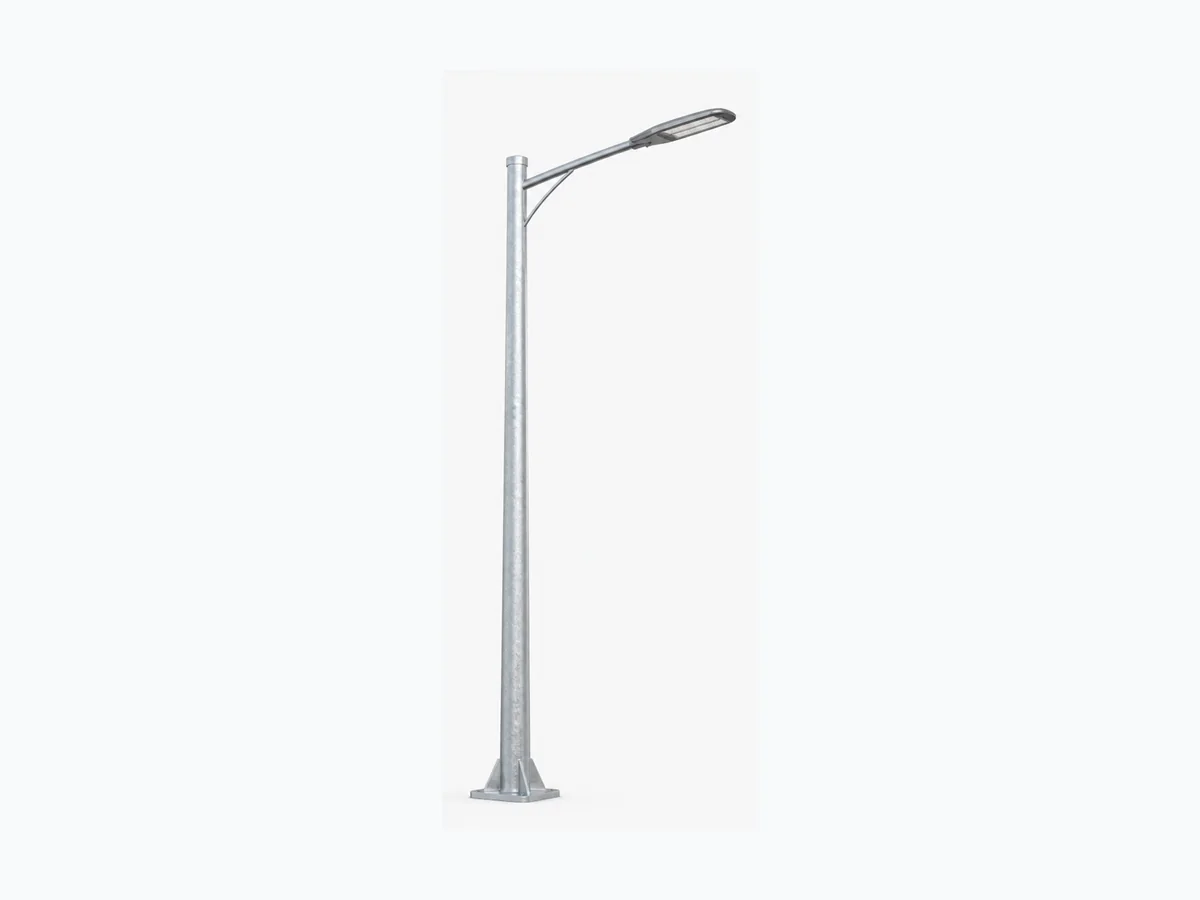
Hot-Dip Galvanized Steel Lighting Pole
Best forMunicipal roads, highways, solar street light projects, industrial roads, standard road lighting.
Not ideal forProjects primarily requiring premium decorative finish.
Required inputsPole height, thickness, arm length, wind speed, luminaire load.
SupportDrawing, datasheet, anchor bolt layout.
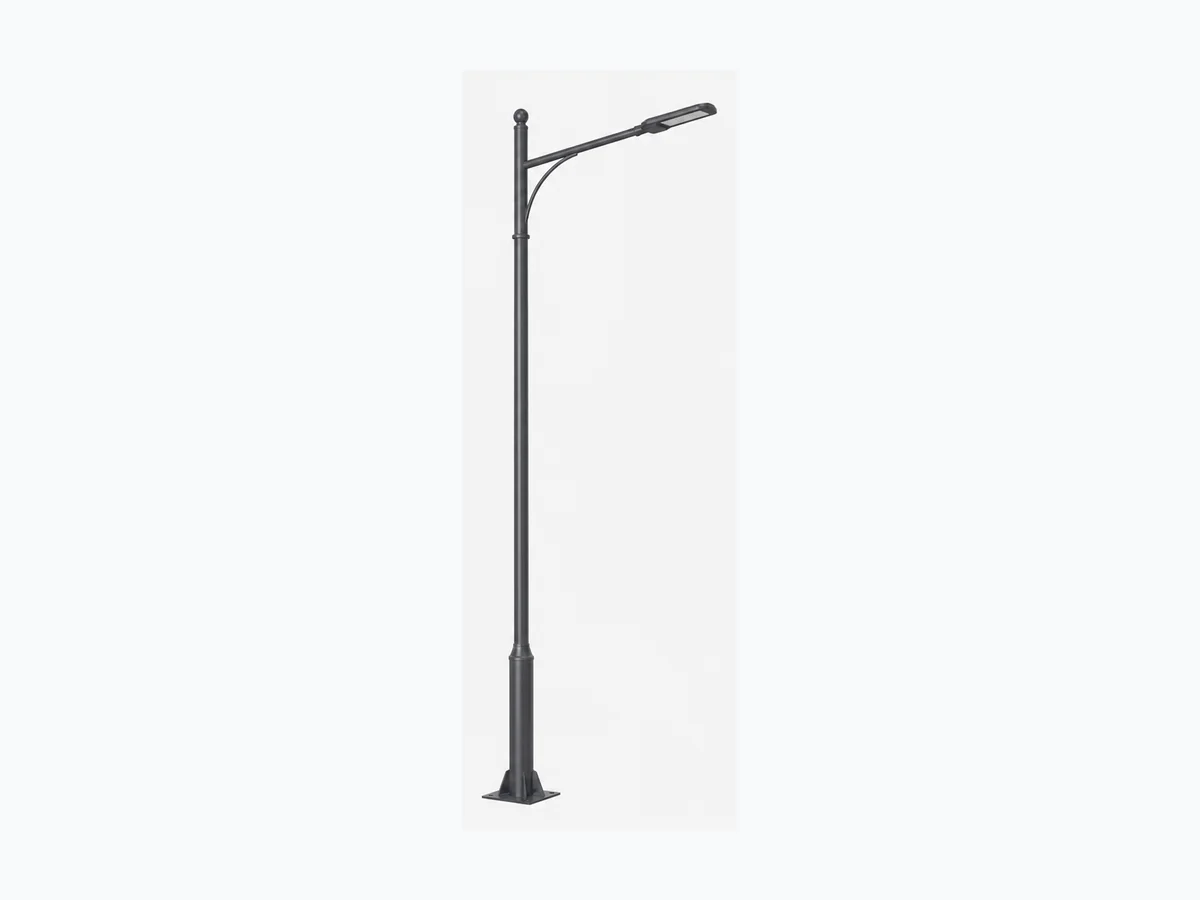
Powder-Coated Steel Lighting Pole
Best forCity roads, parks, urban landscape projects, architectural outdoor lighting.
Not ideal forProjects that only require bare galvanized industrial finish.
Required inputsColor finish, pole height, arm type, corrosion condition.
SupportDrawing, surface treatment notes, project matching.

Anodized Aluminum Lighting Pole
Best forCoastal zones, humid environments, corrosion-sensitive projects, lightweight requirements.
Not ideal forProjects where heavy-duty steel structure is preferred and cost sensitivity is high.
Required inputsPole height, wall thickness, environment, luminaire load.
SupportDrawing, datasheet, finish notes.
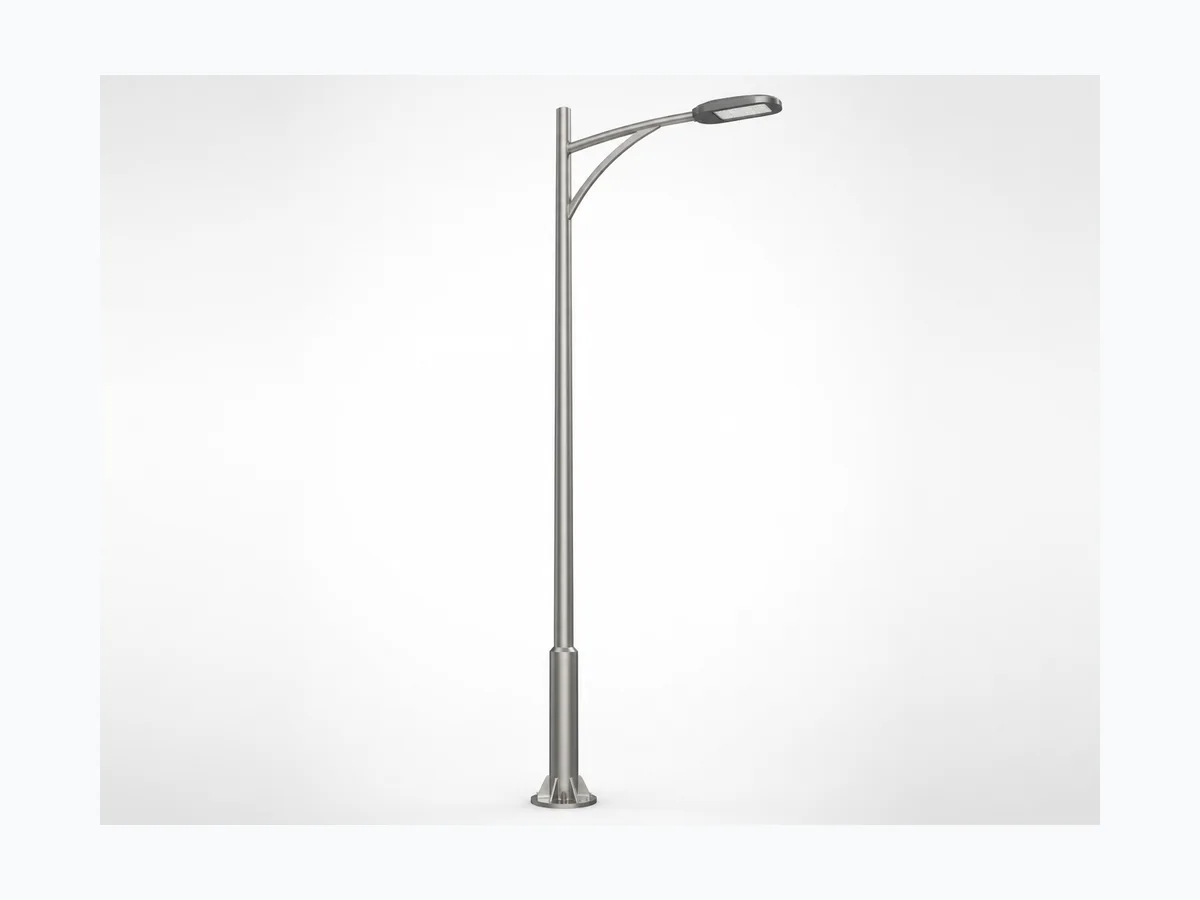
Stainless Steel Lighting Pole
Best forDecorative city projects, landscape lighting, premium outdoor projects, coastal decorative installations.
Not ideal forHeavy road projects where galvanized steel is structurally more common and more cost-effective.
Required inputsPole height, finish type, application area, decorative requirement.
SupportDrawing, project configuration support.
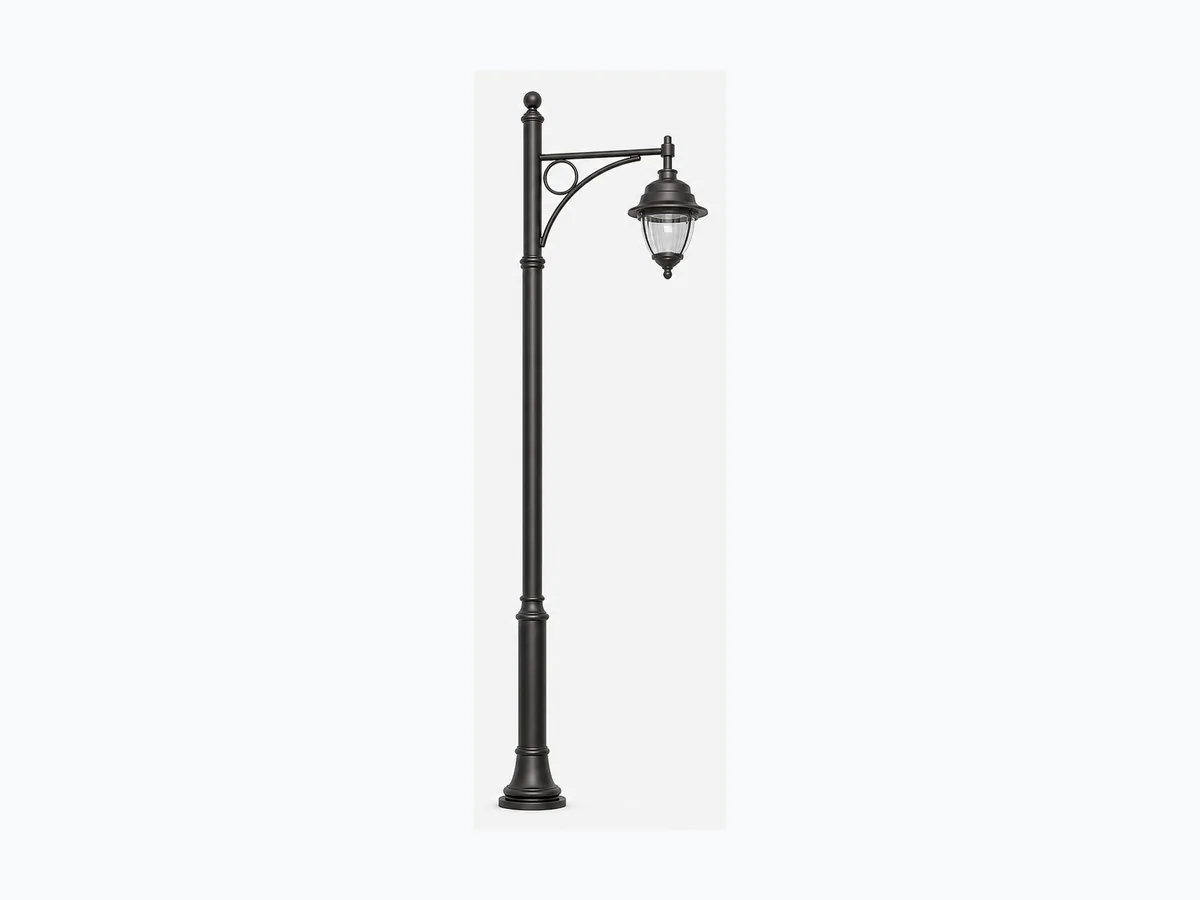
Decorative Lighting Pole
Best forParks, pathways, plazas, landscape lighting, and urban streetscape projects.
Not ideal forPurely industrial or heavy highway applications.
Required inputsDesign style, luminaire style, height, bracket form.
SupportVisual reference, drawing, configuration notes.
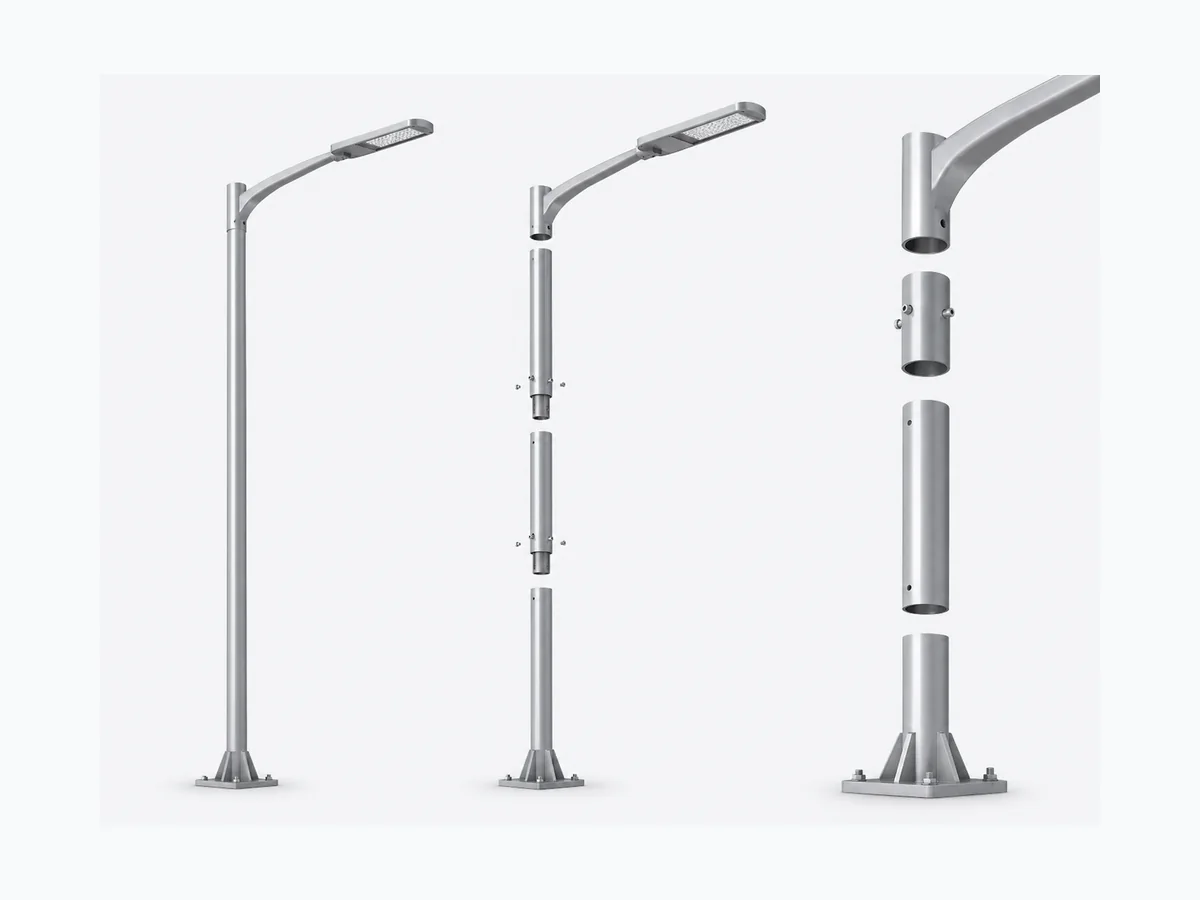
Split Lighting Pole
Best forExport projects, container loading optimization, remote-area delivery, easier transport and site handling.
Not ideal forProjects where one-piece delivery is easier and no transport limitation exists.
Required inputsPole height, joint design, wind speed, luminaire load, installation condition.
SupportSplit structure drawing, assembly guidance, packing notes.
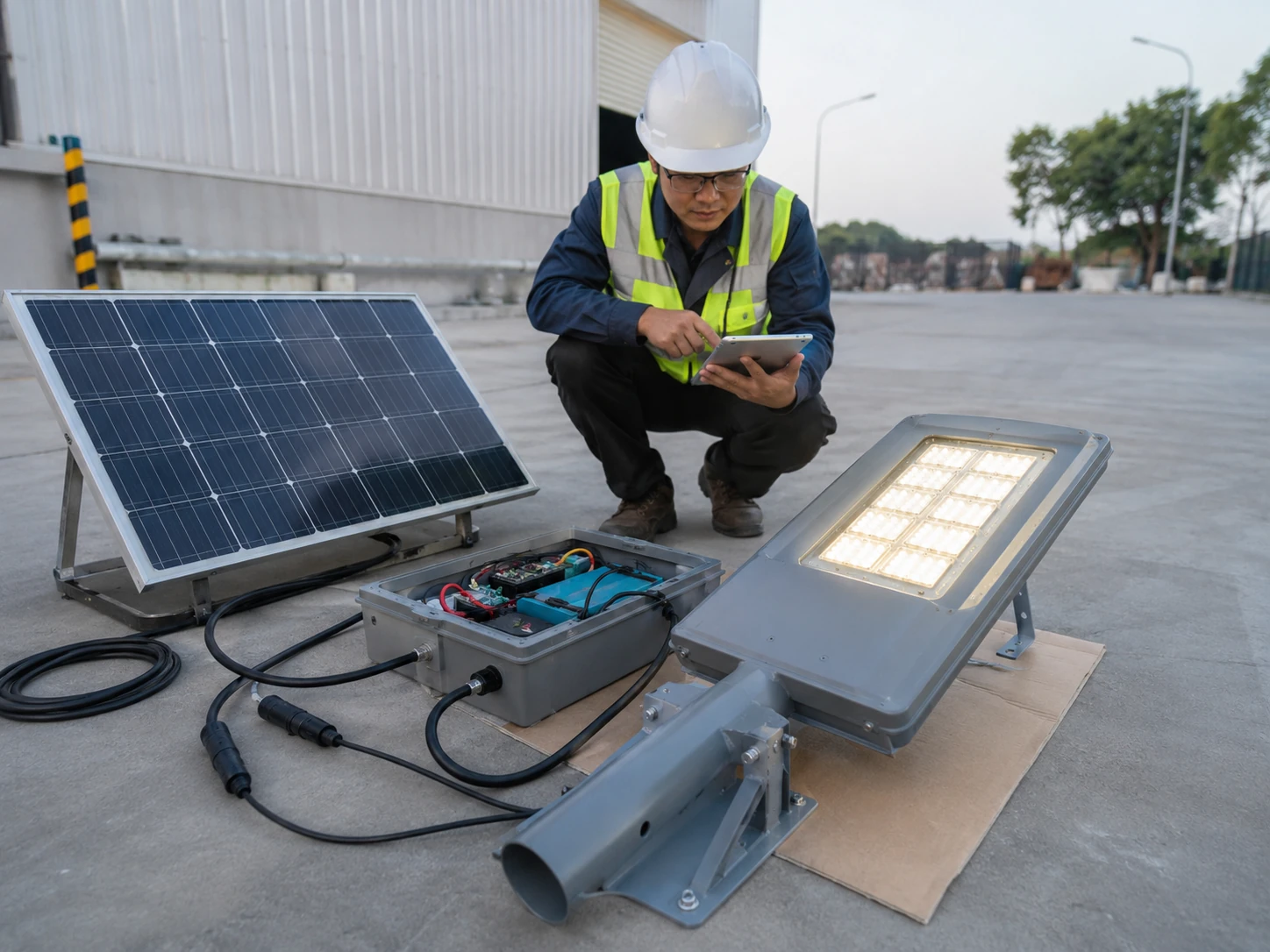
Solar Street Light Pole
Best forSolar road lighting, all-in-one/all-in-two solar street lights, rural roads, off-grid projects.
Not ideal forProjects that only need conventional AC road lighting without solar components.
Required inputsPole height, outreach arm, solar luminaire weight, battery/PV arrangement if relevant.
SupportPole selection guidance for solar systems.
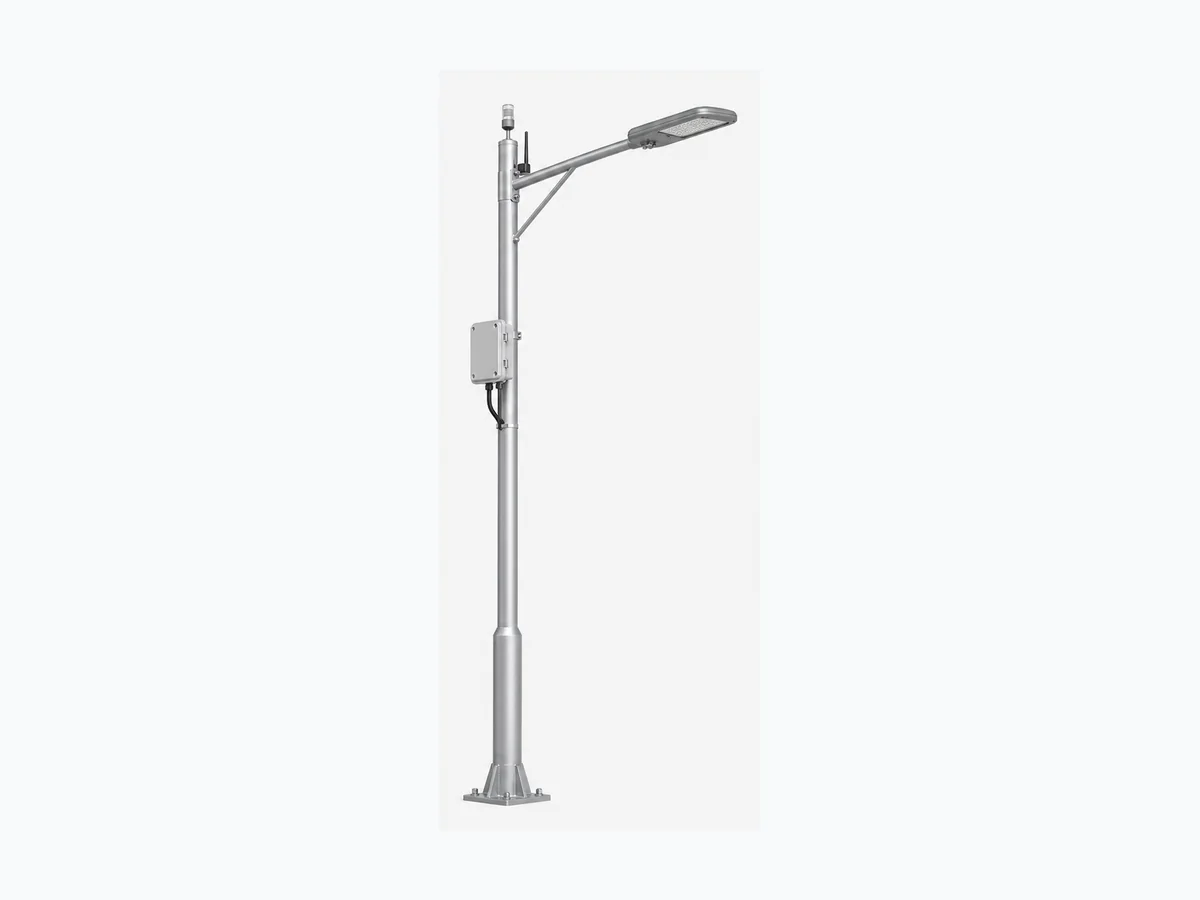
Smart Street Lighting Pole / Support Pole
Best forSmart street lighting projects with controller, sensor, communication device, or additional mounting needs.
Not ideal forVery simple non-smart projects with no device mounting needs.
Required inputsPole height, controller box requirement, device loading, bracket accessories.
SupportPole and control accessory coordination.
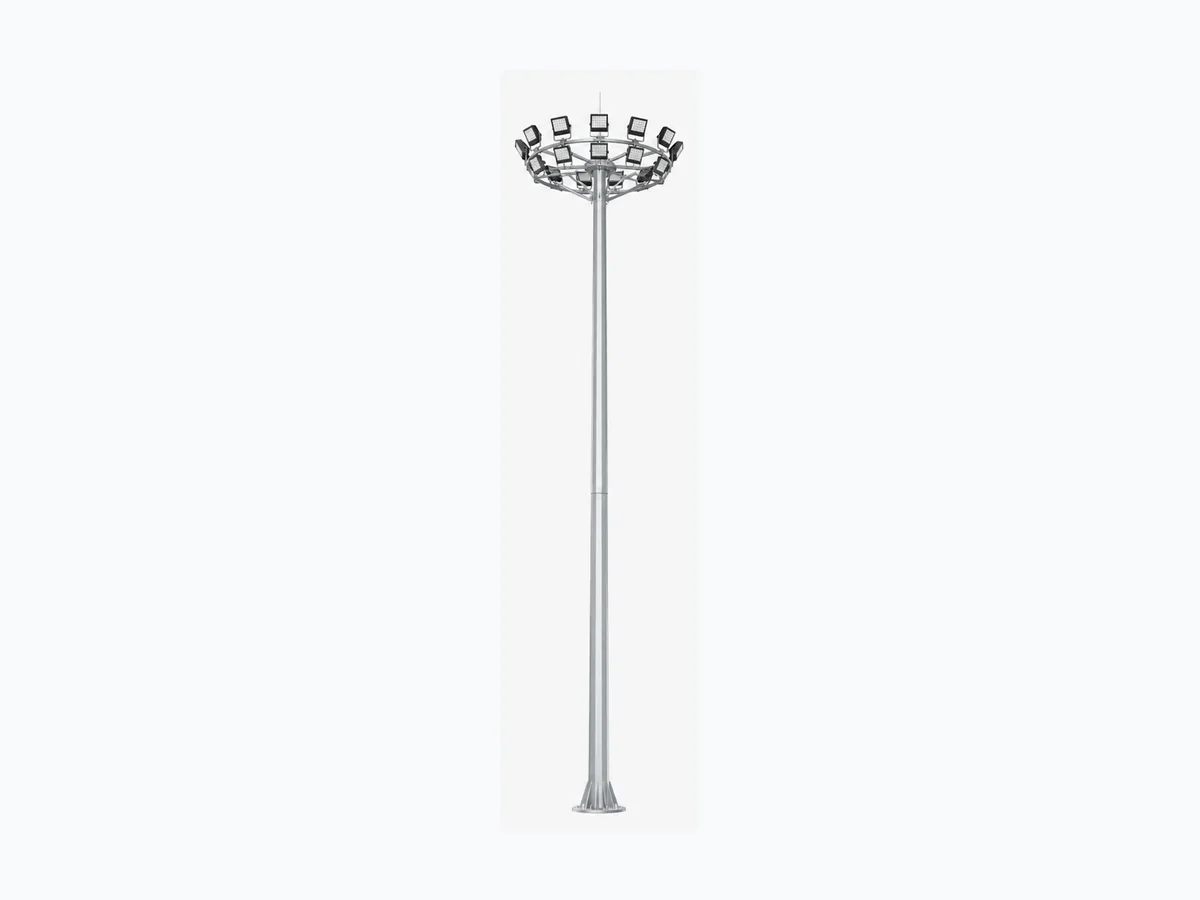
High Mast Pole / Large-Area Lighting Pole
Best forLarge-area outdoor lighting, ports, stadiums, yards, logistics areas.
Not ideal forSmall road lighting projects.
Required inputsPole height, luminaire quantity, wind speed, flange, anchor bolts, maintenance method.
SupportStructural review, reference drawing, project support.
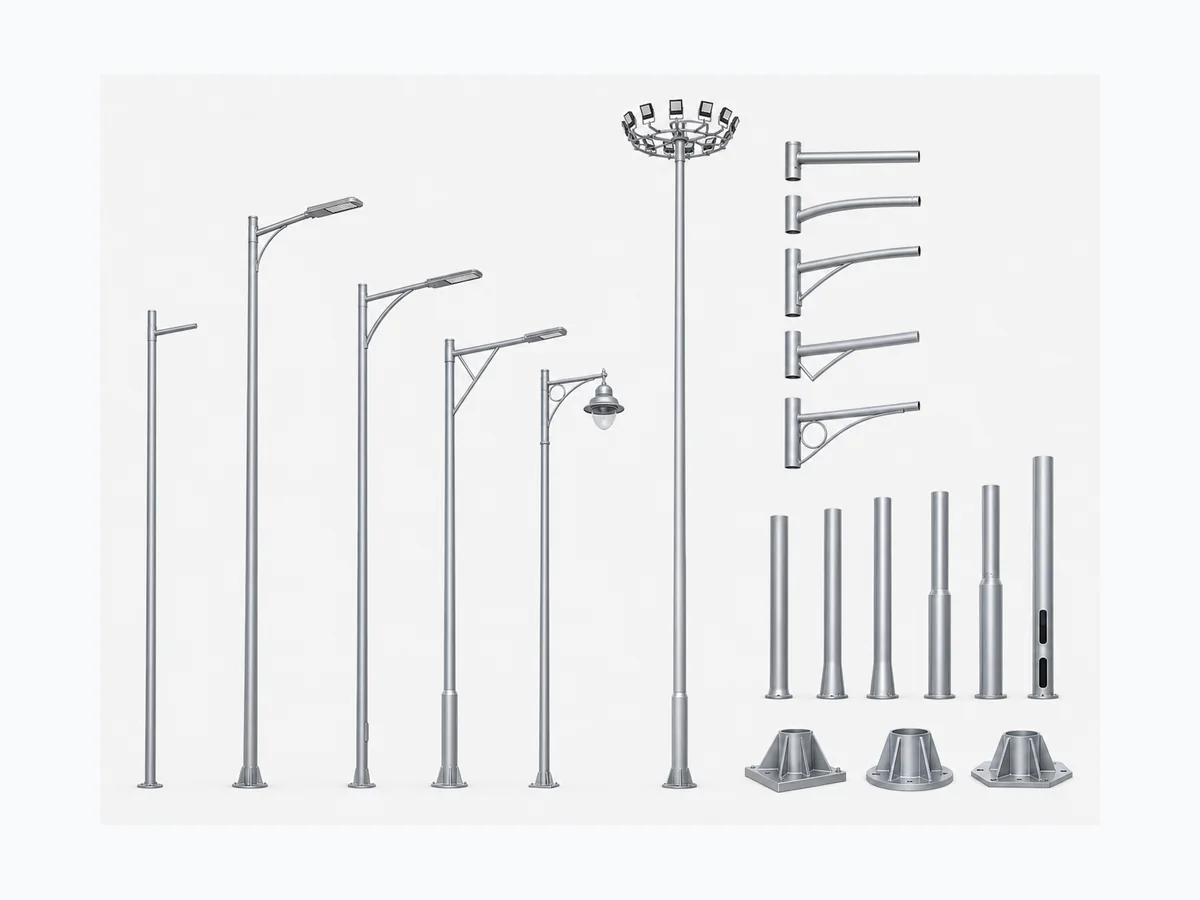
Custom Project Pole
Best forProjects with special drawings, special bracket, decorative structure, or specific municipal requirements.
Not ideal forVery standard off-the-shelf small quantity projects with no customization need.
Required inputsDrawing, dimensions, structure notes, environment, project standards.
SupportCustom drawing review and project coordination.
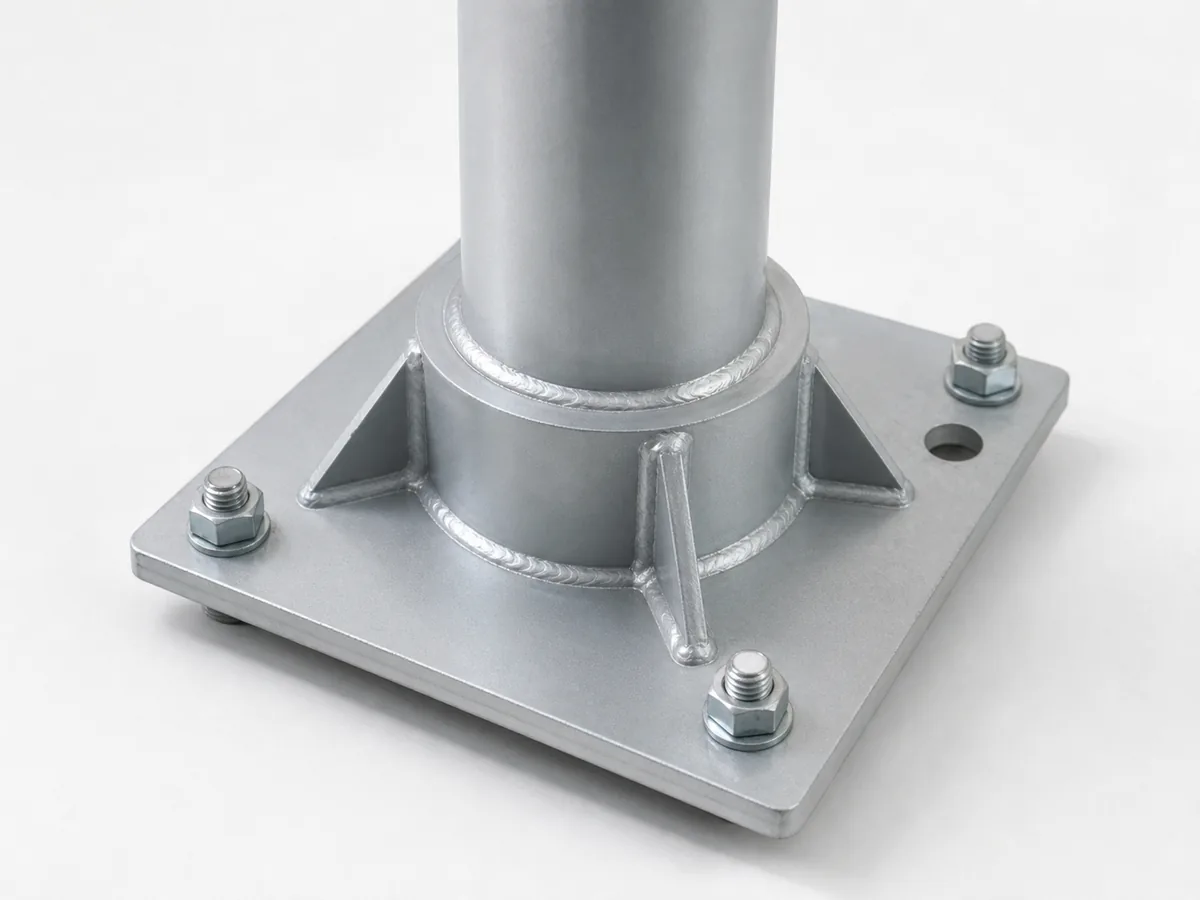
Pole Structure and Engineering Details

A lighting pole should not be selected by appearance alone. Final configuration should be reviewed by height, material, thickness, diameter, arm type, luminaire load, flange, anchor bolts, wind speed, surface treatment, and project environment.
Pole Height and Arm Reach
Height and outreach arm affect luminaire position, wind-load review, and foundation interface.
Top and Bottom Diameter
Pole diameter should match strength, visual requirement, and luminaire bracket compatibility.
Wall Thickness and Structure Strength
Thickness should be reviewed by pole height, luminaire load, arm reach, and wind speed.
Flange and Base Plate
Base plate dimensions and flange welding should match the structural review and project drawing.
Anchor Bolts and Foundation Interface
Anchor bolt layout should be coordinated with the pole GA drawing and foundation reference.
Luminaire Load and Wind Review
Luminaire weight, projected area, and local wind condition affect final pole configuration.
Surface Treatment and Material Options
Hot-Dip Galvanized Steel
Used for road and infrastructure lighting projects requiring long-term corrosion protection and standard structural performance.
Powder-Coated Steel
Used when both corrosion protection and decorative color finish are required for city or park lighting projects.
Anodized Aluminum
Used for lightweight and corrosion-sensitive applications, especially in coastal or humid environments.
Stainless Steel
Used for decorative or high-finish outdoor projects where appearance and corrosion resistance are important.
Custom Finish / Project Matching
Color, coating system, and finish notes can be reviewed according to project environment and municipal visual requirements.
Split Lighting Pole - Export-Friendly Structure for Remote and Containerized Projects

Reduced Shipping Volume
Split sections can improve packing efficiency for export and containerized delivery.
Site Assembly Without Welding
When designed accordingly, sections can be assembled on site without field welding.
Connection Strength Review
Joint structure should be reviewed by pole height, load, wind speed, and installation condition.
Suitable for Remote Project Delivery
Useful where road access, container loading, or site handling limits one-piece poles.
Recommended Lighting Pole Heights by Application
| Application | Recommended Pole Height | Typical Notes |
|---|---|---|
| Pathway / Garden / Landscape | 3-5 m | Decorative appearance, pedestrian scale, small luminaire load. |
| Residential Street | 5-7 m | Reviewed by road width, setback, pole spacing, and luminaire output. |
| Municipal Road | 6-9 m | Common road-lighting range; confirm road class and lighting requirement. |
| Main City Road | 8-10 m | Higher mounting height may be reviewed by width, median, and target illuminance. |
| Parking Area | 6-9 m | Reviewed by area size, pole spacing, glare, and luminaire distribution. |
| Highway / Arterial Road | 9-12 m | Requires wind, foundation, arm reach, and road safety review. |
| Solar Street Light Project | Project-specific | Reviewed with solar luminaire weight, bracket, battery/PV arrangement if relevant. |
| Smart Street Light Project | Project-specific | Reviewed with device mounting, controller box, communication, and O&M needs. |
| Decorative Urban Lighting | 3-8 m | Reviewed by streetscape design, finish, bracket style, and luminaire type. |
| Large-Area Lighting / High Mast | Project-specific | For high mast or area lighting, review pole height, luminaire quantity, lifting system, and wind speed. |
Pathway / Garden / Landscape
3-5 m
Decorative appearance, pedestrian scale, small luminaire load.
Residential Street
5-7 m
Reviewed by road width, setback, pole spacing, and luminaire output.
Municipal Road
6-9 m
Common road-lighting range; confirm road class and lighting requirement.
Main City Road
8-10 m
Higher mounting height may be reviewed by width, median, and target illuminance.
Parking Area
6-9 m
Reviewed by area size, pole spacing, glare, and luminaire distribution.
Highway / Arterial Road
9-12 m
Requires wind, foundation, arm reach, and road safety review.
Solar Street Light Project
Project-specific
Reviewed with solar luminaire weight, bracket, battery/PV arrangement if relevant.
Smart Street Light Project
Project-specific
Reviewed with device mounting, controller box, communication, and O&M needs.
Decorative Urban Lighting
3-8 m
Reviewed by streetscape design, finish, bracket style, and luminaire type.
Large-Area Lighting / High Mast
Project-specific
For high mast or area lighting, review pole height, luminaire quantity, lifting system, and wind speed.
Foundation, Flange, Anchor Bolt, and Installation Notes

Flange size should match structure and project load. Anchor bolt layout should be coordinated with the pole drawing. Luminaire weight, outreach arm, coastal exposure, and open-area wind conditions should be confirmed before final configuration. For more background, see Street Light Pole Foundation Design: Sizes & Anchor Bolts.
Flange Coordination
Flange size and base plate should match pole structure, load, and drawing requirement.
Anchor Bolt Layout
Anchor bolt layout should be coordinated with the pole drawing and foundation interface.
Foundation Reference
Foundation condition should be reviewed according to project soil, load, and local standards.
Installation Access and Sequence
Site access, lifting method, arm mounting, and luminaire installation sequence should be planned.
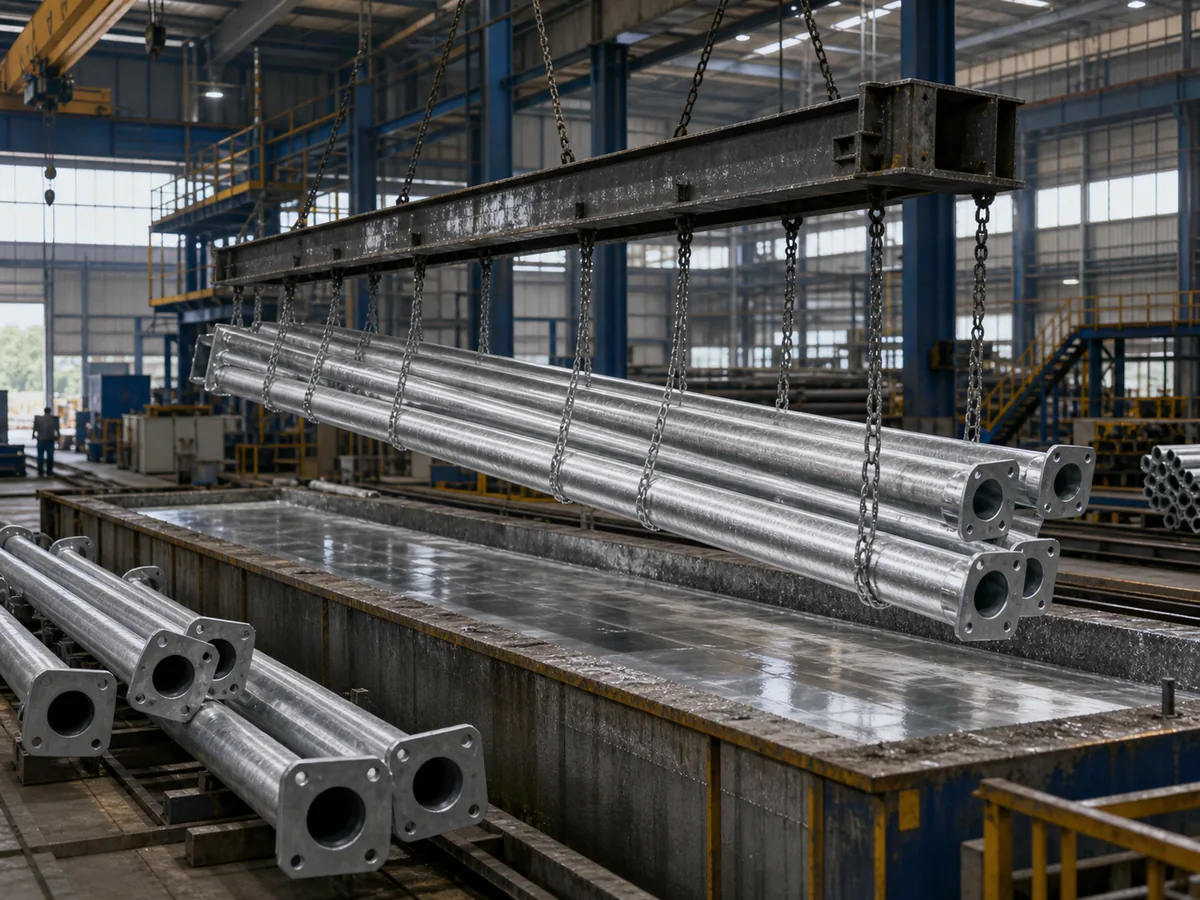
Hot-Dip Galvanizing and Manufacturing Process

Surface Cleaning
Steel preparation and surface cleaning help the zinc coating bond consistently.
Zinc Bath
Hot-dip galvanizing forms a protective zinc layer for outdoor corrosion resistance.
Cooling and Finishing
After galvanizing, poles are cooled and finished according to project requirement.
Coating Inspection
Coating appearance and consistency should be checked before packing.
Packing and Delivery
Packing should protect pole finish and support batch delivery coordination.
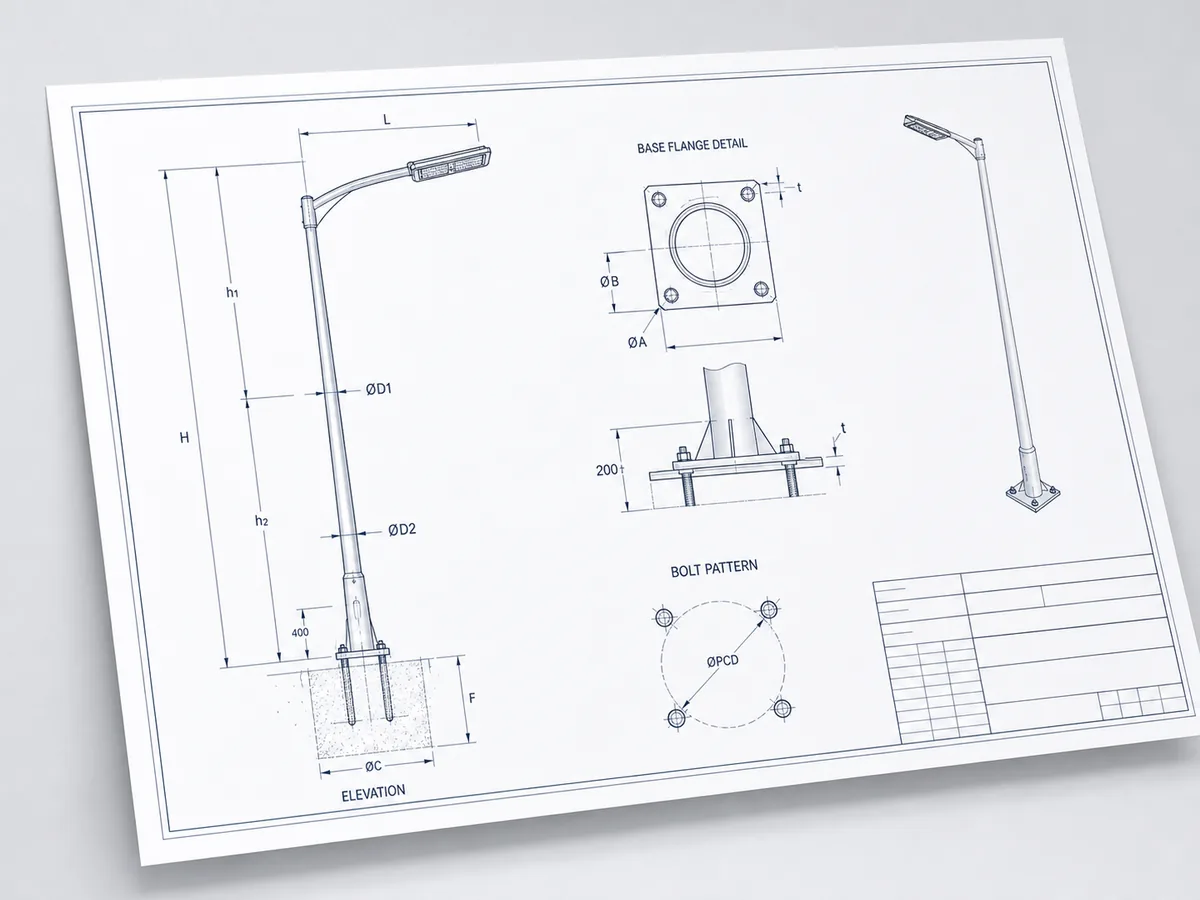
Lighting Pole Document Pack


Pole Datasheet
Model, material, height, diameter, wall thickness, arm type, and finish notes.
Pole GA Drawing
General arrangement drawing for dimensions, arm, base, and mounting details.
Anchor Bolt Layout
Anchor bolt pattern and foundation interface reference for installation planning.
Foundation Reference
Foundation notes for project review, anchor bolt layout, wind-load context, and local engineering coordination.
Surface Treatment Notes
Galvanizing, powder coating, anodizing, stainless finish, or custom finish notes.
BOQ Matching Notes
Technical clarification and BOQ mapping support for tender or EPC review.
Related Products and Project Support
LED Street Light
Road lighting fixtures for standard pole-mounted AC projects.
Solar Street Light
Solar lighting systems where pole height, arm, and luminaire load should be reviewed.
Smart Street Light
Smart lighting projects with controller, device mounting, and O&M coordination.
High Mast Light
Large-area lighting projects requiring high mast pole and foundation review.
Foundation Design Basics
A detailed guide to pole foundation sizing, anchor bolts, wind load, and soil condition review.
Drawings & Datasheets
Pole GA drawing, flange drawing, datasheet, and document support.
Tender Documents & BOQ
BOQ matching notes and tender clarification support.
Engineering Support
Project input review, foundation notes, and configuration coordination.
Manufacturing & Quality
Pole forming, galvanizing, coating, inspection, and packing support.
Lighting Pole FAQ
What information is needed before quoting a lighting pole?
We normally need project country/city, application, pole height, material, wall thickness if known, top/bottom diameter, arm type, luminaire load, wind speed, surface treatment, flange, anchor bolt, and required documents.
How do I choose the right pole height for a road lighting project?
Pole height should be reviewed by road width, pole spacing, luminaire output, optics, arm reach, glare requirement, and local road class. A preliminary height range can be used first, then confirmed with project layout.
What material should be used for coastal or humid environments?
Hot-dip galvanized steel, anodized aluminum, stainless steel, or additional coating systems can be reviewed according to corrosion exposure, structural requirement, visual requirement, and project budget.
Can you provide flange and anchor bolt drawings?
Yes. Flange drawing and anchor bolt layout can be prepared according to the selected pole structure and project requirement. Local foundation design should still be reviewed by the project engineer where required. See foundation design basics for the main review factors.
What wind speed should be confirmed before pole design?
The local basic wind speed or project design wind speed should be confirmed before final pole configuration. Pole height, arm length, luminaire projected area, and installation environment affect wind-load review.
What is the difference between hot-dip galvanized and powder-coated poles?
Hot-dip galvanizing is mainly used for corrosion protection on steel poles. Powder coating can add color and improved visual finish, often applied over a prepared steel surface depending on project requirement.
Can split lighting poles be used for export or remote projects?
Yes. Split poles can improve packing efficiency and site handling for export or remote projects. The joint structure should be reviewed by height, luminaire load, wind speed, and installation conditions.
Can you supply aluminum, stainless steel, decorative, and custom poles?
Yes. Pole material and finish options can include galvanized steel, powder-coated steel, anodized aluminum, stainless steel, decorative poles, split poles, and custom poles according to drawings and project requirements.
Can you support poles for solar street lights, smart street lights, and high mast projects?
Yes. Pole configuration can be reviewed for solar street lights, smart street lights, standard LED road lighting, and high mast or large-area lighting projects according to load, height, accessories, and documents.
Request Lighting Pole Project Configuration
Share your project location, pole type, height, structure requirements, environment, and required documents. Our team will review the suitable lighting pole configuration path.
Project Location
Company, work email, country/city, and project type.
Pole Requirement
Height, pole type, arm type, top/bottom diameter, and wall thickness if known.
Site and Structure
Wind speed, corrosion exposure, luminaire weight, foundation, and anchor bolt needs.
Required Documents
Pole drawing, datasheet, foundation reference, anchor bolt layout, BOQ notes, and packing information.
Need a lighting pole configuration or drawing support?
Share pole height, material, arm type, wind speed, flange/anchor bolt requirement, and required documents. Our team will review the suitable pole configuration path for your project.