
All-in-Two Solar Street Light
All-in-Two Solar Street Lights for Roads & Public Areas
An All-in-Two solar street light uses a separate PV panel and a coordinated luminaire arrangement. Review panel direction and tilt independently from the light head, while keeping a more coordinated installation than a full split system. Confirm road geometry, energy requirements, mounting, wiring and maintenance access before selecting a configuration.
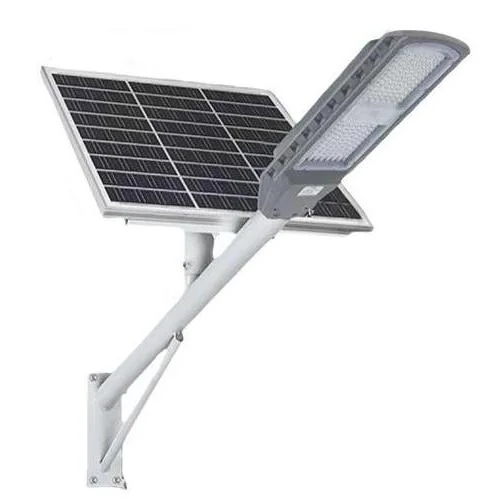
Separate PV panel · Coordinated luminaire and mounting layout
Start with Your Project Conditions
Share the available inputs below. Items that are not yet confirmed can be marked “To be confirmed”.
Location & Solar Resource
Country, city, seasonal solar conditions and potential shading.
Road Geometry
Road width, lanes and the required lighting performance.
Pole Height & Spacing
Proposed height, pole arrangement and spacing.
PV Direction & Tilt
Review solar exposure, shading, panel tilt and secure mounting clearances. Tilt is location-specific.
Operating Profile
Nightly hours, dimming schedule and control requirements.
Autonomy Target
Required backup period and the operating assumptions during low-solar days.
Wiring & Maintenance
Pole interface, cable protection, mounting arrangement and service access.
Required Documents
Datasheet, IES/LDT, DIALux, drawings, wiring review and BOQ scope.
For road-specific lighting criteria and layout coordination, see Road & Highway Lighting. Include quantities, existing pole drawings and site photographs when available; unknown inputs can remain to be confirmed.
How All-in-Two Architecture Works
Separate PV placement creates useful flexibility. The panel, luminaire, wiring and maintenance plan still need to be reviewed as one system.
Coordinated AIT Body
- Separate PV panel and coordinated luminaire; often described as semi-integrated.
- Confirm battery/controller arrangement for the selected configuration.
- External appearance alone does not establish internal components or service method.
PV Direction & Tilt
- Review solar resource, road direction and shading together.
- Check available bracket adjustment against the site.
- Panel position must suit the mounting conditions.
Wiring & Installation Access
- Coordinate cable routes, connector protection and pole interfaces.
- Drawings must identify secure mounting and protected connections without obstructing service access.
- AIT needs more PV-mounting coordination than AIO; Split introduces greater component separation.
Service & Maintenance
- Confirm battery-pack arrangement and replacement access for the selected configuration.
- Check replacement-part compatibility and safe cable disconnection.
- Structure images show mounting and connections, not a verified battery-removal procedure.
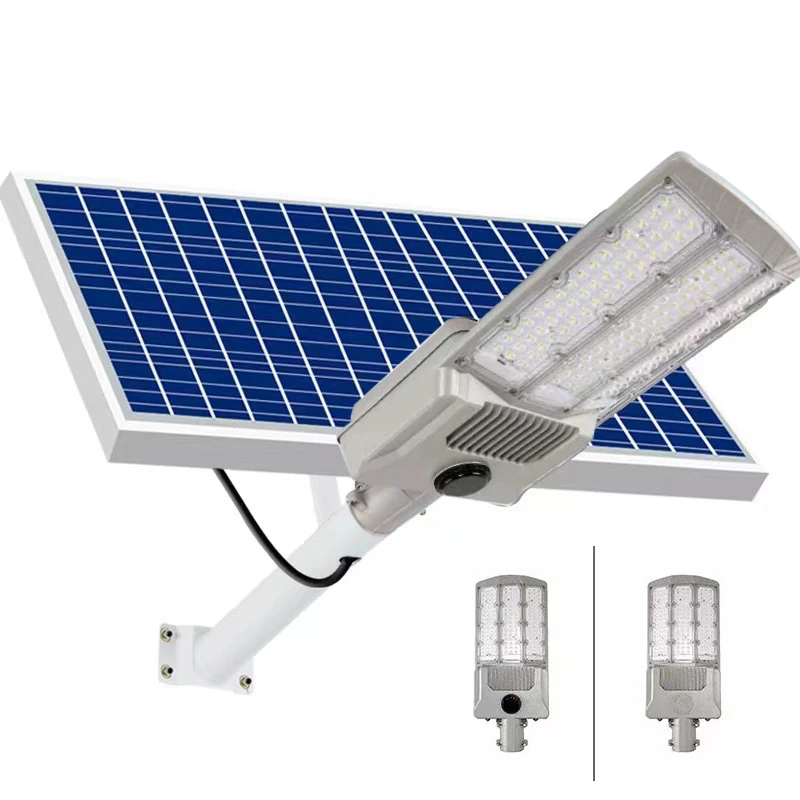
PV and connection arrangement
Review the PV position, cable route and protected connections as one installation arrangement.
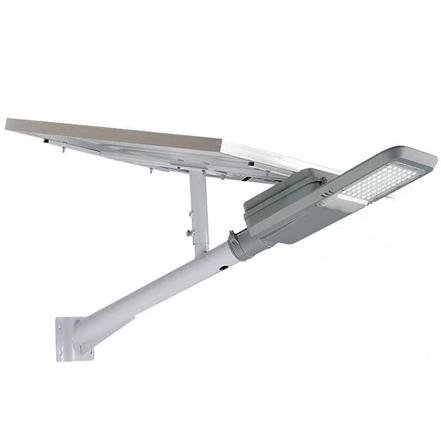
Separate PV mounting arrangement
Check panel clearance, bracket adjustment and pole interfaces against the site mounting conditions.
All-in-Two Technical Capability & Configuration Range
The table summarizes current All-in-Two family capabilities. Final model, BOM, PV, battery, optics and project documents are confirmed against the project requirements.
| Technical Item | Current AIT Capability | Project / Model Boundary |
|---|---|---|
| System Architecture | Separate PV panel with coordinated luminaire architecture. | Final component arrangement, mounting and wiring follow the confirmed project configuration. |
| PV Direction & Tilt | PV direction and tilt can be reviewed independently from the luminaire direction. | Local solar resource, shading, road direction, pole and bracket conditions must be reviewed. |
| Finished Luminaire Efficacy | Company-level tested-configuration reference: Independent third-party laboratory testing of selected Sunlurio LED luminaires has confirmed finished-luminaire efficacy of 200–210 lm/W. Separately, applicable LED modules using 3030, 5050 or 7070 LED packages have achieved up to 230 lm/W. | These are not uniform test results for all AIT models. Confirm the model-matched test data for the selected LED, optic and driver configuration. |
| Mounting-Height Review | Approximately 3–14 m standard road-lighting review. | Actual power, optics and spacing follow road geometry and lighting targets. |
| Battery Chemistry / Cycle Capability | LiFePO4 battery configurations with 6,000-cycle capability are available. | Confirm cell model, DoD, temperature and test basis. |
| Complete Luminaire Protection | IP66. | Exact model/BOM report governs the final formal specification. |
| LED Module Protection | IP67 / IP68 depending on module configuration. | Do not present module IP as complete-luminaire IP. |
| Impact Protection | IK10 for current approved configurations. | Confirm enclosure/BOM/test-report applicability. |
| LED Package | 3030 / 5050 / 7070 options. | Final package follows confirmed product design and project requirements. |
| Colour Rendering | Ra ≥70 for standard road-lighting configurations. | Final photometric specification follows the confirmed model. |
| Correlated Colour Temperature | 4000–5000 K standard; 6500 K optional. | Confirm model / optic availability. |
| Road Optics | Type II / Type III options. | Final distribution requires model-matched IES / LDT. |
| Year-Round Operating Design | System can be engineered for year-round operation. | Sizing depends on solar resource, runtime, dimming profile, system losses and autonomy requirement. |
| Engineering Files | Datasheet, IES/LDT, DIALux, wiring, drawings and BOQ support. | Formal files are matched to confirmed model/configuration and project stage. |
Solar-family battery-system options include 3.2 V, 12.8 V and 25.6 V; applicability to the proposed AIT configuration requires BOM confirmation.
Explore All-in-Two Solar Street Light Series
Explore the five published All-in-Two series pages. Final specifications, component configurations and engineering documents are confirmed against project requirements.
SL-PRO-RY Series
Review the SL-PRO-RY component layout, cable routing and maintenance access with our team to confirm how the selected configuration fits your project.
SL-PRO-TK Series
Check the SL-PRO-TK bracket arrangement, pole interface and solar panel orientation against your installation requirements before selecting a configuration.
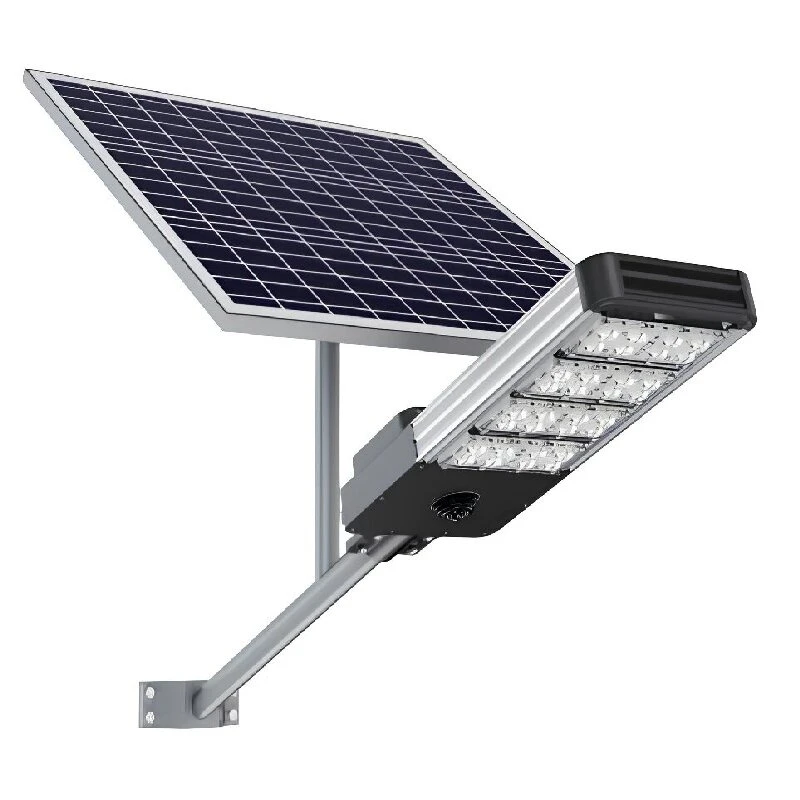
SL-PRO-JG Series
Review the SL-PRO-JG luminaire, solar panel and battery combination against your road layout, operating schedule and local solar conditions.

SL-PRO-JD Series
For repeat procurement of SL-PRO-JD, confirm the selected specification and control requirements, with matching technical documents for each order.
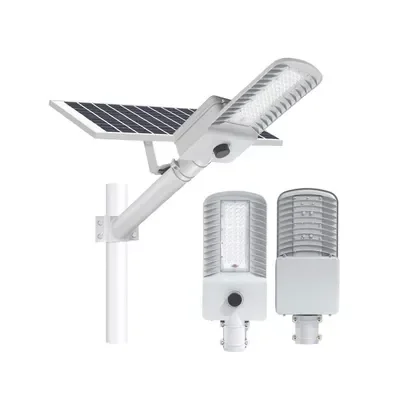
SL-PRO-FY Series
Check the SL-PRO-FY housing dimensions, bracket clearance and maintenance access against the available installation space before confirming the selected model.
AIT Selection Paths
Choose the review path that matches your project and procurement requirements.
01
Standard All-in-Two
For municipal and EPC road-lighting projects that need separate PV orientation and a coordinated luminaire, mounting and wiring arrangement. Start with road geometry, operating hours, solar conditions and the maintenance plan.
02
Government / Tender All-in-Two
For consultant, EPC and municipal tender workflows that require project configuration review and model-matched engineering files. Share the BOQ, lighting criteria and drawings to coordinate IES, DIALux and technical submittal requirements.
The exact model, component configuration and document set are confirmed during project review.
Choose the Right Architecture
All-in-One
Choose when the integrated assembly and compact installation fit the site’s solar exposure, mounting and maintenance requirements. Review All-in-One Solar Street Lights.
All-in-Two
Choose when separate PV direction and tilt are useful while retaining a coordinated, relatively compact luminaire arrangement.
Split
Review when panel or battery position, cable routing or maintenance requires greater component separation. Review Split Solar Street Lights.
Engineering & Tender Support
The document set depends on the confirmed model, optics, component configuration and project stage. Project-specific files remain available through request and engineering review.
IES / LDT
Request photometry matched to the confirmed model, optic and component configuration. The file identifies the distribution used for layout calculations; a generic family file cannot establish the performance of every luminaire. Confirm the proposed optic before the consultant completes the lighting review.
DIALux / Relux
Review the road geometry, lighting target and selected photometry together. Supply road width, mounting height, pole arrangement and spacing, together with the applicable illuminance, luminance or uniformity criteria. The simulation inputs should reflect the proposed layout and the model-matched optical file.
Datasheets / Drawings / Wiring
Confirm the model, mounting interface and system architecture before preparing the applicable files. Coordinate luminaire and PV bracket dimensions, cable routes, connector protection and service access. The final technical submittal should use consistent configuration references across the datasheet, assembly drawing and wiring information.
BOQ / Tender Review
Coordinate product scope, quantities, technical requirements and the document schedule. Identify the required luminaire, solar components, poles, arms and installation interfaces, together with the consultant’s submission requirements. Record unresolved assumptions before treating a preliminary selection as an approved project BOM.
Available certificates and test reports must be checked against the relevant holder, standard, validity and confirmed model or component scope. Submit the project requirements for a model-matched document review.
Start with Engineering Support when the required file set is not yet clear. Project-specific engineering files are supplied through request and review, with the release scope matched to the procurement stage.
Manufacturing & Testing Evidence
Real production and testing activities support configuration consistency and project delivery. The examples below show parts of the manufacturing system; they do not replace the selected model’s datasheet or test report.
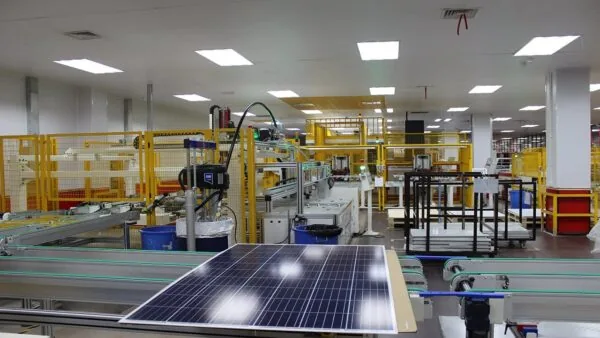
Solar-panel assembly
Solar-panel production supports project integration; the final module specification and certificates remain BOM-specific.
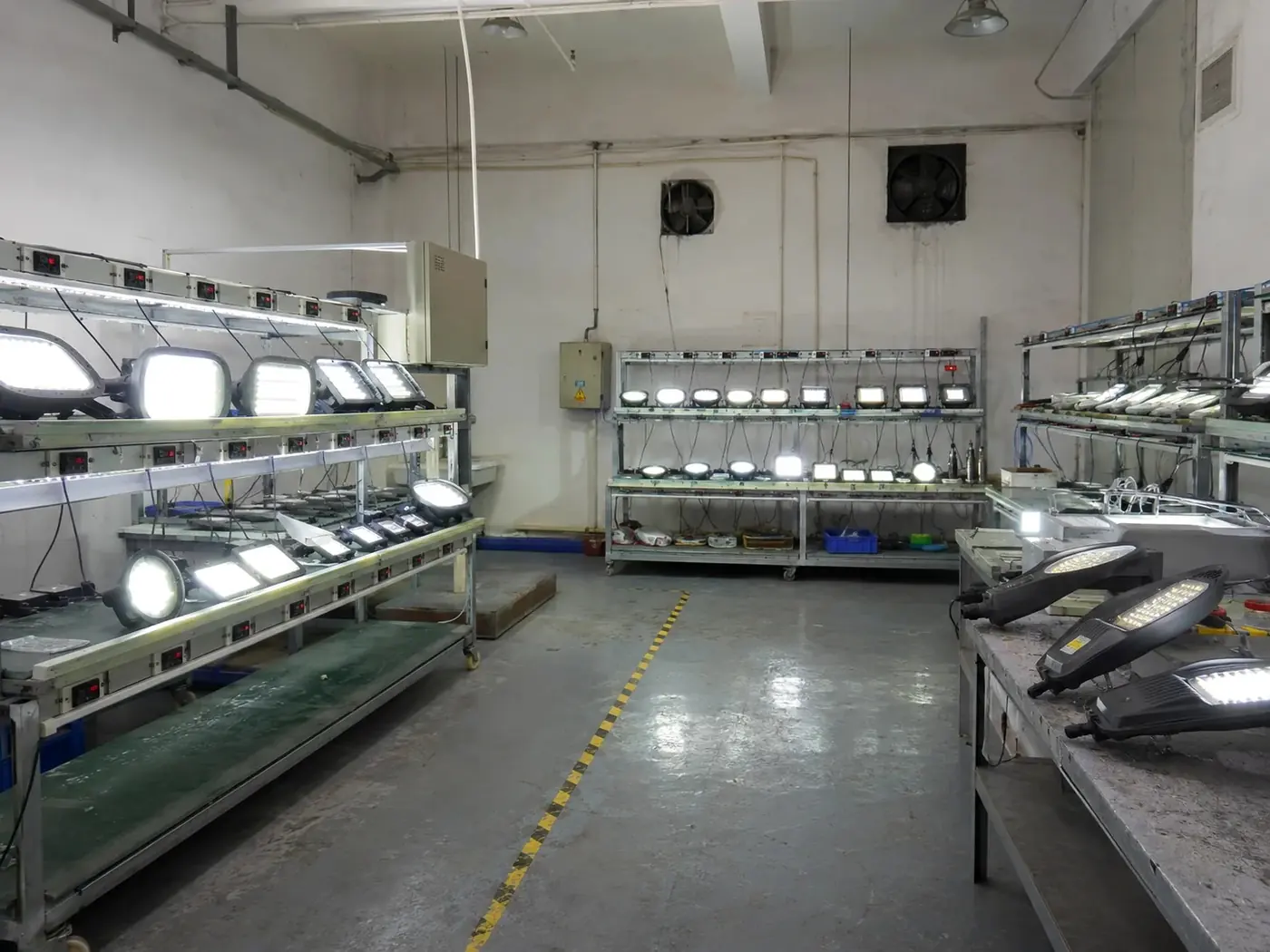
Luminaire aging checks
Aging and operating checks form part of the agreed quality workflow. Inspection scope follows the confirmed order.
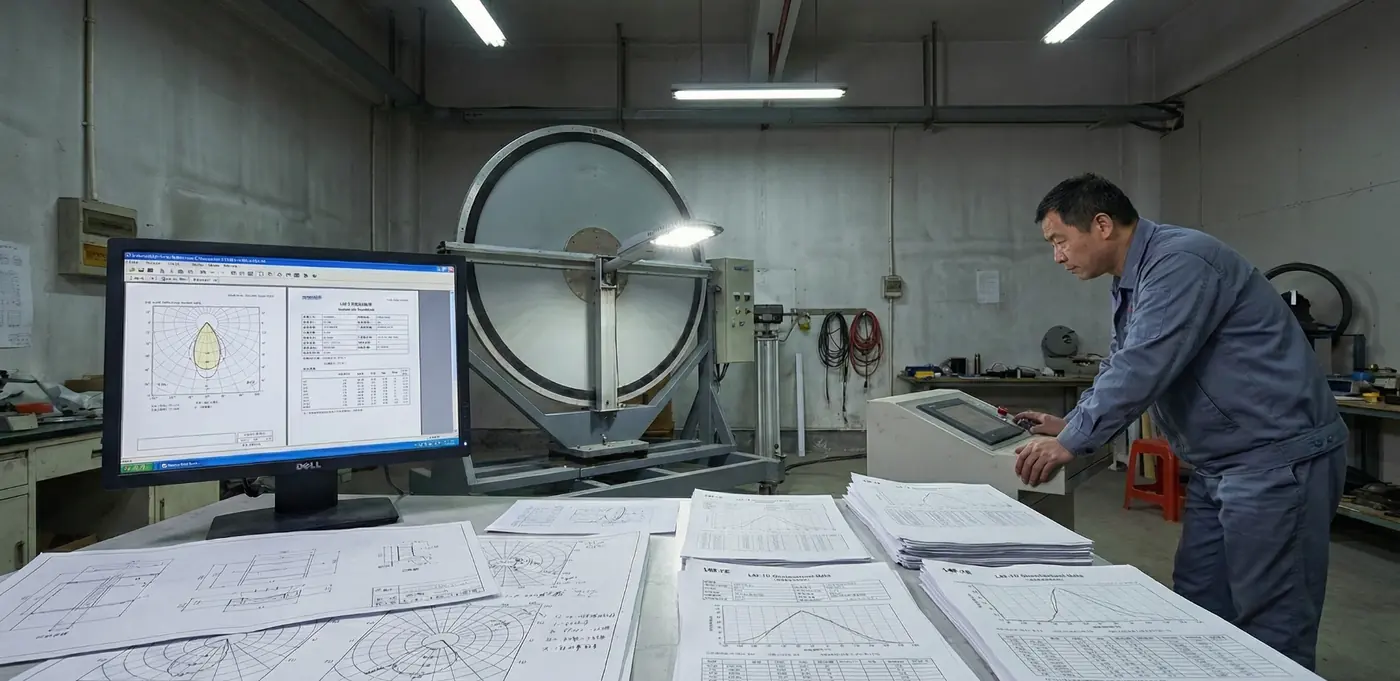
Photometric & electrical testing
Review the applicable photometric and electrical evidence against the selected luminaire, optic and configuration.
Configuration, Quality & Delivery
Configuration confirmation, component checks, lighting and electrical inspection, packing review and batch consistency records can be coordinated for the agreed order scope. Confirm the shipment schedule, spare-parts plan and installation-document requirements before release.
Real All-in-Two Project Evidence
A road and highway programme supported through system supply, engineering documentation and project coordination.
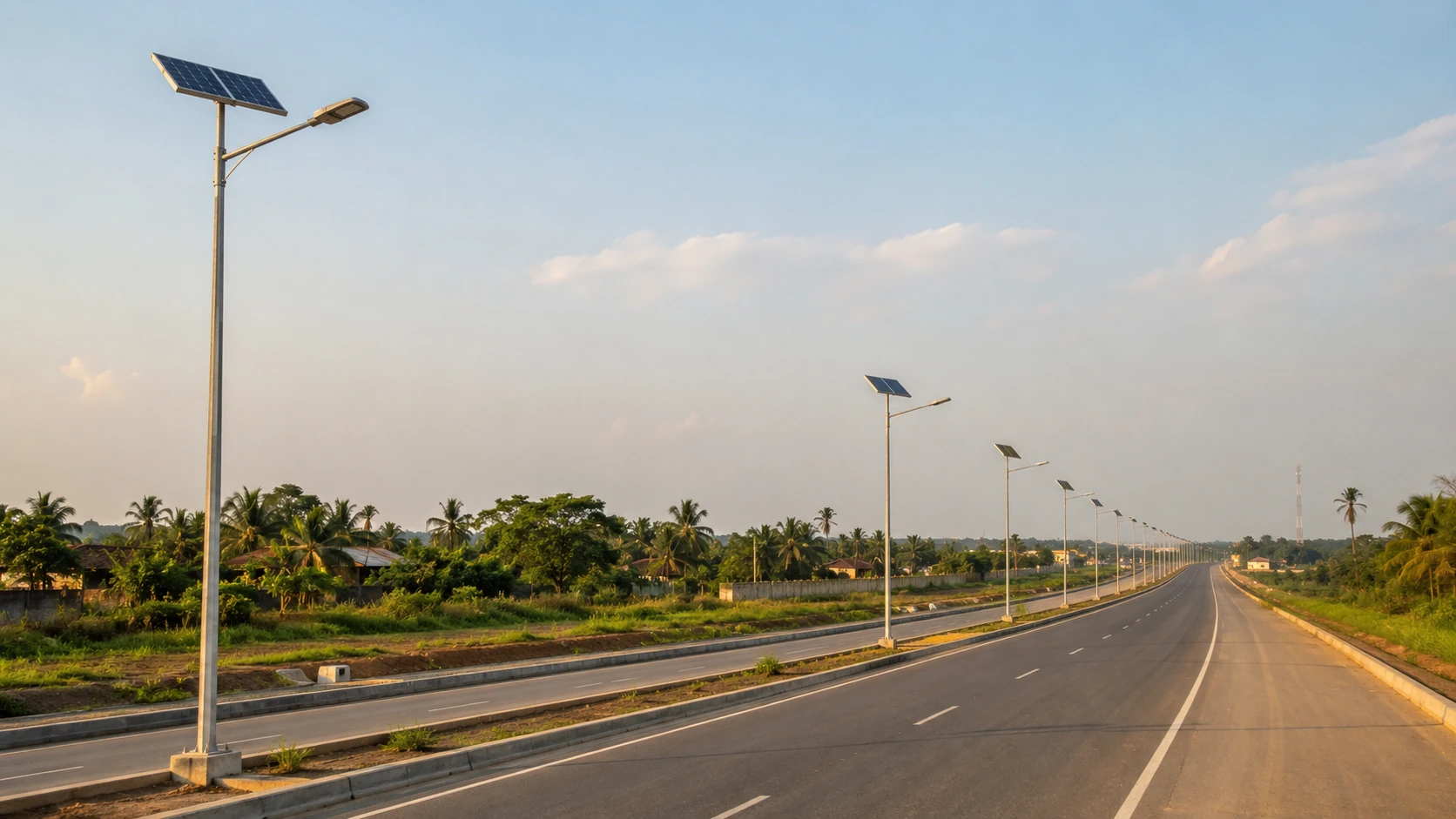
Verified AIT Project
Togo Road & Highway Solar Street Lighting
- Year / Status
- 2018 / Accepted
- System
- All-in-Two Solar Street Light
- Quantity
- 13,000 cumulative sets
- LED / Pole
- 60 W / 8 m hot-dip galvanized steel poles
Sunlurio / Hitech supplied the systems and supported tender / bid work, IES / DIALux, and project engineering and document coordination.
Installation: Client / EPC installation, with Sunlurio on-site guidance only.
All-in-Two Project Questions
Practical questions to resolve before model selection, tender review or production.
What is the difference between All-in-Two and All-in-One?
All-in-Two uses a separated PV panel so its direction and tilt can be reviewed independently from the light head. It is not simply a higher-power AIO. Confirm the selected component arrangement, mounting, wiring and service access.
When should All-in-Two be selected instead of Split?
Review AIT when separate PV orientation is useful and the coordinated luminaire arrangement suits the site. Review Split when separate battery placement or greater component-location flexibility is needed, allowing for additional wiring and installation coordination.
Why does PV direction and tilt matter?
Solar exposure varies with location, season, road direction and shading. The panel position and available adjustment must be checked against the bracket, pole and local mounting conditions.
What project information is needed before configuration?
Send the country and city, road width, pole height and spacing, nightly hours, dimming profile, autonomy target, quantity and required documents. Add site or pole drawings and photographs where available.
How are autonomy and energy requirements reviewed?
Autonomy depends on local solar resource, the operating profile, usable battery energy and system losses. Review the PV panel, battery and controller together against defined low-solar operating assumptions.
What wiring and mounting details must EPC teams confirm?
Confirm the pole interface, luminaire and PV mounting points, cable route, connector protection and maintenance access. Final wiring and installation documents must match the selected configuration.
Can Sunlurio provide IES/LDT, DIALux, drawings and BOQ support?
Yes. The applicable files are reviewed against the confirmed model, optic, component configuration and project stage. Submit the road geometry, BOQ or tender requirements to identify the required document set.
How is the final configuration confirmed before production?
Confirm the model and component configuration, lighting and energy assumptions, mounting and wiring arrangement, document list and agreed inspection scope. Packing, shipment preparation and written commercial terms should be reviewed before release.
Project Configuration Review
Request Model & Project Configuration
Share your available project inputs for model, PV arrangement and document review. Unknown items can be marked “To be confirmed”.
Useful starting points
- Location and road layout
- Pole height and spacing
- Operating hours and autonomy target
- Required engineering documents
For preparation guidance, see Technical Resources & Buyer Guides. The submitted information starts configuration review; it does not confirm a final model, delivery schedule or engineering approval.