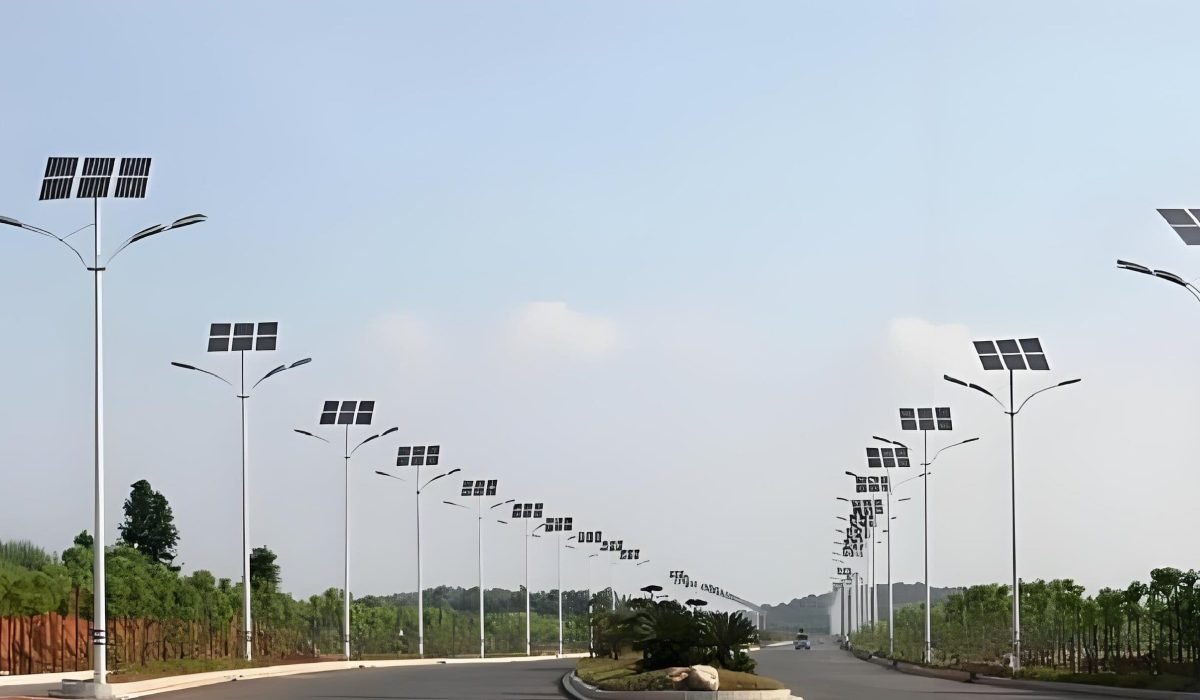
Solar street lights are suitable when the project condition actually fits an off-grid lighting system. They are often a strong solution where grid access is weak, trenching is expensive, deployment must move quickly, or the owner wants lighting without long-term dependence on unstable utility supply. They are not automatically the best choice for every urban road, every municipal package, or every lighting BOQ.
This guide is written for EPC contractors, municipal and government project teams, consultants, and industrial site owners who need to decide whether solar street lighting is the right fit before budget lock, tender submission, or final product selection.
The key point is simple: solar street lights should be reviewed as a project solution, not just a product category. A good decision depends on site condition, lighting target, road geometry, solar resource, maintenance reality, and whether the full system can be specified correctly.
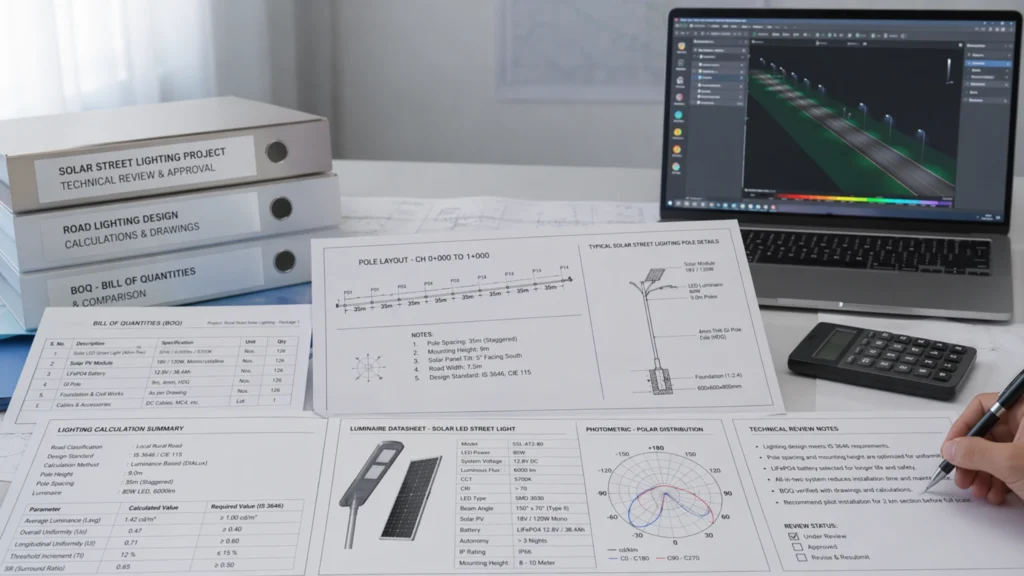
Quick Answer
Solar street lights usually make the most sense when:
- grid access is weak, unstable, or expensive to extend
- trenching and cabling cost would be high
- the project needs fast deployment
- the site is a rural road, community street, remote facility, camp, or edge-of-grid area
- the owner wants to reduce long-term electricity dependence
Solar street lights may not be the best choice when:
- the site already has stable, economical grid access
- shading conditions are poor
- maintenance responsibility is unclear
- theft or vandalism risk is high without protection measures
- the project requires high lighting performance but the energy balance and layout assumptions are still unclear
In other words, this is not only a product decision. It is a review of site condition, solar resource, road geometry, autonomy logic, system configuration, pole and foundation direction, and long-term maintenance ownership.
A Practical Sunlurio Review Note Before Budget Lock
In practical project review, two opposite mistakes show up repeatedly. The first is that solar is approved too quickly because the team focuses on fixture wattage, product appearance, or a lower-looking quotation without checking shading, road geometry, rainy-season charging conditions, and maintenance ownership. The second is that solar is rejected too quickly because the comparison to grid stops at fixture price and ignores trenching, cabling, connection delay, and weak utility reliability.
A stronger review usually starts with total project condition, not with the question of whether solar is “good” in general. If the road is remote, trenching is difficult, and the grid is unstable, solar may be the more practical direction. If the road is dense, shaded, and already grid-ready, solar may not be the better answer even if the product itself looks attractive.
What a Solar Street Light Really Means in Project Terms
A solar street light is an independent outdoor lighting system that combines:
- solar panel
- battery
- controller
- LED luminaire
- pole and support structure
The real value is not simply “free electricity.” In many EPC and municipal projects, the more practical value is:
- less or no trenching
- faster deployment
- lighting in weak-grid or off-grid areas
- less dependence on unstable utility supply
- more flexible rollout in remote or phased projects
If you are comparing product directions first, start from the Solar Street Light category and then move into project-specific review.
Where Solar Street Lights Make the Most Sense
A solar street light performs best when the project problem matches the strengths of an off-grid lighting system.
1) Rural roads and community streets
This is one of the strongest use cases. Many rural and community road projects face one or more of these realities:
- no nearby utility connection
- unreliable grid supply
- difficult trenching conditions
- limited municipal utility budget
- demand for safer night movement
In these cases, solar can be a practical way to deliver road lighting without waiting for full grid expansion.
2) Peri-urban roads and edge-of-grid areas
Some roads are technically “near the grid” but still expensive or slow to connect properly. In these situations, solar lighting may make more sense when:
- utility extension cost is high
- project timeline is tight
- the road is outside the strongest maintenance zone
- phased deployment is required
This is often where solar moves from “alternative technology” to “practical project tool.”
3) Industrial compounds and remote facilities
Industrial access roads, storage yards, perimeter roads, and remote work sites can also be good solar lighting candidates when:
- utility availability is limited
- the site needs independent lighting resilience
- trenching would interrupt operations
- the owner wants lighting without recurring grid dependence
4) Camps, access roads, and fast-deployment municipal works
Temporary or semi-permanent roads, resettlement areas, camp environments, and urgent municipal works often value:
- speed of deployment
- lower civil dependency
- independent operation
- expandable rollout
For this kind of project, solar often succeeds because it reduces coordination complexity, not just electricity cost.
When Solar Street Lights May Not Be the Best Choice
A strong B2B review should say this clearly: solar is not always the better answer.
Solar street lights may be a weak fit when:
- the road is in a dense urban area with stable, economical grid access
- trees, buildings, or corridor geometry create long-term shading
- the project has no realistic maintenance ownership after handover
- vandalism or theft risk is high and local control is weak
- the required lighting target is high, but spacing, battery sizing, or dimming logic are still unclear
- project stakeholders expect “zero maintenance” from the system
These conditions do not always rule solar out, but they do mean the review must be more careful.
What EPC and Municipal Teams Should Check Before Approval
The right approval decision is based on inputs, not assumptions. Before selecting a solar street lighting package, project teams should confirm the following.
Site and environment
Check:
- site location
- solar exposure
- seasonal rainfall pattern
- dust level
- shading risk
- theft and vandalism exposure
- coastal or corrosive environment
- road type and road width
A solar lighting package that looks acceptable in a catalog may still be wrong for the actual site.
Lighting target and road geometry
Check:
- required lighting purpose
- pole height
- spacing
- road width
- mounting arrangement
- luminaire optics
- uniformity expectations where relevant
Do not approve the system based only on wattage. In project review, geometry matters as much as hardware.
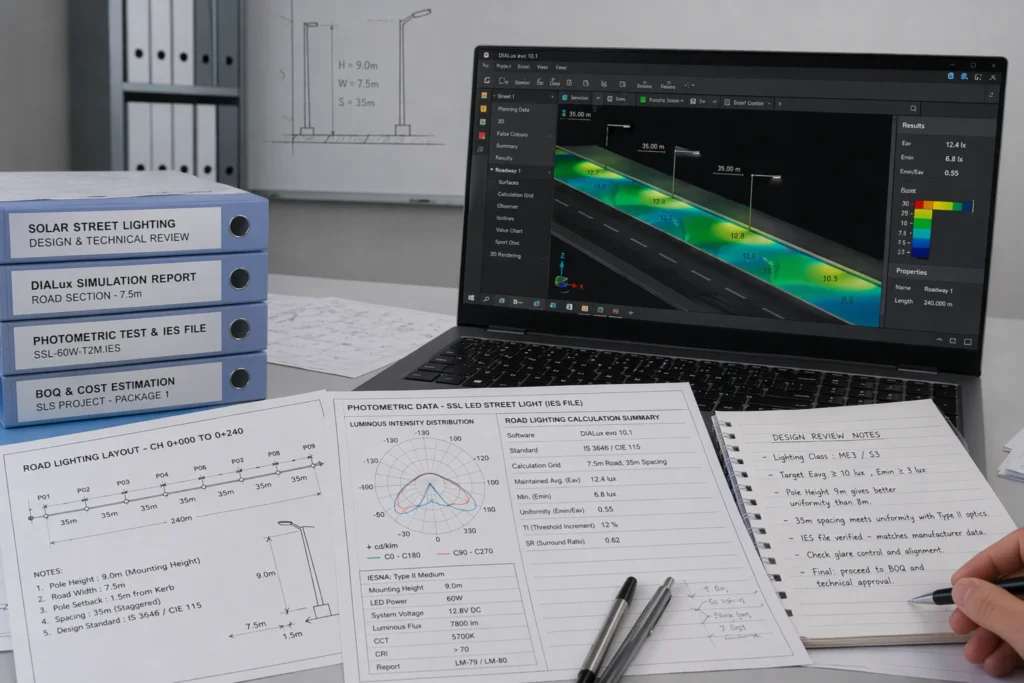
If you need technical review files, see Datasheets + Drawings, IES Photometric Files, and Road Lighting Simulation with DIALux EVO.
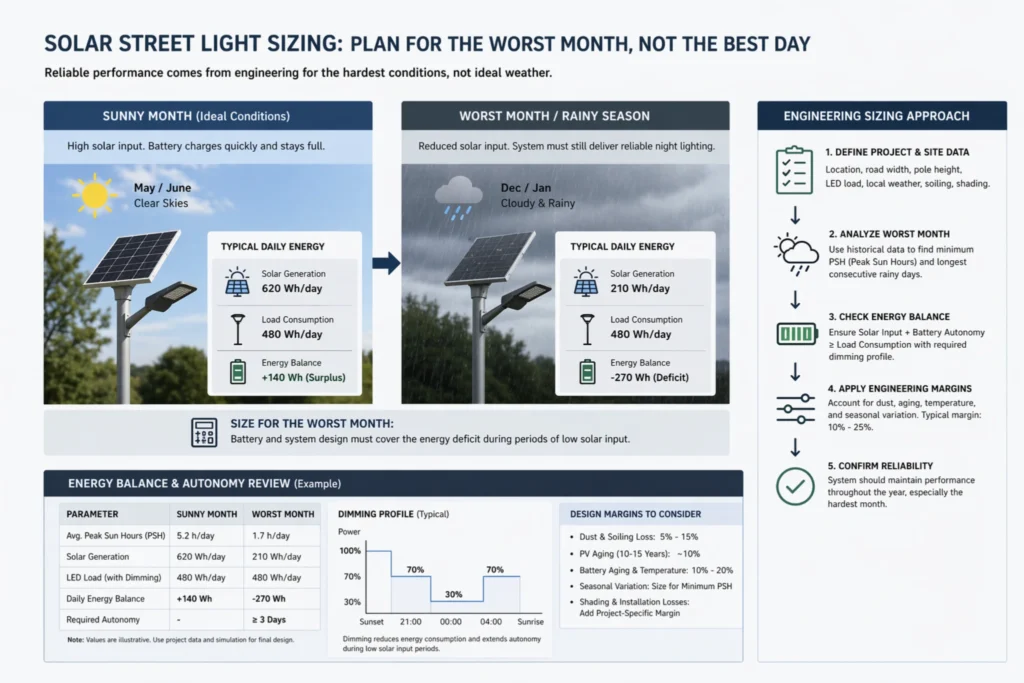
Energy system logic
Check:
- local solar resource
- battery chemistry
- battery capacity
- controller logic
- dimming profile
- motion sensor use if relevant
- autonomy expectation
- recovery after poor weather
This is where many under-specification problems begin. A system can look cost-effective in a quote and still fail in real service if the energy balance is weak.
If the project depends on stable night performance through poor-weather periods, the team should review rainy-season margin and recovery logic before approval rather than after complaints begin.
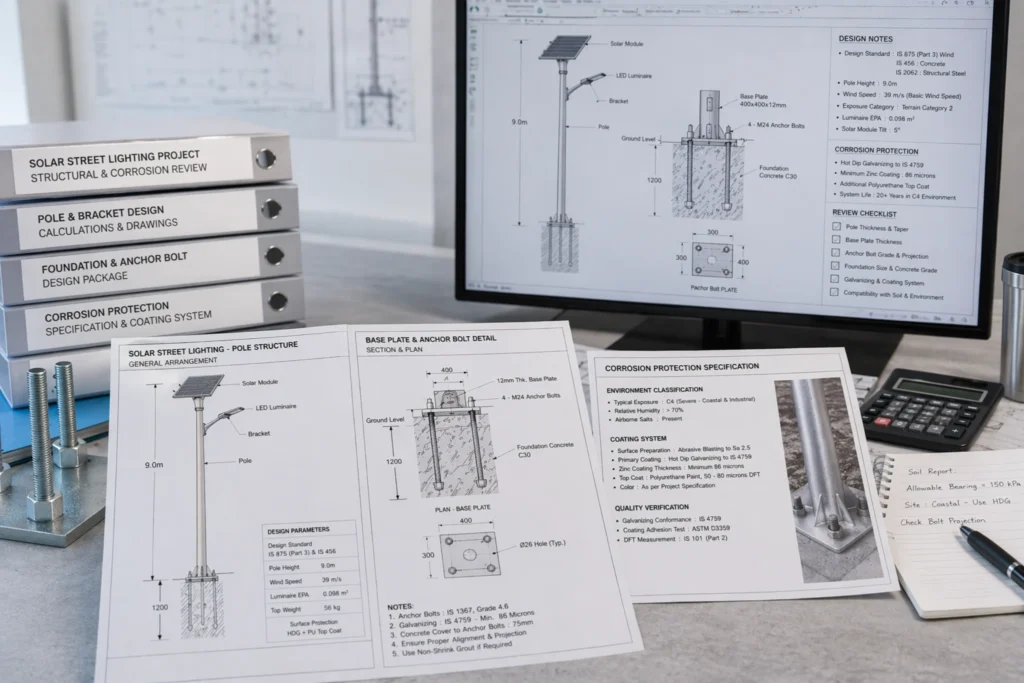
Pole, structure, and support system
Check:
- pole height and section direction
- arm configuration
- wind exposure
- corrosion protection
- foundation direction where relevant
- installation responsibility and execution risk
For many projects, the solar kit gets most of the attention while the pole and support system are treated as secondary. That is a costly mistake, especially in open, coastal, or high-wind environments.
For project-side review support, use Engineering Support, Tender Documents & BOQ, Light Pole Foundation Design Basics, and Coastal Street Light Pole Corrosion Protection Design.
Solar vs Grid Lighting: Which One Makes More Sense for This Project?
The more useful question is not “Which one is better?” but “Which one makes more sense for this project condition?”
| Question | Solar Often Makes More Sense When… | Grid Often Makes More Sense When… |
|---|---|---|
| Grid access | utility is weak, far, unstable, or expensive to extend | stable grid is already nearby |
| Deployment speed | project needs rapid rollout | timeline is flexible |
| Utility budget | ongoing electricity cost is difficult to sustain | utility budget is stable and predictable |
| Site location | road is remote, edge-of-grid, or independent by nature | road is in dense urban infrastructure |
| Maintenance model | local team can manage periodic inspection and cleaning | city utility team already has strong grid maintenance routine |
| Theft and vandalism risk | can be addressed with design and local management | uncontrolled risk is high and difficult to mitigate |
A mature project decision often includes both technologies across different road types. The right answer is not always “all solar” or “all grid.”
Where Solar Looks Attractive on Paper but Performs Poorly in Reality
Many poor outcomes start before installation. They begin when a solar package looks attractive in quotation review, but the project condition behind it was never checked carefully enough.
Three repeated problems show up again and again:
1) Solar was selected because the grid was expensive, but shading was ignored
A project may have high trenching cost or expensive utility extension, which makes solar look attractive. But if corridor trees, buildings, or seasonal shading reduce charging conditions, the energy logic becomes weak.
2) The package was approved on wattage, not lighting performance
Some reviews focus on fixture wattage and product appearance, but do not fully check optics, spacing, road width, and actual lighting target. The result may be a system that is easy to buy but weak in real application.
3) The hardware was chosen before maintenance ownership was clarified
A solar street light is not a “fit and forget” asset. If nobody owns routine cleaning, inspection, battery logic review, and field issue response after handover, even a decent system can underperform.
This is why a strong project review should ask not only “Can solar work here?” but also “Can this project support solar properly after installation?”
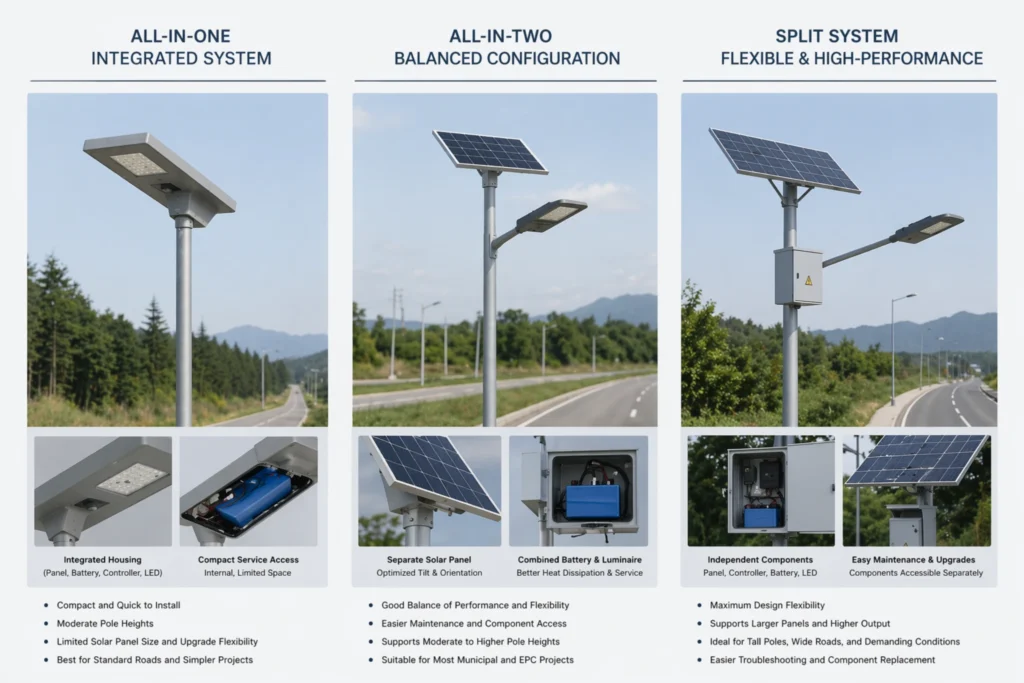
Which Solar Street Light Configuration Makes More Sense?
Once solar is confirmed as a suitable direction, the next question is usually which system architecture fits the project best.
All-in-One
All-in-One Solar Street Light is often suitable when:
- installation speed matters
- the site is simpler
- pole height is moderate
- maintenance access is straightforward
- the project wants a compact integrated form
It is usually a weaker fit when the road class is more demanding, panel flexibility matters more, or the project needs stronger long-term output adjustment.
All-in-Two
All-in-Two Solar Street Light often makes sense when:
- the project needs better panel flexibility
- heat management matters more
- performance needs are higher than a compact integrated setup
- the buyer wants a balance between simplicity and stronger system output
It is often a better middle-ground choice when the project is no longer “simple,” but does not yet need the full flexibility of a split system.
Split-Type
Split Solar Street Light is often more suitable when:
- the site has higher lighting demand
- panel size flexibility is important
- battery and component access need to be more flexible
- the road class, pole height, or project scale is more demanding
Split systems are often a stronger fit when autonomy logic, panel sizing, and road performance requirements need more room for engineering adjustment.
The correct architecture should follow the project condition, not just catalog familiarity.
Common Review Mistakes Before BOQ Lock
Many poor outcomes come from review mistakes, not from the concept of solar lighting itself.
Common mistakes include:
- selecting by wattage without checking optics or road geometry
- choosing by height without checking spacing and layout logic
- approving a battery size without checking autonomy and dimming assumptions
- using one standard configuration across very different roads
- ignoring dust, shading, or rainfall pattern
- approving hardware before clarifying maintenance ownership
- treating the pole and foundation as secondary to the solar kit
- comparing solar to grid only on upfront price
A good BOQ review should connect site condition, lighting target, system logic, and execution reality.
Hidden Costs of Choosing the Wrong Solar Direction
The hidden cost is not always the purchase price. In many projects, the real cost appears later when the selected direction does not match the site.
Common hidden costs include:
- underperforming lighting after handover
- battery stress caused by weak charging conditions
- repeated complaints from poor spacing or optics mismatch
- costly retrofit after the wrong architecture was locked too early
- delayed approval because supporting documents were incomplete
- more difficult maintenance because ownership was never clarified
This is why the “cheapest-looking” option at quotation stage may become the most expensive one in service.
What Documents Should Be Reviewed Before Final Approval?
Before the final approval stage, project teams should ideally check:
- tender clause or employer requirement
- road or site information
- pole layout assumptions
- product datasheet
- dimension drawing
- battery and controller logic
- corrosion and structure notes where relevant
- BOQ mapping to the actual approved configuration
Useful pages for this stage include:
- Engineering Support
- Tender Documents & BOQ
- Datasheets + Drawings
- About Engineering Support
- Projects
- Solar Street Light Projects
Related Pages in This Topic Cluster
If you are reviewing product direction rather than only reading a general overview, these pages are also useful next steps:
- Solar Street Light category
- All-in-One Solar Street Light
- All-in-Two Solar Street Light
- Split Solar Street Light
- Road Lighting Simulation with DIALux EVO
- 230 lm/W High Efficiency Solar Lighting
- Light Pole Foundation Design Basics
- Solar Street Light Installation Guide
- Solar Street Light Projects
Need Help Reviewing Whether Solar Street Lights Fit Your Project?
If you are reviewing a municipal road, community street, industrial access road, or tender-stage lighting package, the most useful next step is to review the project inputs before locking the system direction.
You can send:
- project country and site type
- road width, pole height, and spacing
- grid condition
- maintenance expectation
- autonomy target
- BOQ or tender clause if available
The review can then move in a more practical direction, including:
- whether solar is the right fit at all
- which system architecture is more suitable
- what input gaps should be closed before approval
- what documents are needed for technical alignment
Start here:
FAQ
Are solar street lights always better than grid lights?
No. Solar street lights are often better when the site has weak grid access, high trenching cost, or strong need for fast deployment. Grid lighting may still be the better choice in dense urban roads with stable and economical utility access.
What is the most common reason solar street light projects underperform?
A common reason is not the solar concept itself, but a mismatch between site condition, lighting target, energy balance, and maintenance reality. Many problems begin when systems are approved on incomplete inputs.
What should EPC teams confirm before approving a solar street light BOQ?
They should confirm site exposure, road geometry, solar resource, battery logic, dimming logic, maintenance ownership, and whether the selected system architecture matches the actual project condition.
Which is better for a municipal project: all-in-one, all-in-two, or split type?
That depends on the project. All-in-one is often suitable for simpler and faster deployments, all-in-two fits many mid-level municipal needs, and split type is often better for more demanding roads or higher-output projects.
When is a solar street light project not suitable?
It may not be suitable when the site has poor solar exposure, stable nearby grid access, unclear maintenance ownership, high uncontrolled theft risk, or lighting requirements that have not yet been translated into a reliable system design.
Can solar street lights work well in municipal and government projects?
Yes, when the project condition fits the system. They are often effective in community roads, rural roads, edge-of-grid areas, camps, and municipal works where trenching cost, deployment speed, and grid reliability are real issues.
What project data is most often missing before approval?
The most commonly missing inputs are road width, spacing logic, real shading condition, autonomy target, maintenance ownership, and the exact relationship between lighting target and battery/system design.
Should solar and grid be mixed in one municipal project?
In many cases, yes. A mixed approach can make sense when some roads are dense and grid-ready while others are remote, costly to trench, or better suited to off-grid deployment.
Schema