
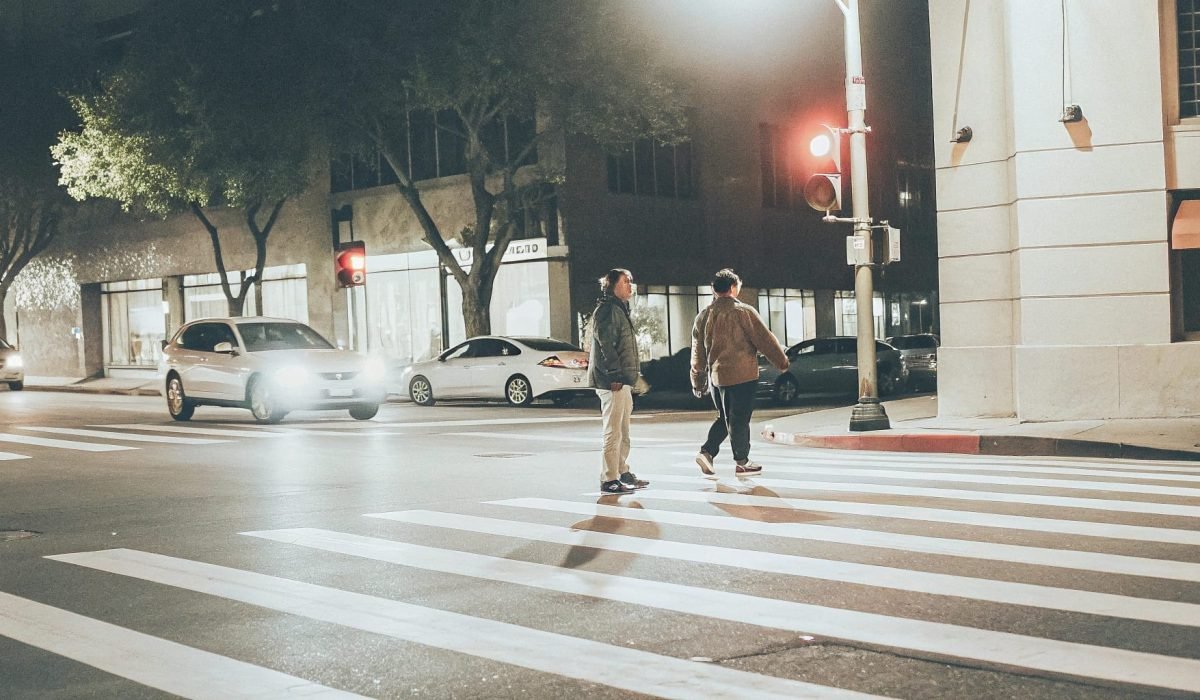
A practical guide for EPC contractors, municipal buyers, consultants, and road-safety planners who need better crosswalk visibility, clearer layout logic, and more defensible pedestrian lighting design.
Quick Answer
Pedestrian crossing lighting is not the same as ordinary street lighting. A crossing can look bright on the pavement and still perform poorly if the pedestrian is not clearly visible to approaching drivers.
A better pedestrian crossing lighting design usually depends on:
- enough vertical illuminance on the pedestrian
- controlled glare from the driver’s approach direction
- coverage of both the crossing zone and the waiting areas
- pole placement matched to lane count and traffic direction
- optics that improve visibility instead of only creating hotspot brightness
In practical design review, the question is not only:
“Is the crossing bright?”
The better question is:
“Can drivers clearly detect the pedestrian early enough, from the real approach direction, under night conditions?”
Need help checking a crosswalk or pedestrian-road layout?
Send us your road width, lane count, pole position, and site photo or drawing for a practical engineering review.
Request Engineering Support →
Why Pedestrian Crossing Lighting Matters
At night, many crossing risks happen not because the road is completely dark, but because the pedestrian is not visually clear enough against the road background.
That is why pedestrian crossing lighting matters in:
- school zones
- urban intersections
- market streets
- residential collector roads
- transport hubs
- crossings near parks, bus stops, and commercial frontage
A better design can support:
- earlier pedestrian recognition by drivers
- reduced conflict risk at crossings
- more comfortable walking conditions
- stronger public confidence in road safety
For road projects, this is a visibility problem first, and a lighting-product problem second.
Why Pedestrian Crossing Lighting Is Different from Ordinary Street Lighting
Ordinary road lighting mainly helps drivers read the road, lane edge, and general traffic space.
Pedestrian crossing lighting has a different task:
it should help drivers identify the person at the crossing.
That is why crosswalk lighting design often needs more than general horizontal road brightness.
What Matters Most
- Vertical illuminance on the pedestrian
- Driver approach visibility
- Controlled contrast
- Reduced glare
- Clear crossing-zone and waiting-zone definition
If a design only brightens the road surface, the crossing may still underperform in real traffic conditions.
What Is Vertical Illuminance and Why Does It Matter?
Vertical illuminance helps light the pedestrian’s body rather than only the ground. This improves the chance that the driver can distinguish the person from the road background at a useful distance.
In practical terms, vertical illuminance helps avoid situations where:
- the pavement looks bright
- the crossing stripes are visible
- but the person remains visually weak from the driver’s angle
That is why pedestrian crossings are often reviewed differently from standard roadway sections.
A stronger design should help the driver see:
- the pedestrian standing at the edge
- the pedestrian entering the crossing
- the pedestrian moving through the full crossing area
Key Design Principles for Pedestrian Crossing Lighting

A useful crosswalk lighting design should follow a few practical principles.
1. Prioritize Pedestrian Visibility, Not Just Ground Brightness
The crossing should not only be visible as a road marking. The person at the crossing should be visually clear to approaching drivers.
2. Include the Waiting Areas
Many pedestrians stand just outside the painted crossing area before stepping forward. If only the stripes are lit, the actual decision zone may remain weak.
3. Control Glare
A brighter luminaire does not always mean a safer crossing. If the optic or placement creates glare from the driver’s approach direction, recognition may become worse, not better.
4. Match the Layout to the Road Configuration
A one-lane crossing, a two-way road, and a four-lane divided road should not use the same pole and optic logic.
5. Use Directional Lighting Logic Where Needed
Crosswalk lighting often benefits from directional or asymmetric light distribution, especially when the goal is to improve visibility from a known driver approach direction.
How Pedestrian Crossing Lights Work
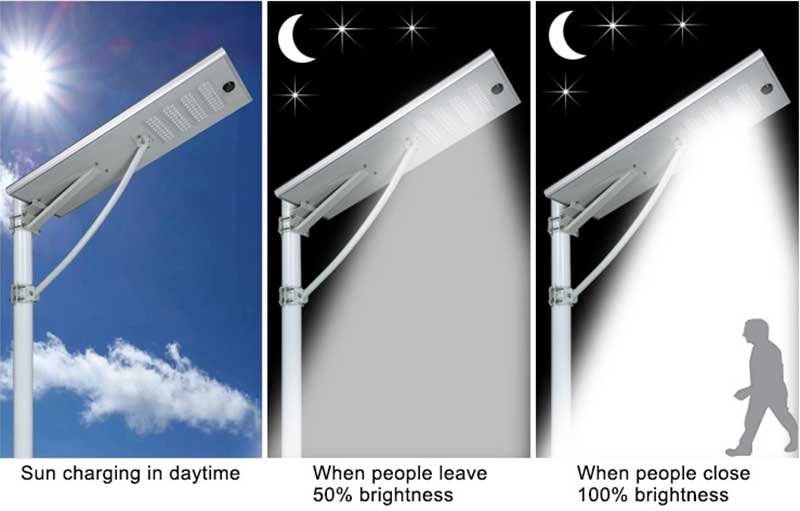
Pedestrian crossing lights improve safety through a combination of:
- pole placement
- optic distribution
- vertical visibility support
- consistent illumination of the crossing zone
Main Functional Elements
Vertical Illuminance
This helps make the pedestrian stand out more clearly.
Directional or Asymmetric Optics
These can help push light where it improves detection most, instead of wasting light or increasing glare.
Balanced Distribution Across the Crossing
The full crossing area should be readable, including entry points and waiting zones.
Reliable Night Operation
In solar or stand-alone systems, runtime and battery support should match the operating hours needed for the crossing.
Standards and Requirements for Pedestrian Crossing Lighting
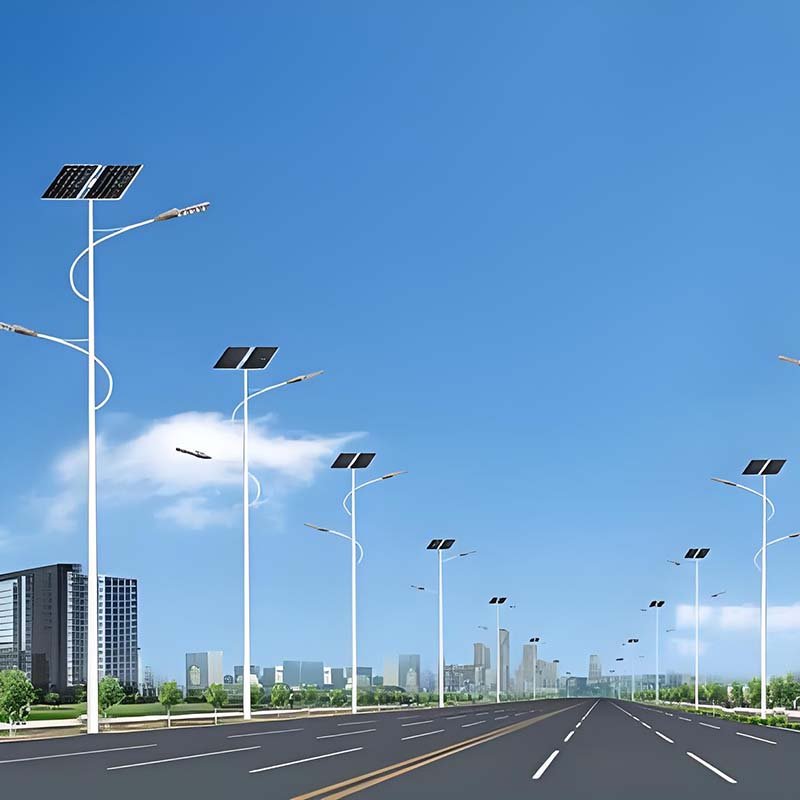
Pedestrian crossing lighting should follow the project specification and relevant local or regional standards.
Two references often discussed in this context are:
- EN 13201 — road-lighting framework
- DIN 67523 — often referenced in pedestrian crossing discussions
What These Requirements Usually Emphasize
While exact criteria vary by country and project, common design priorities include:
- adequate pedestrian visibility
- vertical illumination at the crossing
- balanced coverage across the crossing and waiting zones
- controlled glare
- recognition from the driver’s approach direction
Practical Review Point
For design and procurement review, it is safer to ask:
- does the design improve pedestrian recognition?
- are the waiting zones illuminated?
- is the crossing readable from the actual approach direction?
- is glare likely to reduce visibility?
That is more useful than relying on a simple “bright enough” assumption.
Lighting Design for Different Road Configurations
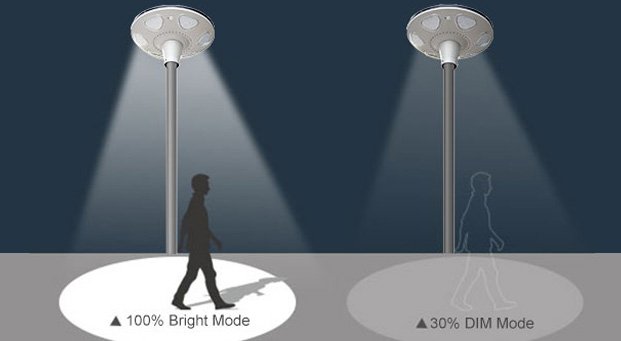
Pedestrian crossing lighting should reflect actual road geometry.
1. One-Way Traffic – Single Lane
For a narrow one-way road, one luminaire may be sufficient if:
- the road width is limited
- the crossing area is small
- the optic supports good pedestrian visibility from the approach direction
- glare remains controlled
The key is not “one pole is enough.” The key is whether the crossing works visually from the driver’s side.
2. One-Way Traffic – Two to Three Lanes
As width increases, balanced coverage becomes more important. In many cases, two luminaires or a more symmetrical arrangement improves visibility across the full crossing width.
Typical design concerns include:
- weak far-side visibility
- uneven brightness across the crossing
- underlit waiting areas
3. Two-Way Traffic – Two to Three Lanes
For two-way roads, visibility must work for both approach directions. Pole placement often needs to support dual-direction recognition rather than one-sided lighting only.
In many practical layouts, diagonal or complementary arrangements perform better than simple one-side placement.
4. Two-Way Traffic – Four Lanes
Wide roads usually require more careful treatment, especially where there is:
- a center divider
- a refuge island
- turning conflict
- high-speed vehicle approach
In these cases, the crossing should remain visually legible across the full width, not only at the near side.
Practical Layout Summary
| Road Type | Typical Lighting Direction |
|---|---|
| Single-lane one-way | Single-side layout may work if visibility is clear |
| Two to three lane one-way | Balanced side coverage often needed |
| Two to three lane two-way | Layout should support both traffic directions |
| Four-lane two-way | Additional support for full-width readability may be required |
Common Design Mistakes in Crosswalk Lighting
A crossing can still underperform even when “there is lighting.”
Common mistakes include:
- lighting only the pavement, not the pedestrian
- ignoring waiting zones
- placing luminaires where the driver sees glare instead of useful contrast
- using general street-light optics without considering crossing visibility
- applying the same layout logic to all road widths
These are common reasons a crossing may appear technically lit but still feel unsafe in real use.
What Procurement Teams and Designers Should Check
Before approving a pedestrian crossing lighting design, check:
- road width and lane count
- traffic direction
- pedestrian movement path
- pole position relative to driver approach
- waiting-zone coverage
- optic type and distribution
- glare risk
- likely pedestrian visibility from real approach angles
- whether the crossing is part of a school, market, transport, or higher-risk zone
These checks are usually more important than simple wattage comparison.
Need help checking whether a crossing layout is likely to perform well?
We can review your lane count, road width, pole location, and crossing geometry before procurement or installation.
Ask for a Crosswalk Lighting Review →
Where Better Pedestrian Crossing Lighting Is Most Important
Pedestrian-focused lighting deserves extra attention in:
- school-zone crossings
- crossings near bus stops
- urban intersections with turning traffic
- market and commercial streets
- park-adjacent roads
- residential collector roads
- crossings at the entrance to built-up areas
In these zones, better visibility often adds more safety value than simply increasing general street brightness.
Final Recommendation
Pedestrian crossing lighting should be designed around human detection, not only road brightness.
A stronger solution usually includes:
- vertical illuminance on the pedestrian
- road-specific pole placement
- optics matched to driver approach direction
- balanced visibility across the crossing and waiting zones
- controlled glare and reduced shadow risk
That is what helps drivers detect people earlier and makes the crossing safer in real road conditions.
Next Step
If you are planning or reviewing a pedestrian crossing lighting project, we can help check:
- road width
- lane count
- traffic direction
- pole position
- crossing geometry
- practical layout suitability
Working on a pedestrian crossing, school-zone road, or urban intersection?
Send us your site photo, road width, and lane layout and we can help review the lighting logic.
Get Project Support →
You can also review our related pages:
FAQ
What is pedestrian crossing lighting?
Pedestrian crossing lighting is lighting designed to improve the visibility of pedestrians at crosswalks, especially at night, so drivers can recognize them earlier and respond more safely.
Why is pedestrian crossing lighting different from ordinary street lighting?
Ordinary street lighting mainly brightens the road surface. Pedestrian crossing lighting is designed to make the person at the crossing easier for drivers to detect.
Why is vertical illuminance important for pedestrian crossings?
Vertical illuminance helps light the pedestrian’s body rather than only the pavement. This improves contrast and makes people easier to recognize from the driver’s approach direction.
Is ordinary street lighting enough for a pedestrian crossing?
Not always. A crossing may look bright on the ground while the pedestrian still appears visually weak from the driver’s angle.
What standards are often referenced for pedestrian crossing lighting?
EN 13201 and DIN 67523 are often referenced in road-lighting and pedestrian-crossing discussions, especially when visibility and vertical illumination are important.
Why do waiting areas matter in crosswalk lighting?
Because pedestrians often stand just outside the marked crossing before stepping forward. If only the painted crossing is lit, the actual conflict zone may still be weak.
Where should lights be placed for a crosswalk?
That depends on road width, lane count, traffic direction, and driver approach angle. The best placement is the one that improves pedestrian visibility without creating glare.
Why does road configuration change the lighting design?
Because a one-lane crossing, a two-way road, and a four-lane divided road create different visibility and coverage challenges. Pole placement and optics should reflect the real road geometry.
Do pedestrian crossing lights need special optics?
In many cases, yes. Directional or asymmetric optics can help improve visibility at the crossing and reduce wasted light or glare.
What are common mistakes in pedestrian crossing lighting?
Common mistakes include lighting only the pavement, ignoring waiting zones, creating glare, and using one layout logic for every road type.
What should procurement teams check before approving a crossing-lighting design?
They should check road width, lane count, traffic direction, pole position, crossing coverage, waiting-zone coverage, optic type, glare risk, and likely driver visibility.
Can solar-powered systems be used for pedestrian crossing lighting?
Yes, if the system is designed with the required runtime, battery support, and night operation profile for the site.
Can Sunlurio help review a pedestrian crossing lighting layout?
Yes. Sunlurio can help review lane count, road width, pole position, and crossing geometry to suggest a more suitable lighting direction.