
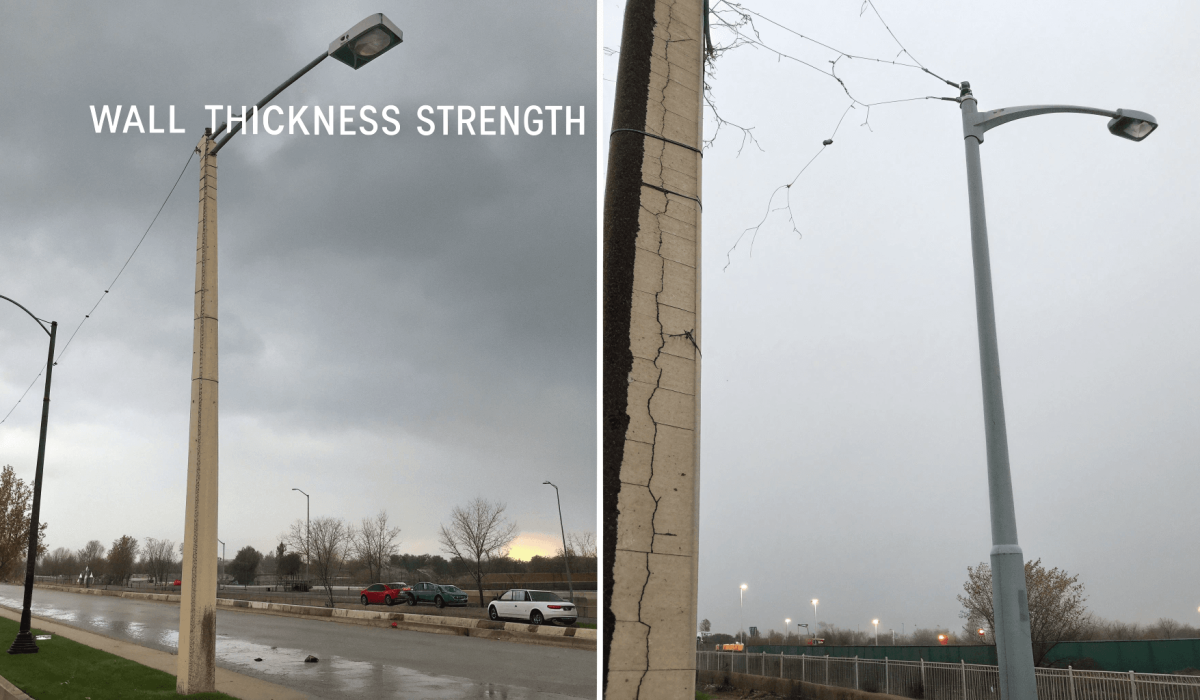
Wall thickness is one of the most important specifications in a street light pole, but it is also one of the easiest for buyers to underestimate.
In real projects, wall thickness affects structural strength, wind resistance, corrosion tolerance, maintenance risk, and long-term service life. A pole may look acceptable on a drawing or quotation sheet, but if the wall thickness is too light for the application, the risk usually appears later in the form of bending, corrosion, vibration, or early replacement.
For EPC contractors, municipalities, and public lighting buyers, wall thickness should never be treated as a minor detail.
Quick Answer
Wall thickness matters because it directly affects how well a street light pole can:
- resist wind and vibration
- support the luminaire and bracket load
- tolerate corrosion over time
- reduce maintenance and replacement risk
- perform safely through the intended service life
In general, thicker pole walls provide better structural reliability and more corrosion allowance, especially in coastal, high-wind, industrial, or public-use environments.
But thicker is not always about “buying the strongest pole available.” The correct wall thickness should be selected according to:
- pole height
- mounted load
- outreach arm length
- wind exposure
- corrosion environment
- project life expectation
- budget and maintenance strategy
Need help reviewing pole specifications for a road, parking, industrial, or solar lighting project?
Explore Solutions
Request Engineering Support (24H)
Why Wall Thickness Is Important for Street Light Poles
A street light pole is not just a steel tube. It is a structural member that must carry the luminaire safely and remain stable under environmental exposure for years.
The wall thickness influences several core performance areas:
- structural capacity
- bending resistance
- vibration behavior
- corrosion allowance
- long-term maintenance burden
If this specification is too light, the project may still pass initial delivery, but problems can show up later in service.
That is why experienced buyers usually check wall thickness together with:
- pole height
- pole diameter and taper
- bracket arrangement
- base-plate design
- galvanizing quality
- wind zone and exposure level
What Does Wall Thickness in a Pole Mean?
Wall thickness is the distance between the outer and inner surfaces of the pole shaft. It is usually measured in millimeters (mm).
In simple terms, it shows how much steel is available to resist:
- bending
- local deformation
- fatigue from repeated loading
- corrosion loss over time
A thicker wall generally improves strength and durability, but the right thickness still depends on the actual application.
Here is a general reference:
| Wall Thickness (mm) | Typical Use |
|---|---|
| 2.5 mm | Low-height poles in low-wind or light-duty applications |
| 3.0–3.5 mm | Municipal roads, streets, and parking areas |
| 4.0 mm and above | Higher poles, heavier loads, highways, industrial or coastal projects |
These values are not universal design rules. Final selection should always follow the project’s structural and environmental requirements.
How Wall Thickness Affects Pole Strength
Wall thickness has a direct effect on how much stress a pole can resist before excessive bending, vibration, or structural weakness becomes a concern.
1. Better Wind Resistance
In outdoor lighting, wind is often one of the main structural loads. A pole with insufficient wall thickness may show:
- excessive deflection
- higher vibration
- faster fatigue accumulation
- greater structural risk during storms or exposed-site operation
Thicker walls generally improve the pole’s ability to remain stable under wind loading, especially when combined with proper diameter, taper, and base design.
2. Higher Load Capacity
The pole does not only carry its own weight. It must also support:
- LED luminaires
- brackets or outreach arms
- CCTV or smart devices
- signs or accessories in some projects
As mounted loads increase, wall thickness becomes more important. This is particularly relevant in smart-city poles, roadway poles with long brackets, and industrial area lighting.
3. Better Resistance to Vibration and Fatigue
Repeated loading from wind, passing traffic, or environmental vibration can gradually weaken a pole over time. A thicker wall does not eliminate fatigue risk, but it can improve the pole’s ability to handle repeated stress more reliably.
How Wall Thickness Influences Longevity
Wall thickness is not only about initial strength. It also affects how much service margin the pole retains after years of outdoor exposure.
Corrosion Tolerance
In humid, marine, or industrial environments, corrosion gradually reduces steel thickness. If the original wall is too light, the pole loses its structural margin sooner.
That is why wall thickness is closely linked with corrosion strategy. In exposed conditions, buyers should review:
- wall thickness
- galvanizing quality
- coating system if used
- drainage and base detail
- expected maintenance interval
Lower Maintenance Risk
Thin-walled poles are generally less forgiving when the surface is damaged, galvanizing is inconsistent, or the site is corrosive. This can lead to:
- earlier visible rusting
- more frequent inspection needs
- earlier repair or replacement pressure
Better Lifecycle Value
A thicker pole may cost more upfront, but in many public or infrastructure projects, the more useful comparison is the total lifecycle cost, not just the purchase price.
| Feature | Lighter Wall Pole | Heavier Wall Pole |
|---|---|---|
| Initial Cost | Lower | Higher |
| Structural Margin | Lower | Higher |
| Corrosion Allowance | Lower | Higher |
| Maintenance Pressure | Higher | Lower |
| Lifecycle Risk | Higher | Lower |
This does not mean every project should choose the thickest wall available. It means the selected thickness should match the real operating environment.
What Affects the Required Wall Thickness?
There is no single wall thickness that suits every pole. A proper decision usually depends on several factors.
Pole Height
As pole height increases, structural demand usually increases as well. Taller poles often need heavier sections because bending moment grows with height and wind exposure.
Wind Exposure
A pole in an open highway, coastal road, or exposed industrial site will usually need a stronger section than one in a sheltered residential street.
Luminaire and Bracket Load
Wall thickness should be evaluated together with:
- fixture weight
- projected area
- bracket outreach
- number of mounted devices
A single-arm decorative pole and a multi-device roadway pole do not have the same demand.
Corrosion Environment
Projects near the sea, in humid climates, or in chemical or industrial zones may require thicker walls to provide more long-term corrosion allowance in addition to protective finishes.
Service-Life Expectation
For public infrastructure, the buyer often expects the pole to remain safe and maintainable for many years. A specification that is too light may reduce upfront cost but increase lifecycle risk.
General Wall Thickness Guidance by Application
The table below is a practical starting reference only:
| Pole Height | Typical Wall Thickness | Typical Application |
|---|---|---|
| 5–6 m | 2.5–3.0 mm | Residential paths, small local roads |
| 7–9 m | 3.0–3.5 mm | Municipal streets, parking areas |
| 10 m and above | 4.0–5.0 mm | Highways, industrial roads, exposed sites |
Additional caution is usually needed for:
- coastal environments
- high-wind regions
- industrial or corrosive sites
- poles carrying smart devices or multiple accessories
These applications often require more than a generic catalog choice.
Common Mistakes Buyers Make
Choosing by Price Alone
A lower-cost pole may achieve a lower quoted price by reducing wall thickness. That can look attractive in procurement, but it may create higher maintenance and replacement risk later.
Ignoring Wind and Outreach Arm Effects
Pole height alone is not enough. The structural demand also depends on how the luminaire and bracket increase bending moment and projected area.
Assuming Galvanizing Solves Everything
Galvanizing is important, but it does not replace adequate steel thickness. A well-galvanized pole that is structurally too light is still a risk.
Overlooking the Whole Pole System
Wall thickness should be reviewed together with:
- shaft geometry
- base plate
- anchor bolts
- foundation coordination
- corrosion protection
- installation environment
For related design considerations, see:
Light Pole Foundation Design Basics
Why Documentation and Quality Control Matter
A wall thickness value on a quotation is useful only if the product is manufactured consistently and backed by clear quality control.
Serious buyers often want to review:
- pole drawings
- material specification
- thickness tolerance
- galvanizing process
- inspection or QC records
- application fit for the project environment
That is especially important for government tenders, EPC projects, and any installation where later failure creates safety or acceptance risk.
You can review more about this side of the process here:
Manufacturing & Quality
Conclusion
Wall thickness is not a minor detail in a street light pole. It is one of the specifications that most directly affects strength, durability, corrosion tolerance, and lifecycle reliability.
A pole with the wrong wall thickness may still look acceptable at delivery, but it is more likely to create problems later through:
- excessive deflection
- faster corrosion loss
- higher maintenance burden
- earlier replacement risk
For most public and infrastructure projects, the right approach is not to choose the cheapest or the heaviest option blindly. It is to select a wall thickness that matches the pole height, load, environment, service-life target, and maintenance reality of the project.
Need Help Reviewing Pole Specifications?
If you are selecting street light poles for a municipal road, parking area, industrial site, or solar lighting project, we can help review the application and recommend a more suitable pole direction.
Next actions:
- Explore Solutions
- View Product Options
- See Project References
- Request Engineering Support (24H)
- Review Manufacturing & Quality
- See Markets We Serve
FAQ
Why is wall thickness important in a street light pole?
Wall thickness is important because it affects structural strength, wind resistance, corrosion tolerance, and long-term service reliability.
Does a thicker street light pole wall last longer?
In many cases, yes. A thicker wall generally provides more corrosion allowance and structural margin, which can improve service life when combined with proper galvanizing and installation.
What wall thickness is common for street light poles?
It depends on pole height and application. As a general reference, 3.0–3.5 mm is common for many municipal street lighting applications, while heavier-duty or exposed projects may require 4.0 mm or more.
Is 2.5 mm wall thickness enough for a street light pole?
It may be suitable for some lower-height, light-duty applications in sheltered conditions, but it is often not ideal for higher poles, exposed locations, or public-use infrastructure with higher structural demand.
Does galvanizing replace the need for thicker steel?
No. Galvanizing helps protect against corrosion, but it does not replace the need for adequate structural thickness.