
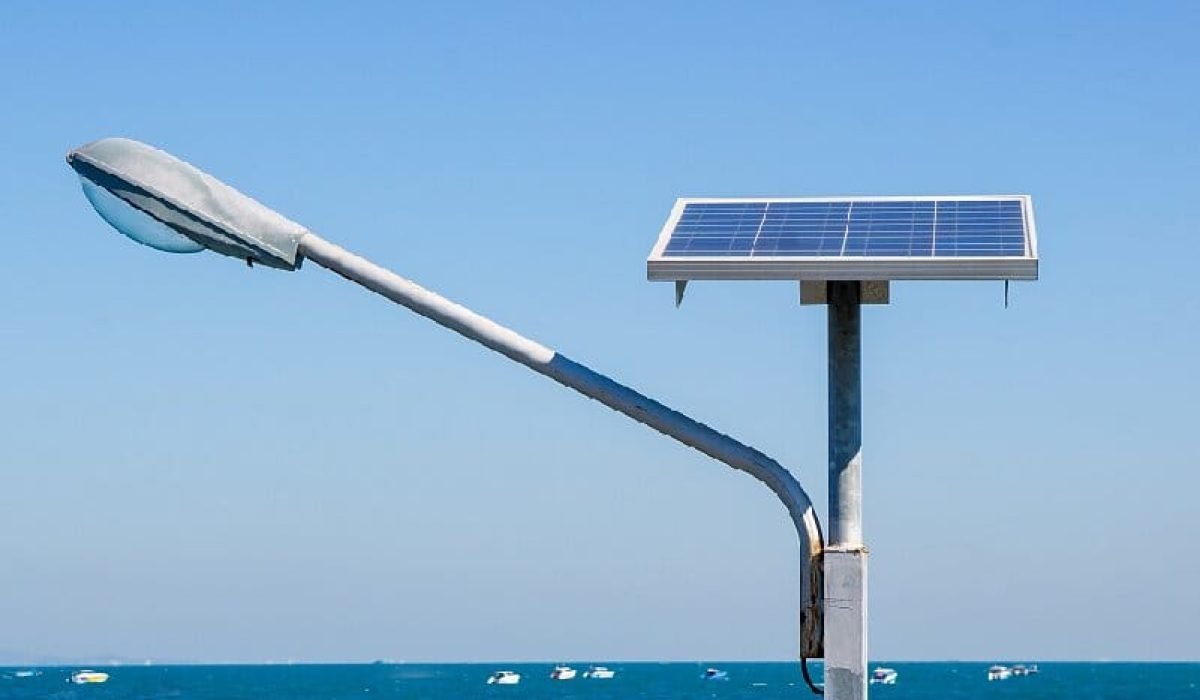
Coastal street light poles are lighting poles specially protected against salt spray, humidity and wind in marine environments, typically using hot-dip galvanizing plus optional powder coating to achieve 25–30+ years of service life with minimal maintenance.
If you've ever worked on a coastal lighting project, you know the struggle: salty air, constant humidity and unpredictable winds can eat away at poles in just a few years. Choosing the right materials and coatings isn’t just a technical detail — it’s the difference between a pole lasting decades or turning into a rusted hazard in a few seasons.
In this guide, we’ll look at why coastal environments are so aggressive, which anti-corrosion methods really work, and how to specify street light poles so they stay safe and presentable for 25–30+ years.
Why Coastal Environments Are So Harsh on Poles

Coastal areas are one of the toughest environments for street light poles. Here's why:
- Salt spray acts like an invisible corrosive mist, accelerating rust formation up to ten times faster than inland locations.
- Persistent humidity and morning fog keep surfaces damp for longer, creating ideal conditions for corrosion.
- Strong coastal winds require poles to withstand not just corrosion but also higher structural stress and vibration.
Without proper protection, poles often require expensive repairs or full replacement after only a few years — especially when installed within a few hundred meters of the shoreline.
Main Anti-Corrosion Methods for Coastal Street Light Poles
Based on real-world coastal projects, these are the most effective ways to protect street light poles and accessories.
1. Hot-Dip Galvanizing
Hot-dip galvanized street light poles are dipped in molten zinc at around 450 °C. This creates a thick, metallurgically bonded zinc–iron layer that protects even if the surface is scratched — crucial for coastal poles exposed to salt spray, airborne sand and minor impacts during installation.
Key benefits:
- Full internal and external coverage, including welds and edges
- Sacrificial protection: zinc corrodes first, protecting the steel
- Typical coating thickness for coastal environments: ≥85 µm
For most coastal steel poles, hot-dip galvanizing is the baseline requirement.
2. Cold Galvanizing (Zinc-Rich Paint)
Cold galvanizing, or zinc-rich spray paint, might look smooth initially but is much thinner (often 3–5 µm) and lacks deep penetration.
In practice, these poles:
- Are more vulnerable to mechanical damage and UV degradation
- Often require touch-ups every 1–2 years in marine environments
- Can hide early-stage corrosion under peeling paint
Cold galvanizing is better than standard paint alone, but it is not a reliable main protection system for coastal street light poles.
3. Anodizing for Aluminum Poles
Aluminum poles resist corrosion naturally. When anodized, they form a strong oxide layer that shields against salty air and moisture.
Advantages:
- Lightweight, easier to handle and install in windy coastal areas
- Naturally resistant to rust (no red rust like carbon steel)
- Anodized finish improves durability and appearance
However, aluminum poles still need proper structural engineering for storm resistance. Wall thickness, joint design and foundation details are critical to avoid vibration and fatigue issues in high winds.
4. Powder Coating (Optional Topcoat)
Powder coating acts like a protective outer shell over hot-dip galvanized steel or anodized aluminum poles. It provides:
- Extra UV and scratch resistance
- Additional barrier against moisture and salt spray
- Customizable colors to match urban design or client requirements
In many coastal projects, powder coating has helped poles look close to brand new even after a decade, especially when combined with robust galvanizing underneath.
5. Sherardizing (Thermal Diffusion Zinc Coating)
Sherardizing is mainly used for smaller components like bolts, nuts and brackets. The process diffuses zinc into the surface of the steel at relatively low temperatures.
Benefits:
- Uniform coating, even on threads and complex shapes
- Good resistance to abrasion and corrosion
However, sherardizing is not practical or economical for full-length street light poles. It should be considered mainly for fasteners and small accessories in coastal projects.
How to Specify Coastal Street Light Poles in Your BOQ or Tender
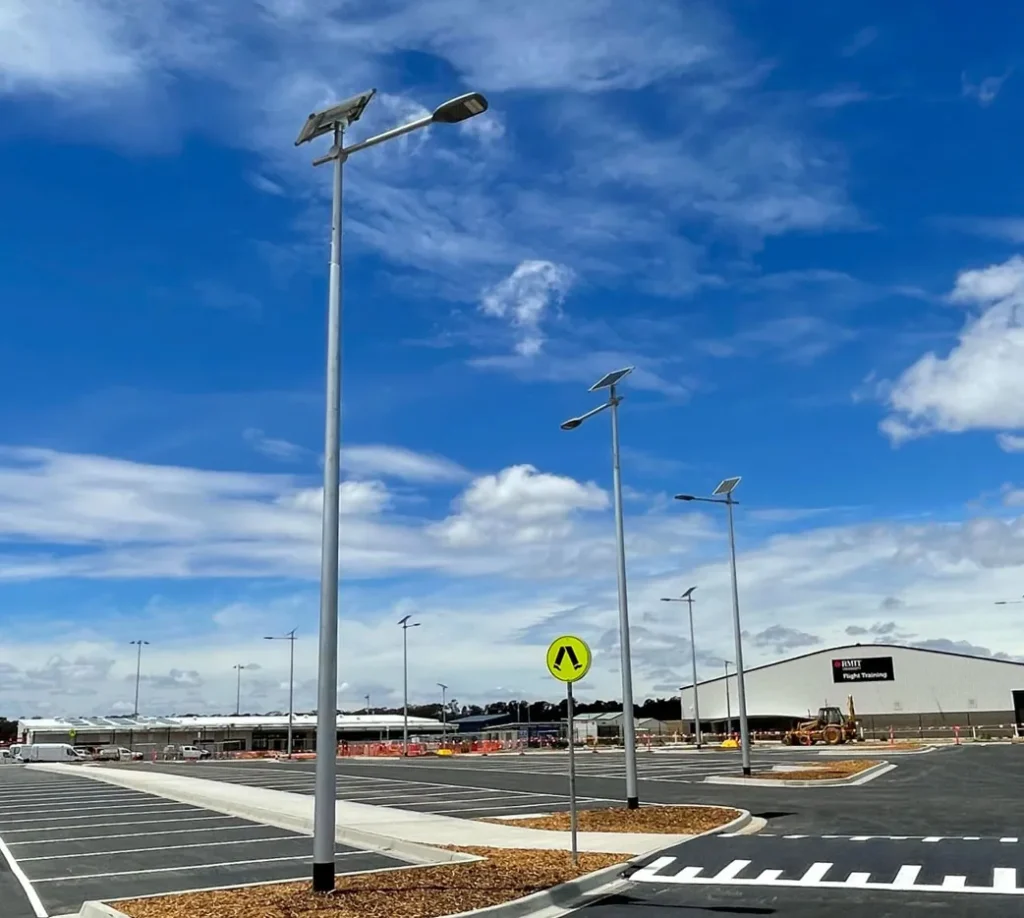
The best anti-corrosion system is useless if it is not clearly written into the project specifications. When preparing BOQs or tenders for coastal projects, you can include requirements like:
- Steel poles: hot-dip galvanized inside and outside according to ISO 1461
- Minimum zinc coating thickness: ≥85 µm for coastal C3–C4 environments (or as per local standards)
- Optional powder coating: ≥80 µm UV-resistant outdoor powder, RAL color as required
- Anchor bolts and brackets: hot-dip galvanized or thermal diffusion zinc coated (Sherardizing)
- Fasteners: stainless steel or zinc–nickel plated, tested to ISO 9227 salt spray
- Design life: ≥25–30 years with corrosion protection suitable for marine exposure
- Inspection and test certificates: galvanizing test reports, coating thickness records and salt spray test reports (if available)
This kind of wording helps EPCs, contractors and municipalities get comparable quotations from different suppliers — and avoid cheap, under-protected poles that will rust in a few seasons.
💡 Need Help Drafting Coastal Pole Specifications?
If you’re preparing a BOQ or tender for a coastal road, port or marina, you can send us your draft specification or project description.Our engineering team can help you:
- Check whether your zinc thickness and coating system match the environment
- Suggest a coastal-grade pole specification that balances cost and 30+ year durability
Real Project Insight: Coastal Marina Installation
In a 2019 marina project in Southeast Asia, the client previously struggled with rapidly rusting painted steel poles installed just 200–300 m from the shoreline. They upgraded to 8 m hot-dip galvanized steel poles with powder coating.
Four years later:
- Zero visible corrosion, even right next to seawater
- Maintenance reduced to simple visual inspections and occasional cleaning
- Poles still look nearly brand new, saving significant repair and replacement costs over 100+ poles
“We haven't had a single corrosion-related callout since installing these poles four years ago,” says the maintenance director at the marina.
Expert Input
“Combining hot-dip galvanization with powder coating can easily push a pole's lifespan beyond 30 years, even right by the shoreline,” says Wang Ming, Technical Lead at Sunlurio. “The zinc layer offers sacrificial protection, while the powder coat maintains appearance and shields against UV and scratches.”
Quick Comparison Table
| Process | Coating Thickness | Durability | Maintenance | Cost (vs basic paint) |
|---|---|---|---|---|
| Hot-Dip Galvanizing | ≥85 µm | High | Low (annual inspection only) | ~15–25% higher upfront, lower lifecycle cost |
| Cold Galvanizing | 3–5 µm | Low | High (frequent touch-ups) | Low upfront, high long-term maintenance cost |
| Anodized Aluminum | Varies | Medium | Moderate | Medium |
| Galv + Powder Coating | ≥85 µm + topcoat | Very high | Very low | Highest upfront, best for 25–30+ year design |
Actual costs vary depending on volume, location, design requirements and local coating facilities.
Common Mistakes When Choosing Coastal Poles
- Relying solely on standard spray paint as the main protection layer
- Overlooking underground corrosion risks when using direct burial
- Skipping annual inspections and waiting until visible rust appears
- Using non-galvanized brackets, base plates or fasteners in an otherwise protected system
- Ignoring wind load and EPA (Effective Projected Area) when selecting pole height and arm length
What We Need to Recommend the Right Coastal Pole Solution

To suggest the most suitable pole material and coating system for your project, we usually ask for:
- Project location and approximate distance to the shoreline
- Pole height, arm length and luminaire type
- Installation type (anchor-base or direct burial)
- Expected design life and maintenance strategy
- Any local standards or client specifications
- Quantity and typical layout (road, marina, port, estate, etc.)
Send these details in a simple email or Excel sheet and we can propose a coastal pole configuration, coating system and reference projects for you to review.
FAQ
Material and Durability
Steel or aluminum — what's better for coastal areas?
Hot-dip galvanized steel offers robust sacrificial protection and high structural strength. Anodized aluminum works well when reducing pole weight is critical or when the client prefers a non-rusting appearance. For the most demanding marine environments, galvanized steel combined with powder coating provides the highest level of durability and aesthetics.
Maintenance
How often should poles be checked?
At least once per year, ideally before storm or monsoon seasons. Scratches, chips or exposed steel should be repaired promptly to maintain corrosion protection. In very aggressive environments, a simple bi-annual visual inspection is recommended.
Wind Resistance
Can these poles handle coastal storms?
Yes — provided they are properly designed and specified. Always verify:
- EPA (Effective Projected Area) of the luminaire and arm
- Design wind speed and gust factors for the site
- Pole strength, foundation design and anchor bolt capacity
Steel poles generally offer higher stiffness, while aluminum poles must be carefully engineered for strength and vibration control.
Installation Type
Is direct burial okay for coastal steel poles?
It is possible but not recommended for aggressive marine environments. Anchor-base designs make inspections and maintenance easier. If direct burial is necessary, use:
- Protective sleeves or wraps in the soil zone
- Extra coating or bitumen in the buried section
- Proper drainage and backfill to avoid standing water
Specification Tips
What standards should be included to ensure durability?
- Hot-dip galvanizing per ISO 1461 or equivalent
- Powder coating ≥80 µm thick, outdoor UV-resistant type
- Salt spray resistance testing per ISO 9227 for critical parts
- Clear design life requirements (25–30+ years for coastal exposure)
- Third-party inspection or factory test reports for galvanizing and coating (where applicable)
Final Recommendation
From our experience with coastal roads, marinas and seafront estates, the best long-term solution for most projects is:
Hot-dip galvanized steel poles finished with an outdoor-grade powder coating, delivering maximum corrosion resistance and an attractive finish that lasts.
Alternatively, anodized aluminum poles are an excellent choice when weight reduction, specific aesthetics or non-rusting appearance is a priority — as long as they are properly engineered for local wind loads and structural requirements.
Need Help with a Coastal Lighting Project?
If you are planning a coastal road, marina, port or seafront estate, the pole specification will decide your long-term maintenance cost.
You can:
- 👉 Review our coastal-grade street light pole options
- 👉 Send your drawings and BOQ for a free coastal pole recommendation
Our engineering team will suggest:
- Suitable pole material and coating system for your corrosion category
- Recommended pole height, anchor-base design and foundation details
- Example reference projects with proven performance in similar environments