
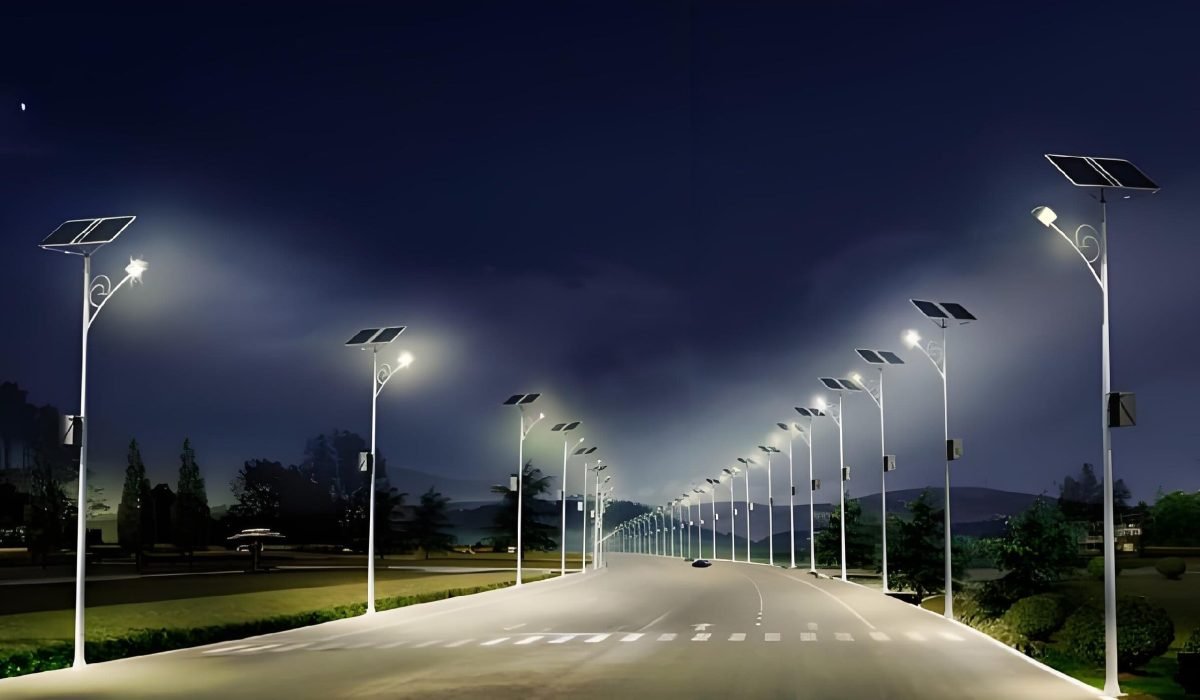
Practical guide for EPC contractors, municipal buyers, and consultants comparing grid-powered AC street lights with solar street lighting for roads, industrial sites, municipal projects, and new infrastructure corridors.
Quick Answer
AC street lights are still a strong choice where the electrical grid is stable, underground utility infrastructure already exists, and centralized power management is practical.
Solar street lights are often the better choice where grid access is weak, blackouts are frequent, trenching is expensive, or the buyer wants lower long-term dependence on utility power.
But the real project question is not:
Which lighting type is better in general?
It is:
Which lighting type fits this road, this utility condition, this maintenance model, and this lifecycle target more reliably?
That matters because many lighting projects fail not because the luminaire is bad, but because the power logic behind the system does not match the site reality.
Need help comparing AC street lights and solar street lights for a real project?
Send us your road type, utility condition, operating hours, and project location for a practical engineering recommendation.
Request Engineering Support →
Why This Comparison Matters
On paper, the AC vs solar decision often looks simple.
In reality, it is one of the easiest places for buyers to make an expensive mistake.
A project may choose AC because:
- grid power exists on paper
- the city is familiar with utility lighting
- the initial product price looks straightforward
But later the project may still struggle because:
- outages are common at night
- voltage quality is unstable
- trenching and cable work cost more than expected
- utility faults affect lighting performance long after installation
A project may choose solar because:
- it avoids trenching
- deployment looks fast
- electricity cost can be reduced
But it can still fail if:
- battery autonomy is undersized
- controller logic is weak
- solar input is overestimated
- the operating profile is unrealistic
- maintenance planning is too optimistic
That is why this is not only a product comparison.
It is a project-fit decision.
What Are AC Street Lights?
AC street lights are grid-powered street lights connected to the public or private electrical network. They typically include:
- a luminaire
- a pole and arm
- underground or overhead cabling
- electrical connection and protection
- switching or control equipment
- access to utility infrastructure
Because they run on alternating current (AC) from the grid, they do not depend on a solar panel or battery for nightly operation.
In many cities, AC street lights have been the standard for decades because they support:
- stable illumination
- continuous power where the grid is reliable
- centralized utility management
- compatibility with established municipal workflows
Where AC Street Lights Still Make Sense
AC street lights are not outdated.
In the right environment, they remain practical and dependable.
1. Dense Urban Roads with Existing Utility Corridors
Where underground cable routes already exist and utility access is already solved, AC lighting can remain highly practical.
In these roads, the decision is usually less about “solar saves power” and more about whether the site already has the civil and electrical infrastructure to support efficient grid lighting.
2. Highways and Main Roads with Reliable Electrical Planning
For highways and major corridors, AC systems may still be suitable where:
- high-output lighting is needed
- utility infrastructure has already been planned
- maintenance teams already work within a grid-based system
3. Industrial Zones and Utility-Controlled Sites
Industrial parks, logistics compounds, ports, and large facilities often already have:
- controlled power infrastructure
- maintenance access
- centralized electrical management
- existing distribution logic
In those cases, AC lighting may integrate more naturally into the site's existing operations.
4. Projects Requiring Centralized Utility Management
Where municipalities or operators already manage lighting through a grid-linked system, AC street lights may fit better into established workflows, especially if fault management, switching, and monitoring already depend on the utility network.
Main Advantages of AC Street Lights
1. Consistent Grid-Powered Operation
Where utility power is stable, AC street lights can provide steady operation without depending on daily solar recharge or battery reserve.
2. High Output Potential
AC systems are often suitable where continuous high output is required and utility power is strong enough to support it.
3. Easier Integration in Existing Urban Infrastructure
In roads that already have utility cabling and electrical distribution, AC lighting can be easier to connect into the existing network.
4. Compatibility with Smart City and Central Control Systems
AC lighting can often integrate with centralized dimming, monitoring, switching, and smart-control platforms.
5. Familiarity for Municipal Maintenance Teams
Many utility and public works teams already understand how to service grid-powered lighting systems, which can simplify operation in some cities.
Main Limitations of AC Street Lights
AC systems still carry several project risks that are often underestimated in procurement.
1. Dependence on Grid Reliability
If the utility network is weak, AC lighting may suffer from:
- outages
- unstable night operation
- voltage inconsistency
- service interruptions beyond the luminaire itself
This is one reason a road can have technically correct AC lighting and still perform poorly in practice.
2. Trenching and Cable Cost
New AC lighting projects often require:
- trenching
- underground cable work
- protection systems
- utility connection approvals
- more civil work
- more coordination with local power infrastructure
On new roads or peripheral roads, this cost can shift the project logic much more than buyers expect.
3. Long-Term Electricity Cost Exposure
Because AC systems rely on utility electricity every night, operating cost remains tied to power pricing over the full project life.
4. Greater Exposure to Utility Maintenance Risk
When the problem is in the cable, feeder, or utility network, lighting performance may drop even if the luminaires themselves are still in good condition.
What Are Solar Street Lights?
Solar street lights are stand-alone lighting systems that usually include:
- a solar panel
- a battery
- a controller
- an LED luminaire
- a pole and bracket structure
Instead of drawing nightly electricity from the grid, they collect solar energy during the day and use stored power at night.
That makes them especially relevant where:
- grid access is weak or unavailable
- trenching is expensive
- blackout risk is high
- rapid deployment is needed
- long-term electricity dependence should be reduced
When Solar Street Lights May Be the Better Choice
Solar lighting is not automatically better.
It becomes better when the site condition and the system design support it.
1. Weak or Unreliable Grid Supply
Where blackouts are common, solar can provide more independent night operation than AC systems tied to unstable utility service.
2. Remote or Rural Roads
If there is no practical utility connection, solar can avoid major trenching and cable cost.
3. New Roads Without Existing Utility Infrastructure
On new corridors, utility extension and trenching may erase the apparent advantage of AC lighting.
In these cases, solar may become the simpler and more economical deployment path.
4. High Electricity Cost Sensitivity
Where long-term operating cost matters more than lowest first cost, solar may offer better lifecycle value.
5. Municipal Projects with Lifecycle Focus
Where the buyer wants to reduce utility dependence, lower electricity exposure, and simplify deployment in weak-grid areas, solar often becomes more attractive.
Where Solar Projects Usually Go Wrong
This is the part many generic comparison articles skip.
A solar street light project does not succeed just because it is “off-grid.”
It often fails because of one or more design mistakes:
- battery autonomy is too small for the real weather pattern
- panel sizing is based on optimistic sunshine assumptions
- controller protection is weak
- the dimming profile is unrealistic
- the nightly operating schedule is too aggressive
- maintenance responsibility is unclear after handover
In other words:
Solar is only the better choice when the autonomy logic, battery quality, controller protection, and charging conditions are matched to the real site.
If that does not happen, solar can become just as problematic as a weak AC system.
AC Street Lights vs Solar Street Lights: Practical Comparison
| Factor | AC Street Lights | Solar Street Lights |
|---|---|---|
| Power source | Grid electricity | Solar panel + battery |
| Dependence on utility | High | Low |
| Trenching / cable need | Usually required | Usually avoided |
| Electricity cost over time | Ongoing | Lower grid dependence over time |
| Blackout resilience | Weak | Stronger if designed correctly |
| Installation complexity | Higher in new roads | Often simpler in remote or new roads |
| Maintenance focus | Grid, cable, luminaire | Battery, controller, panel, luminaire |
| Best fit | Stable-grid urban and industrial zones | Off-grid, blackout-prone, remote, or lifecycle-focused projects |
Which One Fits Better in Different Project Scenarios?
Neither system is universally better.
The right answer depends on the project environment.
AC Street Lights Often Fit Better When:
- the utility grid is stable
- underground cable infrastructure already exists
- the road is in a dense urban corridor
- centralized power management is preferred
- the site already operates within a utility-controlled environment
- high continuous output is needed and power quality is dependable
Solar Street Lights Often Fit Better When:
- outages are common
- grid extension is difficult
- trenching and cabling are too costly
- the site is remote or newly developed
- the buyer wants lower long-term electricity dependence
- lifecycle cost matters more than lowest first cost
- the project needs faster deployment with less civil disruption
What Buyers Should Check Before Choosing AC or Solar
Before deciding between AC street lights and solar street lights, procurement teams should review:
- road type
- utility reliability
- trenching and cable cost
- operating hours
- maintenance access
- electricity cost exposure
- autonomy requirement
- battery and controller logic for solar options
- utility-fault exposure for AC options
- long-term lifecycle budget
- who will maintain the system after handover
- whether the real site condition matches the proposed power logic
This is one reason the best decision usually comes from project-fit review, not from product marketing alone.
Need help deciding whether AC or solar fits your project better?
We can help review your road type, grid condition, operating profile, and lifecycle priorities before procurement.
Ask for a Project Review →
Why Lifecycle Cost Matters More Than First Cost
A lower upfront cost does not always mean lower project cost.
For AC street lights, buyers should consider:
- trenching and cable cost
- electrical connection cost
- long-term electricity cost
- utility maintenance exposure
- fault response linked to the grid network
For solar street lights, buyers should consider:
- battery quality
- autonomy design
- controller quality
- charging recovery in poor-weather periods
- component replacement planning
- long-term maintenance model
The better procurement question is:
Which option gives the best performance, reliability, and total cost over the actual project life?
Design Factors That Usually Decide the Outcome
In real projects, the final result is often decided less by the lighting type itself and more by whether the design assumptions are realistic.
For AC Street Lights, Key Decision Factors Include:
- true grid stability
- real trenching scope
- underground utility complexity
- maintenance access to electrical infrastructure
- long-term electricity-price exposure
For Solar Street Lights, Key Decision Factors Include:
- autonomy target
- battery chemistry
- controller protection logic
- real local solar resource
- panel sizing
- operating schedule
- rainy-season recovery ability
That is why project success usually comes from matching the power strategy to the site, not from choosing whichever system sounds more modern.
Final Recommendation
AC street lights remain a practical and dependable choice in many urban and industrial projects, especially where the electrical grid is stable and utility infrastructure is already in place.
But solar street lights often become the better option where:
- grid access is weak
- outages are frequent
- trenching cost is high
- utility expansion is impractical
- lifecycle cost matters more than first cost
- project deployment needs to be simpler and faster
The strongest decision is usually the one that matches:
- site conditions
- utility reality
- maintenance strategy
- autonomy expectations
- project budget logic
- long-term operating goals
Next Step
If you are planning a road-lighting project and need to compare AC and solar solutions, we can help review:
- utility conditions
- road type
- operating hours
- trenching and cable implications
- autonomy and battery logic
- lifecycle cost logic
- practical project-fit recommendation
Working on a municipal road, industrial zone, or new street-lighting project?
Send us your project type, utility condition, and road details and we can help compare AC street lights vs solar street lights for your site.
Get Project Support →
You can also review our related pages:
What are AC street lights?
AC street lights are grid-powered street lights that operate using alternating current from the electrical network rather than from a solar panel and battery.
Are AC street lights still used today?
Yes. AC street lights are still widely used in urban roads, highways, industrial zones, and other projects where grid power is stable and infrastructure already exists.
What are the main advantages of AC street lights?
Their main advantages include stable grid-powered operation, high output potential, easy integration with existing utility systems, and compatibility with smart controls.
What are the main disadvantages of AC street lights?
Their main disadvantages include dependence on grid reliability, trenching and cabling cost in new projects, ongoing electricity cost, and exposure to utility-related outages.
When are AC street lights better than solar street lights?
AC street lights are often better where the grid is stable, underground infrastructure already exists, centralized utility control is preferred, and long continuous output is needed.
When are solar street lights better than AC street lights?
Solar street lights are often better in blackout-prone, off-grid, remote, or trenching-expensive projects where lower long-term utility dependence matters.
Why do some solar street light projects fail?
Many solar projects fail because autonomy is undersized, panel sizing is unrealistic, controller protection is weak, or the operating profile does not match the real site condition.
Is solar always cheaper than AC street lighting?
Not always. Solar can avoid trenching and utility dependence, but project cost still depends on battery quality, autonomy design, controller quality, and long-term maintenance planning.
What should buyers check before choosing AC or solar?
Buyers should check utility reliability, trenching cost, operating hours, autonomy requirement, battery and controller logic, maintenance access, and long-term lifecycle cost.
Can Sunlurio help compare AC and solar street lighting for a project?
Yes. Sunlurio can help review road type, utility condition, operating profile, and lifecycle priorities to support a more suitable project-fit recommendation.
For a deployed AC lighting reference, compare this overview with the 6m AC street light project in Vietnam.