
Street lamp is a broad search term, but in real projects, buyers are not simply choosing a lamp. They are choosing a complete street lighting solution that must fit the road type, power source, installation environment, maintenance capacity, and approval requirements.
For EPC contractors, municipalities, consultants, and infrastructure developers, the real question is not just which street lamp is brighter. The real question is whether the proposed solution can be justified technically, installed reliably, maintained realistically, and documented clearly for review and handover.
A modern street lamp project may involve lighting performance, pole height and spacing, battery autonomy, corrosion protection, installation details, and documentation readiness. That is why product selection should start with project conditions, not just wattage.
Planning a street lamp project?
Need help with model selection, solar sizing, layout logic, or tender documentation?
Request Engineering Support
View Street Lighting Solutions
Check Product Options
Why Street Lamp Selection Is Often More Complicated Than It Looks
In everyday conversation, people often use “street lamp” to mean only the visible fixture. In project work, that is rarely enough.
A street lamp decision may also involve:
- road width and lighting class
- pole height, outreach, and spacing
- grid availability or off-grid need
- expected operating hours
- solar autonomy requirements
- wind, corrosion, rain, and dust exposure
- maintenance access after installation
- approval documents required by consultants or procurement teams
This is why a strong street lamp proposal is usually not just a quotation. It is a project package that connects the proposed product to the site conditions and review logic.
What Buyers Usually Mean When They Search for Street Lamp
In practice, “street lamp” can refer to several different project categories.
Grid-Connected LED Street Lamp
This is common in cities, highways, industrial parks, and established municipal roads where grid power is stable and civil infrastructure is already in place.
Typical priorities include:
- lower energy consumption
- better visibility and color rendering
- easier dimming and control
- longer service life with lower routine maintenance
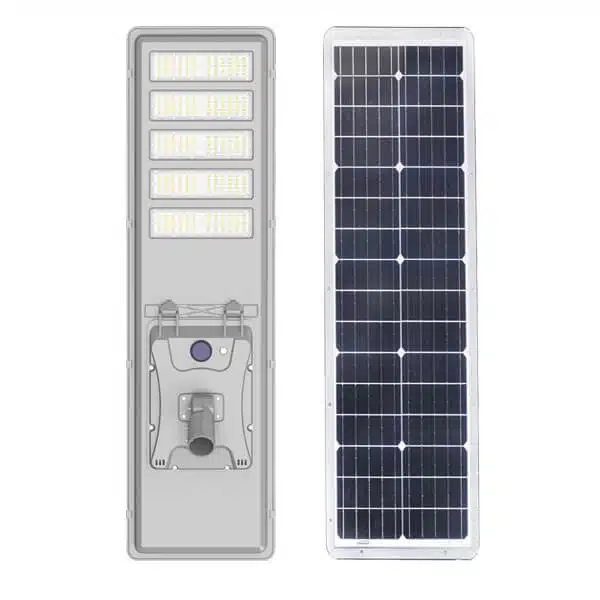
Solar Street Lamp
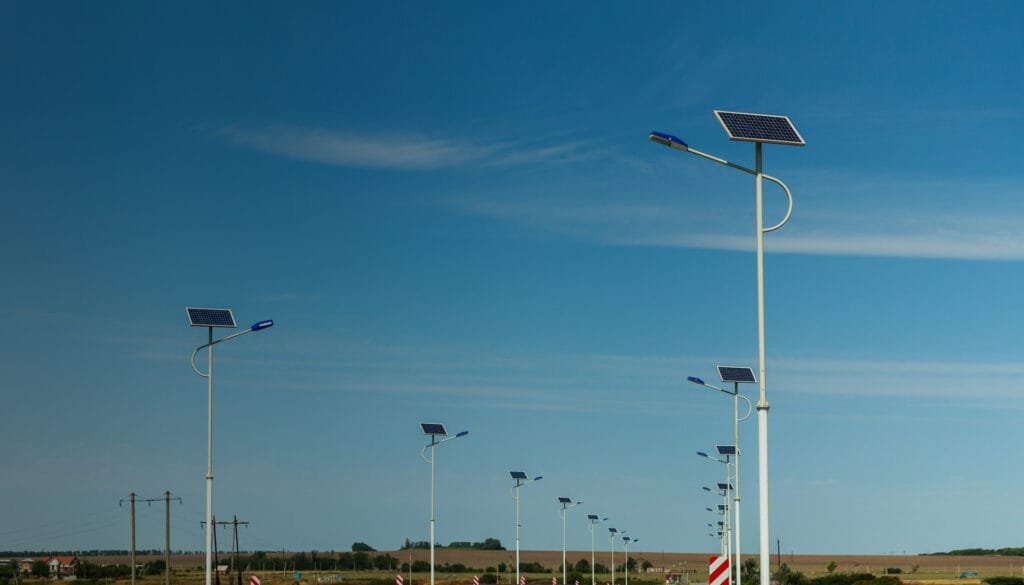
This option is often used where grid extension is costly, unreliable, or too slow. It is common in rural roads, township roads, community access roads, camps, public areas, and development projects.
Typical priorities include:
- no trenching or cable network
- faster deployment
- independence from unstable utility supply
- better fit for remote or underserved areas
Hybrid Street Lamp
Hybrid systems are used when a project wants to reduce grid dependence without fully moving off-grid. They can work well where reliability matters, but a fully solar-only approach is not ideal for every road section.
Typical priorities include:
- improved resilience
- reduced operating cost
- better energy flexibility
- more stable performance across mixed-use road networks
Smart Street Lamp or Smart Pole
This is no longer only about lighting. In many urban projects, a smart street lamp becomes part of digital infrastructure.
Typical optional functions may include:
- remote monitoring
- dimming control
- CCTV integration
- public Wi-Fi
- environmental sensors
- communication modules
- selected smart-city expansion functions
For broader system pathways, see Street Lighting Solutions and Product Configurations.
How Street Lamp Technology Has Evolved
Street lighting has moved through several clear stages.
- HPS street lamps offered strong output, but with high energy use and limited visual quality.
- Metal halide lamps improved visibility in some applications, but maintenance and lamp life remained concerns.
- LED street lamps became the mainstream direction because they support higher efficiency, longer life, and better controllability.
- Solar street lamps expanded lighting access in roads and public areas where grid power is weak or unavailable.
- Smart poles pushed street lighting into a wider role within city infrastructure.
For modern buyers, this evolution matters because the choice is no longer only about replacing a lamp head. It is about selecting the right system architecture for the project.
Street Lamp Selection Starts With Project Conditions
A good street lamp decision is rarely made from wattage alone. These are the factors that usually drive the final design.
1. Road Type and Lighting Goal
A community road, municipal road, industrial yard, public square, and highway feeder road do not need the same lighting approach.
Before selecting a product, buyers should first confirm:
- road width
- traffic type
- pedestrian activity
- required lighting class
- uniformity expectations
- whether the priority is visibility, safety, energy saving, or multi-function integration
In review-heavy projects, lighting design discussions often reference frameworks such as EN 13201 or IES RP-8, depending on the market and consultant requirements.
2. Pole Height and Spacing
Pole height affects coverage, mounting geometry, glare control, and layout quantity. Spacing affects both cost and performance.
A weak concept design often fails because buyers try to reduce quantity first, then discover that illumination becomes uneven, dark zones appear, the road class is no longer met, or the layout becomes difficult to defend during review.
That is why pole height, outreach, tilt, and spacing should be checked together instead of separately.
3. Grid Access or Off-Grid Need
This is one of the biggest decision points.
Ask early:
- Is utility power available at the site?
- Is the grid reliable enough for public lighting?
- Is trenching realistic?
- Is the site remote?
- Is the project under time pressure?
- Is diesel backup common in the area?
If the road is remote or electrification is weak, solar street lamp systems often become the more practical choice. If the road is urban and utility access is stable, grid-connected LED systems may remain the more economical long-term route.
4. Climate and Environmental Exposure
A street lamp that works on a city boulevard may not last the same way on a coastal road, dusty industrial corridor, or humid tropical site.
Environmental factors that matter include:
- high wind
- corrosion exposure
- salt air
- dust
- high temperature
- heavy rain
- limited cleaning access
This affects not just the luminaire, but also pole coating, fasteners, brackets, battery box design, drainage, sealing, and foundation details.
5. Maintenance Capacity
Some buyers choose a technically advanced system that local teams cannot realistically maintain.
Before finalizing a configuration, it is important to ask:
- Who will maintain the system?
- How often can the site be visited?
- Are replacement parts locally manageable?
- Is remote monitoring necessary?
- Is the project more sensitive to downtime or to upfront budget?
A simpler, well-documented street lamp system is often better than a complex one that becomes hard to service after handover.
Where Street Lamp Projects Usually Fail
Many street lamp projects do not fail because the light turns on and off. They fail because the design logic was weak from the beginning.
1. Product Chosen Before Lighting Layout
Some buyers select wattage first and only later think about pole spacing, road width, and lighting distribution. This often creates rework and weakens the proposal during technical review.
2. Solar System Sized for Average Weather, Not Worst Conditions
In solar projects, weak autonomy sizing is one of the most common reasons for complaints. A system that looks acceptable on paper may still underperform during rainy periods, low-sun months, or later-life battery decline.
3. Pole and Foundation Logic Treated as Secondary
Street lamp approval is not only about the light fixture. Wind load, pole design, foundation depth, anchor bolts, and installation quality often become critical during execution and handover.
For related structural support logic, see Light Pole Foundation Design Basics.
4. Corrosion Risk Underestimated
In coastal or humid regions, the failure point is often not the LED chip. It is the metalwork, fasteners, weld area, base plate zone, or sealing detail.
5. Documentation Is Too Thin
A project can stall even when the product itself is acceptable, simply because the supplier cannot provide clear technical support documents.
For many tenders and project reviews, buyers may need:
- DIALux or Relux lighting report
- IES or LDT photometric files
- BOQ-aligned model mapping
- battery and autonomy assumptions
- pole and foundation notes
- installation and commissioning guidance
That is one reason many project teams prefer to start with a supplier who can support both product and engineering review together: Request Engineering Support.
What a Review-Ready Street Lamp Proposal Usually Includes
A stronger street lamp proposal normally does more than list model names and unit prices. It helps the buyer understand why the solution fits the project.
A review-ready package often includes:
Lighting Simulation Report
DIALux or Relux output showing the layout logic, target area, illumination results, and key assumptions.
Photometric Files
IES or LDT files matched to the proposed luminaire model so the lighting result can be checked and reproduced.
Model-to-BOQ Mapping
A clear connection between quoted items and actual product configurations.
Solar Sizing Logic
For off-grid systems, the supplier should be able to explain panel sizing, battery capacity, operating hours, autonomy target, and reserve logic.
Pole and Structural Notes
Pole height, outreach, material, surface treatment, wind considerations, and related installation assumptions should be clear.
Installation and Commissioning Notes
Mounting angle, cable path, grounding, tightening checks, and handover points should be documented in a usable way.
This is often where buyers can quickly distinguish between a brochure supplier and a project-capable supplier.
Need a street lamp proposal that is easier to review and easier to compare?
If you need support with layout logic, solar sizing, photometric files, BOQ-aligned configuration, or tender documentation, start here:
Request Engineering Support
View Street Lighting Solutions
Check Product Options
Why Buyers Shortlist One Street Lamp Supplier Over Another
In many road lighting tenders and project purchases, suppliers are not shortlisted only because of nominal wattage or initial unit price.
Buyers usually move one supplier ahead of another when they see that the proposal is easier to review, easier to defend internally, and less risky during execution.
What often makes the difference:
- the supplier can explain why the proposed model fits the road condition
- the layout logic is clear, not just a price list
- solar sizing assumptions are understandable and not over-optimistic
- pole, bracket, and foundation thinking are not treated as afterthoughts
- the proposal can be traced from BOQ to actual model code and technical files
- the supplier shows that installation and handover have been considered
- the team can respond to clarification requests without starting over
That is why project buyers often prefer a supplier who can support product, documentation, and engineering discussion together rather than offering catalog data alone. Buyers who want to see how this kind of support translates into real project delivery can also review street lighting project references.
Which Street Lamp Solution Fits Which Application
The best street lamp is always application-dependent.
Urban Municipal Roads
A grid-connected LED street lamp is often the starting direction.
Buyers should confirm:
- lighting class
- pole spacing
- glare control
- utility availability
Rural Roads and Villages
A solar street lamp is often the more practical starting point.
Buyers should confirm:
- autonomy days
- battery sizing
- maintenance access
- theft protection
Commercial Areas
LED or hybrid street lamps are often suitable.
Buyers should confirm:
- visual comfort
- operating hours
- control strategy
Industrial Parks and Logistics Roads
LED, hybrid, or smart street lamp systems may all be suitable depending on the environment.
Buyers should confirm:
- pole strength
- uniformity
- maintenance access
- corrosion exposure
Public Squares and Development Zones
Smart street lamps or decorative LED solutions are often preferred.
Buyers should confirm:
- aesthetics
- controls
- multi-function scope
Smart City Corridors
Smart poles are usually the better starting direction.
Buyers should confirm:
- sensors
- communications
- data platform compatibility
- future expansion
What Helps a Street Lamp Proposal Move Faster
A proposal usually moves faster when the buyer does not need to spend extra rounds asking basic technical questions.
In practical terms, the process is smoother when the package already shows:
- what road or application the system is designed for
- how pole height and spacing were considered
- whether the light distribution can be checked
- whether solar autonomy assumptions are stated clearly
- whether the product configuration matches the quotation
- whether installation and handover notes are already anticipated
This matters because many delays do not come from product quality alone. They come from uncertainty, unclear assumptions, or incomplete documents.
What Procurement Teams Should Ask for Before Approval
A buyer-focused street lamp selection process should go beyond product brochures.
Procurement teams should usually ask for:
- a clear lighting design basis
- photometric evidence matched to the proposed model
- explanation of spacing and pole height logic
- for solar systems, battery and autonomy assumptions
- foundation and installation notes where relevant
- warranty scope and maintenance expectations
- product-to-BOQ traceability
In many projects, buyers also review whether the proposed system can be supported by commonly referenced standards such as:
- IEC 60598 for luminaire safety
- IEC 60529 for ingress protection
- IEC 62262 for impact resistance
- LM-79 for luminaire performance testing
- LM-80 / TM-21 for LED lumen maintenance evidence
- ISO 1461 for hot-dip galvanized steel components where relevant
The exact standards required depend on the country, consultant, and project type, but buyers should confirm early which compliance path is expected.
Street Lamp Installation and Maintenance Best Practices
A strong product can still perform poorly if installation quality is weak.
Good project practice usually includes:
- site survey before final layout
- lighting simulation before quantity is locked
- proper foundation planning
- correct pole verticality and bolt positioning
- drainage and sealing checks
- grounding and bonding where applicable
- a clear handover checklist
In solar projects, maintenance planning should also cover:
- panel cleaning access
- battery compartment inspection
- controller settings
- replacement strategy over the system lifecycle

How to Evaluate a Street Lamp Supplier
A street lamp supplier should not be judged only by wattage claims or price per unit.
A more reliable evaluation usually includes:
- whether the supplier can match the road application
- whether they can provide project references
- whether their documentation is complete
- whether their product range covers grid, solar, hybrid, or smart options as needed
- whether they understand installation and acceptance logic
- whether they can support changes during tender or execution stages
For project buyers, a stronger supplier is usually one that can support:
- product selection
- engineering discussion
- drawing-based clarification
- BOQ alignment
- documentation handover
You can review broader solution directions here:
Street Lamp Projects Need More Than a Fixture
In real municipal, development, and infrastructure work, a street lamp is not just a lighting head on a pole. It is part of a complete project system.
The right solution depends on:
- road use
- power strategy
- climate
- maintenance capacity
- approval logic
- documentation readiness
That is why the safer buying path is usually not “choose a lamp first.” It is “define the project conditions first, then match the lighting system.”
Need Support for a Street Lamp Project?
If you are working on a municipal road, rural electrification scheme, smart corridor, industrial road, or solar lighting tender, a review-ready package can save a lot of time later.
You may need support with:
- model selection
- DIALux or Relux simulation
- IES or LDT files
- BOQ-aligned configuration
- solar sizing logic
- pole and foundation notes
Start here:
- Request Engineering Support
- View Street Lighting Solutions
- Check Product Options
- See Project References
FAQ
What is the difference between a street lamp and a street lighting system?
A street lamp often refers to the visible lighting unit, but in project terms, a street lighting system includes the luminaire, pole, power configuration, controls, foundation logic, and installation details.
Which is better for road projects: grid street lamp or solar street lamp?
It depends on the site. Grid-connected systems are often suitable where utility access is stable. Solar street lamp systems are often a stronger option where grid power is weak, remote, or too expensive to extend.
How do buyers choose the right pole height for a street lamp project?
Pole height should be selected together with road width, spacing, optic distribution, glare control, and lighting target. It should not be chosen from appearance or wattage alone.
What documents should I ask for before approving a street lamp proposal?
A stronger proposal usually includes a lighting simulation report, photometric files, BOQ-aligned model mapping, installation notes, and for solar projects, clear battery and autonomy assumptions.
Are smart street lamps only for large smart city projects?
No. Smart functions can be added at different levels. Some projects only need remote monitoring and dimming, while others may require CCTV, sensors, or communication modules.
How long can a modern LED street lamp last?
Service life depends on product quality, thermal design, driver quality, environment, and operating profile. In project evaluation, buyers should focus on test evidence, lumen maintenance logic, and warranty scope rather than a headline life claim alone.
What is the biggest mistake in solar street lamp projects?
One of the biggest mistakes is sizing the system too aggressively for ideal weather while ignoring seasonal variation, battery reserve, and real operating hours.