

Street light poles are often overlooked—until they start leaning. A bent or tilted street light isn’t just an eyesore; it’s a safety hazard waiting to happen. In my years managing solar and infrastructure projects across Africa, I’ve seen countless poles slowly lean due to small, preventable issues—most of them invisible until it’s too late.
A leaning pole can signal foundation failure, corrosion, or even fatigue from environmental stress. Left unchecked, that tilt could end with a full collapse, risking vehicles, pedestrians, and costly outages.
Let’s break down why street light poles bend, how to fix them safely, and what preventive measures ensure long-term stability—especially relevant for EPC contractors managing road or solar street lighting networks.
Why Do Street Light Poles Bend?
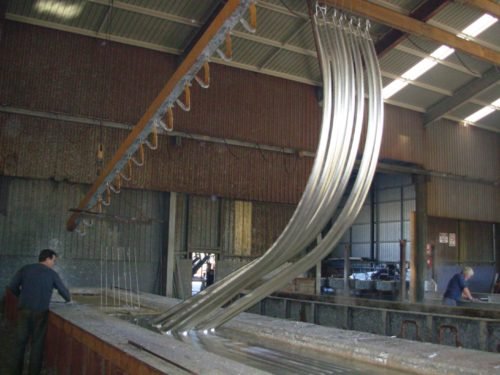
In short: Street light poles bend when their foundation, structure, or installation integrity fails.
The reasons usually fall into five categories—each requiring a different fix.
1. Foundation Instability in Street Light Poles
If the base shifts, the whole pole follows.
This is by far the most common cause I’ve encountered, particularly in rural or flood-prone areas.
Typical causes of foundation instability include:
- Soil erosion: Heavy rain or poor drainage can wash away compacted soil beneath the pole base.
- Poor installation: If the concrete foundation wasn’t properly sized or leveled, poles lean within months.
- Loose anchor bolts: Vibration, thermal expansion, or improper torqueing can loosen anchor bolts over time.
- Incorrect concrete curing: When concrete doesn’t cure evenly, micro-cracks develop—weakening structural support.
Once the foundation shifts even a few degrees, the load distribution changes dramatically. A 6-meter pole with a 10° lean can create over 200 kg of lateral stress at the base.
2. Structural Damage from Corrosion or Fatigue
Metal poles have one enemy: rust.
Even hot-dip galvanized poles start showing corrosion if the protective layer wears off.
Over time, corrosion and metal fatigue eat away the wall thickness—especially near welds or at the base where water collects. Once the steel weakens, bending can start gradually or suddenly after a strong gust of wind.
Aging infrastructure compounds this. Many African municipalities still use 10–15-year-old poles that were never maintained or repainted. The outer layer may look fine, but inside, it’s often paper-thin steel holding hundreds of kilograms.
3. Vehicle Impact on Street Light Poles
One night in Kigali, I witnessed a delivery truck clip a 9-meter pole—it didn’t fall, just bent slightly. A month later, it collapsed after a minor storm.
That’s the problem: vehicle impacts can cause both visible bending and hidden internal fractures.
The base plate or weld joint may have microscopic cracks invisible to the eye. If these go unchecked, even small vibrations from wind can propagate the damage until failure.
Any pole near traffic lanes should be periodically checked for impact signs, dents, or loosened bolts—even if it still looks upright.
4. External Forces: Wind and Cable Load
Strong winds and uneven cable loading silently pull poles off alignment.
If your lighting network carries overhead wiring or CCTV mounts, those cables can act like sails.
Key external contributors include:
- Storm pressure and high winds, especially in coastal regions.
- Heavy signage, banners, or solar modules added later without load analysis.
- Unequal tension from data or electrical cables strung between poles.
Even a small continuous pull—say, 15 kg from a stretched wire—can cause measurable tilt over time. This is why every additional load should be reviewed against the pole’s rated capacity.
5. Improper Installation or Alignment
Many bends begin on day one.
During site inspections, I’ve seen poles installed with misaligned base plates, uneven grouting, or incorrect bolt patterns. Sometimes, the installers simply tighten bolts unevenly, leaving one side slightly raised. Over months, that “small mistake” becomes a visible lean.
Always check that the pole is perfectly vertical before tightening and that all nuts are torqued to spec. A laser level costs less than a bent pole replacement.
How to Fix a Bent or Leaning Street Light Pole
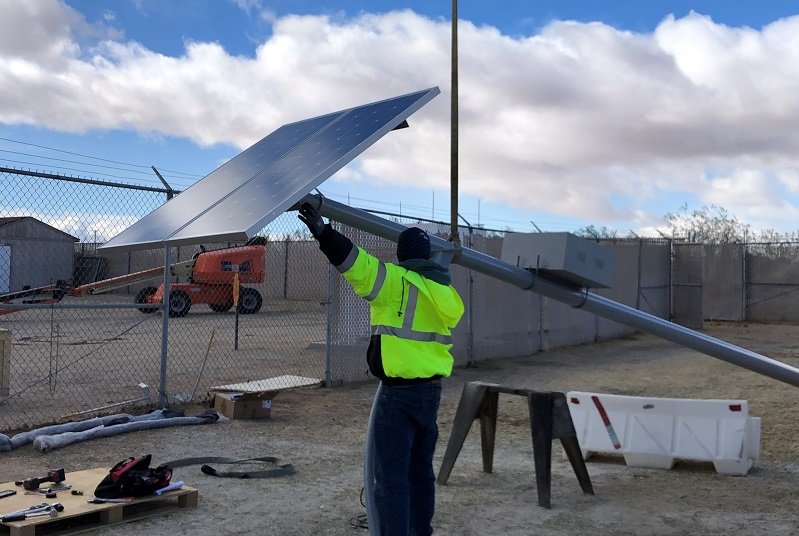
When a street light pole starts to lean, speed matters—but so does safety.
Here’s a step-by-step guide that both municipalities and contractors can follow.
Step 1: Secure the Area Around the Pole
Before touching anything, cordon off the site. Use cones, caution tape, or barriers to keep pedestrians and vehicles clear. Even a light tap could topple a severely weakened pole.
Step 2: Turn Off Electrical Power
Always isolate the circuit before inspection.
Electrical shock or arc flash is a real danger, especially if the pole has integrated luminaires or solar controllers.
Step 3: Inspect the Foundation for Damage
Look for:
- Cracked concrete
- Loose or corroded bolts
- Soil erosion around the base
- Visible gaps between the pole flange and concrete
If you notice foundation movement or uneven settling, the root problem is below ground.
Step 4: Perform a Structural Integrity Assessment
Professionals often use:
- Visual inspection for corrosion and cracks
- Ultrasound or magnetic particle testing for hidden fractures
- Stress analysis to check if the pole can safely stand after repair
Document every finding—it guides whether to realign or replace.
Step 5: Repair or Replace Based on Severity
Here’s a simple decision table:
| Condition | Recommended Action |
|---|---|
| Minor lean (<5°), foundation intact | Realign and brace |
| Cracked base or loosened bolts | Recast or reinforce foundation |
| Structural corrosion or vehicle impact | Replace the pole |
If the lean is due to foundation instability, excavate, recompact, and recast.
If the steel itself is compromised—replace it. A bent pole rarely regains full strength after correction.
Step 6: Hire a Professional for Street Light Pole Repair
DIY isn’t an option here.
Engage a qualified structural engineer or licensed electrical contractor familiar with local standards.
They’ll ensure compliance with safety codes and proper torqueing, grounding, and insulation practices.
How Can You Prevent Street Light Poles from Bending?
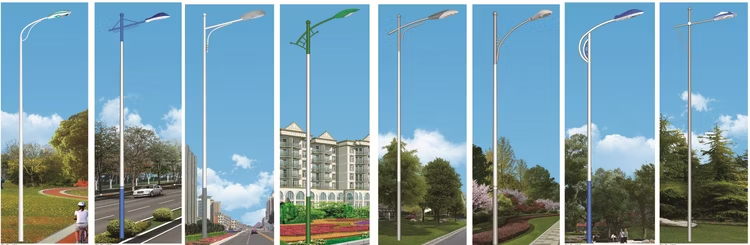
Prevention is far cheaper than replacement.
Here’s what works in real field conditions:
- Schedule regular inspections: Every 6–12 months, check for corrosion, alignment, and soil settlement.
- Ensure proper drainage: Poor drainage leads to erosion. Always maintain clear runoff channels around bases.
- Use anti-corrosion coatings: Repaint poles every 3–5 years or apply zinc-rich primer for coastal areas.
- Avoid overloading: Don’t attach extra signage, cameras, or solar panels without load calculations.
- Maintain accurate alignment: Use laser levels and correct torque during installation.
A disciplined maintenance program extends pole lifespan by 30–40%, based on our projects in Tanzania and Uganda.
Conclusion: Maintaining Safety and Stability
A bent street light pole isn’t just a maintenance issue—it’s a warning sign.
Behind every leaning pole lies a story of neglect, poor design, or environmental stress.
Timely inspection, professional assessment, and preventive care save far more than replacement costs—they protect lives and infrastructure reputation.
So next time you see a pole start to lean, don’t shrug it off. Treat it as an early signal—and act before gravity finishes the job.