
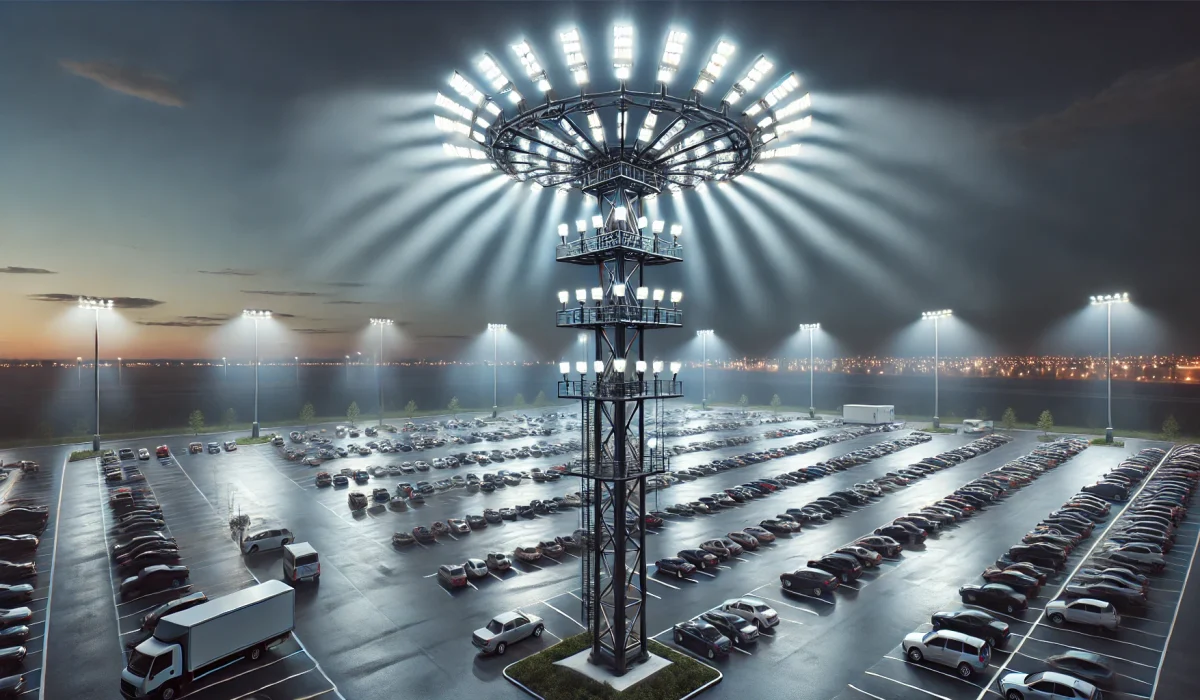
What Is a High Mast Lighting System? Design, Applications, and Selection Guide
Practical guide for EPC contractors, consultants, municipal buyers, and infrastructure teams who need to understand how high mast lighting systems work, where they fit, and what really matters before selection.
Quick Answer
A high mast lighting system is a wide-area outdoor lighting solution that uses tall poles and multiple luminaires to illuminate large spaces such as highways, ports, airport aprons, industrial yards, logistics areas, toll zones, and large public grounds.
Its value is not simply “more light from a taller pole.”
A well-designed high mast system helps deliver:
- wider area coverage from fewer pole locations
- better visibility across large operational zones
- lower site clutter than many short poles
- more centralized maintenance planning
- stronger long-term value when layout, optics, structure, and maintenance method are matched correctly
For real projects, the better question is not only:
What is a high mast lighting system?
It is:
What mast height, luminaire quantity, optics, spacing, and maintenance method are suitable for this site and its real visual task?
Need help checking whether a high mast system fits your project?
Send us your site layout, target application, and preferred mast height for a practical engineering review.
Request Engineering Support →
Why High Mast Lighting Systems Matter
Large outdoor spaces often face the same lighting problems:
- poor visibility in wide operating areas
- dark gaps between ordinary poles
- high fixture count with complicated wiring and maintenance
- safety risk in traffic or industrial movement zones
- inefficient layouts that increase cost without improving performance
These issues are common in:
- highways and interchanges
- ports and container yards
- airport aprons
- industrial parks
- toll plazas
- stadium surroundings
- large parking and logistics areas
A high mast lighting system is used when standard pole lighting becomes inefficient, cluttered, or difficult to manage.
What Is a High Mast Lighting System?
A high mast lighting system typically includes:
- a tall pole, often around 12 m to 50 m depending on the application
- multiple luminaires mounted near the top
- a structural design suitable for wind and fixture load
- an electrical system sized for the required illumination
- in some cases, a lowering mechanism to simplify maintenance
The core purpose is to illuminate a large zone from an elevated point so the site can be lit more efficiently than with many smaller poles.
That does not mean one mast is always better than several ordinary poles. The correct layout still depends on:
- area size
- target lux
- uniformity target
- mast height
- optics
- glare control
- operational constraints
The Real Problem: Wide Areas Are Hard to Light Well
Poor lighting in large outdoor spaces creates more than visual inconvenience.
It can lead to:
- higher accident risk
- slower vehicle movement
- lower operational efficiency
- poor working visibility
- harder surveillance and monitoring
- more maintenance interventions from scattered lighting points
In public and industrial projects, lighting quality affects both safety and operational reliability.
That is why the decision to use high mast lighting should be based on project function, not just appearance.
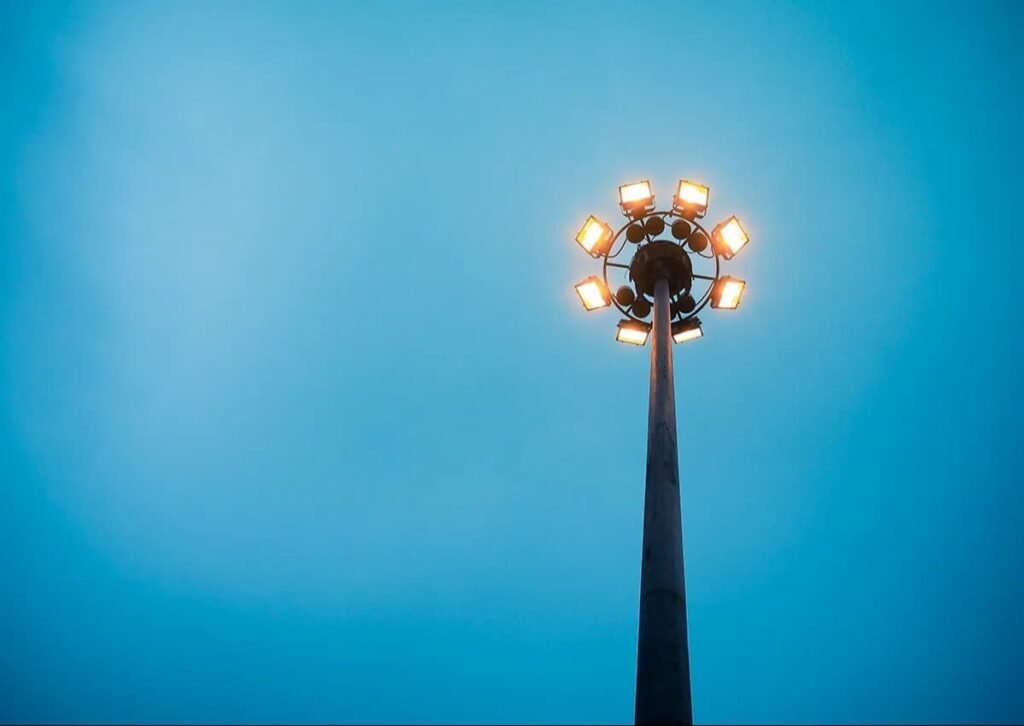
ALT: high mast lighting system in outdoor application for broad centralized site illumination
High mast lighting is often used where large outdoor spaces need broad, centralized illumination with fewer pole locations.
How High Mast Lighting Systems Solve These Issues
A properly designed high mast system helps solve wide-area lighting problems in several ways.
1. Wider Area Coverage
Because luminaires are mounted at greater height, high mast systems can distribute light across broader zones than many conventional pole layouts.
This can help reduce:
- excessive pole count
- visual clutter
- cable routing complexity
- maintenance spread across the site
2. Better Centralized Visibility
In highways, yards, aprons, and industrial sites, the system can help create broader operating visibility across open spaces.
The goal is not only brightness under the mast.
The goal is useful coverage across the actual working or traffic area.
3. More Efficient Layout Potential
In many large sites, a high mast solution can simplify layout logic compared with many smaller poles. That said, the final result still depends on:
- optic selection
- mounting height
- spacing
- target lux
- uniformity requirement
In large open sites, the wrong optic or mast height can create bright hotspots near the mast while leaving the real working area less usable than expected.
4. Easier Maintenance Strategy in Some Projects
Where lowering mechanisms are used, maintenance can be simplified by servicing luminaires closer to ground level instead of using repeated high-access work.
Why LED Technology Matters in High Mast Systems
Modern high mast lighting systems often use LED luminaires because LED technology provides several practical benefits in wide-area projects:
- higher efficacy
- lower maintenance frequency
- better controllability
- longer useful service life
- better compatibility with dimming or smart control
For project review, however, the important point is not only “LED is efficient.”
Buyers should still check:
- real delivered lumens
- optic type
- thermal design
- IP rating
- maintenance access
- long-term system reliability
A weak LED luminaire on a tall mast is still a weak project decision.
Where High Mast Lighting Systems Are Commonly Used
High mast systems are usually selected where the lighting task is large, open, and operationally critical.
Highways and Interchanges
Used to improve broad driver visibility at major junctions, interchanges, and conflict zones where larger road geometry may not be served efficiently by many standard poles.
In highway applications, the visual task is strongly related to road geometry, conflict movement, guidance, and safe traffic perception. That means mast layout should be judged by useful roadway visibility, not just by how large an area appears bright.
Ports and Industrial Zones
Used to support operations in yards, loading areas, stacking zones, and transport corridors where large areas need clear working visibility.
In ports and industrial projects, maintenance access, equipment movement, obstacle awareness, and glare control are often as important as average lux.
Airport Aprons and Open Transport Areas
Used where wide-area coverage, obstacle awareness, and operational lighting are important.
In apron-related environments, glare and spill control may matter more than buyers first expect, because overly aggressive lighting can create operational visibility problems rather than solve them.
Stadium Perimeters and Large Public Grounds
Used where large surrounding areas need broad lighting coverage rather than only localized pole lighting.
Parking and Logistics Yards
Used where vehicle movement, loading operations, and security visibility benefit from broader overhead distribution.
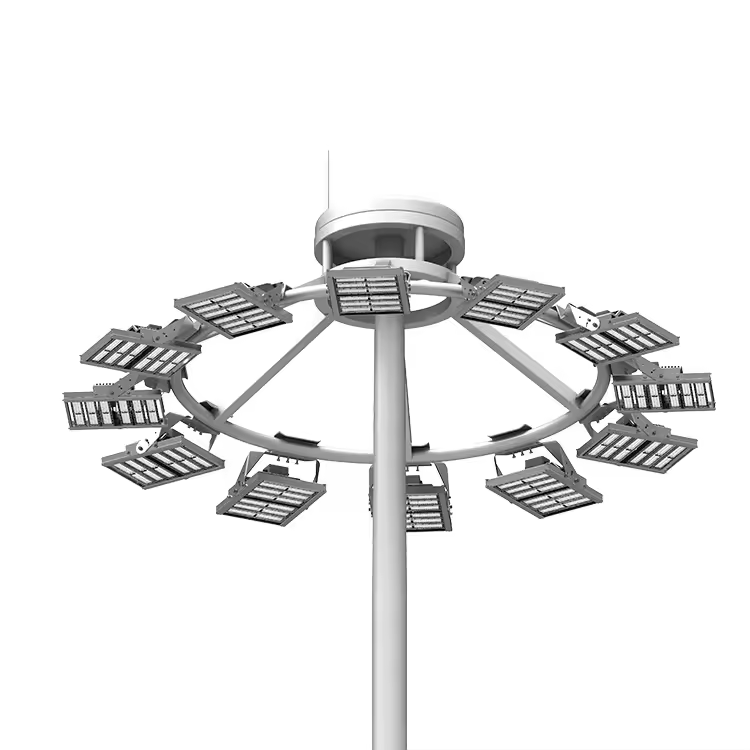
ALT: high mast lighting in transport industrial and public infrastructure environment
High mast lighting is often preferred in large transport, industrial, and public environments where broad area coverage matters more than local pole density.
Key Advantages of High Mast Lighting Systems
Wide Coverage from Elevated Mounting
A higher mounting position helps luminaires cover broader areas, especially in open sites.
Fewer Pole Locations in Large Areas
In some projects, this can reduce clutter and simplify circulation paths compared with many smaller poles.
Better Suitability for Open Operational Sites
Ports, aprons, toll zones, and industrial yards often benefit from broad-area lighting strategies.
More Centralized Maintenance Planning
When a lowering system or suitable access plan is included, maintenance can become easier to organize than scattered pole-by-pole servicing.
Strong Long-Term Value in the Right Application
When mast height, optics, and layout are chosen correctly, high mast systems can provide strong lifecycle value for large-area projects.
What Buyers Should Check Before Choosing a High Mast Lighting System
This is where many generic articles stop too early.
In real projects, buyers should not choose high mast lighting just because the site is “large.”
Before selecting a system, check:
- application type
- required average lux
- uniformity target
- mast height
- number of luminaires per mast
- optic distribution
- wind-load condition
- maintenance method
- site obstacles
- glare and spill-light concern
- foundation and structural implications
- whether lowering access is needed
- how the layout will actually be verified
These questions are usually more important than marketing claims such as “high-output” or “covers a huge area.”
Features to Look for When Choosing High Mast Lighting
1. Height and Coverage Logic
Pole height should match the application. Higher is not always better. Excessive height can create:
- weaker ground illuminance
- more demanding optics
- higher structural cost
- different glare behavior
2. Lighting Technology
LED is usually preferred, but the luminaire still needs suitable:
- efficacy
- optics
- durability
- outdoor protection
3. Maintenance Method
Where maintenance access is difficult, a lowering mechanism may be highly valuable.
4. Structural Durability
High mast poles should be reviewed for:
- wind load
- fixture load
- corrosion protection
- pole material
- base plate and anchor logic
5. Energy and Control Strategy
For large-area projects, energy use and control logic can affect long-term operating cost significantly.
Lowering Mechanism: Why It Matters
In many high mast systems, maintenance is easier when a lowering mechanism is included. This allows the luminaire ring or mounted equipment to be lowered closer to the ground for service.
That can reduce:
- repeated high-access equipment use
- labour risk
- maintenance time
- operational disruption
This is especially useful in:
- ports
- airport-adjacent areas
- highways
- industrial yards
- sites with difficult access planning
In these projects, maintenance method is not just a convenience issue. It can affect access cost, service planning, safety procedure, and operational downtime.
Practical Applications of High Mast Lighting Systems
1. Highways and Intersections
Used where broad driver visibility is needed across larger road geometry.
2. Stadiums and Sports Complexes
Used to illuminate surrounding operational or public zones, depending on project scope.
3. Ports and Industrial Zones
Used to support safer logistics movement, loading operations, and large open work areas.
4. Airports and Large Parking Areas
Used where wide-area visibility and operational clarity matter across broad paved spaces.
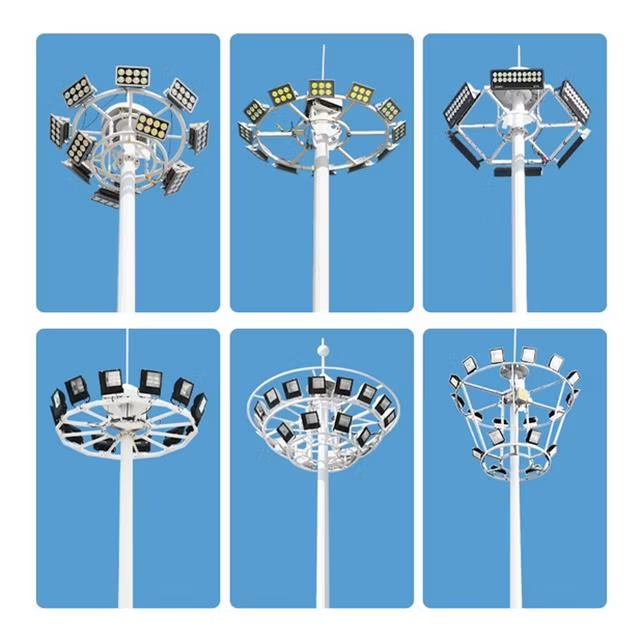
ALT: high mast lighting project application showing mast height optics and site suitability
Application suitability depends on mast height, optics, maintenance logic, and the visual task of the site—not on height alone.
What Makes a High Mast System Successful?
A successful high mast lighting project is not defined only by the pole.
It depends on the full system:
- mast height
- luminaire quantity
- optical distribution
- spacing logic
- structural design
- maintenance access
- project-specific lux and uniformity goals
- glare and spill-light control
- site-specific operational constraints
That is why large-area lighting decisions are best supported by simulation and engineering review, not only catalog comparison.
A strong high mast solution is usually determined by layout quality and project fit, not by pole height alone.
Conclusion
A high mast lighting system is a practical solution for large outdoor spaces that need broad, centralized illumination. It can improve visibility, reduce clutter, support safety, and simplify maintenance planning when the design is properly matched to the application.
But not every large site automatically needs high mast lighting.
The strongest project decision comes from reviewing:
- the real area to be lit
- target lux and uniformity
- mast height and optics
- maintenance method
- glare and spill-light implications
- structural and lifecycle implications
Need help deciding whether high mast lighting is the right fit for your site?
Send us your layout, target application, and preferred mast height for a practical recommendation.
Get Project Support →
You can also review our related pages:
- High Mast Light Product Page
- High Mast Lighting System Design and Simulation
- High Mast Light Projects
FAQ
What is a high mast lighting system?
A high mast lighting system is a wide-area outdoor lighting solution that uses tall poles and multiple luminaires to illuminate large spaces such as highways, ports, aprons, industrial yards, and stadium surroundings.
Where are high mast lighting systems commonly used?
They are commonly used in highways, interchanges, ports, industrial zones, airport aprons, large parking areas, stadium surroundings, and other wide outdoor operational sites.
What is the typical height of a high mast lighting pole?
Typical high mast poles are often in the range of about 12 to 50 meters, depending on the project application and lighting requirement.
Why are high mast lighting systems used instead of ordinary poles?
They are used where wide-area coverage, reduced pole count, centralized lighting, and more practical large-site visibility are needed.
Are LED luminaires better for high mast lighting systems?
In many projects, yes. LED luminaires are usually preferred because they offer better efficacy, lower maintenance frequency, and stronger long-term operating value.
What should buyers check before choosing a high mast lighting system?
Buyers should check the application type, target lux, uniformity, mast height, optic distribution, luminaire quantity, wind-load condition, maintenance method, glare concern, and structural implications.
Does a higher mast always mean better lighting?
No. A higher mast can cover a wider area, but it may also change ground illuminance, optic requirement, structural cost, and glare behavior. Height must match the project.
What is a lowering mechanism in high mast lighting?
A lowering mechanism allows the luminaire assembly to be lowered closer to ground level for maintenance, which can reduce access difficulty, labour risk, and service cost.
Can one high mast replace several smaller poles?
Sometimes, depending on the site, target lux, uniformity, layout logic, and optic choice. But this should be checked through lighting design or simulation rather than assumed.
Why does simulation matter in high mast lighting design?
Because mast height alone does not determine project success. Simulation helps check coverage, uniformity, glare behavior, spacing logic, and whether the lighting actually suits the visual task of the site.
Can Sunlurio help review a high mast lighting project?
Yes. Sunlurio can help review project layout, application type, target lighting requirement, and mast-height direction to support a more suitable high mast lighting recommendation.