

High mast lighting is used in large-area projects because it can deliver broad, uniform illumination with fewer poles, better site clearance, and more efficient visibility control across ports, highways, yards, airports, and industrial zones. For EPC contractors, consultants, and project owners, the main benefit is not simply higher mounting height, but the ability to improve coverage, reduce pole clutter, and support safer operations in wide, high-activity spaces.
If you are evaluating lighting for a port, logistics yard, highway interchange, industrial plant, airport perimeter, or other open-area project, this guide explains where high mast lighting performs best, what advantages it offers over lower mounting systems, and what buyers should check before approval. For project support, Sunlurio also provides High Mast Light solutions, high-mast lighting design and simulation, and broader Engineering Support.
Quick Answer
The main benefits of high mast lighting are wide-area coverage, fewer poles, better operational clearance, strong suitability for large open sites, and more efficient long-term lighting layouts for infrastructure-scale applications. Compared with conventional lower-pole lighting, high mast systems can reduce visual clutter, simplify large-area coverage, and improve lighting consistency where standard layouts would require too many poles or create operational interference.
That said, high mast lighting is not automatically the right answer for every site. Its value depends on area size, activity type, maintenance strategy, wind conditions, lighting targets, and whether the project really benefits from high mounting geometry. In practice, this decision is best reviewed together with high-mast lighting design support and the project’s engineering support requirements.
What Is High Mast Lighting?
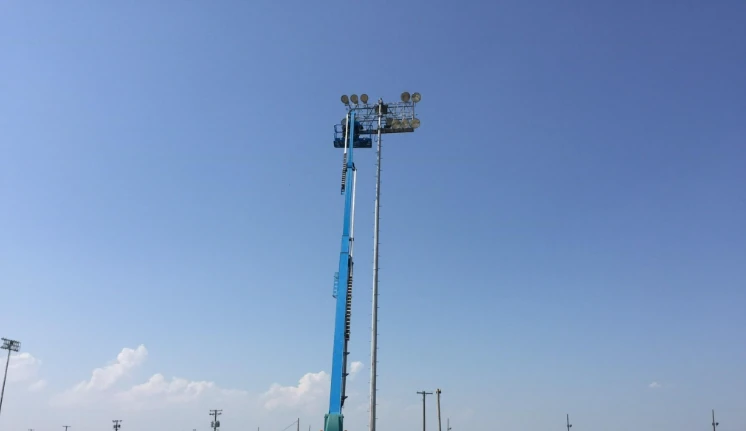
High mast lighting is a tall-area lighting system that uses a high pole with multiple luminaires mounted near the top to illuminate a large open space from a single structural point. It is commonly used in locations where broad coverage, reduced obstruction, and fewer pole positions are more practical than distributed lower-height lighting.
In many projects, high mast poles are used where conventional road-lighting layouts would create too many columns, reduce equipment clearance, or fail to deliver efficient coverage across large operational surfaces.
Typical characteristics of high mast lighting include:
- high mounting height
- multi-luminaire top arrangement
- broad area illumination
- reduced pole quantity compared with lower-height layouts
- suitability for large traffic or industrial spaces
For projects that require technical review of area coverage, aiming, and layout performance, high mast lighting should usually be evaluated together with high-mast lighting design and simulation rather than by fixture wattage alone.

Where Is High Mast Lighting Commonly Used?
High mast lighting is most useful in projects where large open areas need strong visibility, safe movement, and fewer physical obstructions. It is not mainly about appearance; it is about how to light a wide site more efficiently and more practically.
Common applications include:
- highways and major interchanges
- ports and container yards
- airports and perimeter zones
- logistics parks and freight terminals
- industrial plants and refineries
- large parking or storage areas
- public squares and transport hubs
In these environments, the mounting height helps deliver wider coverage while keeping pole positions out of key circulation or operating zones. This can be especially important in sites where trucks, cranes, cargo equipment, or high-speed traffic make lower-pole layouts less practical.
For buyers comparing application fit, it is often useful to review both the High Mast Light product page and relevant High Mast Light project references.
Why High Mast Lighting Covers Large Areas More Efficiently
One of the biggest advantages of high mast lighting is that it can cover large areas from fewer structural points, which reduces pole clutter and improves site openness. In large-area environments, this can be a major operational benefit.
Instead of using many lower poles across a wide zone, a high mast layout can often reduce the number of support structures needed for the same operational area. This creates several practical advantages:
- fewer physical obstacles on site
- more open circulation for vehicles and equipment
- less interference with logistics or cargo movement
- cleaner site organization in high-traffic spaces
- fewer structural locations to coordinate in the layout
This is one of the main reasons high mast lighting is widely used in ports, yards, and transport infrastructure. The benefit is not just fewer poles on paper, but better functional use of the site. Where this needs to be demonstrated formally, simulation outputs and layout review become critical.
How High Mast Lighting Improves Visibility and Site Safety
High mast lighting can improve visibility and site safety by providing broad, elevated illumination across large operating zones, especially where consistent light distribution matters more than local point lighting. In many infrastructure and industrial projects, this helps reduce dark areas, improve movement visibility, and support safer nighttime operation.
Key visibility and safety advantages include:
- better area-wide visual coverage
- improved monitoring of large open surfaces
- reduced need for many isolated lighting points
- stronger support for vehicle movement and site navigation
- improved visibility in logistics, loading, and industrial work zones
In practice, this is especially useful where large equipment, vehicle turning movements, storage rows, or open circulation spaces must remain visible at night. Where safety approval depends on lighting targets and simulation evidence, buyers should also review high-mast lighting design and simulation support and the related engineering support capability.
Why High Mast Lighting Can Reduce Long-Term Layout Complexity
High mast lighting can simplify large-area lighting layouts because a smaller number of taller structural points may serve an area more efficiently than many lower-height poles. This can reduce coordination burden in some infrastructure projects.
Potential project advantages include:
- fewer pole foundations in some site layouts
- less underground coordination in certain areas
- fewer obstructions near equipment or circulation paths
- simplified layout logic for large open zones
- easier zoning of lighting for operational areas
This does not mean high mast lighting is always cheaper in every project. The real benefit is that, in the right application, it can create a more practical and scalable lighting layout over the life of the site. Buyers weighing this trade-off should compare the high mast product path with the project’s expected design logic and maintenance constraints.
What Are the Energy and Maintenance Benefits?
Modern LED high mast lighting can improve energy performance and reduce maintenance frequency compared with older HID-based large-area lighting systems. The advantage is especially relevant in projects where lighting runs for long hours and maintenance access is expensive or operationally disruptive.
Compared with older high-power conventional systems, LED-based high mast lighting can offer:
- lower energy consumption
- longer source life
- reduced relamping frequency
- better control compatibility
- lower long-term maintenance interruption
This is particularly valuable in ports, airports, and industrial sites where access equipment, shutdown windows, and maintenance logistics can add substantial cost. Buyers reviewing lifecycle performance should consider not only wattage, but also access difficulty, replacement intervals, and operational downtime. For related technical review, Sunlurio’s Engineering Support can help align configuration, layout, and project documentation.
What Makes High Mast Lighting Suitable for Ports, Highways, and Industrial Yards?
High mast lighting is especially suitable for ports, highways, and industrial yards because these projects typically require large-area illumination with minimal obstruction and strong operational visibility. Lower-height systems often struggle to deliver the same site-wide coverage without adding too many poles.
Ports and Container Yards
Ports benefit from high mast lighting because cargo movement, stacking zones, and equipment paths require wide visibility and open operating space. Fewer poles can help reduce interference with large machinery and site circulation.
Highways and Interchanges
High mast lighting is often used in highways and major interchanges because it can illuminate large road zones from fewer points and support visibility in open traffic areas. It is particularly useful where road geometry is wide and conventional layouts would become cluttered.
Industrial Plants and Logistics Yards
Industrial yards benefit from high mast systems where the site requires broad visibility for loading, storage, security, and vehicle movement. In these environments, layout efficiency and maintenance strategy matter as much as the lighting hardware itself.
For buyers in these sectors, it is often useful to review High Mast Light solutions together with High Mast Light projects.
When High Mast Lighting Is Not the Best Choice
High mast lighting is not always the best solution, especially for smaller sites, low-scale pedestrian environments, or projects where high mounting geometry does not improve lighting efficiency. This is an important point, because not every outdoor project benefits from going taller.
High mast lighting may be less suitable when:
- the site is too small to benefit from wide-area coverage
- the project requires localized, lower-level lighting control
- pole height creates structural or wind-load complications
- maintenance access is difficult without a clear service plan
- the budget does not support high-mast structural requirements
- the visual environment is more suited to distributed lower poles
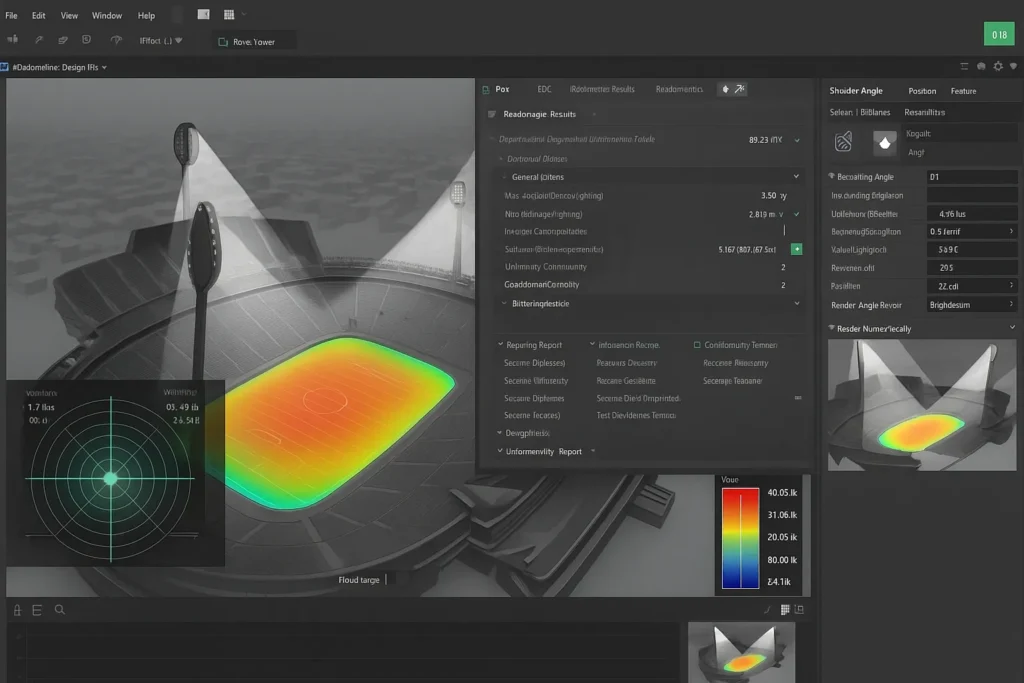
This is why high mast lighting should be evaluated as a project-fit solution, not a default “higher is better” decision. In many projects, the correct answer depends on site size, usage pattern, wind conditions, aiming strategy, and target performance. That is also why project-specific simulation matters more than generic benefits lists.
What Buyers Should Check Before Approving High Mast Lighting
Before approving a high mast lighting system, buyers should verify whether the layout, structural logic, aiming design, and maintenance plan match the actual operating conditions of the site. The decision should not rely only on general claims such as “wide coverage” or “energy saving.”
A practical review checklist should include:
| What to Check | Why It Matters |
|---|---|
| Area size and application type | Confirms whether high mast lighting is really suitable |
| Mounting height logic | Affects coverage, glare, and structural design |
| Layout and simulation | Needed to verify performance across the actual site |
| Aiming strategy | Important for uniformity and operational visibility |
| Wind-load and structural review | Critical for tall poles in exposed environments |
| Maintenance access plan | High-mast systems need realistic servicing strategy |
| Fixture and wattage selection | Should match site use, not only theoretical output |
| Project drawings and technical documents | Needed for approval, coordination, and execution |
For technical review and documentation support, buyers should combine high-mast lighting design and simulation, Engineering Support, and where relevant, High Mast Light project references.
What to Avoid When Evaluating High Mast Lighting
The most common mistake is treating high mast lighting as a universal upgrade without checking whether the project truly benefits from high-pole geometry. In some cases, buyers focus too much on height and not enough on layout efficiency, maintenance, or application fit.
Avoid these common mistakes:
- assuming high mast lighting is always better than lower-pole systems
- choosing by pole height alone without simulation review
- ignoring wind-load and structural implications
- overlooking maintenance access requirements
- focusing only on wide coverage without checking visibility quality
- using generic claims instead of project-specific lighting design
This is especially important in infrastructure and industrial projects where lighting decisions affect both performance and lifecycle cost. In practice, buyers should compare proposed layouts against real design and simulation support before approval.
Conclusion
The main benefits of high mast lighting are broad area coverage, fewer poles, better clearance for site operations, stronger suitability for large open zones, and improved long-term efficiency in the right applications. These advantages make high mast lighting a strong choice for ports, highways, airports, logistics yards, and other projects where lower-pole systems would be less practical.
At the same time, high mast lighting should not be selected simply because it looks more powerful or covers more area in theory. The real value comes when the site is large enough, the operating pattern supports high mounting geometry, and the project includes proper layout, structural review, and maintenance planning.
If you are evaluating a large-area lighting project, explore High Mast Light solutions, review high-mast lighting design and simulation, check relevant High Mast Light projects, or request help through Engineering Support.
FAQ
What are the main benefits of high mast lighting?
The main benefits are wide-area coverage, fewer poles, better site clearance, improved visibility across large zones, and stronger suitability for infrastructure and industrial applications.
Where is high mast lighting most commonly used?
High mast lighting is commonly used in highways, ports, airports, logistics yards, industrial facilities, and other large open spaces that need broad, efficient illumination.
Is high mast lighting more energy efficient?
Modern LED high mast lighting can be more energy efficient than older conventional large-area lighting systems, especially where long operating hours and reduced maintenance are important.
Is high mast lighting always the best solution for outdoor projects?
No. High mast lighting is not always the best choice for smaller sites, localized lighting needs, or projects where lower-height layouts provide better control and easier maintenance.
What should buyers check before approving high mast lights?
Buyers should check site size, application fit, layout simulation, aiming strategy, wind-load conditions, maintenance access, and project-specific technical documentation before approval.