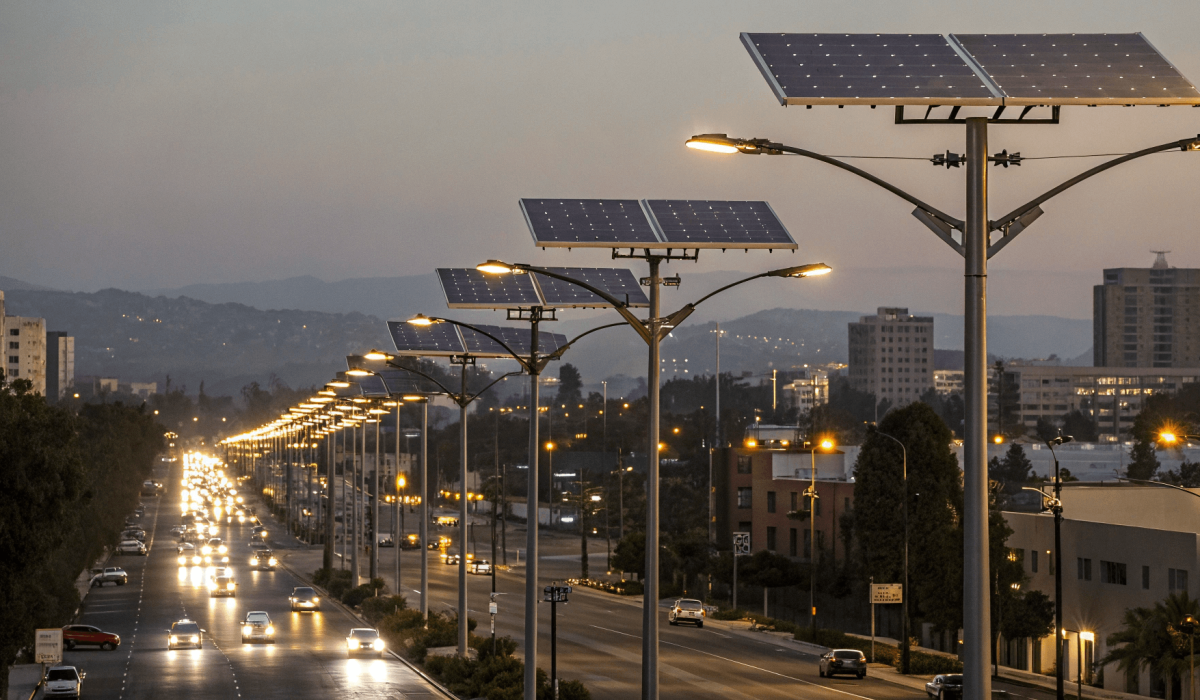
A solar street light does more than illuminate a road after dark. In real projects, it can improve public safety, reduce dependence on unstable grid power, support local activity at night, and help governments extend lighting coverage without the recurring electricity cost of conventional systems.
For municipalities, EPC contractors, and development-focused projects, the value of solar street lighting is not only environmental. It is also practical: faster deployment, lower operating cost, and visible community impact.
Quick Answer
Solar street lights benefit communities by providing reliable off-grid lighting that improves nighttime visibility, supports safer movement, extends public activity after sunset, and reduces long-term electricity costs.
In many projects, they are especially valuable where communities face:
- limited or unstable grid power
- high trenching and cabling cost
- cable theft or vandalism risk
- rural or peri-urban expansion needs
- pressure to deliver visible infrastructure improvement quickly
For EPC and public-sector buyers, the strongest case for solar street lighting is usually not “green technology” alone. It is the combination of lighting access, resilience, lower operating burden, and easier deployment in hard-to-serve areas.
Need a scenario-based recommendation for roads, communities, parking areas, or remote public projects?
Explore Lighting Solutions
Request Engineering Support (24H)
Why Street Lighting Matters for Communities
Street lighting is one of the most visible forms of public infrastructure. When it is missing, the effect is immediate: roads feel less safe, movement becomes harder after dark, and public areas lose activity earlier than they should.
Well-planned lighting can support communities in several practical ways:
- improve visibility for drivers, riders, and pedestrians
- increase confidence when moving after dark
- support business activity in evening hours
- make public spaces more usable
- reduce dependence on fragile grid infrastructure in underserved areas
In many regions, conventional street lighting also comes with persistent problems such as delayed grid extension, blackout exposure, high cable cost, and maintenance difficulty. That is why solar street lighting is often considered not only as an energy choice, but as an infrastructure delivery strategy.
If your project is still at the early planning stage, you can review suitable deployment scenarios here:
Solar Street Lighting Solutions for EPC & Public Projects
Solar Street Lights as a Practical Infrastructure Solution
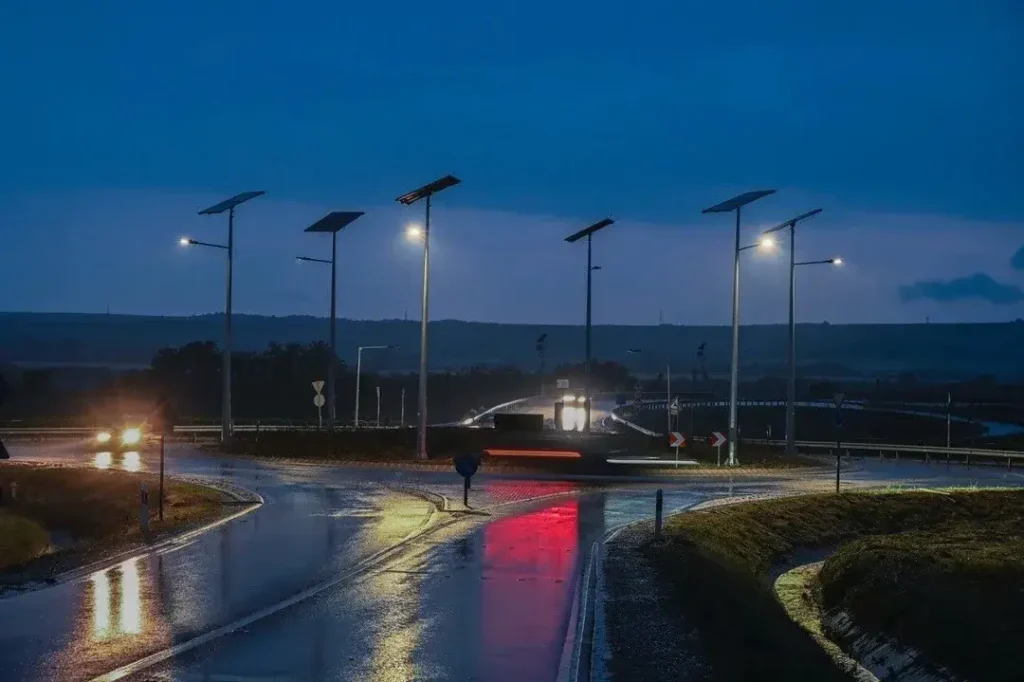
ALT: motion sensor solar street lights installed for outdoor road or community lighting
A solar street light typically combines a solar panel, battery, controller, LED luminaire, and pole system into one independent lighting unit. During the day, the panel charges the battery. At night, the controller powers the luminaire according to the operating logic set for the project.
For communities, that independence matters because it means lighting can still work where grid access is weak, delayed, or costly to extend.
For project teams, the practical benefits often include:
- no trenching for power cable in many applications
- no monthly electricity bill for the lighting system
- better resilience during grid failure
- faster deployment in remote or developing areas
- simpler expansion in roads, compounds, or public spaces not yet fully electrified
This is why solar lighting is often used in:
- municipal roads
- community streets
- peri-urban expansion areas
- parks and public compounds
- rural roads and social infrastructure corridors
To compare different configuration directions for roads, public areas, and solar applications, use the main product hub here:
View Product Categories
Safety Benefits of Solar Street Lights
Better Nighttime Visibility
The most immediate community benefit of solar street lighting is better visibility after sunset. Roads, walkways, intersections, and public areas become easier to navigate, especially in places where darkness previously limited movement.
This matters for:
- pedestrians returning home after dark
- riders and drivers on local roads
- school zones or clinic access roads
- markets and public gathering areas
- residential streets with limited existing infrastructure
Good lighting does not solve every public-safety issue by itself, but it improves one essential condition: people can see and move more confidently.
More Reliable Lighting in Areas With Weak Grid Access
In communities where blackouts are common or grid extension is incomplete, a conventional street light can fail exactly when it is most needed. Solar street lights reduce that dependence because they operate from stored solar energy rather than live grid supply.
That makes them especially relevant for:
- off-grid communities
- unstable grid environments
- newly developed roads
- public works in remote districts
- areas where energy access is improving but not yet dependable
Better Use of Streets and Public Space After Dark
In many communities, lighting changes how public space functions at night. Roads feel more usable, activity lasts longer, and public areas remain active instead of becoming empty immediately after sunset.
For local authorities, that can help support:
- safer evening movement
- stronger community presence outdoors
- more practical use of public infrastructure already built
- higher visibility of development investment
How Solar Street Lights Improve Quality of Life
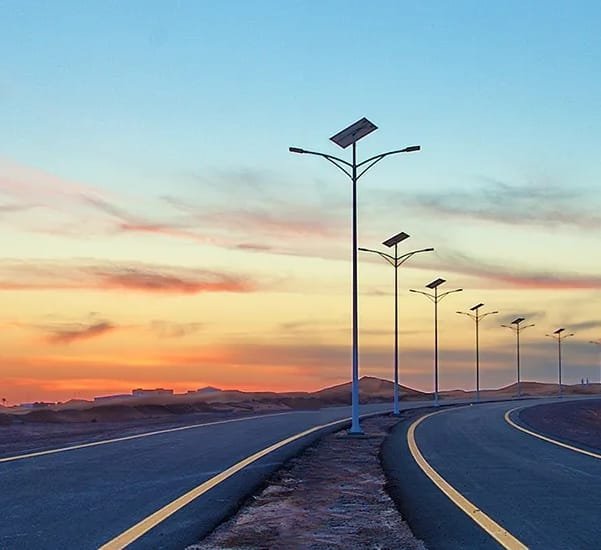
ALT: public road or community area illuminated at night by solar street lighting
The social benefit of street lighting is often discussed in broad terms, but on the ground it is usually felt in simple ways.
With reliable lighting, communities often gain:
- more usable evening hours for daily movement
- better access around shops, schools, clinics, and community roads
- greater comfort in walking, cycling, or waiting outdoors
- more visible public investment, which improves confidence in local infrastructure delivery
In rural and peri-urban areas, this can be particularly meaningful because one lighting project may serve several purposes at once: mobility, safety, local commerce, and visible community improvement.
For governments and EPC teams, this is also why solar street lighting performs well as a public-facing infrastructure project. The results are easy to see, easy to explain, and closely tied to daily life.
For regional deployment considerations such as hot climates, heavy rain, dusty environments, or African and Middle East market conditions, see:
Markets We Serve
Economic Benefits for Communities and Project Owners
Solar street lights are usually evaluated first for energy savings, but the economic case is broader than that.
Lower Operating Cost
Because the system does not consume grid electricity for nightly operation, solar lighting can reduce recurring energy expense significantly in the right application.
Lower Civil and Cabling Burden in Some Projects
Where trenching, cable routing, transformer coordination, or utility connection would otherwise be required, solar lighting may reduce infrastructure complexity.
More Predictable Lifecycle Logic
For municipalities and public buyers, the more useful question is not only “What is the unit price?” but also:
- What will this cost to operate?
- How often will maintenance be needed?
- Is grid dependency a long-term risk?
- Can this be deployed faster than conventional lighting?
That is why many tenders now pay more attention to lifecycle cost, maintenance logic, and documented configuration assumptions rather than first cost alone.
If you need reviewer-ready support such as DIALux/Relux outputs, IES/LDT files, BOQ-ready notes, drawings, or a tender pack, start here:
Engineering Support Hub
Why Solar Street Lights Matter in Remote or Underserved Areas
One of the strongest use cases for solar street lighting is where traditional infrastructure is hardest to extend.
These include:
- remote roads
- rural settlements
- new development zones
- camp-like environments
- roads serving schools, clinics, or public compounds
- municipalities with limited power availability or tight utility coordination
In these settings, solar lighting is often not just an alternative to conventional street lights. It may be the more realistic deployment path.
This is especially true where the project needs to move quickly, avoid cable theft risk, or operate without depending on a stable utility network.
Project Confidence: Why Documentation and Quality Still Matter
Communities benefit from solar street lights only when the system is properly designed, correctly sized, and built with components that can hold up in the actual project environment.
That is why serious buyers increasingly look beyond marketing claims and ask for evidence such as:
- product documentation
- QC and inspection records
- battery and controller reliability references
- waterproofing and testing capability
- shipping and compliance documents
- traceable project deliverables
You can review Sunlurio’s manufacturing and QC positioning here:
Manufacturing & Quality
For public tenders and EPC projects, this point matters a lot. A solar light that looks attractive in a brochure but lacks clear engineering documentation can create approval risk, maintenance risk, or performance disputes later.
Real-World Relevance: Communities Need Proven Deployment, Not Only Claims
When public buyers or contractors evaluate solar street lighting, they usually want more than a statement about benefits. They want to know whether the system has already been deployed in similar conditions and whether the supplier can support real project workflows.
That is where project references become useful.
Project case pages help answer practical questions such as:
- Has this type of system been used at scale?
- Has it been deployed in Africa, the Middle East, or Southeast Asia?
- Were the applications roads, highways, compounds, or community areas?
- Is there evidence of BOQ, IES, or project configuration logic?
You can review reference projects here:
See Project References
A Brighter Future: Solar Street Lights in Smarter Public Infrastructure
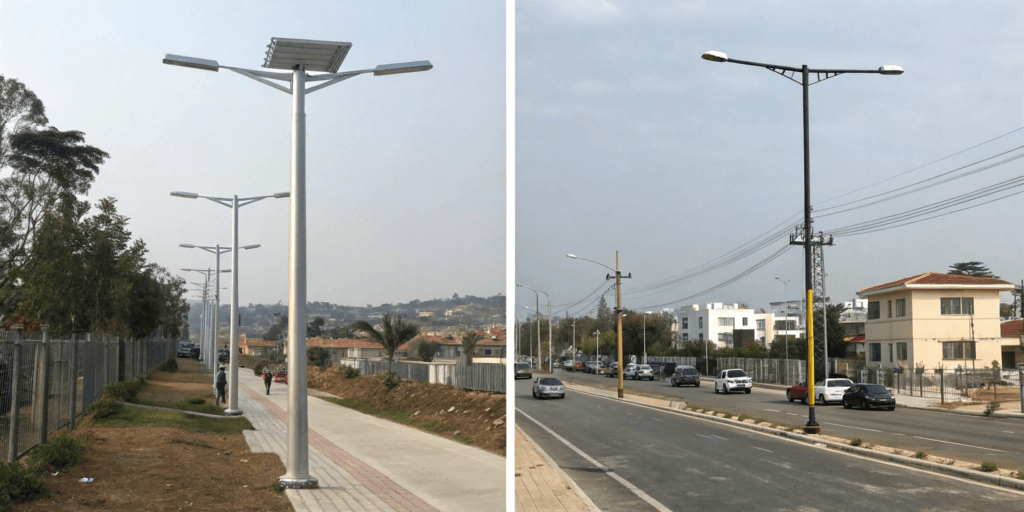
ALT: comparison concept showing conventional lighting and smart solar street lighting for public infrastructure
As more cities, municipalities, and public developers look for resilient infrastructure, solar street lighting is increasingly being considered alongside:
- smart control systems
- motion sensing
- remote monitoring
- fault alerts
- battery status tracking
- adaptive dimming strategies
Not every community project needs advanced controls. In many cases, a standard and well-sized solar street light is enough. But for larger networks or maintenance-sensitive deployments, monitoring functions can improve visibility into system performance and service planning.
That broader direction makes solar street lighting more than a standalone product. It becomes part of a wider public-lighting strategy.
Conclusion
Solar street lights benefit communities because they bring together three things that many public projects need at the same time:
- reliable lighting
- lower operating dependence on the grid
- visible, practical community impact
They can improve nighttime visibility, support public movement after dark, extend the usefulness of streets and public areas, and reduce the burden of electricity cost in suitable applications.
For municipalities, EPC contractors, and development-oriented projects, their value is strongest where conventional lighting is too slow, too costly, or too dependent on fragile grid conditions.
The real question is not whether solar street lights are “good” in theory. It is whether the system is correctly matched to the road type, operating conditions, autonomy requirement, maintenance reality, and project budget.
That is where good engineering, documented quality, and project-fit configuration matter most.
Need Help With a Community or Public Lighting Project?
If you are planning a solar street lighting project for roads, communities, municipal streets, compounds, or regional tenders, the fastest next step is to align the application with the right solution path and documentation level.
Next actions:
- Explore Solutions
- View Products
- See Projects
- Request Engineering Support (24H)
- Review Manufacturing & Quality
- See Markets We Serve
FAQ
How do solar street lights benefit communities?
Solar street lights benefit communities by improving nighttime visibility, supporting safer movement after dark, reducing dependence on unstable grid power, and extending the usable hours of streets and public areas.
Do solar street lights work during power outages?
Yes. Because they operate independently from the utility grid, solar street lights can continue working during grid outages if the system has been properly sized and charged.
Why are solar street lights useful in rural or remote areas?
They are useful in rural or remote areas because they reduce the need for trenching, utility connection, and grid dependence, which can make deployment faster and more practical.
Are solar street lights cost-effective for municipalities?
They can be cost-effective for municipalities, especially where electricity cost, trenching, cable installation, or unreliable grid service makes conventional lighting more difficult or expensive over time.
Can solar street lights support smart city or monitored lighting projects?
Yes. Some solar street lighting systems can include remote monitoring, motion sensing, dimming logic, and fault-alert functions when the project requires those features.