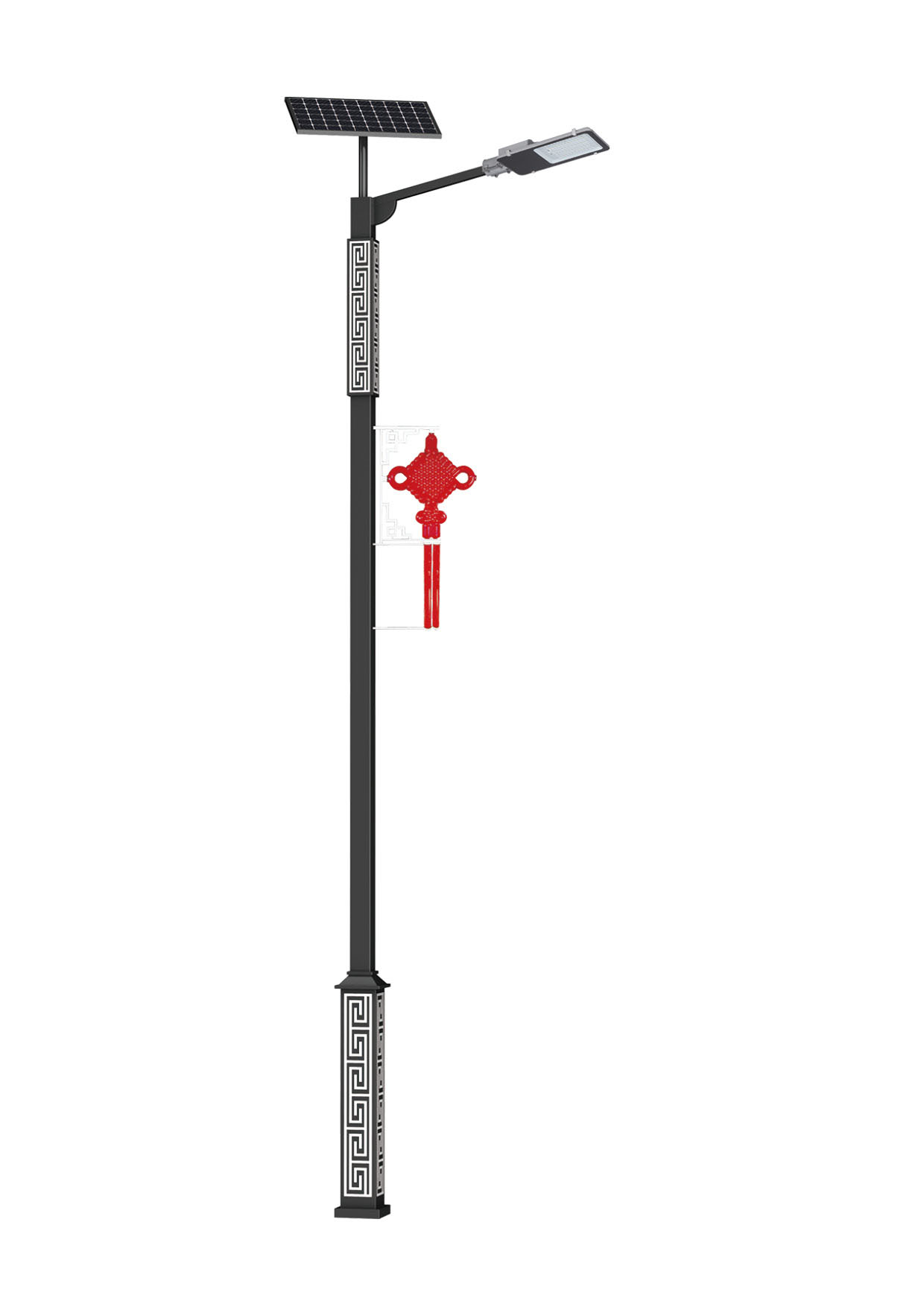

Thailand — Split Solar Street Lighting (7 m | 60 W | 2024)

Reference deployment using 7m poles and 60W split solar street lights for road and public-area sections. Deliverables can be aligned to BOQ and reviewer scope on request.
Country / Area 🇹🇭 Thailand | Road & public-area sections (scope-based)
Client Type EPC Contractor / Tender Workflow Reference
Application Road lighting + public-area segments (as required)
Lighting Type Split Solar Street Lighting
System Architecture Split solar kit (remote PV + LiFePO4) | configuration sized by autonomy and local conditions
Pole Height & Spacing 7 m poles | layout-dependent spacing (by road width & targets)
Luminaire Power 60 W (reference)
Controls Dusk-to-dawn + programmable dimming (motion optional)
Deliverables IES / BOQ (on request) | drawings & layout notes (as required)
Year 2024

Project Background

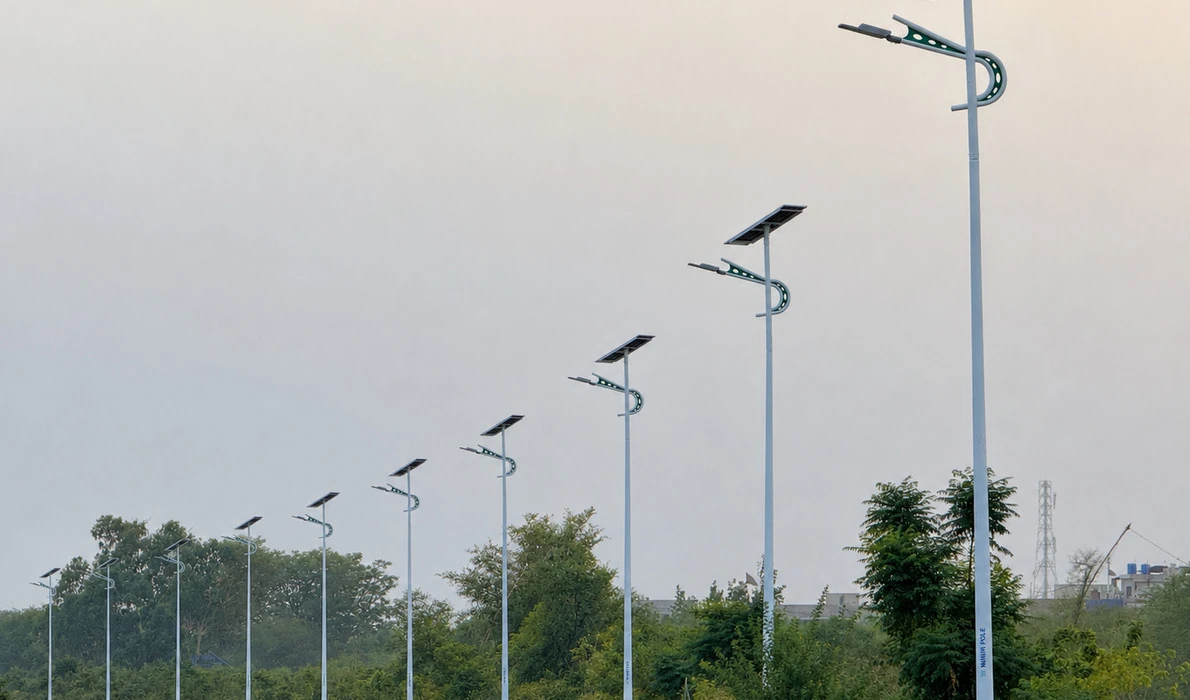
Reference deployment in Thailand (2024) using 7m poles and 60W split solar street lights for road and public-area sections. The EPC workflow prioritised documented layout assumptions (pole height, spacing intent, optics), clear deliverables (IES/LDT on request, BOQ mapping notes), and practical acceptance checks to reduce installation risk and rework.
Technical Configuration (Typical Range)
Roadway optics with IES photometric files available for layout verification (on request)
Typical mounting: 7 m poles with 60 W luminaires, spacing set by road width and maintained lux targets
Split architecture: remote PV + LiFePO4 battery sized by autonomy and local conditions (configuration range available)
Dusk-to-dawn operation with programmable dimming profiles (motion optional)
Surge protection and IP rating aligned to tender or EPC requirements (scope-based)
Installation and acceptance notes provided for mounting interface, wiring, and traceability checks (on request)

Scope & Assumptions

A concise summary of what this reference covers and the verification inputs behind it.
Scope (Reference Deployment)
  • Coverage: split solar street lighting reference deployment in Thailand (2024), scope-based sections
  • Use case: EPC / tender workflows requiring verifiable assumptions and auditable notes
  • Deliverables referenced: IES photometry + BOQ notes (on request)
  • Configuration approach: 7m poles with 60W baseline, layout tuned to road width and targets
Verification Inputs (Assumptions Documented)
  • Pole height: 7 m (reference)
  • Spacing: layout-dependent, documented per section
  • Optics: roadway distribution verified using IES files (on request)
  • Targets: maintained lux & uniformity per project brief (scope-based)
  • Controls: dusk-to-dawn with programmable dimming (motion optional)
Detailed verification inputs can be shared in a redacted pack or under NDA for tender review.

Photos & Acceptance Notes

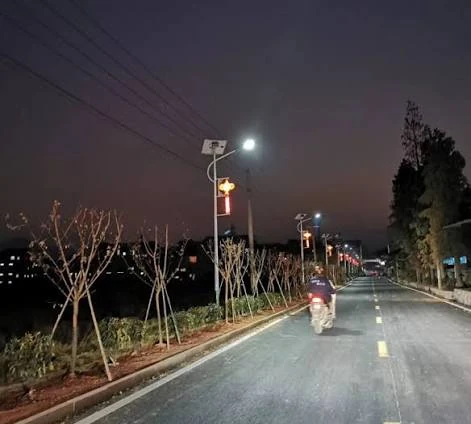
Field photos confirm the deployment is real. The notes below summarize typical site acceptance checks used by EPC teams to reduce rework and sign-off risk.
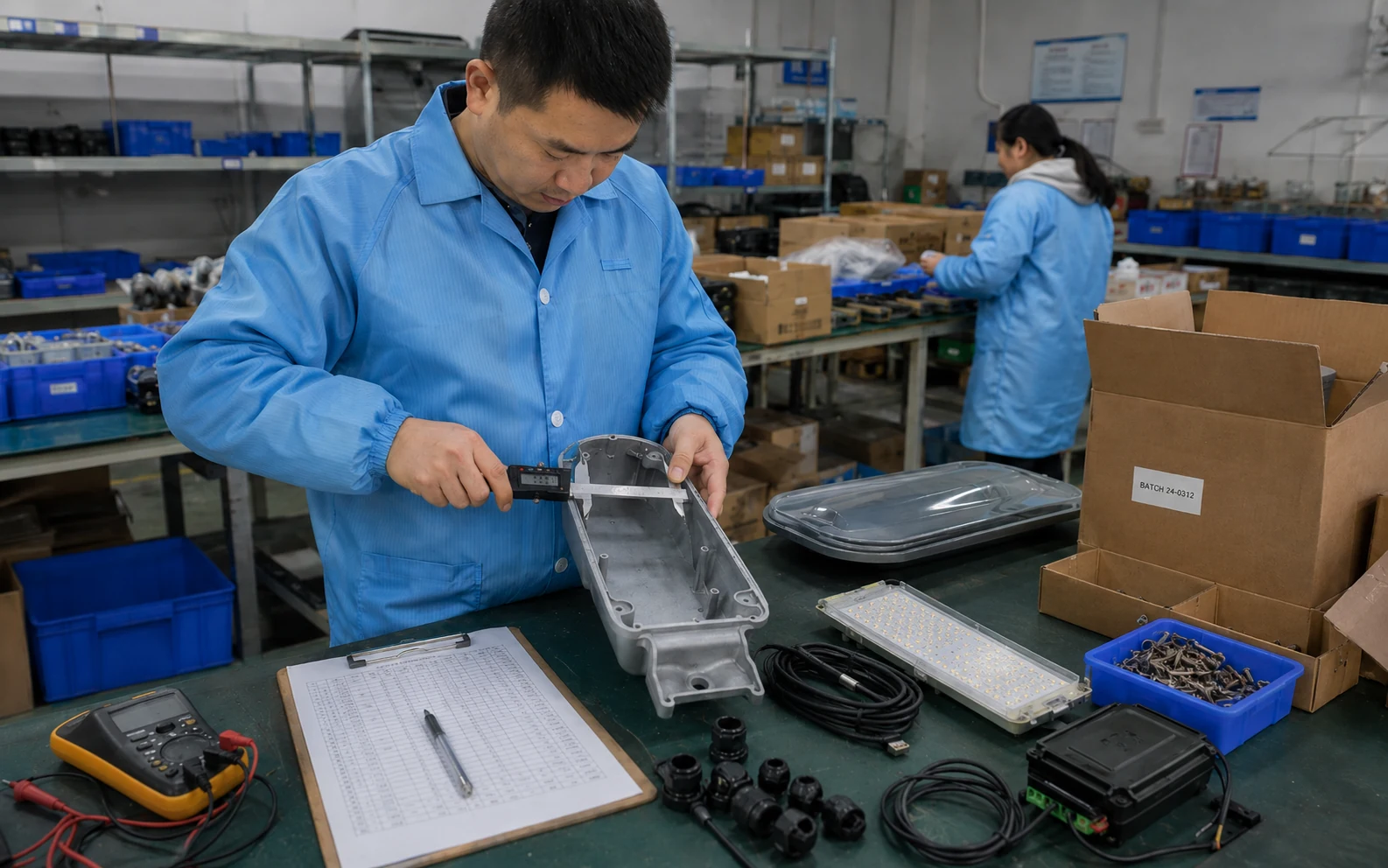
Acceptance Notes (Typical)
✓ Bracket / Arm Interface
Verified against drawings (spigot size, orientation, fasteners).
✓ Wiring & Polarity
Checked before commissioning; glands sealed and connectors secured.
✓ Controller Label / ID
Recorded for traceability (batch/serial, configuration version).
✓ Pole Verticality & Base
Checked after installation (verticality, base fastening).
✓ PV Mount & Cable Routing
PV bracket and cable routing verified; no pinch points or shading risks.
✓ Lux Spot-Check (Optional)
Performed on a representative section for visibility and uniformity.
Tip: Full checklist and traceability tables can be shared in a redacted pack (NDA available).

Deliverables Provided

Reference deliverables available for tender review and verification. Browse samples in the resource pages or request a project-ready pack.

IES / LDT Photometric Files

Browse IES files used for roadway optics verification and layout checks. Suitable for EPC submissions and audit trails.

BOQ (Bill of Quantities)

Review BOQ examples aligned to scope, accessories, and configuration ranges for procurement and budgeting.

Drawings & Acceptance Checklist

Download or request CAD drawings, installation details, and datasheets for approvals.

DIALux / Relux Outputs

See report samples and typical verification items (maintained lux, uniformity, assumptions, and result tables).

FAQ (Tender & Verification)

Quick answers to common EPC / tender questions for this reference.
What documents can be shared for tender submission?
Typical items include datasheets and drawings, BOQ mapping notes, and (when required) IES/LDT photometric files and layout outputs. The pack can be aligned to the reviewer checklist and declared assumptions.
Do you provide IES files and layout assumptions for verification?
Yes. Model-matched IES/LDT files can be provided on request for optics verification. Layout assumptions (pole height, spacing intent, road width, targets) can be documented for EPC review.
How is the 7m / 60W split-solar configuration verified?
This reference uses 7 m poles with 60 W luminaires as a baseline. Final spacing and optics are selected by road width and maintained lux targets. Solar sizing (PV + LiFePO4) is scope-based and documented when required by the reviewer checklist.
Can you share photos and acceptance records under NDA?
Yes. Field photos and typical acceptance notes can be shared in a redacted pack. NDA can be used for traceability items (labels/IDs, configuration records, checklists) when requested by the client.
What inputs do you need to propose a similar deployment?
Country/city, road type and width, pole height preference, quantity, operating hours and dimming intent, and any targets (lux/uniformity) if specified. If available, share the BOQ/spec so deliverables can be matched to the reviewer scope.

Get in Touch with Sunlurio Manufacturer

Feel free to ask any question to us

Sunlurio street light manufacturer replies within 24 hours with factory-direct support, technical suggestions and quotations for solar or LED street lighting projects.

Request Your Custom Quote – No Middlemen