

I’ve always believed that brightness tells the real story of a solar street light — not the brand, not the pole, but the light itself.
When we install solar lamps in rural roads or dusty border towns, people don’t talk about panels or controllers. They talk about how bright it feels at night. That sense of safety — that’s the true value. So, let’s have an honest conversation about brightness: what it really means, what affects it, and how I’ve seen it change the way communities live after sunset.
Introduction – The Importance of Brightness in LED Solar Street Lights
Brightness is what turns a piece of hardware into something human — visibility, comfort, and safety.
In Uganda, one contractor told me, “If the light doesn’t shine bright, people think it’s broken.” He wasn’t wrong. Brightness shapes trust — if the street looks dim, even a perfect installation feels like failure.
But brightness isn’t just power. It’s design, optics, battery health, and light distribution. And LEDs have rewritten the rules: more light, less energy. That’s why nearly every solar lighting project I’ve done in the last five years has moved to LED — not for trend, but for performance that people actually notice.
Understanding LED Solar Street Light Brightness
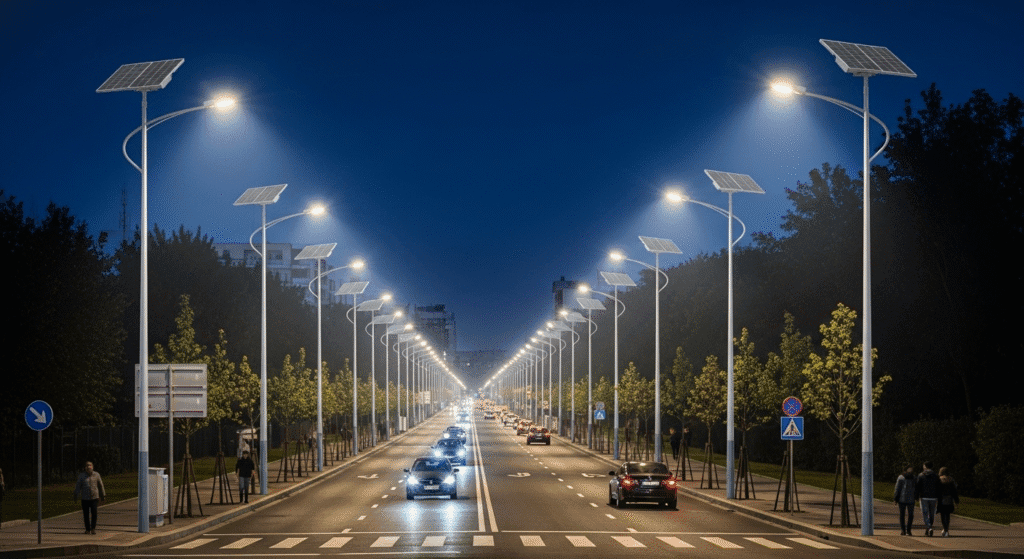
What Does Brightness Mean in LED Lighting?
In real terms, brightness is what your eyes perceive — it’s how light fills space, not just how many watts it burns.
We measure it in lumens. Simple rule: more lumens, more light. But perception also depends on height, color temperature, and even how dusty the lens is. I’ve seen two “identical” lights in Nairobi perform completely differently just because one was mounted 1.5 meters higher.
The Lumens Breakdown
Lumens are output; lux is how that light spreads; luminous efficacy is how efficiently it happens.
When I explain this to clients, I often say: “lumens tell you how much, lux tells you how well.”
Here’s a rough table I use in project briefings:
| Application | Recommended Lumens | Lighting Range |
|---|---|---|
| Pathway | 800–1200 lm | 5–10 m |
| Street | 3000–6000 lm | 10–25 m |
| Parking Lot | 8000+ lm | 20–40 m |
✅ Snippet:
Q: How bright should LED solar street lights be?
A: Around 3000–8000 lumens, depending on height, road width, and the use case.
There’s no magic number — lighting should match purpose, not price.
Brightness vs. Wattage – Understanding the Difference
I get asked this too often: “Can we get 100W solar lights? They must be brighter, right?” Not always.
Brightness depends on efficiency, not just wattage. A 20W LED can outshine a 60W halogen easily. The difference lies in how much of that wattage becomes light instead of heat.
In one project in Garissa, we replaced 30W CFL solar lamps with 12W LED units. People thought we had upgraded the system, but it was just better efficiency — same sun, better use.
Lower wattage means smaller batteries, less maintenance, and longer system life. That’s not just engineering — that’s cost saved every single night.
Adaptive and Smart Brightness Control
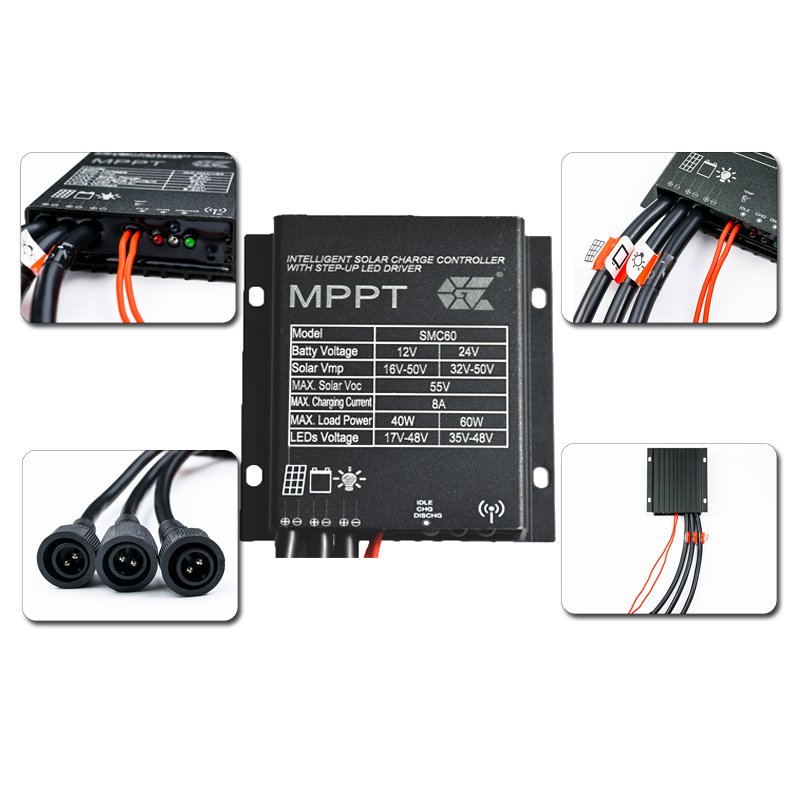
What Is Adaptive Brightness?
Adaptive brightness is when your light knows how to think — it shines only when needed.
I love this feature for highways and village roads. When no one’s around, it dims to 30%. The moment motion is detected — full power. It saves energy and stretches battery life during cloudy weeks.
Smart Control Technologies
Sensors and smart controllers make solar lighting feel alive.
- Motion sensors: Brighten instantly when movement is detected.
- Photocells: Handle dusk and dawn without timers.
- Time scheduling: Adjust brightness throughout the night.
- IoT control: Monitor voltage and performance remotely — great for municipal projects.
✅ Snippet:
Q: What is adaptive brightness in LED solar street lights?
A: It’s a self-adjusting system that changes brightness automatically based on motion or light conditions — smarter and more efficient.
Components That Influence LED Solar Street Light Brightness
If the light’s too dim, don’t blame the LED first — brightness is teamwork.
Panel, battery, LED, controller — they all decide how bright your night becomes.
Solar Panel Efficiency
A panel that collects poor sunlight means a weak light at night.
Clean panels often, avoid shading, and mount them at a good tilt (your local latitude usually works). I once fixed a “low brightness” complaint simply by re-angling panels that faced west instead of south.
Battery Capacity and Performance
Battery is the real backbone.
A weak or old battery can’t feed consistent light. LiFePO₄ batteries perform best — they hold voltage longer through the night and survive heat better than gel types.
LED Light Source
LEDs vary wildly — check the lumens per watt and color tone.
Cool white looks brighter but can be harsh; neutral white offers comfort. Always balance brightness and atmosphere — streets shouldn’t look like football fields.
Controller and Circuit Management
A smart controller makes sure every component speaks the same language.
Overcharging kills batteries, undercharging dims lights. Good controllers regulate both, keeping output stable all night.
Commercial Solar Street Lights vs. Other Lighting Systems
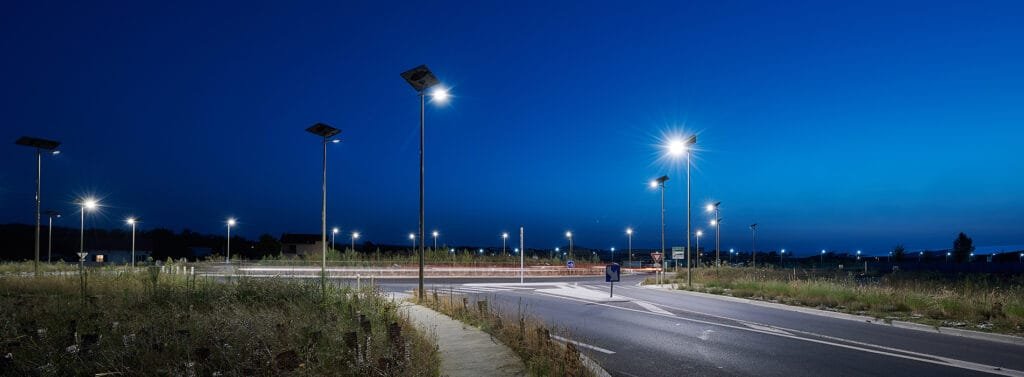
Common Components and Similarities
Every system — grid, hybrid, or off-grid — shares the same DNA.
Panel, controller, battery, LED, pole. What differs is how they get and manage power. Solar brings freedom — no grid, no monthly bills.
Grid-Tied vs. Off-Grid Systems
| System Type | Description | Power Source | Ideal Use |
|---|---|---|---|
| Grid-Tied | Solar plus backup grid | Hybrid | Urban roads |
| Off-Grid | Fully solar, self-powered | Solar only | Rural or remote sites |
Off-grid is where I’ve seen the most transformation — one small light changing how a whole street feels after dark.
LED Solar Street Light Control Options
Controls decide how lights behave — and how long they survive.
Photocell Controls (Light Sensors)
They’re simple and reliable. Lights wake up at dusk, sleep at dawn. No timers, no mistakes.
Motion Sensors
Perfect for rural or low-traffic areas. Less light when idle, full brightness when movement happens — smart energy discipline.
Time-Based Controls
For predictable environments. I set 100% brightness till 10 PM, then drop to 50%. Balanced and efficient.
Remote and Smart Controls
For large-scale projects, remote management saves headaches.
You can detect battery faults, adjust schedules, or even switch modes from a phone app.
Applications and Benefits of LED Solar Street Light Brightness
Enhancing Road Safety
Bright, even lighting cuts accidents and improves driver visibility.
I’ve walked many unlit roads before installation — people move cautiously, even fearfully. Two weeks later, with bright LEDs? Completely different mood.
Urban Planning and Public Security
Lighting changes how people use spaces.
In one Nairobi market, vendors extended hours just because solar lights made them feel safe. The energy efficiency is great, but the human impact — that’s the real story.
Environmental and Economic Impact
LED solar lighting reduces emissions and saves costs quietly, night after night.
Less diesel backup, less wiring, fewer replacements. The savings accumulate without anyone noticing — until the numbers speak.
The Future of LED Solar Street Light Brightness
AI and Predictive Brightness Control
AI will soon adjust light intensity based on real use — traffic, weather, even festivals.
Imagine a system that learns from your town’s rhythm and lights accordingly. It’s coming, sooner than most expect.
Integration with Renewable Technologies
Next-gen lights will combine solar, wind, and smart storage.
Hybrid lighting is already being tested in Ethiopia — panels and micro wind turbines sharing one pole. Efficiency through diversity.
Conclusion – Shining Toward a Brighter, Greener Future
Brightness is no longer just a technical parameter — it’s the feeling of safety and progress.
When you understand lumens, optics, and smart control, you can design lights that truly serve people, not just specs.
Solar LED street lights are writing Africa’s next energy story — one bright corner at a time.
FAQs About LED Solar Street Light Brightness
How many lumens are needed for a street light?
Usually between 3000–8000 lumens, depending on the road width and pole height.
Do LED solar street lights work on cloudy days?
Yes, if batteries are healthy — a well-sized system runs 1–3 nights without sun.
What’s the best color temperature for street lighting?
Neutral white (4000–5000K) — it’s bright but gentle on the eyes.
How do motion sensors save energy in solar street lights?
They reduce brightness when no one’s around and boost it instantly when motion is detected.
What factors affect LED brightness lifespan?
Dust, poor controllers, heat, and cheap chips. Keep them in check, and your light can last over 50,000 hours.