Why impact resistance quietly decides the fate of coastal solar lighting projects.
Quick Answer
For coastal solar lighting projects, IK10 is usually the safer specification when the site is public-facing, windy, logistics-heavy, or exposed to vandalism and flying debris. IK08 may still be acceptable in lower-risk residential or controlled environments, but in coastal roads, ports, fishing towns, and other exposed sites, the combination of impact risk, salt exposure, moisture ingress, and rough maintenance conditions often makes IK10 the more reliable long-term choice.
Just as important, IK is not the same as IP. A luminaire can have a good IP rating for dust and water protection and still fail early if the lens cracks, the enclosure deforms after impact, or the housing and fasteners are not suitable for coastal service.
If you need help reviewing a coastal solar lighting BOQ, model list, or supplier claim, visit our Engineering Support page.
Need a fast check for a coastal project?
Send us your BOQ, site location, or supplier model list for an IK/IP suitability review before approval.
Request Engineering Support →
Why Does IK08 vs IK10 Matter in Coastal Solar Lighting Projects?
In many coastal solar lighting projects, failures do not begin with the LED chips or the controller. They often begin with something more basic: a cracked lens, a deformed housing, or an enclosure that loses integrity after impact.
That is why IK rating matters. In specification language, IK tells you how well an enclosure resists external mechanical impact. In project language, it answers a more practical question:
Will this light stay sealed, safe, and serviceable after real abuse on site?
On exposed roads and public-access sites, abuse is not hypothetical. It can come from:
- wind-borne debris
- stones or accidental knocks
- vehicle contact during operation or maintenance
- rough handling during installation or servicing
- public interaction or vandalism
In inland, low-contact environments, a lower impact rating may still perform acceptably. But on coastal roads, port zones, fishing communities, transport corridors, and other high-exposure sites, a marginal enclosure can become a maintenance problem very quickly.
What Do IK08 and IK10 Actually Mean?
The IK code is used to classify how enclosures resist external mechanical impacts. For practical solar-lighting discussions, the most common comparison is simple:
- IK08 = 5 J
- IK10 = 20 J
That means IK10 is not a small upgrade. It represents a much higher level of impact resistance.
Practical Comparison
| Rating | Impact Energy | Typical Interpretation | What It Often Means on Site |
|---|---|---|---|
| IK08 | 5 J | Moderate impact resistance | Can be suitable for lower-risk, controlled environments |
| IK10 | 20 J | High impact resistance | Better suited to public-facing, exposed, or abuse-prone project environments |
In specification review, the key point is not only the number itself. It is what that number protects:
- the lens
- the enclosure seal
- the housing geometry
- the battery compartment integrity
- the product’s ability to stay serviceable after accidental abuse
Why IK10 Often Becomes the Safer Choice in Coastal Projects
Coastal projects are difficult because several risks act together, not one by one.
1. Impact Damage Can Turn into Water Ingress
A small impact may not look catastrophic on day one. But if it cracks the lens or distorts the housing, the real failure may start later:
impact → seal weakness → moisture ingress → corrosion, driver issues, or battery-compartment risk
That chain is especially dangerous in all-in-one and integrated solar luminaires, where the panel, controller, battery, and LED system all depend on the enclosure staying intact.
2. Salt Exposure Punishes Marginal Construction
Coastal air, humidity, and wet-dry cycles accelerate material degradation. When a product already has weak lens material, thin housing construction, poor coating quality, or low-grade fasteners, impact damage becomes more serious because the environment is already attacking the system.
This is why coastal review should never stop at “IK10” alone. Buyers should also verify:
- housing alloy and finish
- lens material quality
- gasket and sealing design
- stainless or corrosion-resistant hardware
- anti-corrosion treatment around fixings and interfaces
3. Coastal Sites Often Have More Human and Operational Contact
Ports, fishing towns, public roads, transport yards, market edges, and roadside activity zones usually have more direct human interaction than quiet private estates. That means more chances of:
- thrown objects
- maintenance tools hitting the housing
- reversing vehicles or loading activity near poles
- repeated handling during service work
In those environments, stronger impact resistance is often not a premium feature. It is a risk-control feature.
4. Rough Maintenance Is a Real-World Condition
In many remote or coastal projects, maintenance is not done in laboratory conditions. Crews may use force, remove tight corroded fasteners, or handle fixtures roughly during troubleshooting. A tougher enclosure helps reduce secondary damage during normal field servicing.
IK Is Not the Same as IP, and IP66 Alone Is Not Enough
This is one of the most common procurement mistakes.
IK rating addresses protection against external mechanical impact.
IP rating addresses protection against dust and water ingress.
A coastal luminaire can still fail early when:
- the lens cracks after impact
- the enclosure distorts and the seal is compromised
- corrosion weakens the hardware
- the battery compartment loses protection
- the housing material is not durable enough for the site
So in coastal tenders, the better question is not:
“Is it IK10?”
It is:
“Is the complete luminaire construction suitable for a coastal, public-facing, impact-prone environment?”
That is a much better engineering and procurement question.
What Standards Should Buyers and EPC Teams Check?
For a more credible review, buyers should ask suppliers to align their claims with recognized standards and model-specific documentation.
Core Standards to Check
- IEC 62262 / EN 62262 — defines IK impact protection classification
- IEC 60529 — defines IP code for dust and water ingress protection
- IEC 60598-1 — general safety requirements and tests for luminaires
Useful Supporting LED Documentation
For LED product credibility and long-term lighting discussions, suppliers may also provide documentation linked to:
- IES LM-79 — electrical and photometric measurements
- IES LM-80 — lumen maintenance and color maintenance testing
- IES TM-21 — maintenance projections derived from LM-80 data
These do not replace IK or IP review, but they help buyers evaluate whether the supplier’s performance and durability claims are supported in a more professional way.
How Should EPCs Choose Between IK08 and IK10?
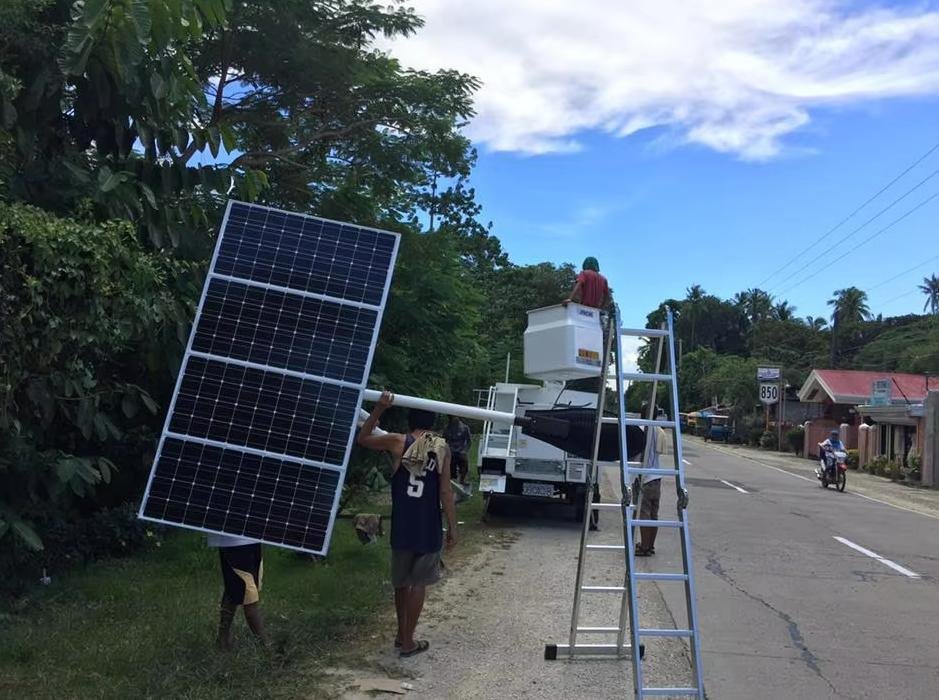
In exposed coastal or public-facing projects, impact resistance should be reviewed together with enclosure sealing, corrosion resistance, and maintenance access.
The decision should be based on site risk, not only on catalog pricing.
IK08 May Still Be Acceptable When:
- the site is controlled or low-contact
- vehicle interaction is minimal
- vandalism risk is low
- the environment is less exposed
- the buyer is not specifying an all-in-one luminaire for a harsh coastal location
Typical examples may include:
- gated residential compounds
- controlled garden lighting
- low-risk internal roads
- private developments with limited public access
IK10 Is Usually the Better Choice When:
- the project is coastal or near salt exposure
- the site is public-facing
- vehicles operate close to poles
- there is frequent human interaction
- the luminaire is integrated or all-in-one
- maintenance access is difficult or expensive
- the buyer wants lower replacement risk over time
Typical examples may include:
- coastal roads
- ports and logistics yards
- fishing communities
- roadside public infrastructure
- transport corridors
- municipal projects with high public visibility
A Simple Field Decision Framework
Use this practical screening logic during specification review.
Ask These Questions
- Is the site close to the sea or exposed to salt-laden air?
- Is there visible debris, gravel, sand, or wind exposure?
- Are trucks, service vehicles, or loading operations active near poles?
- Is the project in a public-access area?
- Is the light an all-in-one design with the battery inside the luminaire housing?
- Would maintenance or replacement be costly after installation?
If several answers are yes, IK10 is usually the safer procurement position.
Lifecycle Cost Matters More Than Catalog Price
A lower first cost can look attractive in comparison sheets. But coastal project buyers should think beyond purchase price.
If the weaker enclosure leads to:
- cracked lenses
- water ingress
- battery-compartment damage
- more frequent replacements
- repeat maintenance visits
- reputation problems after handover
then the cheaper option may become the more expensive option over the project life.
Practical Comparison
| Parameter | IK08 Solar Light | IK10 Solar Light |
|---|---|---|
| Initial price | Usually lower | Usually higher |
| Impact tolerance | Moderate | Stronger |
| Suitability for exposed coastal/public sites | Often limited | Usually better |
| Risk of enclosure damage in abuse-prone environments | Higher | Lower |
| Maintenance predictability | Less stable | More stable |
| Best fit | Controlled, lower-risk sites | Roads, ports, coastal and public-facing projects |
For EPCs and municipalities, this matters because post-installation failure is not only a maintenance issue. It is also an approval, reputation, and warranty issue.
What Should Buyers Verify Beyond an “IK10” Claim?
This is where many tenders go wrong. A datasheet line alone is not enough.
Ask for These Items
| Tender Review Item | What Buyers Should Ask For | Why It Matters |
|---|---|---|
| IK claim | Model-matched IEC / EN 62262 test report | Confirms the rating is supported, not only advertised |
| IP claim | Model-matched IEC 60529 evidence | Separates water/dust protection from impact resistance |
| Luminaire safety | Relevant IEC 60598 compliance documents | Supports broader product safety review |
| Lens material | UV-stabilized polycarbonate details | Helps reduce cracking and aging risk |
| Housing material | Alloy, wall thickness, coating details | Important for durability in coastal service |
| Hardware | Corrosion-resistant fastener specification | Weak hardware can undermine the whole system |
| Battery compartment | Reinforcement and sealing details | Critical for integrated solar lights |
| Test evidence | Photos or video of actual test setup where available | Adds traceability and confidence |
| Project suitability | Similar coastal or high-exposure references | Helps separate true field-fit products from generic catalog products |
A buyer should also confirm that the report matches the actual model code being offered, not a similar product from the same supplier.
Not sure whether a supplier’s IK10 claim is really project-fit?
We can help review the model code, IK/IP documents, housing details, and coastal-use suitability before tender approval.
Ask for a Tender Review →
Real Project Lessons Procurement Teams Should Learn
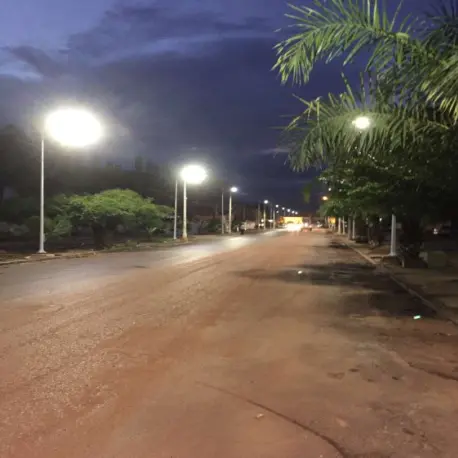
For ports, fishing towns, transport corridors, and other public-access sites, IK rating affects not only lens durability but also enclosure integrity and long-term maintenance risk.
The most useful lesson from field projects is simple:
impact resistance is rarely an isolated issue.
When a luminaire fails after impact, the visible crack is only part of the story. The more expensive consequences usually appear later:
- moisture ingress
- corrosion spread
- battery protection loss
- repeated maintenance
- early replacement
- user complaints after commissioning
That is why procurement review should focus on failure chains, not only on test labels.
Typical Failure Pattern in Marginal Coastal Installations
- Minor impact occurs
- Lens or housing is damaged
- Enclosure integrity is weakened
- Moisture or salt enters over time
- Output, electronics, or battery reliability declines
- Maintenance cost rises
- End-user confidence drops
Typical Outcome in Better-Specified Installations
- Luminaire absorbs routine abuse better
- Lens and enclosure remain intact
- Sealing performance is preserved
- Moisture ingress risk is reduced
- Maintenance intervals stay more predictable
- Handover quality and project reputation improve
Why This Matters Even More for All-in-One Solar Street Lights
All-in-one products combine several critical functions in one housing:
- solar module integration
- battery enclosure
- controller protection
- LED optical chamber
That means a single enclosure failure can affect the whole system. In exposed environments, stronger housing and impact protection become even more important because the consequence of damage is larger than in a separated system architecture.
For that reason, buyers should be especially careful when evaluating all-in-one units for:
- coastal roads
- public-access sites
- transport corridors
- municipal projects with difficult maintenance access
Final Decision: IK08 or IK10?
For coastal, public-facing, windy, or abuse-prone solar lighting projects, IK10 is usually the better engineering and procurement choice.
IK08 still has a place in lower-risk environments. But where impact risk combines with salt exposure, humidity, rough maintenance, and public interaction, the margin for error becomes much smaller.
The real question is not whether IK08 is “bad.”
The real question is whether it is good enough for the actual project environment.
In many coastal EPC and municipal scenarios, buyers will reduce long-term risk by specifying:
- IK10 impact resistance
- suitable IP rating
- corrosion-resistant construction
- verified luminaire safety documentation
- model-matched test evidence
That is a much stronger specification position than asking for a single marketing label.
What Should You Do Next for a Coastal Solar Lighting Tender?
Here is a practical checklist.
Coastal Solar Lighting Tender Checklist
- Require IK10 where the site is exposed, public-facing, or impact-prone
- Verify IEC / EN 62262 test evidence for the offered model
- Check IP rating separately under IEC 60529
- Ask for luminaire safety documentation aligned with IEC 60598
- Confirm lens material is suitable for long-term outdoor abuse
- Review housing alloy, coating, and corrosion-resistant hardware
- Check battery-compartment reinforcement and sealing
- Ask for similar coastal or high-exposure project references
- Avoid approving a product only because a catalog says “IK10”
If you are preparing a coastal EPC tender or comparing supplier offers, you can send us your BOQ, project location, or model list through our Engineering Support page.
You can also review our broader Solutions, Products, and Projects pages for related references.
Working on a coastal road, port, or public lighting tender?
Send us your BOQ, layout, or project pin and we can help you check whether IK08 or IK10 is the safer specification for your site.
Get Coastal Project Support →
FAQ
Is IK10 always necessary for coastal solar lights?
Not always. For low-contact and controlled environments, IK08 may still be acceptable. But for public-facing, windy, abuse-prone, or logistics-heavy coastal sites, IK10 is often the safer choice.
Does IK10 mean better corrosion resistance?
No. IK10 refers to impact resistance, not corrosion resistance. Coastal durability still depends on housing material, coating quality, fasteners, seals, and overall enclosure design.
Is IP66 the same as IK10?
No. IP66 relates to dust and water ingress protection. IK10 relates to mechanical impact resistance. A product may have one without being strong in the other.
Why is IK10 especially important for all-in-one solar street lights?
Because the battery, controller, and lighting components are integrated into one housing. If impact damages the enclosure, the whole system may be affected.
What documents should buyers request from suppliers?
At minimum, ask for model-matched IK and IP evidence, relevant luminaire safety documents, material specifications, and similar project references for exposed environments.
Related Support
If you are comparing coastal solar lighting options for roads, ports, public areas, or difficult environments, our team can help review:
- BOQ alignment
- model selection
- IK / IP suitability
- coastal-risk specification logic
- tender-ready documentation support
Start here: Request Engineering Support