

A field-tested guide on cutting solar lighting cost from procurement to end-of-life, based on 15 years deploying solar street lights across Ghana, Zambia, Kenya, and the Gulf.
Why Solar Light Lifecycle Cost Matters?
Lifecycle cost = upfront price + maintenance + replacements + failures + hidden operational losses.
In real African and Middle-East projects, this number can swing wildly — two systems that look identical on a quotation sheet end up costing 3× different amounts over 5–7 years. I’ve seen this many times in Lusaka municipal corridors or in Dakar’s coastal roads: the cheapest system is almost never the cheapest after year three.
A good lifecycle strategy gives you:
- Fewer battery swaps
- Less night-time downtime (angry calls reduced)
- Better ROI for EPC + municipal clients
- Longer operating lifespan without crew visits
What Factors Affect Solar Lighting Cost Over the Lifecycle?
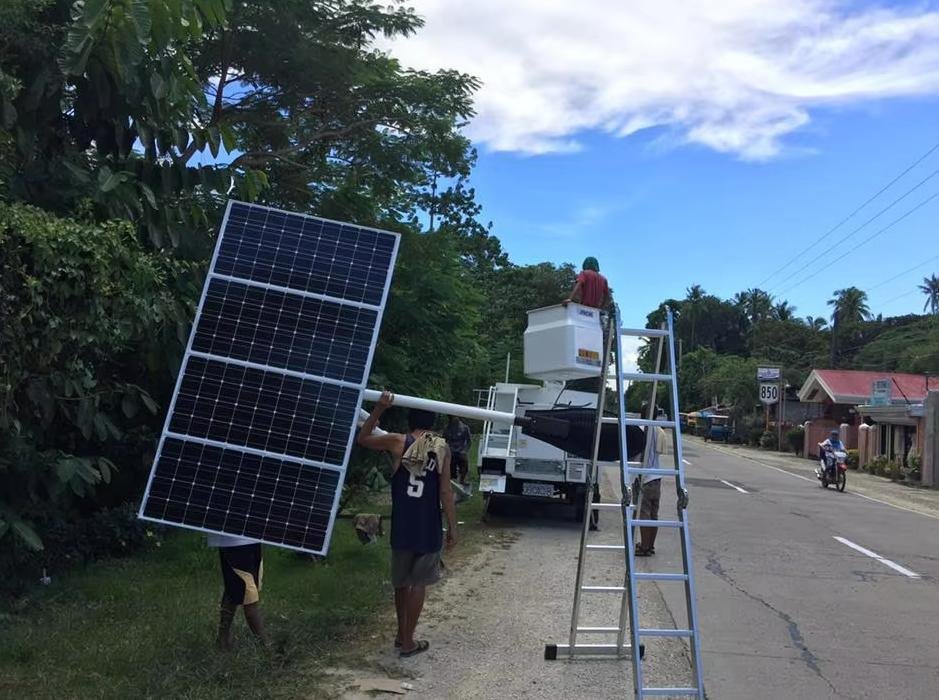
The total cost is driven by the durability and stability of each component.
The weakest link — usually battery or controller — determines the true lifecycle cost.
Breakdown of Major Cost Drivers
| Cost Driver | Typical Issue | Lifecycle Impact | Reduction Strategy |
|---|---|---|---|
| Battery | Fast degradation | Expensive replacements | Use LiFePO₄ + correct sizing |
| Panel | Wrong angle / shading | Low charging & battery stress | Correct tilt, strong brackets |
| Controller | Cheap PWM / unstable BMS | Overcharge/overheat failure | MPPT + protections |
| LED | Low efficiency | Larger panel & battery needed | 180–230 lm/W LEDs |
| Installation | Shading, loose wiring | Reduced lifespan | Proper positioning & cable management |
| Maintenance | Irregular cleaning | Higher load cycles | Quarterly cleaning |
Most failures I encounter in Nairobi or Accra happen because of mismatched components — not the environment itself.
What Cost Drivers Do Users Commonly Underestimate?
Beginners often assume “solar = maintenance-free.” It’s not fully true.
Commonly underestimated factors:
- Battery degradation rate in hot environments (>45°C)
- Poor panel orientation cutting daily energy by 30–40%
- Cheap controllers cooking batteries within 18 months
- Undersized cables causing losses
- Assuming a low upfront price means low final cost
- Ignoring nightly brightness schedules
- Dust accumulation cutting efficiency by 10–20%
Truth:
Low upfront cost ≠ low lifecycle cost.
The lowest quote is usually the most expensive system after year two.
Which Components Lower Solar Lighting Cost Long Term?
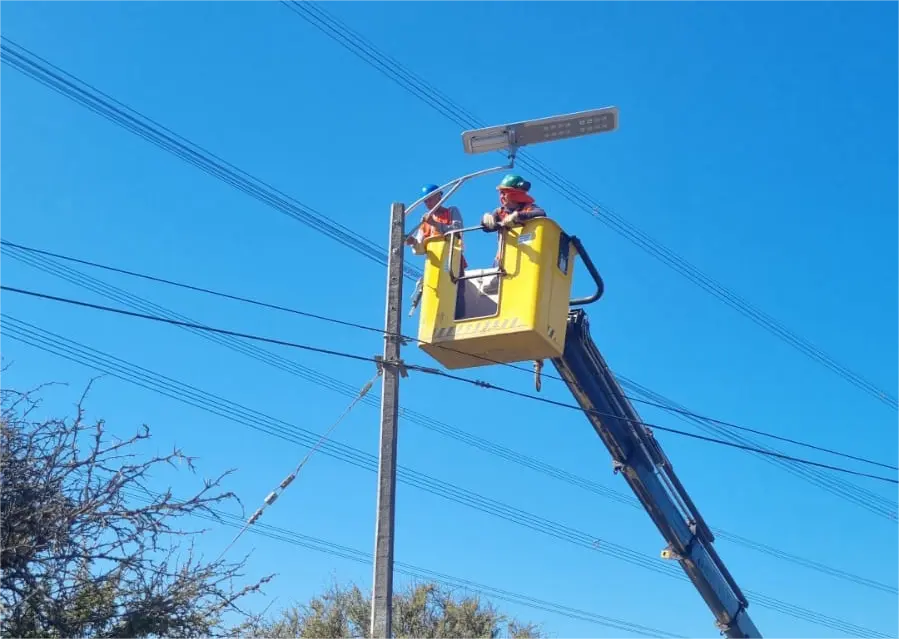
Good components don’t eliminate cost — they prevent expensive failures.
Three rules I always use in EPC consultations:
- Battery first — it defines system lifespan.
- LED efficiency second — it defines system size.
- Controller quality third — it protects everything else.
If any one of these three fails, the whole system is compromised.
Mini Decision Framework
- Hot climate? → Prioritize LiFePO₄ + large capacity reserve
- High traffic? → High-efficiency LEDs (≥200 lm/W)
- Vandal-prone or coastal? → Strong panel bracket + anti-corrosion screws
- Tight budget? → Reduce brightness before lowering component grade
How to Optimize Battery Selection to Cut Lifecycle Cost?
The battery is 50–70% of total lifecycle cost.
Battery Type Comparison
| Battery Type | Cycle Life | Heat Resistance | Maintenance | Real-World Notes |
|---|---|---|---|---|
| Lead-acid (GEL/AGM) | 500–800 | Poor | Frequent | Cheapest upfront, worst long-term |
| NCM Lithium | 1000–2000 | Medium | Low | High energy density but heat-sensitive |
| LiFePO₄ | 3000–6000 | Excellent | Low | Best total cost per cycle |
Key rule:
Don’t buy the cheapest battery — buy the lowest cost per cycle.
Matching Capacity to Climate
- Hot zones (Sudan, Oman): oversize battery by +20–30%
- Coastal/humid regions (Gabon, Dar es Salaam): ensure strong sealing (IP66+)
- Cloudy regions: choose higher Ah capacity or reduce nightly load
How Do High-Efficiency LEDs Lower System Cost?
LED efficacy is lifecycle gold.
Higher lumen/watt → smaller panel → smaller battery → lower cost.
Example:
- 130 lm/W LED → needs 40W power for target brightness
- 200 lm/W LED → needs only 26W
→ 35% smaller panel + 35% smaller battery → 20–30% lifecycle savings.
Quick formula:
Lower wattage → smaller panels → smaller batteries → lower lifecycle cost.
How Controllers Protect the System and Avoid Costly Failures
Not all controllers are equal — though they look similar.
Essential Controller Protections
- Overcharge & over-discharge protection
- Thermal cutoff (>70°C)
- MPPT tracking (10–30% better charging than PWM)
- Low-voltage disconnect
- Reverse polarity protection
- Smart dimming profiles (3–5 stages)
Controllers without protection slowly kill batteries — I’ve seen this repeatedly in Abuja projects.
Optional (but useful):
- Remote monitoring
- Soft start function
- Real-time current/voltage logs
Which Installation Techniques Reduce Lifecycle Cost?

Even a perfect component mix fails if installed poorly.
Key Installation Rules
- Keep panels away from tree shadows & building edges
- Pressure-test brackets; avoid vibration
- Use UV-resistant cables
- Ensure clean grounding
- Apply anti-corrosion treatment on hardware
- Tighten terminal screws after first 30 days (thermal expansion)
A badly positioned panel can cost more than a cheap controller.
How to Optimize Panel Orientation?
Orientation errors are the #1 cause of hidden lifecycle cost.
Practical Guidelines
- Face panels due north (Southern Hemisphere) / due south (Northern Hemisphere)
- Tilt angle ≈ local latitude ± 5°
- Avoid partial shading at all costs — even 10% shade can reduce output >50%
- Use stiff brackets to survive coastal winds
Do / Don’t List
Do:
- Clean panels quarterly
- Keep 1–2m clearance from nearby trees
- Add anti-bird spikes if needed
Don’t:
- Install under power lines
- Over-tilt beyond 60° unless snow-heavy zone
- Allow shadows during peak sun hours
How Weatherproofing Reduces Long-Term Cost
Moisture kills electronics slowly but surely.
Techniques
- IP65–IP66 minimum for fixtures
- Stainless steel or hot-dip galvanized screws
- Anti-corrosion coating in coastal zones
- Silicon-sealed cable entries
- Heat-resistant enclosure for controllers
- Avoid battery directly exposed to sun
Seasonal Inspection Checklist
- Check panel frame corrosion
- Inspect cable insulation cracks
- Verify battery voltage (morning reading)
- Check for dust buildup
- Confirm bracket stability
What Maintenance Practices Reduce Lifecycle Cost?
Simple preventive checks save thousands in future replacements.
Suggested Schedule
- Monthly: Quick visual check, debris removal
- Quarterly: Panel cleaning, battery port inspection
- Annually: Full wiring audit, mechanical tightening, firmware update (if smart system)
Maintenance is cheap; failures are expensive.
Why Routine Cleaning and Inspection Matter?
Dust = less charging = deeper discharge = faster battery death.
In places like Kano or Mombasa, dust alone can cut charging by 10–20%.
Cleaning Steps:
- Switch system off
- Use soft cloth + water
- Avoid detergent
- Wipe brackets and check screws
- Re-tighten cable glands
How to Monitor Battery Health and Prevent Failures?
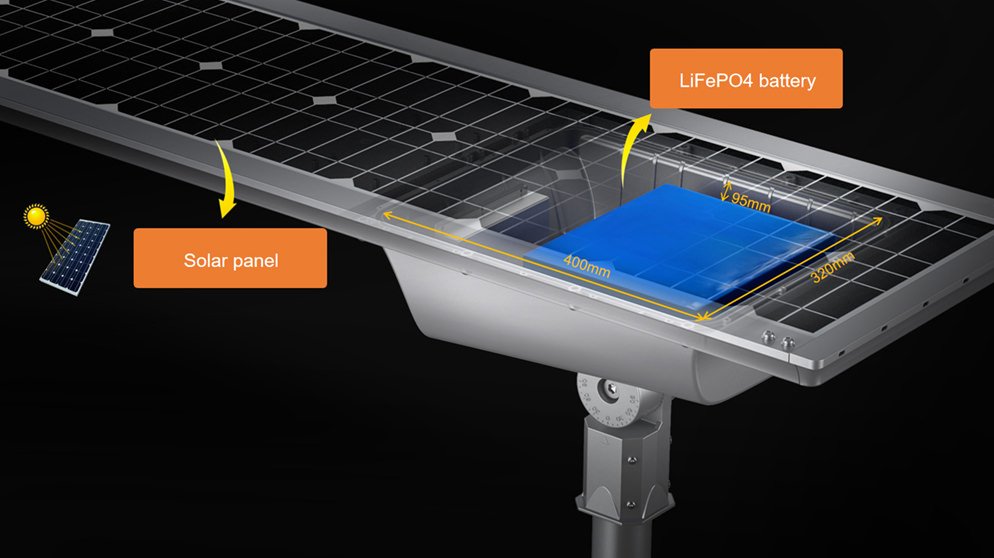
Signs your battery is aging:
- Dim light early in the night
- Voltage drops below 3.1V/cell by dawn
- Swelling or corrosion
- Abnormal heat during charging
Typical replacement interval:
- LiFePO₄: 4–7 years
- NCM: 2–3 years
- Lead-acid: 1–2 years
Troubleshooting: low voltage + fast drop = sulfation or cell imbalance.
What Smart Usage Strategies Lower Solar Lighting Cost?
Load reduction is the fastest way to extend battery life.
Examples
- Switching from full-night 100% brightness → 40/60/100 dimming curve
- Adding PIR motion sensor on pedestrian paths reduces energy use by 50–70%
- Reducing working hours by 1 hour/night = +10–15% lifecycle increase
How to Adjust Lighting Schedules?
Before:
- Full-night 100% brightness → battery cycles 100% daily
After:
- 20% early-night → 60% mid-night → 100% peak hour
→ battery cycles drop 30–40%
When Should You Use Motion Sensors?
Best for:
- Compounds
- Parking lots
- Rural paths
- Security perimeter
Energy reduction estimate:
30–70% depending on traffic.
Q&A:
Does sensor reduce lifespan? No — it extends it.
Will it delay lighting? Good sensors response <0.5s.
Can it work in rain? Yes, if IP65+.
How Do You Calculate ROI & Lifecycle Savings?
Basic formula:
Lifecycle Cost = (Upfront Cost + Maintenance + Replacement Cost) – Energy Savings
Simple Example:
- Upfront: $220
- Battery replacement (year 4): $70
- Maintenance over 5 years: $30
- Total = $320 lifecycle cost
- A cheaper initial $160 system that needs 2 battery replacements = $380 lifecycle cost
Cost Comparison Table
| System | Upfront | Replacements | 5-Year Cost |
|---|---|---|---|
| High-quality | $220 | 1 | $320 |
| Cheap system | $160 | 2 | $380 |
Cheap systems aren’t actually cheap.
FAQ: Reducing Solar Lighting Cost
How long do solar lights last?
5–10 years depending on battery and controller.
How often to replace batteries?
LiFePO₄: 4–7 years. Others sooner.
Does panel size matter?
Yes — undersized panels destroy batteries fast.
Do I need maintenance?
Yes. Quarterly cleaning prevents 20–40% efficiency loss.
What’s the best battery type?
LiFePO₄ for hottest climates and longest lifespan.
Simple Example:
- Upfront: $220
- Battery replacement (year 4): $70
- Maintenance over 5 years: $30
- Total = $320 lifecycle cost
- A cheaper initial $160 system that needs 2 battery replacements = $380 lifecycle cost
Cost Comparison Table
| System | Upfront | Replacements | 5-Year Cost |
|---|---|---|---|
| High-quality | $220 | 1 | $320 |
| Cheap system | $160 | 2 | $380 |
Cheap systems aren’t actually cheap.
FAQ: Reducing Solar Lighting Cost
How long do solar lights last?
5–10 years depending on battery and controller.
How often to replace batteries?
LiFePO₄: 4–7 years. Others sooner.
Does panel size matter?
Yes — undersized panels destroy batteries fast.
Do I need maintenance?
Yes. Quarterly cleaning prevents 20–40% efficiency loss.
What’s the best battery type?
LiFePO₄ for hottest climates and longest lifespan.