
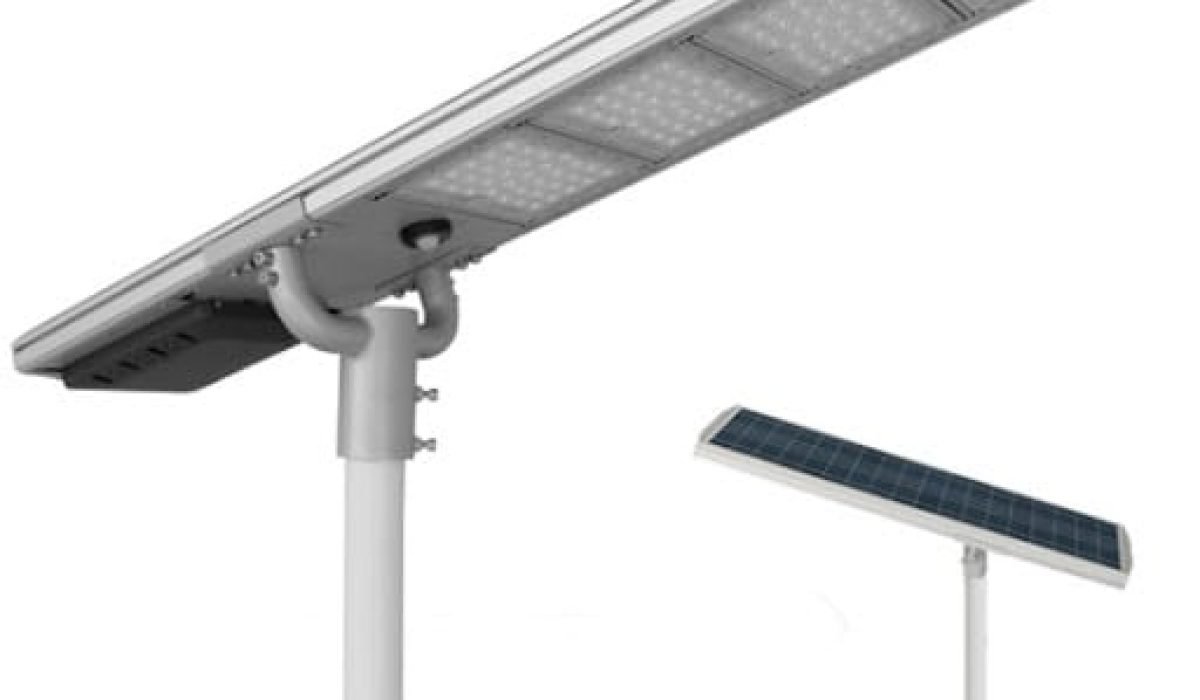
All-in-one solar street lights look simple on paper: one compact unit, no trenching, and a streamlined product form that is attractive for rural roads, compounds, parking areas, and small municipal projects.
But in real installations, many all-in-one systems do not fail because the idea is wrong. They fail because the product was selected for the wrong site conditions, installed without proper assessment, or expected to perform beyond its actual design limits.
In real projects, underperformance usually appears as early shutdown, weak illumination before dawn, poor rainy-season autonomy, or buyer complaints that the installed system does not match the promised specification.
For EPC contractors, municipal buyers, distributors, and project owners, the real question is not whether all-in-one solar street lights can work. It is why they often underperform in real projects and how those mistakes can be prevented before procurement.
This guide explains the most common reasons all-in-one solar street lights fall short in practice, including sizing errors, battery mismatch, false IP claims, poor installation angles, weak site assessment, and unrealistic buyer expectations.
Why All-in-One Solar Street Lights Often Underperform
In many proposals, all-in-one solar street lights are presented as a universal answer: simple, efficient, and almost maintenance-free. That is only partly true.
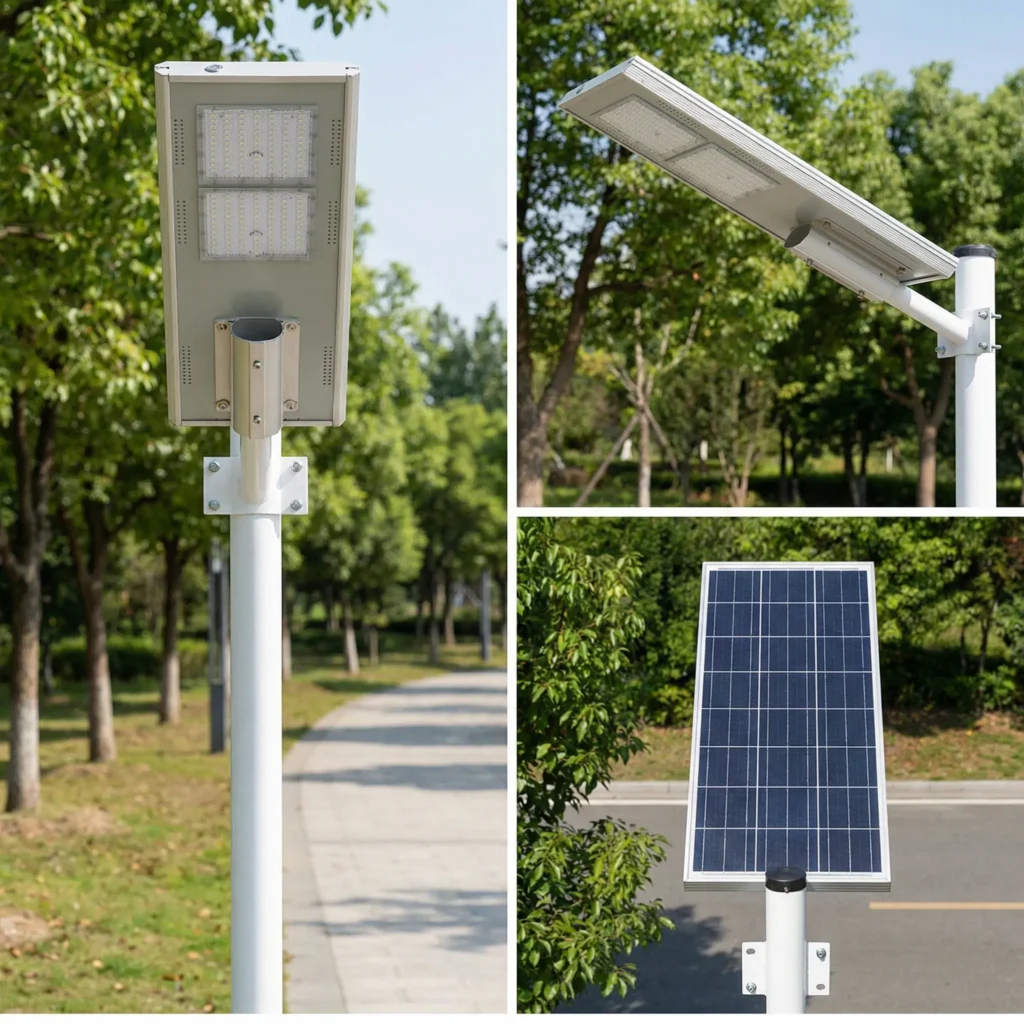
An all-in-one system combines the LED, solar panel, battery, and controller into one housing. That integration saves installation time, but it also creates limitations:
- the battery capacity is constrained by housing size
- the panel area is limited compared with split systems
- heat management becomes more critical
- replacement and servicing options may be less flexible
This means performance depends heavily on matching the product to the actual project environment. If the system is undersized, poorly installed, or used in the wrong application, the result is usually the same: dim output, short runtime, battery degradation, and early complaints.
Mistake 1: Choosing Brightness by Wattage Instead of Real Lighting Needs
One of the most common problems is selecting all-in-one lights by wattage alone. Buyers often compare 30 W, 60 W, or 100 W models without first defining the actual lighting requirement.
In practice, the better starting point is always the application:
- is this for a village road, pathway, parking lot, compound, or municipal street?
- what pole height will be used?
- what spacing is planned?
- what minimum lux or uniformity is required?
A unit that looks “powerful” in a quotation sheet may still perform poorly if the lumen output, beam distribution, and spacing assumptions do not match the site.
What to do instead
Start with the use case, not the wattage label.
| Application | Typical Lighting Need |
|---|---|
| Pathways and pedestrian areas | lower lux, wider spacing sensitivity |
| Small internal roads | moderate lux and controlled distribution |
| Parking areas | broader coverage with glare control |
| Main traffic roads | higher output and stricter layout requirements |
Ask your supplier for:
- a photometric layout
- mounting height recommendations
- spacing assumptions
- real lumen data, not only nominal wattage
A product should be selected around lighting performance, not only around a larger wattage number.
Mistake 2: Ignoring Battery Reality and Nighttime Runtime
Many all-in-one solar street lights fail expectations because the battery is too small for the actual operating profile.
This problem becomes worse when the buyer expects:
- full brightness all night
- several backup days
- high output in cloudy or rainy conditions
- no reduction in performance over time
In a compact all-in-one housing, battery capacity is limited. If the autonomy target is unrealistic, the system may work for a few weeks after installation but begin shutting down early at night once weather conditions change.
In many rainy-season projects, the complaint is not total failure at first. It is that lights become noticeably dimmer or shut down several hours before dawn.
Common battery-related mistakes
- choosing capacity without considering local solar resource
- assuming average weather instead of worst-month conditions
- ignoring dimming strategy
- treating all lithium batteries as equal
- focusing only on Ah without understanding usable energy
What to do instead
Check:
- battery chemistry
- usable battery capacity
- expected nightly runtime
- backup days
- local sunlight conditions
- dimming profile after midnight or low-traffic hours
In many projects, a good dimming strategy is more valuable than simply claiming a larger battery.
Mistake 3: Believing IP Labels Without Verifying Real Weather Resistance
Outdoor lighting products often claim IP65, IP66, or IP67. But in real market conditions, not every label reflects genuine long-term protection.
For all-in-one solar street lights, poor sealing is especially risky because the battery, controller, and LED system are all integrated in one body. If water ingress or dust intrusion happens, the consequences are more serious than in a more separable system.
This becomes critical in:
- tropical rainfall areas
- coastal environments
- dusty roads
- humid compounds
- regions with strong day-night temperature cycles
In coastal or humid zones, poor sealing often shows up first as condensation, corrosion around fasteners, or unstable performance after repeated wet-dry cycles.
What to do instead
Do not rely on a printed IP mark alone. Ask for:
- test reports
- housing construction details
- gasket and sealing approach
- corrosion protection details
- real project references in similar climates
A weak enclosure can destroy battery reliability, shorten LED life, and create repeated field failures.
Mistake 4: Installing the Unit at the Wrong Angle, Direction, or Height
Even a decent product can perform badly if installation is careless.
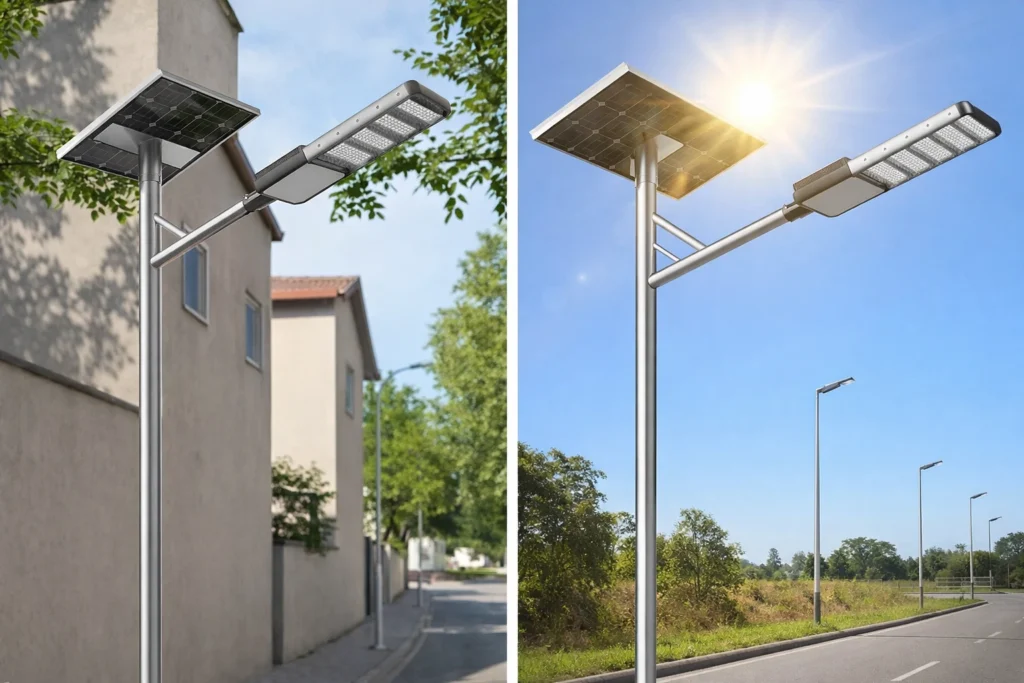
This is one of the most underestimated issues in all-in-one projects. Because the unit is compact, many teams assume it can simply be mounted and forgotten. In reality, panel direction, tilt, and shading still matter.
Common installation mistakes include:
- facing the panel in the wrong direction
- ignoring seasonal sun path
- mounting too close to trees or buildings
- using pole heights that do not match the beam pattern
- using spacing copied from other projects without recalculation
What to do instead
Before installation, confirm:
- panel orientation for the hemisphere
- tilt angle range suitable for the site
- expected shading throughout the day
- pole height and spacing assumptions
- whether nearby structures will reduce charging performance
A poor installation angle can cause chronic undercharging even when the product itself is acceptable.
Mistake 5: Skipping Proper Site Assessment Before Purchase
Many poor outcomes begin before the products even arrive on site.
If there is no real site assessment, buyers may approve a system that does not match:
- road width
- pole spacing
- surrounding obstructions
- local weather
- security conditions
- soil or mounting constraints
This is especially common when procurement is done only from a brochure, a sample, or a low-price quote.
What to do instead
At minimum, assess:
- road or area dimensions
- target lighting level
- pole height
- spacing plan
- nearby shading
- expected traffic level
- local climate and rainy-season conditions
A short site review or layout discussion can prevent months of complaints later.
Mistake 6: Using All-in-One Systems in Applications Better Suited to Split Systems
This is an important selection mistake that many vendors do not explain clearly.
All-in-one solar street lights are useful, but they are not the best choice for every project. In harsher conditions, the compact integrated design may become a limitation.
Examples where all-in-one products may struggle include:
- high-power road lighting
- long operating hours with low solar resource
- very hot environments
- heavy rainy-season demand
- projects requiring larger battery reserve
- applications with tall poles and wider spacing
What to do instead
Ask whether the application is genuinely suitable for all-in-one design, or whether a split solar street light would be more reliable.
In many serious roadway or municipal projects, the right question is not:
“Can we use all-in-one?”
It is:
“Should we use all-in-one here at all?”
Mistake 7: Buying on Price Alone and Ignoring Specification Credibility
Cheap units often look attractive in early comparison tables. But low pricing can hide several risks:
- fake lumen claims
- unrealistic runtime promises
- overstated battery capacity
- weak housing materials
- poor thermal management
- no meaningful warranty support
This is one of the biggest reasons projects fail after bulk purchase. A unit may look acceptable during sample review, then reveal serious inconsistency once installed at scale.
What to do instead
Before bulk order, verify:
- specification consistency
- battery details
- actual housing construction
- warranty terms in writing
- support response after installation
- evidence from completed projects
In project procurement, a cheap failure is rarely cheap after transport, installation, and replacement cost are included.
Mistake 8: Treating All-in-One Solar Lights as “Zero Maintenance”
All-in-one solar street lights are often marketed as low-maintenance, but that should never be understood as no-maintenance.
In real field conditions, performance drops when teams ignore:
- dust accumulation on panels
- loosened mounting bolts
- seal wear
- corrosion
- abnormal battery aging
- housing damage after storms or transport impact
What to do instead
Use a simple maintenance plan:
| Task | Typical Check Frequency |
|---|---|
| Panel cleaning | every 1–3 months depending on dust and rain |
| Fastener and bracket check | every 6 months |
| Housing and seal inspection | every 6–12 months |
| Corrosion inspection | yearly or more often in coastal zones |
| Battery performance review | based on project scale and monitoring access |
Low-maintenance is realistic. Zero-maintenance is not.
Mistake 9: Ignoring Smart Controls When the Project Needs Better Energy Management
Not every site needs sensors, dimming, or remote monitoring. But some projects perform worse because basic control logic was never considered.
Examples include:
- compounds with changing traffic at night
- parking areas with long low-activity hours
- municipal roads that do not need full output until dawn
- projects where maintenance crews need fault visibility
What to do instead
Where appropriate, consider:
- motion sensing
- time-based dimming
- scheduled output reduction
- grouped control logic
- remote status monitoring
Smart control is not just a selling feature. In some projects, it is what makes a limited battery budget work acceptably.
How to Evaluate an All-in-One Solar Street Light More Professionally
If you want to avoid the mistakes above, stop asking only:
- How many watts?
- How many lumens?
- How long is the warranty?
Start asking:
- What is the actual application this model is suitable for?
- What runtime is realistic under weak solar conditions?
- What battery chemistry and usable capacity are included?
- What is the lighting layout assumption?
- Is the IP claim supported by testing?
- What happens in rainy-season or dusty conditions?
- Is all-in-one the right architecture for this project?
These questions separate brochure marketing from real project suitability.
Practical Buyer Checklist Before Approval
Use this short checklist before placing an order:
Product fit
- output suits the application
- battery and runtime assumptions are realistic
- panel size and charging logic fit the climate
- housing protection is credible
Site fit
- shading and orientation reviewed
- pole height and spacing checked
- local climate considered
- installation method confirmed
Supplier fit
- specifications are verifiable
- reports and references are available
- warranty is written clearly
- support and spare-part response are realistic
Conclusion
All-in-one solar street lights can work very well in the right applications. But many underperform because buyers focus on labels and promises instead of real project conditions.
Most failures do not start with the LED itself. They begin much earlier — with poor sizing, weak site assessment, unrealistic battery expectations, false weather-resistance confidence, or choosing an integrated system for the wrong application.
For EPC contractors, municipal buyers, and distributors, the smartest decision is not to ask for the cheapest or brightest unit first. It is to ask whether the proposed all-in-one system actually matches the site, climate, runtime expectation, and maintenance reality.
FAQ: Common Questions About All-in-One Solar Street Light Performance
Are all-in-one solar street lights suitable for municipal road projects?
They can be suitable for some municipal applications, but not for all road projects. The answer depends on road width, pole height, spacing, target illumination level, local solar conditions, and required nighttime runtime. For lighter-duty roads, compounds, and secondary streets, all-in-one systems may work well. For higher-power roads or harsher climates, a split solar street light system may be the more reliable choice.
Why do all-in-one solar street lights shut down early at night?
Early shutdown is usually caused by a mismatch between battery capacity, solar charging conditions, and actual runtime demand. Common reasons include undersized batteries, poor installation angle, shading, unrealistic full-night brightness expectations, or rainy-season solar input being lower than assumed during selection.
How do I know whether all-in-one or split solar street lights are better for my project?
The decision should be based on application conditions, not only on price or appearance. All-in-one systems are often suitable for smaller-scale projects, easier installation, and moderate operating requirements. Split systems are usually better for higher-power applications, longer runtime demands, hotter climates, and projects where larger battery reserve or easier component replacement is important.
What should I check before buying all-in-one solar street lights for rainy or coastal areas?
For rainy or coastal environments, check battery runtime assumptions, backup days, housing sealing quality, IP test credibility, corrosion protection, panel orientation, and whether the product has real project references in similar climates. In these environments, poor sealing, undersized battery capacity, and unrealistic specification claims are common causes of underperformance.
Is wattage enough to compare all-in-one solar street lights?
No. Wattage alone is not a reliable basis for selection. You also need to review lumen output, beam pattern, pole height, spacing, battery capacity, runtime expectations, panel size, and local solar resource. A higher wattage label does not automatically mean better lighting performance in the real project.
Are all-in-one solar street lights really maintenance-free?
No. They are usually lower-maintenance than conventional systems, but not maintenance-free. Regular panel cleaning, fastener inspection, seal checks, corrosion review, and performance monitoring are still necessary, especially in dusty, coastal, humid, or rainy environments.
Need a Second Opinion Before You Buy?
If you are comparing all-in-one solar street lights for roads, compounds, parking areas, or municipal projects, we can help review:
- whether the application is suitable for all-in-one design
- output and spacing logic
- battery size, runtime, and backup-day expectations
- climate risks such as rain, heat, dust, or shading
- whether a split system would be the safer long-term choice
Send us your project location, installation scenario, pole height, and operating expectations to get a more realistic selection review.