
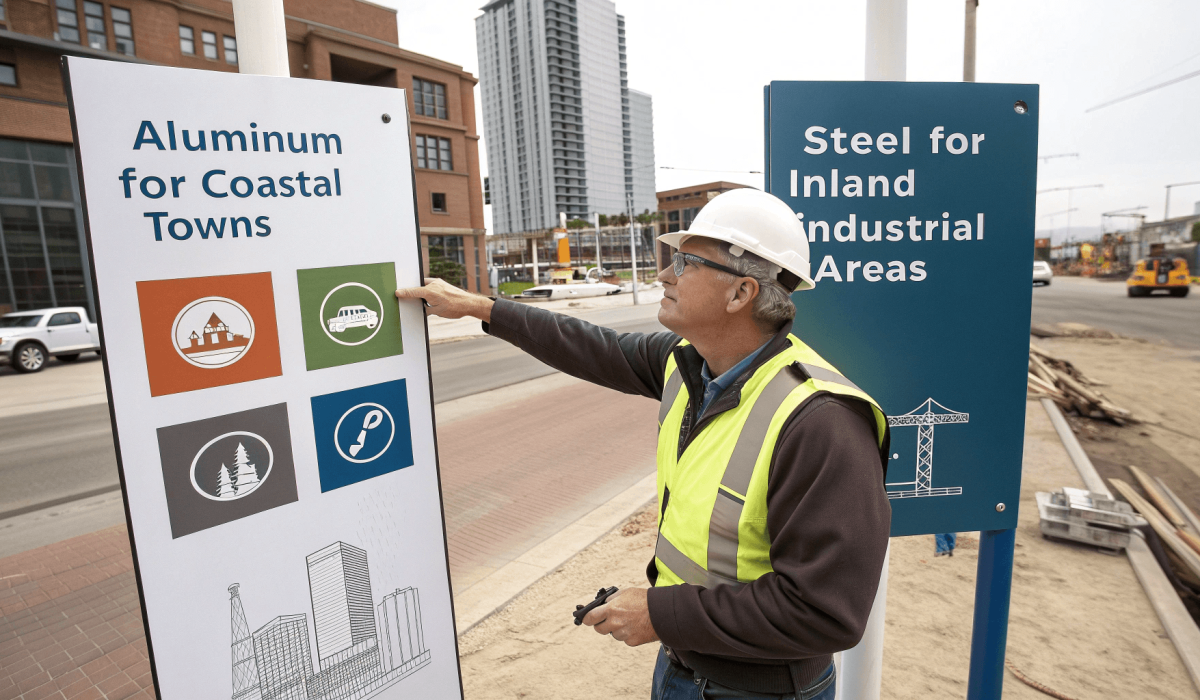
A practical guide for EPC contractors, municipal buyers, developers, and consultants choosing pole materials for coastal roads, urban streets, parks, highways, and industrial projects.
Quick Answer
Both aluminum and steel light poles can be the right choice, but they solve different project problems.
- Aluminum poles are often preferred where corrosion resistance, low maintenance, and lighter handling matter most.
- Steel poles are often preferred where higher structural load, taller pole height, heavier fixtures, or tighter upfront budgets matter more.
The right choice should not be based on material preference alone. It should be based on:
- project environment
- fixture load
- pole height
- corrosion exposure
- maintenance strategy
- lifecycle cost
Need help choosing the right pole material for your project?
Send us your pole height, fixture weight, site environment, and project type for a practical engineering recommendation.
Request Engineering Support →
Why Pole Material Choice Matters
Choosing the wrong pole material can create problems that only appear later:
- corrosion and coating failure
- higher maintenance cost
- structural overdesign or underdesign
- difficult transport and installation
- avoidable replacement risk over the project life
That is why pole material should be treated as a project decision, not just a catalog option.
For many tenders, the correct comparison is not simply:
Which material is better?
It is:
Which material is more suitable for this environment, load, and lifecycle target?
Quick Comparison: Aluminum vs Steel Light Poles
| Feature | Aluminum Pole | Steel Pole |
|---|---|---|
| Weight | Lightweight, easier to handle | Heavier, often requires lifting support |
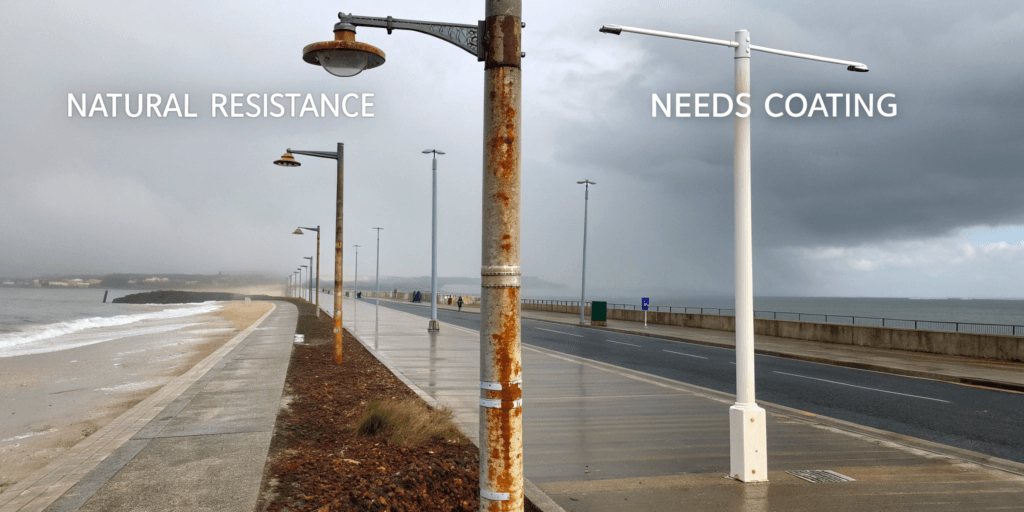
| Corrosion Resistance | Strong natural corrosion resistance | Depends heavily on galvanizing or coating |
| Strength | Suitable for light to medium loads | Better for heavier loads and taller structures |
| Initial Cost | Usually higher | Usually lower |
| Maintenance | Lower in corrosive environments | Higher if coating protection is compromised |
| Lifecycle Value | Often better in coastal / humid zones | Often good where structural demand is higher |
| Common Use | Residential, parks, coastal streets | Highways, industrial roads, larger fixture loads |
This table is only a starting point. Final selection still depends on pole height, arm length, wind load, fixture EPA, and environment.
Corrosion Resistance: Why Environment Changes the Decision
In outdoor lighting, corrosion risk is often one of the most important selection factors.
Aluminum poles are often chosen for coastal, humid, or tropical sites because they resist corrosion well and usually require less anti-rust maintenance.
Steel poles can also perform well, but their long-term durability depends more heavily on:
- galvanizing quality
- coating quality
- base-plate detailing
- site drainage
- maintenance quality
In many coastal projects, field experience shows that corrosion-related maintenance is not driven by “steel vs aluminum” alone. It is often driven by whether the full corrosion strategy was properly considered.
That includes:
- hot-dip galvanizing quality
- fastener protection
- base plate and grout detailing
- exposure to standing water or salt spray
Practical Rule of Thumb
- Coastal or high-moisture projects: aluminum often reduces maintenance risk
- Inland or lower-corrosion projects: steel may remain practical if structural load is higher and coating quality is controlled
Weight, Transport, and Installation
Transportation and installation cost matter more than many buyers expect, especially in remote or labor-sensitive projects.
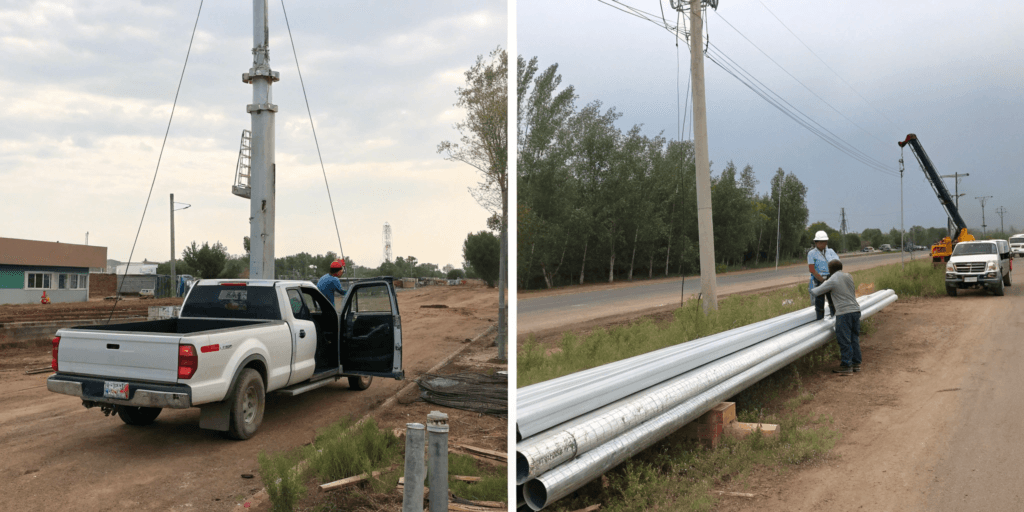
Aluminum Poles
- lighter and easier to move
- easier to handle on smaller sites
- can reduce installation difficulty in remote locations
Steel Poles
- heavier and often require more lifting support
- may increase transport and handling complexity
- can still be the better choice where heavier fixtures or taller poles are required
This means pole material is not only a structural decision. It can also be a logistics and installation decision.
Strength and Structural Load: Where Steel Still Has a Clear Advantage
When fixture load, mast height, arm length, or wind exposure increase, steel poles often remain the safer engineering choice.
Steel is commonly preferred for:
- highways and main roads
- larger fixtures
- taller poles
- double-arm or heavier structural configurations
- more demanding wind-load scenarios
Aluminum is often sufficient for:
- residential roads
- footpaths
- city parks
- lighter fixture applications
- lower to medium pole heights where structural demand is moderate
General Direction by Height / Load
| Pole Height | Typical Material Direction |
|---|---|
| 5–8 m | Aluminum or steel, depending on environment and load |
| 9–12 m | Often steel preferred, especially with heavier fixtures |
| 13 m+ | Steel usually preferred for higher structural demand |
This is not a universal rule. Final selection should still be checked against project-specific wind load, arm length, EPA, and fixture weight.
Initial Cost vs Lifecycle Cost
Choosing pole material only by purchase price can be misleading.

Steel Poles
- usually lower upfront cost
- may need more long-term attention in corrosive environments
- coating and rust-related maintenance can increase lifecycle cost
Aluminum Poles
- usually higher upfront cost
- often reduce maintenance burden in corrosive environments
- can improve long-term value where rust-related service is a recurring problem
A better buying question is:
What is the total cost after 10–20 years in this environment?
That is especially important in:
- municipal projects
- campuses
- housing developments
- coastal roads
- park lighting
Maintenance Requirements and Long-Term Reliability
Maintenance is not just a budget issue. It affects safety, uptime, and public appearance.
Steel poles generally require more careful corrosion monitoring over time, especially if coating damage appears at:
- the base plate
- bolt areas
- weld areas
- ground-line exposure zones
Aluminum poles generally reduce rust-related maintenance, which is why they are often preferred for projects where long-term service access is limited or maintenance budgets are tight.
This does not mean aluminum is always better. It means aluminum often reduces one major category of maintenance risk: corrosion-related intervention.
Sustainability and Environmental Considerations
Environmental impact is becoming more relevant in some public and donor-funded projects.
In those cases, buyers may ask not only about pole performance, but also about:
- recyclability
- lifecycle durability
- maintenance intensity
- long-term material use
Aluminum is often valued for its recyclability and low-maintenance performance in corrosive environments.
Steel is also widely recyclable and remains essential in structural applications where higher strength is required.
So for sustainability-driven projects, the more useful question is not simply:
Which one is greener?
It is:
Which option gives the best balance of durability, maintenance, and project life in the actual application?
Application Guide: Where Aluminum or Steel Often Fits Best
| Application Area | Often Preferred Material | Why |
|---|---|---|
| Coastal roads | Aluminum | Better corrosion resistance and lower rust maintenance |
| Residential streets | Aluminum or steel | Depends on load, budget, and environment |
| City parks and footpaths | Aluminum | Lightweight, lower maintenance, cleaner appearance |
| Industrial zones | Steel | Stronger structural support for heavier applications |
| Highways and main roads | Steel | Better for taller poles and heavier load conditions |
| Large parking lots | Steel or aluminum | Depends on pole height, fixture size, and environment |
| Heavy fixture applications | Steel | Better structural reserve for heavier loads |
The correct answer always depends on environment + load + lifecycle target.
What Procurement Teams Should Verify Before Choosing Pole Material
This is one of the sections missing from many generic comparison blogs, but it matters in real tenders.
Before finalizing aluminum or steel poles, procurement teams should verify:
- pole height
- fixture weight and EPA
- wind-load requirement
- arm length and configuration
- site corrosion exposure
- coating or galvanizing details
- foundation coordination
- long-term maintenance capacity
These questions often matter more than broad material marketing claims.
Need a pole material recommendation that matches your project?
Send us your pole height, fixture type, arm length, and site condition and we can help review whether aluminum or steel is more suitable.
Ask for a Material Review →
Simple Decision Checklist
Use this checklist as a first-pass guide:
- Near the ocean or high humidity? → Aluminum often reduces corrosion risk
- Heavy fixture or taller pole? → Steel is often safer
- Installation labor and transport cost sensitive? → Aluminum may help
- Budget focused on lowest upfront cost? → Steel may be attractive
- Long project life with limited maintenance team? → Aluminum may improve lifecycle value
- Highway, industrial road, or heavy-load application? → Steel often remains the stronger option
Final Recommendation
Both materials have clear strengths.
- Choose aluminum when corrosion exposure, lighter handling, and lower maintenance are major priorities
- Choose steel when structural load, pole height, and heavier-duty applications are the main concern
The most reliable decision is usually not based on one feature alone.
It comes from reviewing the project as a whole:
- environment
- pole height
- load
- corrosion risk
- maintenance plan
- lifecycle target
That is what leads to better long-term value and fewer surprises after installation.
Next Step
If you are comparing aluminum and steel poles for an actual project, we can help review:
- pole height
- fixture weight
- site environment
- application type
- corrosion exposure
- practical material direction
Working on a coastal road, residential project, park, or highway scheme?
Send us your project type, pole height, and fixture details and we can help suggest whether aluminum or steel is the better fit.
Get Project Support →
You can also review our related pages:
FAQ
Which is better, aluminum or steel light poles?
Neither material is universally better. Aluminum is often better for corrosion resistance and low maintenance, while steel is often better for higher loads, taller poles, and heavier-duty applications.
Are aluminum poles better for coastal areas?
In many coastal and humid environments, aluminum poles are often preferred because they reduce corrosion-related maintenance risk.
Are steel poles stronger than aluminum poles?
In general, steel poles are more suitable for higher structural loads, taller poles, and heavier fixtures.
Which pole material is cheaper?
Steel poles are usually cheaper upfront, while aluminum poles often cost more initially but may reduce long-term maintenance cost in corrosive environments.
Do aluminum poles last longer than steel poles?
That depends on environment, load, coating quality, and maintenance regime. In corrosive environments, aluminum often performs well over the long term because it reduces rust-related maintenance.
When should I choose steel poles?
Steel is often the safer choice for highways, industrial roads, heavier fixtures, taller poles, and other applications with higher structural demand.
When should I choose aluminum poles?
Aluminum is often a strong choice for coastal roads, parks, residential areas, campuses, and projects where lighter handling and lower maintenance are important.
Does galvanizing make steel poles suitable for outdoor use?
Yes, galvanizing and coating systems can significantly improve steel-pole durability, but long-term performance still depends on environment, detailing, and maintenance quality.
What matters more than pole material alone?
Pole height, fixture weight, wind load, corrosion exposure, arm length, coating quality, and maintenance strategy often matter more than broad material labels alone.
Can Sunlurio help recommend the right pole material?
Yes. Sunlurio can help review project inputs such as pole height, fixture type, environment, and application scenario to suggest whether aluminum or steel is more suitable.
For steel-pole procurement, compare material selection with galvanized street light pole requirements for infrastructure projects.
For procurement reasoning, connect material comparison with why pole material matters in solar lighting projects.