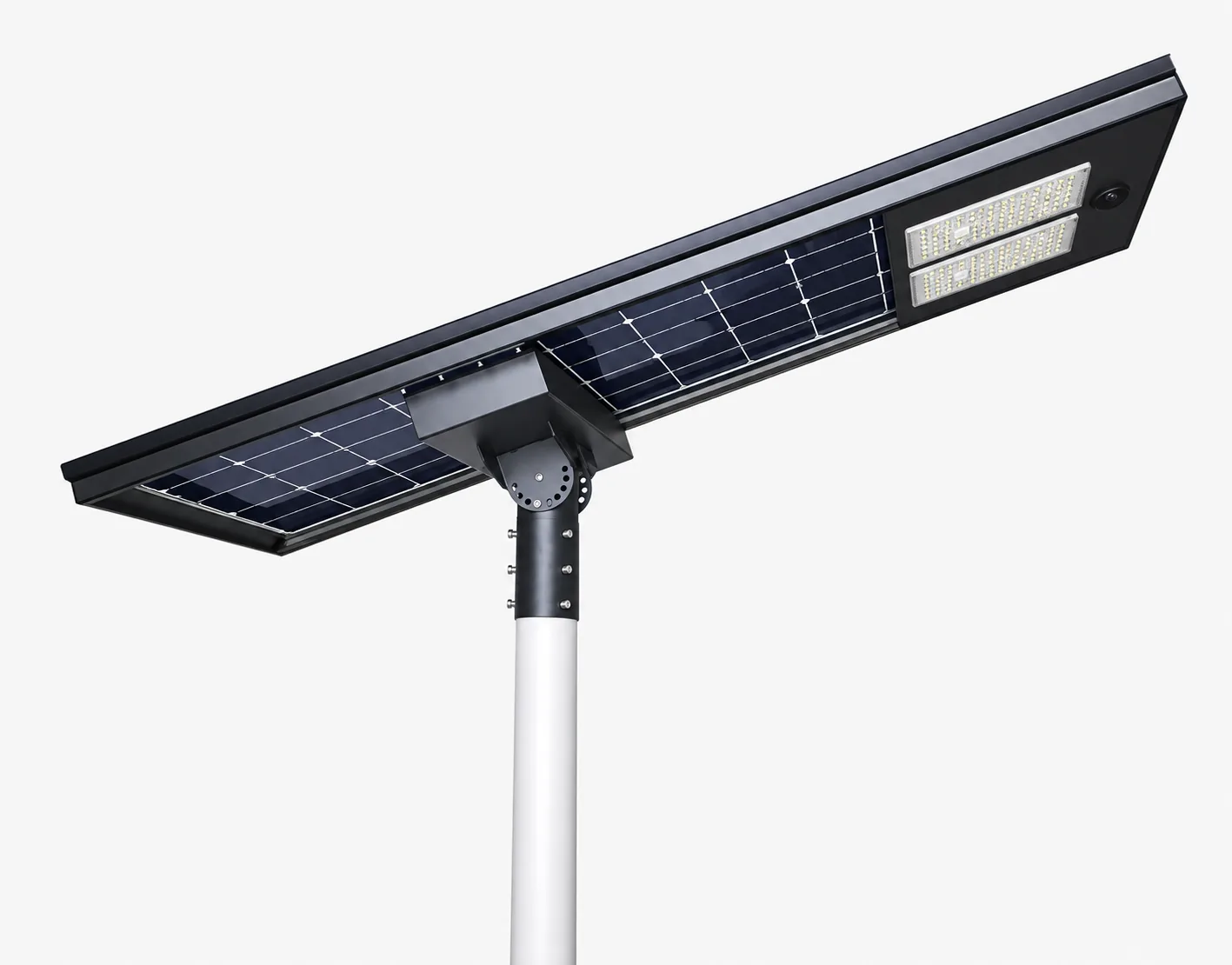
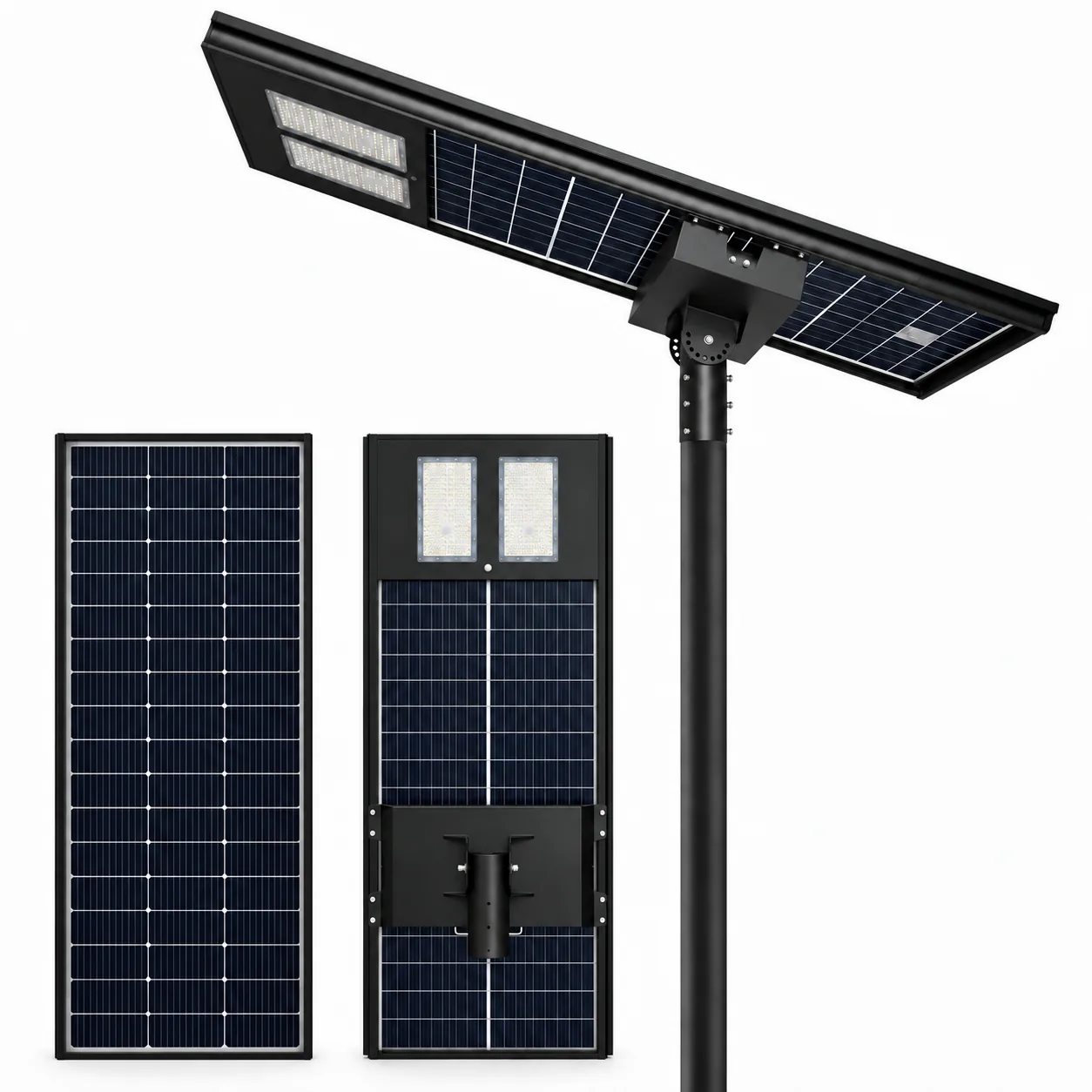
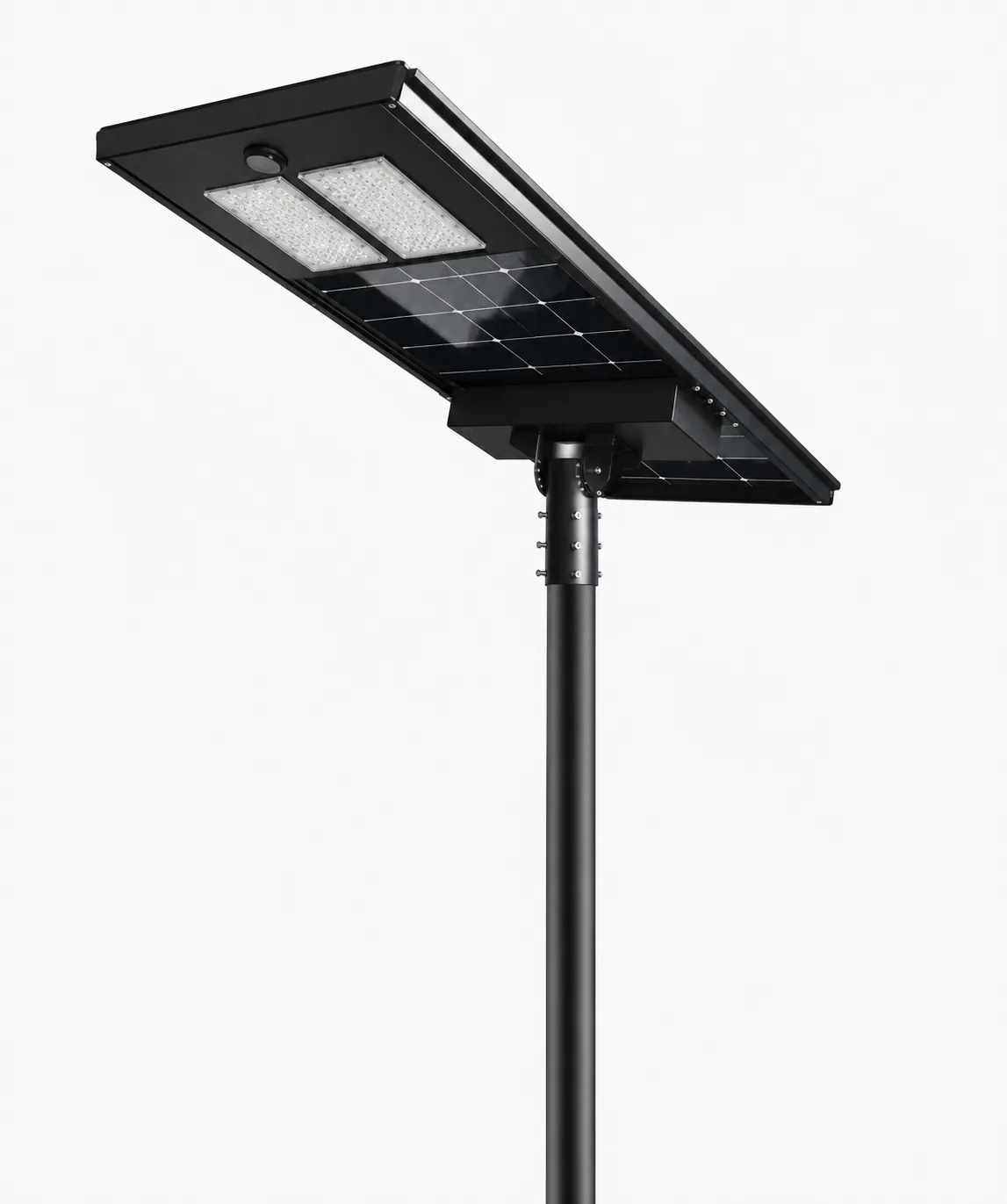
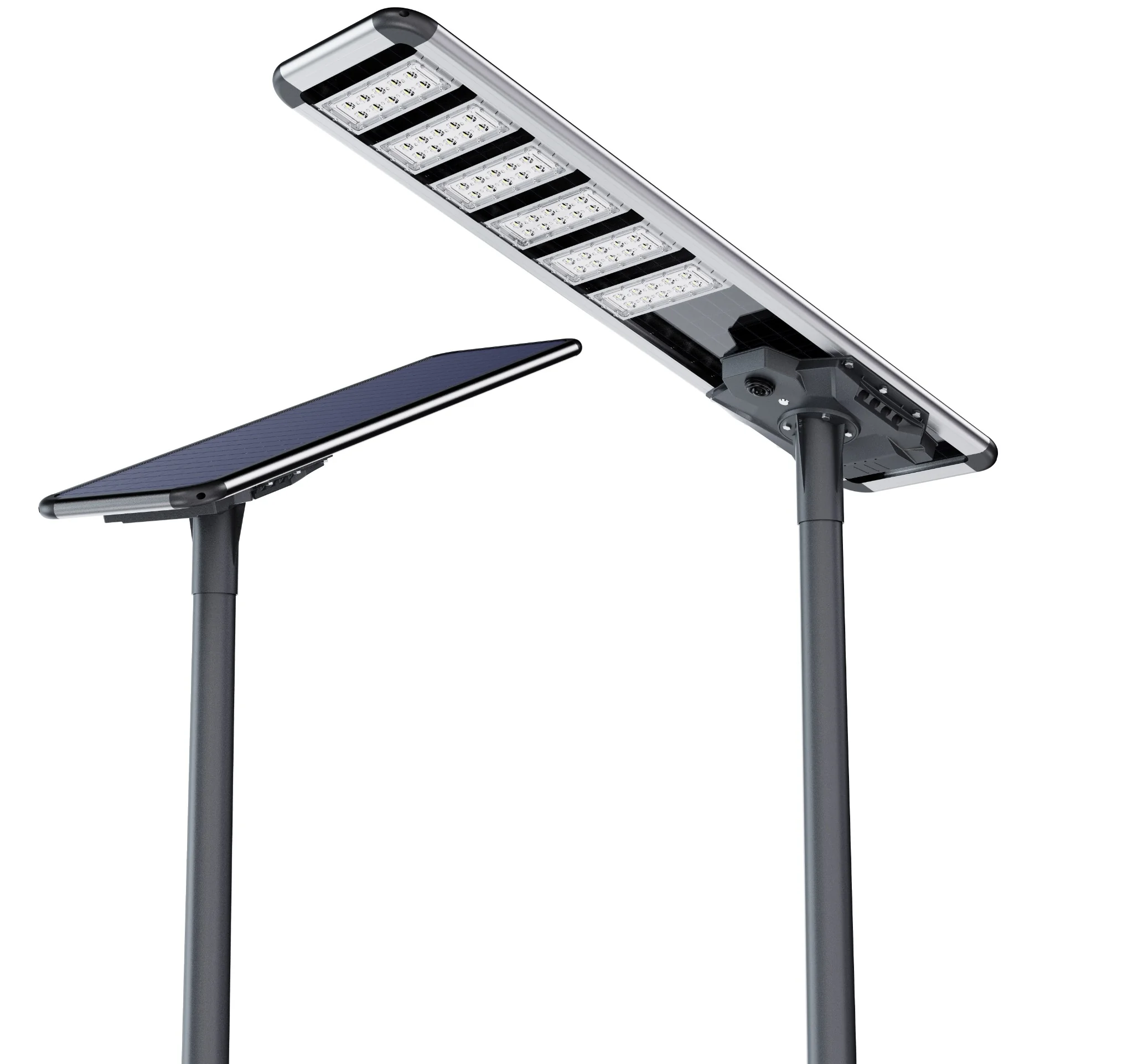
All-in-One Solar Street Lights for Roads & Public Areas

Choose an integrated solar street light configuration with project review for road width, pole height, spacing, working hours, backup days, and tender documentation.

Project Review Inputs

Before quotation, our team reviews the key project conditions instead of selecting by wattage only.

Engineering Configuration Note

High-Power All-in-One Configuration Available

Sunlurio All-in-One solar street lights are not limited to low-power applications. 100W+ and other project-specific high-power configurations can be reviewed and developed according to road width, pole height, spacing, working hours, backup days, local solar conditions, PV and battery sizing, heat dissipation, and system design. Typical project outputs may include 100W, 120W, 130W, 140W, 150W, 160W or other project-specific configurations. The final configuration should be confirmed by lighting requirement, autonomy target, installation condition, and document needs.

Key Configuration Checks

All-in-One output should be reviewed with road width, pole height, spacing, target illumination, heat dissipation, and installation condition.
PV and LiFePO4 battery capacity should match local solar conditions, working hours, backup days, dimming schedule, and autonomy target.
Datasheet, IES/LDT, DIALux or Relux support, drawings, BOQ notes, and packing information are prepared according to the selected configuration.

Why Choose All-in-One?

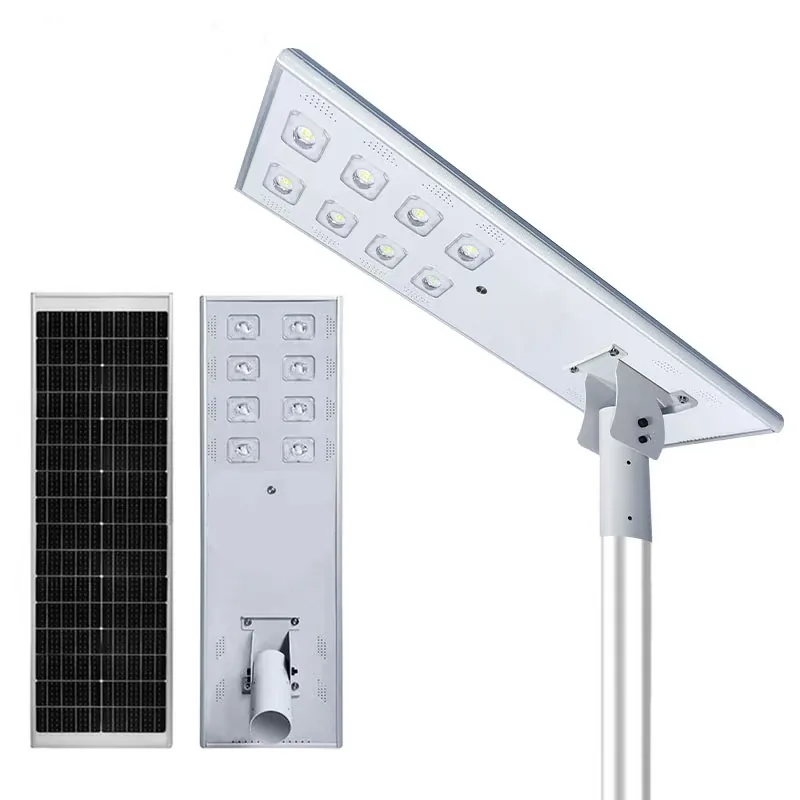
An integrated structure for projects that need cleaner appearance, fewer exposed components, and simplified batch installation.
Solar street light remote control for mode setting and field testing

Integrated Structure

The lamp body, solar module, battery, controller, and mounting structure are integrated to reduce exposed components and visible wiring.

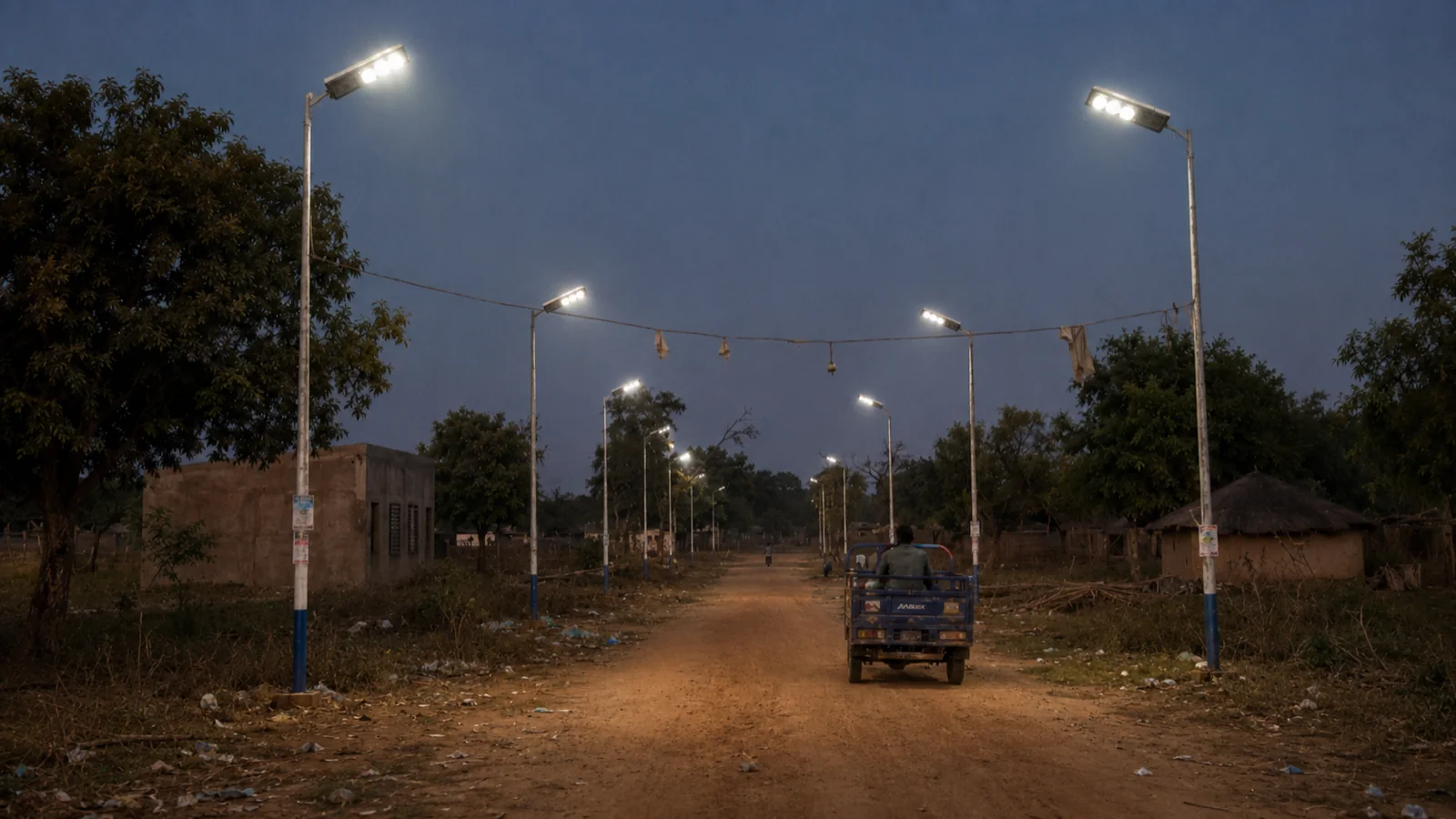
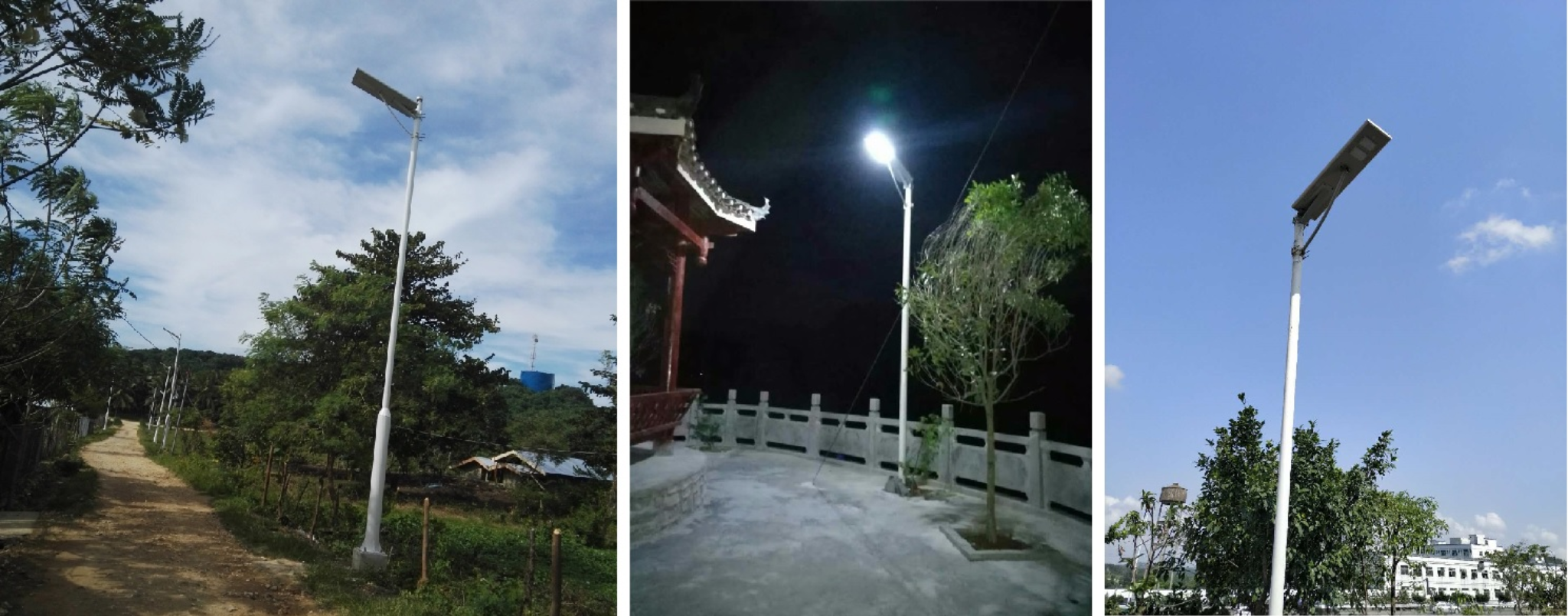
solar street light project references for public lighting programs

Simpler Batch Installation

A more integrated design helps contractors standardize installation steps for road, community, campus, and public lighting projects.

100W+ Project Configurations

100W+ and other project-specific outputs can be reviewed by road width, pole height, spacing, autonomy target, PV sizing, and local solar conditions.

Reduced External Wiring

Fewer external cable connections help improve site organization, reduce installation complexity, and support cleaner public-area appearance.

Program Support Deliverables

Files and technical support are prepared according to road width, project layout, mounting height, spacing, and tender requirement.

IES/LDT Photometric Files

Photometric files for optical verification, lighting simulation, and consultant review where applicable.

DIALux / Relux Layout Support

Lighting layout support based on road width, pole height, spacing, mounting condition, and project target.

Drawings & Datasheets

Dimension drawings, datasheets, mounting details, and technical files for the selected configuration.

BOQ & Model Mapping

Model mapping notes to help match tender BOQ, project configuration, and document submission requirements.

Quick Selection Guide

Choose the series by project priority: appearance, batch installation, output range, road width, pole height, autonomy target, and required documents.

Best for: Municipal programs and long-term standardized road lighting projects.
Key inputs: road width, pole height, spacing, working hours, backup days.
Best for: Distributor programs and repeat-order standardization.
Key inputs: target power range, installation method, batch quantity, document requirement.
Best for: Wider roads and higher output configurations after project review.
Key inputs: mounting height, road width, spacing, battery autonomy, solar condition.

Compare System Types: All-in-One vs All-in-Two vs Split

Use this table to decide whether the project should start from an integrated, semi-integrated, or split solar street light structure.
Compare ItemAll-in-OneAll-in-TwoSplit
StructureLuminaire, battery, controller, and solar panel integrated in one unitLuminaire and battery/controller integrated, solar panel separatedLuminaire, solar panel, battery, and controller separated
Best forClean appearance, batch installation, standard road and public-area programsProjects needing better PV angle flexibility with simplified installationHigh-power, long backup, flexible maintenance, and complex site conditions
InstallationSimplest installation pathModerate installation with separated PV panelRequires more site coordination and wiring
MaintenanceWhole-unit access, simple replacement planningEasier solar panel adjustment and partial accessBest component-level maintenance flexibility
PV flexibilityLimited by integrated structure and mounting directionBetter solar panel angle and orientation adjustmentHighest PV layout flexibility
Battery capacityProject-reviewed, suitable for standard autonomy targetsProject-reviewed with more layout flexibilityMost flexible for larger battery capacity and backup days
Wiring complexityLowest external wiringMedium wiringHighest wiring and installation coordination
AppearanceCleanest appearance with fewer exposed partsBalanced appearance and PV flexibilityMore visible components and cabling
Tender reviewGood for standardized municipal and public lighting programsGood for EPC road projects requiring PV angle reviewGood for high-power or complex tender configurations
Recommended next stepConfirm road width, pole height, spacing, working hours, and backup daysConfirm PV mounting angle, pole structure, road width, and autonomy targetConfirm layout, battery/cabinet position, wiring route, foundation, and maintenance access

Structure

All-in-One: Luminaire, battery, controller, and solar panel integrated in one unit

All-in-Two: Luminaire and battery/controller integrated, solar panel separated

Split: Luminaire, solar panel, battery, and controller separated

Best for

All-in-One: Clean appearance, batch installation, standard road and public-area programs

All-in-Two: Projects needing better PV angle flexibility with simplified installation

Split: High-power, long backup, flexible maintenance, and complex site conditions

Installation

All-in-One: Simplest installation path

All-in-Two: Moderate installation with separated PV panel

Split: Requires more site coordination and wiring

Maintenance

All-in-One: Whole-unit access, simple replacement planning

All-in-Two: Easier solar panel adjustment and partial access

Split: Best component-level maintenance flexibility

PV flexibility

All-in-One: Limited by integrated structure and mounting direction

All-in-Two: Better solar panel angle and orientation adjustment

Split: Highest PV layout flexibility

Battery capacity

All-in-One: Project-reviewed, suitable for standard autonomy targets

All-in-Two: Project-reviewed with more layout flexibility

Split: Most flexible for larger battery capacity and backup days

Wiring complexity

All-in-One: Lowest external wiring

All-in-Two: Medium wiring

Split: Highest wiring and installation coordination

Appearance

All-in-One: Cleanest appearance with fewer exposed parts

All-in-Two: Balanced appearance and PV flexibility

Split: More visible components and cabling

Tender review

All-in-One: Good for standardized municipal and public lighting programs

All-in-Two: Good for EPC road projects requiring PV angle review

Split: Good for high-power or complex tender configurations

Recommended next step

All-in-One: Confirm road width, pole height, spacing, working hours, and backup days

All-in-Two: Confirm PV mounting angle, pole structure, road width, and autonomy target

Split: Confirm layout, battery/cabinet position, wiring route, foundation, and maintenance access

Compare All-in-One Series

This comparison is intended for preliminary series selection. Final configuration should be confirmed by road width, pole height, spacing, working hours, backup days, local solar conditions, and required project documents.

AF Series

Best For: municipal programs and long-term consistency.
Selection Priority: stable SKU control, repeatable public-road deployment.

TJ Series

Best For: distributor programs and repeat orders.
Selection Priority: controlled models, fast reorder planning, export packaging.

GM Series

Best For: wider roads where optics and spacing matter.
Selection Priority: beam pattern, pole spacing, higher-output review.

Compare Item AF Series TJ Series GM Series
Best for Municipal programs & long-term consistency Distributor programs & repeat orders Wider roads where optics/spacing matter
Selection priority Consistency across deployments Controlled SKUs & after-sales stability Optics-first road performance
Typical use cases Communities / municipal roads Market distribution / fast-moving programs Main roads / wider road sections
Configuration approach Program-standard configurations SKU-controlled set for stocking Optics + spacing driven selection
Control options Standard + optional smart control Optional smart control (market-dependent) Standard + optional smart control
Reliability focus Lifecycle stability for large deployments Lower return risk & easier service Performance consistency on wider roads
Support scope Lead time • QC • Warranty • Installation Lead time • QC • Warranty • Installation Lead time • QC • Warranty • Installation
Next step View AF Series → View TJ Series → View GM Series →

What We Deliver

Model Recommendation

Model recommendation based on road width, pole height, spacing, autonomy target, and operating profile.

Lead Time & Shipment Plan

Clear lead time and shipment planning for program orders, repeat shipments, and project schedules.

Program QC Consistency

Configuration and inspection consistency for repeat orders, public lighting programs, and phased delivery.

Warranty, Spares & Installation

Warranty terms, spare parts planning, and installation guidance to support local deployment and maintenance.

Built to Fit Your Project — Not a Fixed Template

All-in-One solar street light configuration should be reviewed by road layout, pole height, working profile, autonomy target, and document requirements before model selection.

01 Road & Layout Review

Road width, pole height, spacing, and lighting target are reviewed before recommending the configuration.

02 PV, Battery & Dimming Profile

PV and battery sizing should match working hours, backup days, dimming schedule, and local solar conditions.

03 Document Pack Coordination

Datasheets, IES/LDT files, drawings, and BOQ notes can be prepared according to the project stage.

Manufacturing & Quality Control

Production and inspection records help EPC, municipal, and tender buyers verify manufacturing capability, batch consistency, testing process, and shipment readiness.
Production Process · Testing & Inspection
Pole arm welding and metal processing for outdoor lighting project orders
Production Process

Lighting Pole Welding

Pole welding, bracket preparation, and metal structure processing for road lighting and solar street light projects.

Pole structureWeldingMetal processing

Solar panel and bracket preparation area for outdoor lighting project orders
Production Process

Solar Panel Assembly

Solar panel and module assembly process for matching PV output with project autonomy and working profile requirements.

PV moduleAssemblyPower matching

Lithium battery pack integration and inspection for solar street light systems
Production Process

Battery Pack Integration

Lithium battery pack assembly, wiring, protection, and inspection for solar street light systems.

LiFePO4Battery packBMS check

LED street light housings and structural parts staged before assembly
Production Process

Luminaire Assembly

Solar luminaire assembly and batch preparation before aging test, inspection, packing, and shipment.

LuminaireAssemblyBatch order

LED street light aging test room for fixture reliability check before shipment
Testing & Inspection

LED Aging Test

LED lighting units are powered and checked through aging test procedures before packing and delivery.

Aging testLED checkBatch consistency

Sunlurio lighting product photometric and electrical testing lab for project document review
Testing & Inspection

Lumen & Lighting Performance Test

Lighting performance can be checked by lumen output, beam distribution, illuminance reference, and inspection records where applicable.

Lumen testIlluminancePhotometric review

Review the production and inspection system behind Sunlurio project orders.

Selected All-in-One Project References

Selected references from municipal roads, community programs, and repeat-order deployments. Detailed configuration files can be shared according to project relevance and confidentiality conditions.

Togo solar street light program, 2010-2024: 13,000 sets
Cote d'Ivoire solar street light project, 2012: 890 sets
Nepal solar street light project, 2022: 200 sets
Cambodia solar street light program, 2023: 12,000 sets
Additional project references available on request

Common Applications for All-in-One Solar Lights

Application suitability should be confirmed by road width, pole height, spacing, working hours, backup days, and local solar conditions.

Highways & Urban Roads

Integrated solar lighting for road sections where trenching, grid access, or fast deployment is a key constraint.

Schools, Colleges & Campuses

Safer pedestrian movement and perimeter visibility with simpler installation planning.

Government & Public Infrastructure

Public lighting programs that need repeatable models, documents, and installation support.

Industrial & Perimeter Lighting

Security and circulation lighting for factories, warehouses, and site boundaries.

Corporate & Commercial Areas

Lighting for parking areas, compounds, and business parks with reduced civil works.

Parks & Recreational Zones

Off-grid lighting support for parks, walkways, open areas, and community spaces.

Core Components That Affect Project Reliability

LED Module & Optics

Matched with road width, pole height, spacing, target lux, and beam distribution.

LiFePO4 Battery

Sized by working hours, backup days, temperature, dimming profile, and autonomy target.

Solar Panel & Charging

Reviewed by solar radiation, PV layout, tilt condition, and charging requirement.

MPPT Controller

Controls charging, dimming, protection, schedule, and overall system stability.

FAQs

Common questions for project selection:

Yes. Sunlurio All-in-One solar street lights can be reviewed for 100W+ and other project-specific high-power configurations. Final output depends on road width, pole height, spacing, working hours, backup days, PV and battery sizing, heat dissipation, and local solar conditions.
No. All-in-One is selected mainly for integrated structure, cleaner appearance, simpler installation, and fewer external components. It can also be reviewed for high-power project configurations when the system design and site conditions support it.
Choose by installation method, PV and battery layout, maintenance access, pole structure, wiring complexity, and site conditions. All-in-One is more integrated, All-in-Two provides more PV orientation flexibility, and Split provides the most flexible component layout.
We normally need project country and city, road width, pole height, pole spacing, working hours, backup days, dimming mode, quantity, installation environment, and required documents such as datasheet, IES/LDT, DIALux, drawings, or BOQ.
Yes. Document support can be prepared according to the selected model and project requirement. Typical files may include datasheets, IES/LDT photometric files, DIALux or Relux support, drawings, BOQ model mapping notes, packing list, and compliance documents where applicable.
Battery cycle life depends on cell grade, depth of discharge, temperature, charging control, and operating profile. For project review, we check working hours, backup days, dimming profile, and local climate before confirming the battery configuration.
Yes. Configuration and document support can be matched to tender requirements where applicable, including model selection, datasheet, IES/LDT, DIALux support, drawings, BOQ notes, packing list, and other project files.

Request All-in-One Project Configuration

Complete project inputs help us review PV and battery sizing, mounting structure, dimming profile, document requirements, and delivery planning more accurately.

Request a Project Document Pack

Share your project location, road width, pole height, spacing, working hours, backup days, and required documents. Our team can help prepare configuration guidance, datasheets, IES/LDT files, DIALux support when applicable, drawings, and BOQ matching notes.