
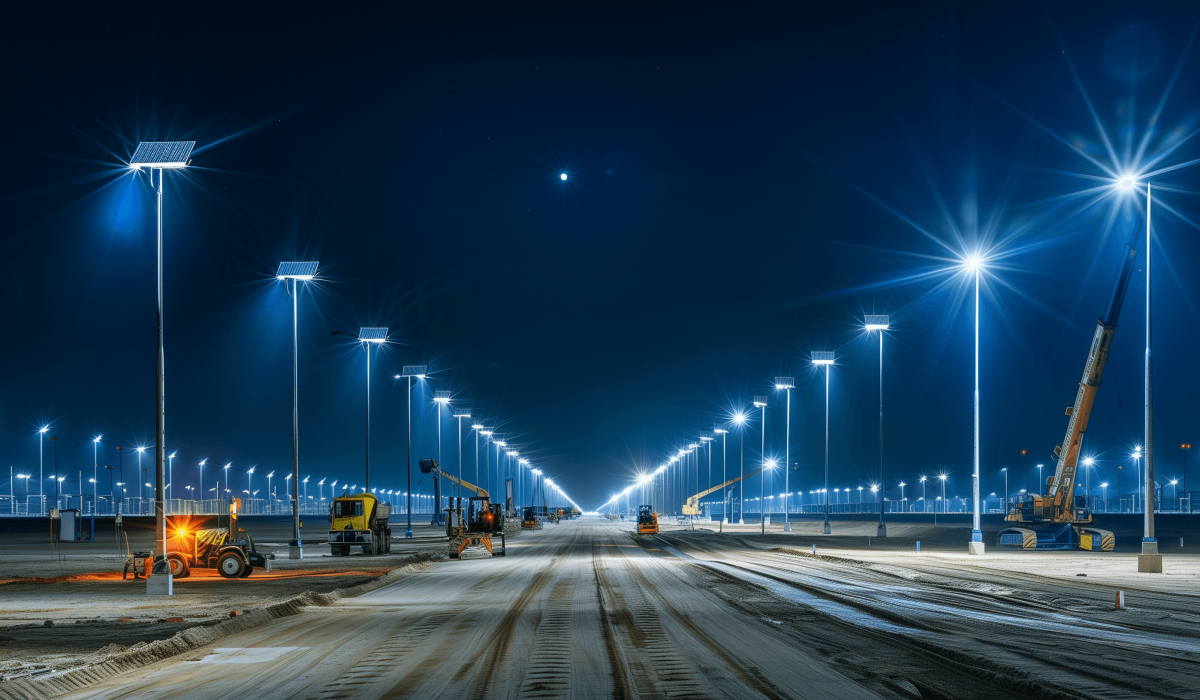
Street light poles are commonly made from steel, aluminum, fiberglass, and concrete. The right choice depends on more than material name alone. In real projects, pole material affects structural capacity, corrosion resistance, transport difficulty, installation method, maintenance cost, and long-term reliability.
A pole that looks acceptable in a catalog can still become the wrong choice if the site has coastal salt exposure, strong wind, difficult access, limited maintenance, or higher loading from outreach arms, solar components, or larger luminaires. That is why pole material should be selected as a project decision, not only as a catalog preference.
For buyers, contractors, municipalities, and project planners, the key question is usually not only what material the pole is made of, but which material fits the actual environment, loading condition, and lifecycle requirement of the project.
If you are already comparing poles for a live project, go directly to the next step:
Request Engineering Support → Request Engineering Support
View Lighting Solutions → View Lighting Solutions
Explore Product Options → Explore Product Options
See Project References → See Project References
Quick Answer
Street light poles are most commonly made from:
- steel
- aluminum
- fiberglass
- concrete
None is universally best.
For practical project selection, the right material depends on:
- corrosion environment
- pole height and arm load
- wind exposure
- transport and installation conditions
- maintenance access
- expected service life
- project budget
- architectural or visual requirements
For many municipal and road-lighting projects, steel and aluminum are the most common choices. In more corrosive or electrically sensitive environments, fiberglass may be considered. In some utility-style or remote applications, concrete may still be selected where long replacement cycles matter more than handling convenience.
Why Pole Material Matters More Than It First Appears
A street light pole does more than support a luminaire. It must continue performing under:
- wind load
- vibration
- rain and humidity
- corrosion exposure
- transport and installation stress
- long-term maintenance conditions
In practical projects, material problems often do not appear on day one. They show up later as:
- corrosion at the shaft or base
- coating failure
- rising maintenance cost
- structural weakness under repeated loading
- premature replacement in aggressive environments
This is why pole material should not be selected only by first-purchase price or appearance. A lower upfront cost can become a higher lifecycle cost if the material does not match the site.
What Materials Are Street Light Poles Commonly Made Of?
1. Steel Street Light Poles
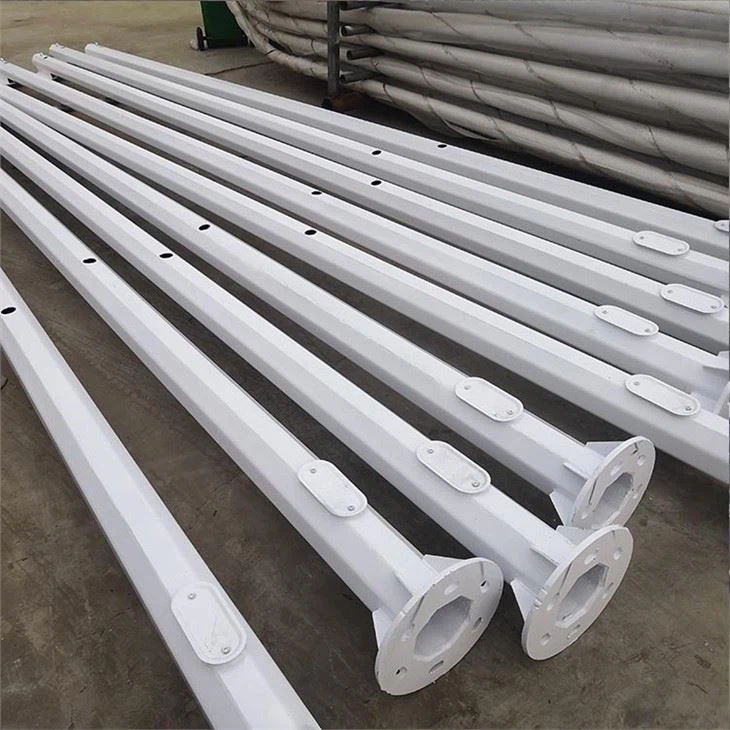
Steel is one of the most widely used materials for street light poles because it offers high structural strength, fabrication flexibility, and broad availability.
In many roadway and infrastructure projects, steel is chosen where the pole must support:
- higher mounting heights
- outreach arms
- larger luminaires
- brackets, signs, or accessories
- stronger wind exposure
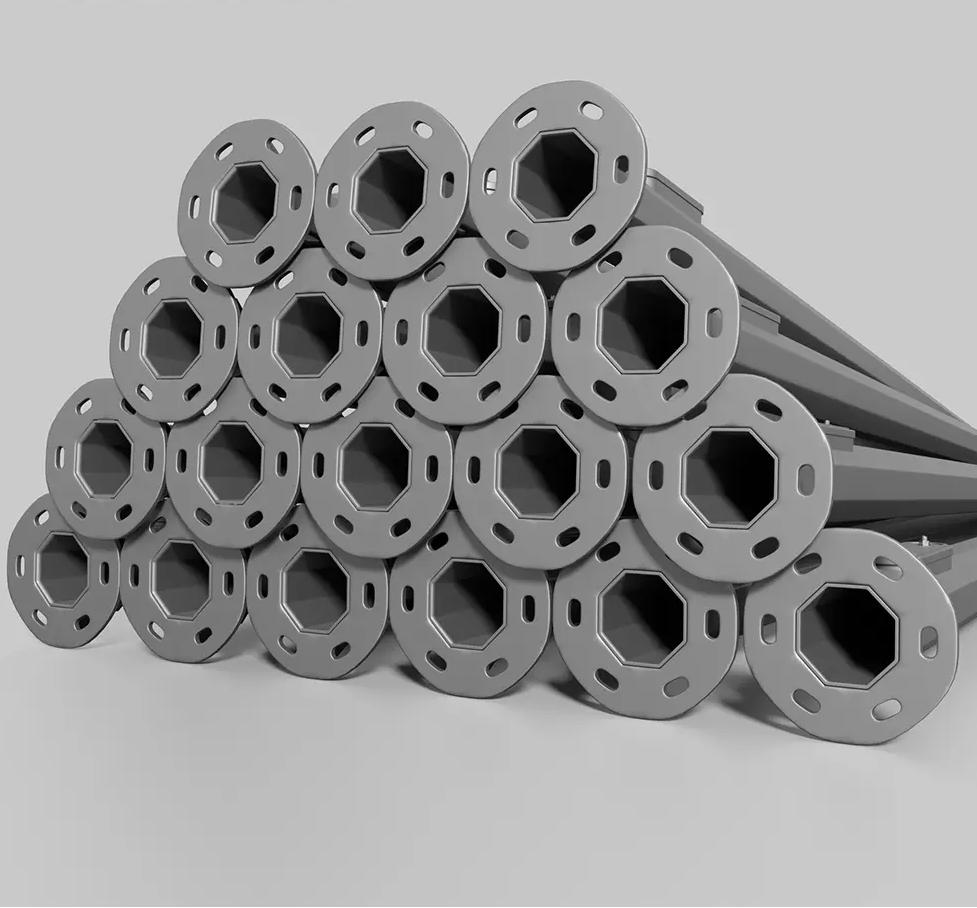
Steel can be manufactured into conical, octagonal, round tapered, and decorative forms, which makes it highly adaptable in public-road and contractor-led work.
Why steel is often chosen
- strong structural capacity
- widely accepted in municipal and roadway projects
- suitable for many heights and arm configurations
- practical for standardized larger-volume procurement
What buyers should watch
Steel is not automatically a low-maintenance answer. Long-term durability depends heavily on:
- galvanizing quality
- coating system
- weld-area protection
- base-plate protection
- anchor-bolt zone detailing
- local corrosion environment
Practical project note
Steel is often the default choice because it balances strength, fabrication practicality, and project familiarity. But in coastal, high-humidity, or poorly maintained environments, buyers should pay much closer attention to corrosion-protection details rather than assuming “steel is steel.”
2. Aluminum Street Light Poles
Aluminum is valued for being lighter than steel and naturally corrosion resistant, which makes it attractive where rust resistance and easier handling matter.
Compared with steel, aluminum poles are often easier to transport and lift because of lower weight. They are also commonly selected where a cleaner or more architectural appearance is preferred.
Why aluminum is often chosen
- good corrosion resistance
- lower weight than steel
- easier handling and installation in some projects
- cleaner appearance for urban, commercial, or landscaped environments
What buyers should watch
Aluminum is not simply “better because it does not rust.” The correct choice still depends on:
- pole height
- arm reach
- luminaire weight
- local wind exposure
- project cost target
- structural basis of the design
Practical project note
Aluminum can be attractive in coastal or humid areas where corrosion risk is high and maintenance access is limited. But material choice should still be based on engineering and project fit, not only on the phrase “corrosion resistant.”
Need Help Comparing Pole Material Options?
If you are comparing pole materials for a municipal road, coastal road, pathway, industrial site, compound, or contractor project, it is usually safer to compare them together with load demand, corrosion exposure, transport difficulty, and maintenance expectations.
Request Engineering Support → Request Engineering Support
View Lighting Solutions → View Lighting Solutions
See Project References → See Project References
3. Fiberglass Street Light Poles
Fiberglass poles are less common than steel or aluminum in mainstream roadway projects, but they can be useful in selected environments.
They are often considered where corrosion risk is severe, where non-metallic behavior is preferred, or where lower maintenance in aggressive environments is a priority.
Why fiberglass is sometimes chosen
- strong corrosion resistance
- useful in certain aggressive environments
- lower maintenance in some conditions
- lighter handling in selected applications
What buyers should watch
Fiberglass should not be treated as a universal upgrade. It may be a good fit in some corrosive or specialty settings, but buyers should still confirm:
- structural documentation
- local project acceptance
- long-term field familiarity
- visual suitability
- installation experience
Practical project note
Fiberglass can be attractive in chemical, marine-adjacent, or highly corrosive environments, but the decision should be based on project acceptance and real support documents, not only on the idea that it is “maintenance-free.”
4. Concrete Street Light Poles
Concrete poles are known for their mass, rigidity, and long-life potential in certain applications.
They are commonly associated with utility or infrastructure use where long replacement cycles may matter more than easy handling.
Why concrete is sometimes chosen
- stable in long-life applications
- less dependent on coating systems than steel
- useful in some rural, utility, or remote contexts
- can perform well where service life is prioritized over handling ease
What buyers should watch
Concrete poles are heavy. That affects:
- transport cost
- lifting requirements
- installation method
- foundation coordination
- replacement difficulty
They are not usually the first choice where fast installation, decorative appearance, or simpler replacement is important.
Practical project note
Concrete poles may still make sense in selected utility-style or remote applications, but they are not automatically the best “heavy-duty” answer for all road-lighting projects. Logistics and maintainability still matter.
How Should Buyers Choose the Right Pole Material?
The right pole material should be selected by reviewing the full project condition, including:
- road or site type
- mounting height
- arm outreach
- luminaire size
- wind exposure
- corrosion environment
- transport access
- installation method
- maintenance resources
- visual expectations
- lifecycle priorities
In practical work, the best material is usually the one that gives the best long-term fit, not the one that sounds strongest in isolation.
Key Selection Rules That Matter Most
1. Corrosion Environment
This is often the first screening factor.
A project near the coast, in high humidity, or in chemically aggressive air may require stronger corrosion attention than a dry inland site.
Practical rule
If the environment is corrosive, do not judge the pole only by base material. Also review:
- galvanizing or coating system
- weld-area finish
- base-plate protection
- fasteners and hardware
- anchor-bolt zone detailing
- maintenance interval assumptions
2. Structural Demand
Pole material should match the real structural requirement.
That includes:
- pole height
- arm outreach
- luminaire weight
- solar panel or battery-related load where relevant
- local wind condition
- attached brackets or accessories
Practical rule
A material should not be selected only because it is lighter, cheaper, or more familiar. The structural system still needs to suit the actual loading case.
3. Installation and Transport Conditions
In many projects, site logistics change the material choice.
For example:
- remote areas may make heavy transport difficult
- narrow city sites may favor easier handling
- limited crane access may affect installation planning
- hard replacement conditions may favor longer-life options
Practical rule
A pole that looks efficient on paper can still become inefficient if transport, lifting, or replacement is difficult for the actual site.
4. Maintenance Strategy
Some pole materials are more forgiving than others where inspection is infrequent or repair access is difficult.
If the site has limited maintenance resources, durability behavior becomes more important than small upfront savings.
Practical rule
When maintenance is uncertain, material selection should be made with lifecycle thinking, not first-purchase thinking.
Simple Material Comparison Table
| Material | Main Strength | Main Watchpoint | Often Considered For |
|---|---|---|---|
| Steel | High strength, broad use, flexible fabrication | Needs proper corrosion protection | Roads, municipal projects, higher-load applications |
| Aluminum | Lower weight, corrosion resistance, cleaner appearance | Must still match structural demand and budget | Coastal, urban, commercial, landscaped areas |
| Fiberglass | Corrosion resistance, specialty use | Not universal for every project or acceptance framework | Aggressive environments, selected specialty sites |
| Concrete | Mass, stability, long-life potential | Heavy transport and installation burden | Utility-style, remote, selected long-life applications |
What Standards or Technical Frameworks Are Relevant?
Pole material selection is usually judged within a broader structural and durability framework rather than by material name alone.
Depending on the project, relevant references may include:
- EN 40, where lighting-column design, loading, and characteristic requirements may be relevant
- ISO 1461, where hot-dip galvanized steel protection is part of the durability discussion
- IEC 60598, where luminaire safety requirements are relevant on the lighting side
- IEC 62262, where IK impact protection may matter in exposed public environments
- local wind-loading or structural design frameworks where pole stability must be verified
These references do not replace project-specific engineering, but they help buyers and reviewers judge whether the pole is being presented with a more professional and verifiable basis.
Practical buyer note
If a supplier recommends one pole material over another, it is reasonable to ask:
- what environment the recommendation assumes
- what corrosion-protection system is included
- what loading and pole height the recommendation is based on
- whether the pole design follows a recognized structural framework
- whether similar project references are available
Want a More Project-Ready Pole Recommendation?
If you are choosing pole materials for an active project, it is usually better to compare corrosion exposure, structural demand, and maintenance expectations together rather than choosing by habit or appearance alone.
Request Engineering Support → Request Engineering Support
View Lighting Solutions → View Lighting Solutions
Explore Product Options → Explore Product Options
What Usually Goes Wrong in Pole Material Selection?
In practical projects, material-selection mistakes often come from one of these issues:
- choosing only by initial price
- assuming all steel poles perform the same
- assuming aluminum automatically solves every corrosion issue
- ignoring transport and installation constraints
- selecting by appearance without checking structural need
- discussing “durability” without defining environment and maintenance reality
In practical review, many pole problems do not start with the luminaire. They start when the pole material is chosen too early, before corrosion environment, wind exposure, loading, transport, and lifecycle expectations are checked together.
A material that looks attractive in a brochure can still become the wrong choice if the real site condition is harsher than the assumption behind the product.
Related Project Perspective
In real project work, pole material should be reviewed together with:
- site exposure
- wind condition
- corrosion environment
- foundation condition
- mounting height
- arm configuration
- maintenance access
- approval or consultant expectations
If you want to see how lighting systems are applied in actual project contexts, you can review our Projects page.
You can also move to the next step here:
See Project References → See Project References
Request Engineering Support → Request Engineering Support
View Lighting Solutions → View Lighting Solutions
Explore Product Options → Explore Product Options
Buyer Checklist Before Finalizing Pole Material
Before approving a pole material, it is worth checking:
- corrosion exposure
- pole height and arm load
- wind condition
- transport and lifting constraints
- maintenance access
- coating or galvanizing system
- base-plate and connection protection
- lifecycle expectations
- available structural documentation
- project-reference relevance
A pole material should not be approved only because it is common. It should be approved because it fits the site, the loading condition, the maintenance reality, and the project objective.
FAQ
What are street light poles usually made of?
Street light poles are commonly made from steel, aluminum, fiberglass, or concrete. The right choice depends on structure, corrosion exposure, maintenance expectations, and project conditions.
Which pole material is best for coastal areas?
There is no single answer for every coastal project. Aluminum and corrosion-resistant non-metallic options may be considered, but steel can also perform well when the protection system and maintenance plan are suitable. The correct choice depends on exposure level, design, and lifecycle strategy.
Is steel or aluminum better for street light poles?
Neither is always better. Steel is widely used for strength and fabrication flexibility, while aluminum is attractive for lower weight and corrosion resistance. The better choice depends on loading, environment, budget, and maintenance conditions.
Are fiberglass poles good for street lighting?
Fiberglass poles can be useful in corrosive or specialty environments, but they are not automatically the right choice for every project. Structural acceptance, local familiarity, and project expectations should still be checked.
Why are concrete poles still used in some projects?
Concrete poles are still used in some utility, remote, or long-life applications because of their mass and durability. However, their weight and installation burden can make them less suitable for some road-lighting projects.
What should buyers ask suppliers about pole materials?
Buyers should ask about corrosion protection, structural basis, wind and load assumptions, coating or galvanizing details, maintenance expectations, and similar project references.
Summary
Street light poles are commonly made from steel, aluminum, fiberglass, and concrete, but the right choice depends on more than material name alone.
For practical project work, the best material is the one that fits:
- the real corrosion environment
- the structural demand
- the installation and transport condition
- the maintenance strategy
- the project’s lifecycle priorities
If you are reviewing pole materials for a municipal, contractor, industrial, coastal, or public-lighting project, it is usually better to compare them with engineering assumptions and site conditions behind them rather than by catalog description alone.
Next Step
If you are working on a road-lighting, coastal, compound, contractor, or public-lighting project, the safest next move is to compare pole materials together with corrosion risk, loading assumptions, and support documents before final selection.
Request Engineering Support → Request Engineering Support
View Lighting Solutions → View Lighting Solutions
Explore Product Options → Explore Product Options
See Project References → See Project References